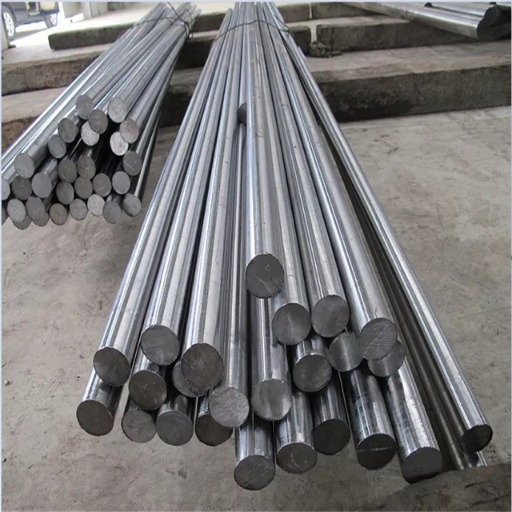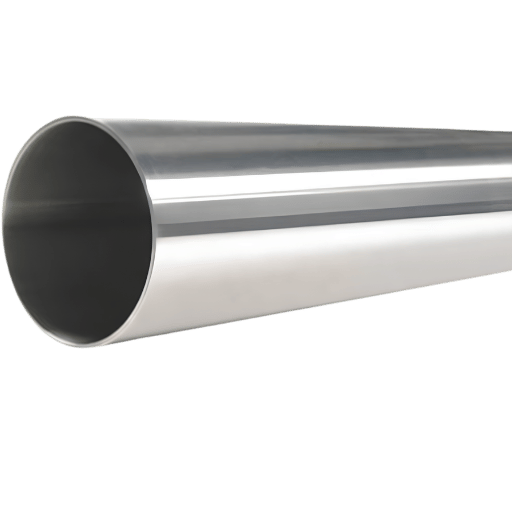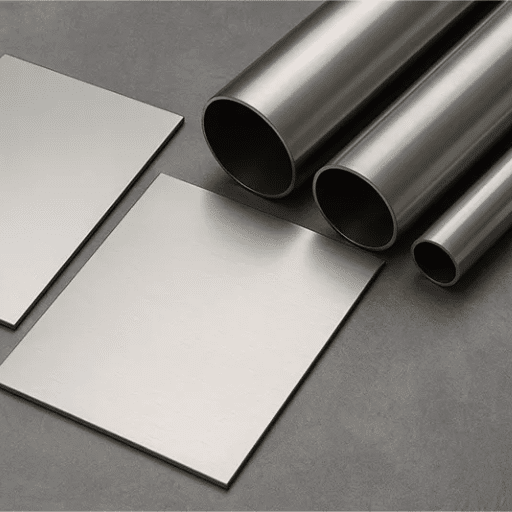
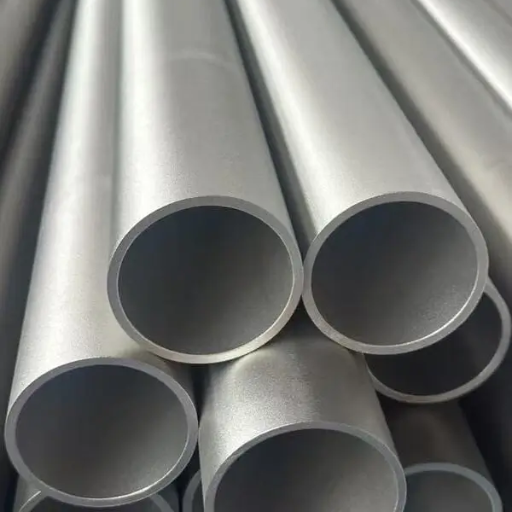
321 stainless steel pipe is a titanium-stabilized austenitic pipe made to ASTM A312, A213, or A269, specified for welded service in the 425–815 °C band where 304 would sensitize. It isn’t a more corrosion-resistant 304, and it isn’t a seawater grade.
Most buyers order 321 stainless steel pipe for the wrong reason. They see “stabilized” on a data sheet and read it as “better.” Then they pay a 10–25% premium over 304 and expect the pipe to survive a chloride line or a coastal cooling loop. It won’t. In chlorides, 321 behaves like 304 with an extra element.
The right reason is narrower. 321 keeps chromium in solution when a weld sits at temperature. That’s the whole purchase.
If your line stays below roughly 425 °C and sees no chlorides, 304 is cheaper and adequate. If it cycles through 425–815 °C, or holds there, the weld HAZ in 304 is where the first leak starts. This guide covers the four grade decisions, the pipe specification, and the goods-in checks.
Key Takeaways
- 321 is 304 plus titanium. Titanium is specified at 5 × (C + N) minimum and 0.70% maximum. Carbon is still allowed up to 0.08%, so 321 isn’t a low-carbon grade.
- The stabilization band is 425–815 °C. Below it, 304 or 304L usually costs less and performs the same. Above roughly 850 °C, 321 runs out of oxidation resistance and 310S takes over.
- 321 has roughly 304-level chloride resistance. PREN is about 18. It isn’t a seawater alloy, and it isn’t a substitute for 316L or duplex in chloride service.
- 321H is a creep grade, not a corrosion upgrade. Carbon runs 0.04–0.10%, titanium is 4 × (C + N), and grain size must be ASTM No. 7 or coarser. Room-temperature minimums don’t change.
- The standard decides what “mechanical” means. A312 and A213 carry 515 MPa tensile / 205 MPa yield / 35% elongation. A269 accepts TP321 on hardness, not a tensile table.
Specifying TP321 for a line? Send the line list with design pressure, design temperature, and the governing code. Our technical team will confirm the grade, wall, and test requirements, and reply within 24 hours. Request a line-list review.
What Is 321 Stainless Steel Pipe?
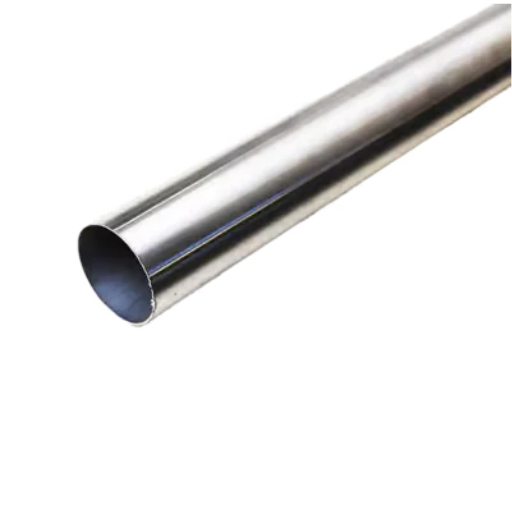
321 stainless steel pipe is a titanium-stabilized austenitic stainless steel pipe covered by ASTM A312 for pipe, ASTM A213 for boiler and heat-exchanger tube, and ASTM A269 for general-service tube. Its UNS number is S32100. In Europe the grade is 1.4541, X6CrNiTi18-10; in Japan, SUS321; in China, 06Cr18Ni11Ti, often written S32168.
The base chemistry is 18% chromium and 9–12% nickel, the same family as 304. The difference is titanium at not less than five times the carbon plus nitrogen content, capped at 0.70%.
That ratio is the specification. Titanium has a stronger affinity for carbon than chromium does. At 425–815 °C, it forms titanium carbide instead of allowing chromium carbide to form at the grain boundaries. Chromium stays in the matrix, the passive film stays intact, and the weld HAZ keeps its corrosion resistance.
The product forms matter. A312 covers seamless and welded pipe in NPS and schedule sizes. A213 covers minimum-wall boiler, superheater, and heat-exchanger tube. A269 covers general-service tube, including instrument and hydraulic lines.
The chemistry is the same; the dimensional and testing rules aren’t.
Zhongzheng produces TP321 in both seamless and welded construction, including the TP321 welded pipe range.
321 Stainless Steel Pipe Specifications at a Glance
The 321 stainless steel composition table is the one to keep. Read the titanium row first, then the carbon row.
| Element, % | 321 (S32100) | 321H (S32109) | 304 (S30400) | 316L (S31603) | 347 (S34700) |
|---|---|---|---|---|---|
| Carbon | 0.08 max | 0.04–0.10 | 0.08 max | 0.035 max | 0.08 max |
| Chromium | 17.0–19.0 | 17.0–19.0 | 18.0–20.0 | 16.0–18.0 | 17.0–19.0 |
| Nickel | 9.0–12.0 | 9.0–12.0 | 8.0–11.0 | 10.0–14.0 | 9.0–13.0 |
| Molybdenum | , | , | , | 2.00–3.00 | , |
| Titanium | 5×(C+N) min, 0.70 max | 4×(C+N) min, 0.70 max | , | , | , |
| Niobium + tantalum | , | , | , | , | 10×C min, 1.00 max |
| Nitrogen | 0.10 max | 0.10 max | 0.10 max | 0.10 max | 0.10 max |
| Manganese | 2.00 max | 2.00 max | 2.00 max | 2.00 max | 2.00 max |
| Silicon | 1.00 max | 1.00 max | 1.00 max | 1.00 max | 1.00 max |
| Phosphorus | 0.045 max | 0.045 max | 0.045 max | 0.045 max | 0.045 max |
| Sulfur | 0.030 max | 0.030 max | 0.030 max | 0.030 max | 0.030 max |
Two rows carry the commercial risk. Carbon must stay at or below 0.08% for 321, and titanium must be at least five times the carbon plus nitrogen. A mill certificate that says “321” without a titanium value hasn’t proven the grade.
The mechanical table is simpler, and it contains one exception that catches buyers on heavy-wall seamless pipe.
| Property, specified minimum | 321 / 321H | 304 | 316L |
|---|---|---|---|
| Tensile strength | 515 MPa (75 ksi) | 515 MPa | 485 MPa |
| Yield strength, 0.2% offset | 205 MPa (30 ksi) | 205 MPa | 170 MPa |
| Elongation in 50 mm | 35% | 35% | 35% |
| Hardness, max | 90 HRB | 90 HRB | 90 HRB |
| A312 seamless wall > 9.5 mm | 485 MPa / 170 MPa | , | , |
The last row isn’t a typo. ASTM A312 reduces the specified tensile and yield for TP321 and TP321H seamless pipe when the nominal wall exceeds 3/8 in (9.5 mm). A 12 in schedule 80S line is heavy-wall by that definition. If your wall calculation uses 205 MPa yield for a heavy-wall seamless 321 pipe, you’re using a number the standard doesn’t support.
For pipe, ASTM A312 TP321 is the default pressure-service specification. The standards matrix decides which mechanical table applies:
| Standard | Product form | What to check |
|---|---|---|
| ASTM A312 / ASME SA312 | Seamless and welded pipe | Tensile/yield/elongation; hydrostatic or nondestructive electric test per length |
| ASTM A213 / ASME SA213 | Boiler, superheater, heat-exchanger tube | 321H grain size; tighter wall tolerance; hydro and NDE |
| ASTM A269 / ASME SA269 | General-service tube | No tensile table in A269-15; hardness 192 HBW / 90 HRB max plus flaring and flattening tests |
That A269 row is the one most supplier pages get wrong. They quote 515 MPa tensile for “A269 TP321” because the number exists in A213 and A312. In A269-15, mechanical acceptance is hardness and workmanship tests, not a tensile table. If your purchase order says A269 and your inspection plan expects a tensile certificate, you’ve written a conflict into the order.
Dimensions follow ASME B36.19M: NPS 1/8 through 30, with schedules 5S, 10S, 40S, and 80S. Schedule 40S matches schedule 40 up to NPS 10; above that, 40S stays at 9.53 mm wall while schedule 40 keeps growing. Custom OD and wall combinations are mill items, not catalogue items.
Typical physical properties are density 8.0 g/cm³, thermal expansion 16.6 µm/m·°C over 0–100 °C, thermal conductivity 16.1 W/m·K at 100 °C, and modulus of elasticity about 193 GPa. The A312 standard is the governing text for pipe; the grade chart puts these numbers beside the rest of the austenitic family.
Why Titanium Matters: Sensitization and Weld Decay
Sensitization is a welding problem that shows up months later. Heat a 304 weld into 425–815 °C and carbon diffuses to the grain boundaries, where it combines with chromium as chromium carbide. The chromium leaves the adjacent metal depleted.
That narrow band loses its passive film, and an aggressive medium attacks the boundary before it touches the grain. The visible result is weld decay.
321 stainless steel pipe interrupts the reaction at the first step. Titanium carbide forms at a higher temperature than chromium carbide, so the carbon is already tied up before the weld cools through the sensitizing range. Chromium stays where it belongs.
This is different from 304L. The L grade limits carbon to 0.035% in pipe and tube, so there’s less carbon available to form chromium carbide. 321 keeps the carbon but stabilizes it.
One approach reduces the reactant; the other removes it from the reaction. Both work, and they fail in different ways.
A262 Practice E is the test that separates them. It bends a sensitized specimen in copper sulfate–sulfuric acid and looks for fissures at the grain boundaries. A312 Supplementary Requirement S7 and A269 Supplementary Requirement S4 invoke it when the buyer specifies it.
For a stabilized grade, the test runs on the sensitized condition, which is the condition that matters after welding.
Scenario: the exhaust duct that leaked at the weld. A 6 in (168.3 mm) welded 304 duct, 3 mm wall, cycles between 550 °C and 650 °C three times a day. The weld passed inspection at commissioning. Eighteen months later, the leak started in the heat-affected zone, not in the weld metal. The cause was chromium carbide precipitation in the HAZ. The same line in 321, welded with 347 filler, keeps titanium carbide in place and leaves chromium in solution. The grade change costs more per kilogram. The unscheduled shutdown costs more than the pipe.
If the weld will see a solution anneal after fabrication, the story changes. A full anneal at 1,040 °C or above redissolves the carbides and restores the HAZ.
Most field welds never get that treatment. That’s why 321 exists. The solution annealing guide covers the furnace side.
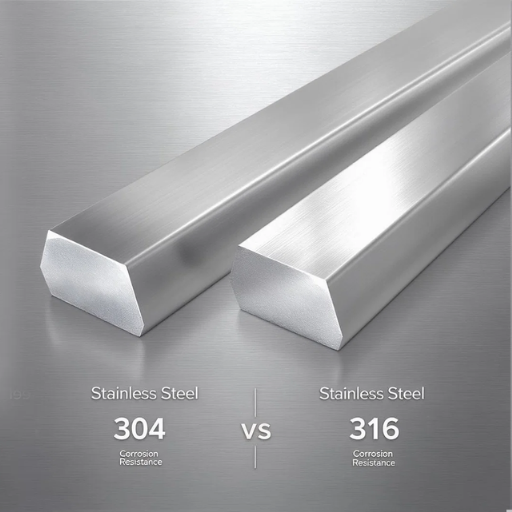
321 vs 304 vs 316 vs 347
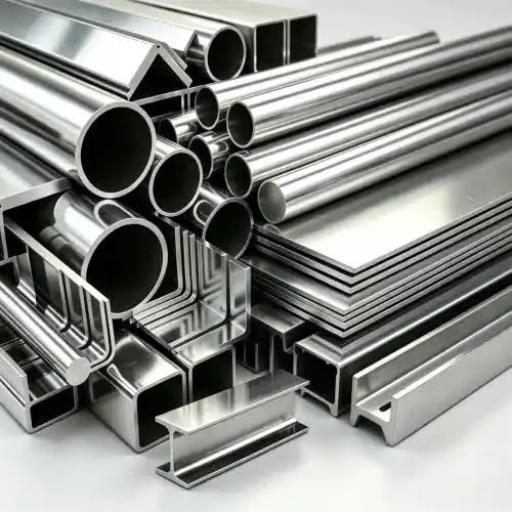
Four grades, four jobs. The table is the short version.
| Grade | Stabilizer | PREN | Chloride service | High-temperature service | Choose when |
|---|---|---|---|---|---|
| 304 | None | ~18 | Moderate; not seawater | To ~425 °C before sensitization matters | General ambient service, no chlorides, lowest cost |
| 304L | None (low carbon) | ~18 | Moderate | To ~425 °C; welded, no anneal | Welded ambient service where carbon is the risk |
| 321 | Ti ≥5×(C+N) | ~18 | 304-level; not seawater | 425–850 °C | Welded high-temperature pipe, no PWHT |
| 316L | None (low carbon) | ~24–26 | Good to ~100 ppm Cl at moderate temperature | Lower than 321 | Chlorides, mild acids, sanitary service |
| 347 | Nb+Ta ≥10×C | ~18 | 304-level | 425–900 °C; best knife-line resistance | Top of the range, severe cycling, refinery service |
321 vs 304 Stainless Steel
321 and 304 share chromium, nickel, and room-temperature minimums. 321 adds titanium and costs 10–25% more. Below the sensitization band, that premium buys nothing.
Use 304 when the line runs cold, the weld won’t see 425 °C, and chlorides are absent. Use 321 when the weld will sit in or cycle through the band and can’t be annealed.
321 vs 316L Stainless Steel
This is where most mis-specification happens. 316L adds 2–3% molybdenum, which raises PREN to roughly 24–26 and improves pitting and crevice resistance. 321 has no molybdenum. Its PREN is about 18, the same family as 304.
If the service is chloride-bearing, 316L is the better austenitic choice, and duplex 2205 is better again above its limits. If the service is hot and chloride-free, 321 wins because 316L isn’t a high-temperature grade. The 304 vs 316 comparison explains the molybdenum mechanism. Titanium doesn’t replace it.
Scenario: the cooling loop specified as “stabilized.” A coastal plant specifies 321 for a cooling-water line because the buyer reads “stabilized” as “corrosion-resistant.” The water runs 150 ppm chloride at 55–65 °C. Within a year, the pipe shows pitting under gasket crevices and chloride stress corrosion cracking at the welds. The correct grade was 316L, or duplex 2205 if the chloride and temperature stay in its envelope. The 321 order wasn’t defective. It was answering a different question.
321 vs 347 Stainless Steel
347 uses niobium plus tantalum at 10 × carbon instead of titanium. Niobium carbide is more thermally stable than titanium carbide, so 347 resists knife-line attack better and holds up at the top of the temperature range. It also costs more.
Choose 321 for the middle of the band: 425–815 °C, clean service, moderate cycling, and a price-sensitive project. Choose 347 for superheater tubing, severe thermal cycling, refinery service where polythionic acid is a risk, and any weld that will be repeatedly heated into the carbide range. Above roughly 850 °C, neither grade is the answer. Move to 310S or a nickel alloy.
The four-question decision
| Question | If yes | If no |
|---|---|---|
| Will the weld see 425–815 °C in service? | 321 or 347 | 304/304L |
| Is chloride present above ~60 °C or ~100 ppm? | 316L or duplex | Continue |
| Is the top of the range above ~850 °C or cycling severe? | 347 or 310S | 321 |
| Is creep strength required above ~537 °C? | 321H | 321 |
321 vs 321H: Carbon, Creep, and Grain Size
321H stainless steel pipe is the same alloy with more carbon and a different titanium ratio. It isn’t a stronger room-temperature grade.
| Property | 321 | 321H |
|---|---|---|
| Carbon | 0.08 max | 0.04–0.10 |
| Titanium | 5×(C+N) min, 0.70 max | 4×(C+N) min, 0.70 max |
| Grain size | Not specified | ASTM No. 7 or coarser |
| Room-temperature tensile / yield | 515 / 205 MPa | 515 / 205 MPa |
| Creep and rupture strength above ~537 °C | Baseline | Higher |
| Typical use | General high-temperature pipe | Superheater, header, high-temperature tube |
The higher carbon is the mechanism. It raises creep and stress-rupture strength above roughly 537 °C (1,000 °F), which is why 321H appears in superheater and boiler tube specifications. The coarser grain size is part of the same package.
The trade-off is corrosion. More carbon is a liability in aqueous service, and 321H isn’t an upgrade for a chloride line. Use it when the design temperature and creep regime require it, not because the data sheet looks stronger.
Heat treatment differs too. TP321 is solution annealed at 1,040 °C minimum. TP321H requires a higher temperature, but the number depends on the standard and finish: A312 specifies 1,100 °C minimum for cold-finished and 1,050 °C for hot-finished pipe, while the A213 edition reviewed here shows 1,150 °C. Put the standard and heat-treatment condition on the purchase order, and check the certificate against that standard.
For heat-exchanger tube, the A213 heat exchanger tube range covers both 321 and 321H. The tube specification isn’t interchangeable with A312 pipe, even when the chemistry is the same.
Temperature and Corrosion Limits
No ASTM standard sets a maximum service temperature for 321. That sentence is the most important one in this section.
What the mill datasheets give is an oxidation-limited guidance range. The conservative pair is about 850 °C in air and 750 °C in steam. Other published figures run to 870 °C, and some reach 900–925 °C under specific cyclic or continuous conditions. The difference comes from atmosphere, moisture, thermal cycling, and product form, not from a specification clause.
Use 850 °C in air and 750 °C in steam as the planning numbers. Above that, move to 310S or a nickel alloy. Don’t quote 925 °C as a limit your warranty depends on. The BSSA compilation of maximum service temperatures shows how much the published values vary, and the Rolled Alloys 321 datasheet is a useful mill-side reference.
| Environment | Verdict for 321 | Reason |
|---|---|---|
| Clean, dry air to ~850 °C | Suitable | Oxidation resistance |
| Steam to ~750 °C | Suitable | Oxidation/steam resistance |
| Above ~850–900 °C | Not suitable | Scaling; use 310S or nickel alloy |
| Chlorides above ~60 °C | Not recommended | Chloride SCC risk |
| Chlorides around 100 ppm | Borderline | Practical limit for 18-8 grades; 316L or duplex preferred |
| Seawater | Not suitable | PREN ~18; pitting and SCC |
| Polythionic acid, refinery service | Often suitable | Stabilization improves resistance |
The polythionic acid case is 321’s quiet advantage. Refinery piping that sees sulfur-bearing streams and shutdown moisture can crack along sensitized grain boundaries. The stabilized chemistry is why 321 and 347 are specified there. It’s a better reason to buy the grade than a vague “corrosion resistance” claim.
Welding, Knife-Line Attack, and Heat Treatment
321 welds well by all standard fusion processes. The complication is the filler and the heat-affected zone.
ASTM A312 Table 6 lists ER321 as the matching filler. In practice, many fabricators use ER347 or E347 because titanium doesn’t transfer reliably across the arc. Both routes exist. The WPS should say which one, and the procedure qualification should match the service. Don’t assume “321 pipe” means “321 filler.”
Knife-line attack is the 321-specific failure mode. The welding arc heats a narrow band next to the fusion line above roughly 1,250 °C, which dissolves the titanium carbide. On cooling, or during a later post-weld heat treatment in the 450–850 °C range, chromium carbide precipitates in that narrow band instead. The result is a sharp corrosion groove along the weld line, often less than a millimetre wide.
347 resists this better because niobium carbide dissolves at a higher temperature. That’s the technical reason 347 is preferred at the top of the range. It’s also why a post-weld heat treatment intended to relieve stress can make 321 worse. Heat the weld into the carbide range without a subsequent solution anneal, and the stabilization is undone in the band that matters.
The heat treatments aren’t interchangeable:
- Solution anneal: 1,040 °C minimum for TP321, water or rapid cool. This dissolves carbides and restores the HAZ.
- Stabilization anneal: typically 870–900 °C for 2–4 hours, air cool. A312 S6 and A269 S3 set the temperature “as agreed” between purchaser and vendor, so the purchase order has to state it.
- Stress relief: 870 °C for about 1 hour relieves most residual stress, but it can precipitate grain-boundary carbides. It isn’t a substitute for solution annealing after knife-line attack.
One clause deserves a place on the purchase order. A213 Table 3 note H and A269 6.3 warn that solution treating above 1,950 °F (1,065 °C) may impair resistance to intergranular corrosion after later sensitizing exposure in TP321.
When the buyer specifies it, a lower-temperature stabilization or re-solution anneal follows the high-temperature anneal. The clause exists because the higher temperature that helps 321H’s grain structure can hurt 321’s corrosion resistance. Specify which one you need.
Scenario: the stress relief that looked like a fix. A fabricator welds a 321 spool, then stress-relieves the assembly at 870 °C for one hour to calm dimensional movement. The procedure looks conservative. If the weld had a knife-line-susceptible HAZ, the stress relief can precipitate chromium carbide in exactly that band. The fix is a solution anneal at 1,050–1,100 °C and a water quench, not a longer hold at 870 °C. “Heat treatment” isn’t one process. Name the process, the temperature, and the cooling rate on the PO.
How to Specify and Verify 321 Stainless Steel Pipe
A 321 purchase order needs more than the grade name. The minimum line is:
- Grade and UNS: TP321, UNS S32100, or TP321H, UNS S32109.
- Standard: ASTM A312 for pipe, A213 for heat-exchanger tube, A269 for general-service tube.
- Size: NPS and schedule, or OD and nominal wall.
- Construction: seamless or welded.
- Heat treatment: solution annealed; stabilization anneal if required.
- Testing: hydrostatic or nondestructive electric test; A262 Practice E if intergranular corrosion resistance is critical.
- Documentation: mill test report with heat number, chemistry, mechanicals, and heat-treatment record.
- Marking: grade, standard, heat number, and size.
At goods-in, read the chemistry against the ratio, not just the grade stamp. Carbon must be 0.08% or below for 321, titanium must be at least 5 × (C + N), and titanium must not exceed 0.70%. For 321H, carbon must be 0.04–0.10% and titanium at least 4 × (C + N). A certificate that lists titanium as “present” or “5×C min” without a measured value isn’t a verification.
Handheld XRF is useful for alloy identity, but it doesn’t measure carbon. It also struggles with light elements unless the instrument is calibrated for them. If carbon is the acceptance criterion, order laboratory combustion analysis. If titanium is the acceptance criterion, confirm the XRF can measure it and that the result is reported, not just “pass.”
A262 Practice E is the intergranular corrosion test. A312 S7 and A269 S4 invoke it when specified. For a stabilized grade, the specimen is tested in the sensitized condition.
That’s the condition that simulates the weld HAZ after service exposure. If the project has a corrosion engineer, this is the clause to discuss before the order, not after the first rejection.
Hydrostatic or nondestructive electric testing is mandatory per length under A312, at the manufacturer’s option unless the buyer specifies otherwise. A213 tube adds 100% hydro and NDE. The test report should name the method, the pressure or the standard, and the length tested.
The common mistakes are predictable:
- Specifying 321 for chlorides, where 316L or duplex is the correct answer.
- Accepting a “321” certificate with no titanium value.
- Using 304 filler on a 321 weld and assuming the base metal does the work.
- Expecting 321H to be stronger at room temperature.
- Ordering 321 where 304L would pass, and paying a 10–25% premium for nothing.
- Quoting A269 mechanicals from an A213 table.
The quality control process covers spectrographic verification, ultrasonic testing, and hydrostatic testing on our side. The A312 guide covers the standard in more detail. If you want a second read on a certificate before shipment, send it to our technical team.
Where 321 Stainless Steel Pipe Earns Its Place
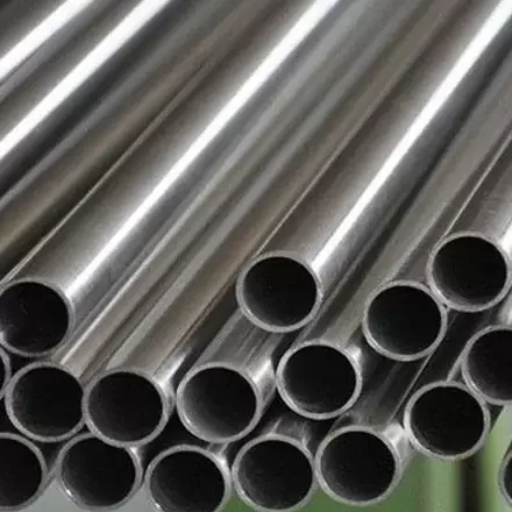
321 is a high-temperature pipe grade. The applications below share one condition: a weld that sees the 425–815 °C band and won’t be solution annealed after fabrication.
| Application | Why 321 fits |
|---|---|
| Heat exchanger and superheater tubes | A213 tube banks in the sensitizing band; 321H where creep governs |
| Boiler and pressure-vessel piping | As-welded HAZ corrosion resistance at temperature |
| Expansion joints and bellows | Thermal cycling; stabilized weld HAZ |
| Exhaust manifolds, stacks, turbochargers | Cyclic 600–850 °C service; oxidation resistance |
| Refinery high-temperature piping | Polythionic acid SCC resistance |
| Furnace and heat-treat fixtures | Oxidation resistance to ~850 °C |
| Aircraft exhaust components | High-temperature oxidation; AMS 5557 coverage |
The seamless pipe range covers pressure-service construction; welded pipe is usually the lower-cost choice for large-diameter, lower-pressure lines. The seamless vs welded comparison explains where the boundary sits.
One application where 321 is usually the wrong default is sanitary service. 316L is the hygienic standard for food, dairy, and pharmaceutical tubing. 321 can meet the mechanical and corrosion requirements, but its titanium oxide and carbon nitride inclusions polish poorly.
They show up as minute dark specks during grinding or buffing. The effect is cosmetic, not a corrosion defect, but a sanitary finish is a cosmetic specification as much as a metallurgical one.
FAQ
Is 321 stainless steel better than 304?
Only for the job it was designed for. 321 is better when a weld will sit in or cycle through 425–815 °C and can’t be solution annealed. Below that band, 304 is cheaper and performs the same. In chlorides, neither is the right grade.
Is 321 stainless steel suitable for seawater?
No. 321 has a PREN of about 18, the same family as 304. It’s susceptible to pitting, crevice corrosion, and chloride stress corrosion cracking in seawater. Use 316L for mild chloride service, or duplex 2205 / super duplex for seawater, depending on temperature and chloride level.
What is the difference between 321 and 321H?
321 has 0.08% max carbon and titanium at 5 × (C + N). 321H has 0.04–0.10% carbon, titanium at 4 × (C + N), and a grain size of ASTM No. 7 or coarser. 321H is the creep grade for service above roughly 537 °C. Room-temperature minimums are the same.
Is 321 better than 347?
It depends on the top of the range and the welding sequence. 347’s niobium stabilization is more resistant to knife-line attack and holds up better above roughly 850 °C. 321 is adequate and usually cheaper for 425–815 °C service with moderate cycling. Above 850 °C, move to 310S rather than either grade.
What is the maximum temperature for 321 stainless steel pipe?
No ASTM standard sets one. Mill datasheets commonly guide to about 850 °C in air and 750 °C in steam, with some sources quoting 870–925 °C under specific conditions. Treat those as oxidation-limited guidance, not a specification limit. Above roughly 850 °C, 310S or a nickel alloy is the safer specification.
The Grade Is a Heat-Decision, Not a Corrosion-Decision
321 stainless steel pipe earns its cost in one place: a welded joint that will sit in or cycle through 425–815 °C and won’t get a solution anneal. Titanium ties up the carbon, chromium stays in the matrix, and the heat-affected zone keeps its corrosion resistance. That’s the purchase.
It doesn’t earn its cost in chlorides, where 316L or duplex is the better answer. It doesn’t earn its cost below the sensitization band, where 304 is cheaper. It doesn’t earn its cost above roughly 850 °C, where 310S takes over. And it doesn’t earn its cost when the mill certificate has no titanium value to prove the grade.
The four decisions are simple: 304 for ambient, 321 for the heat band, 316L or duplex for chlorides, 347 or 310S for the top of the range. The fifth decision is procurement: specify the standard, the heat treatment, and the test, then verify the certificate against them.
Ready to specify TP321? Send the line list, the design temperature, and the governing standard. We’ll confirm the grade, wall, heat treatment, and documentation package, and quote from our Wenzhou mill. Request a TP321 quote.