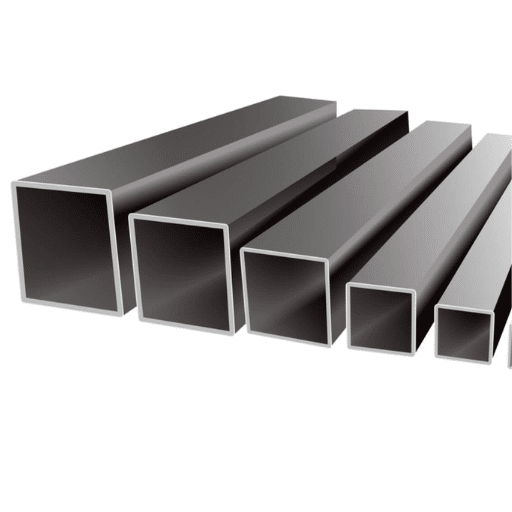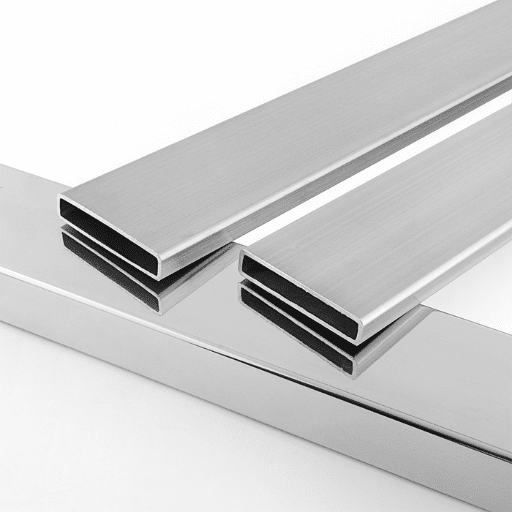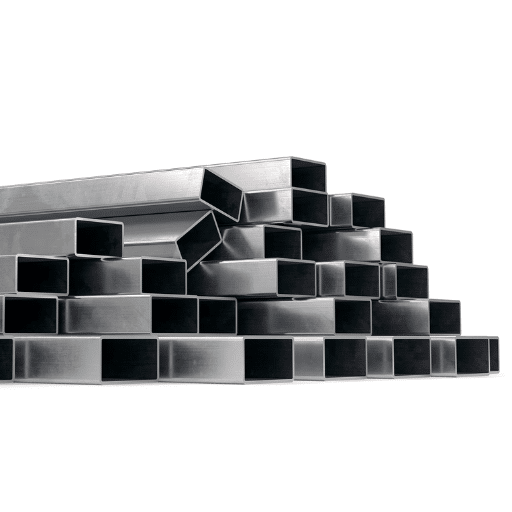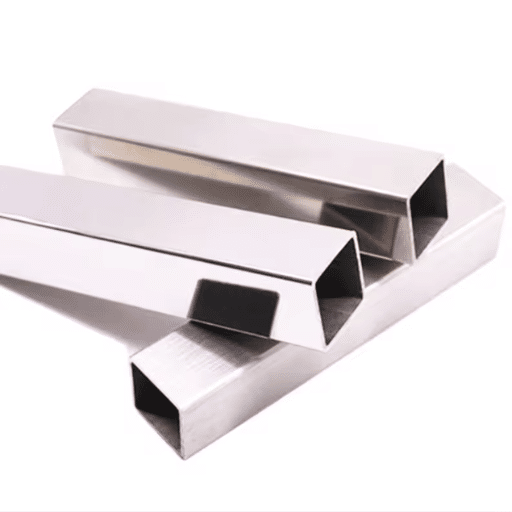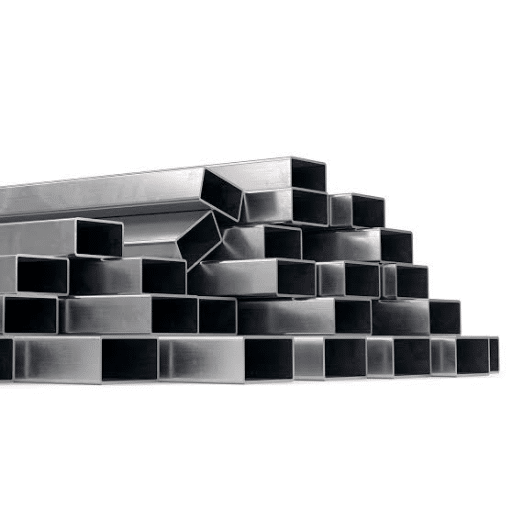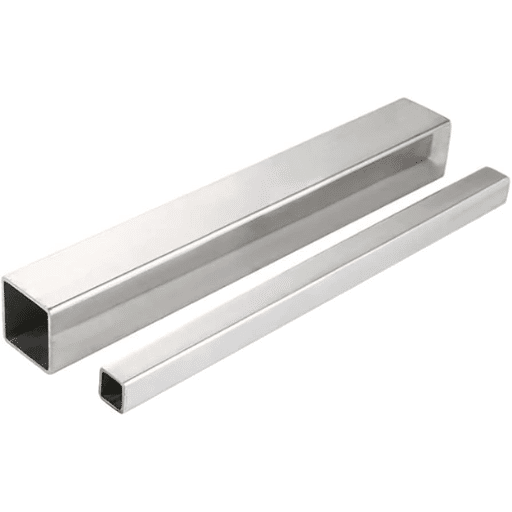

Stainless steel rectangular tube for handrails comes down to two calls made in order. Choose 304 (MT-304/304L) for interior and inland work, and 316L (MT-316L) where chlorides reach the metal, on a coast, around a pool, or beside a deicing-salt road. Then match the profile to the member: 80 x 40, 50 x 30, and 40 x 20 mm rectangular tube are the workhorse top-rail and base-rail sections with walls around 1.5 to 3.0 mm, set over square posts and round grab rails. Grade follows the environment. Shape follows the job.
The rail on a beachfront balcony and the rail in a downtown office lobby look identical in a supplier photo. One is specified in 316L with a vertical brushed grain so rain rinses the salt off. The other is 304 with a No.4 finish. Order them the wrong way round and that is why a “stainless” handrail rusts in a single winter, or costs more than it needed to, while the shop that mixed them up absorbs the rework.
We are the Wenzhou manufacturer that forms, welds, anneals, and finishes rectangular, square, and round stainless tube on the same floor, so this guide reflects how the material actually behaves in a railing, not a reseller’s brochure. By the end you can name the grade, the profile, the finish, and the wall for every member of a balustrade, and write the whole material set on one RFQ. Start with our complete stainless steel rectangular tube guide for the wider frame, or read on for the railing decision.
Key Takeaways
- For stainless steel handrails, 304 is the correct default for interior and inland work; 316L is required where chlorides reach the metal, on the coast, at a pool, or along deicing-salt roads, because its molybdenum lifts PREN from roughly 18 to 20 up to about 24 to 25.
- The workhorse rectangular top-rail and base-rail profiles are 80 x 40, 50 x 30, and 40 x 20 mm tube with walls around 1.5 to 3.0 mm; larger profiles such as 100 x 50 and 120 x 60 mm carry glass-balustrade frames.
- A railing is never a one-shape order. Use rectangular tube for the long horizontal members, square tube for posts and vertical balusters, and round tube for a classic grab rail.
- Finish is the second decision, not a substitute for grade. Smooth No.4, hairline, or mirror surfaces shed salt; mirror 304 still tea-stains in aggressive coastal air.
- Rectangular railing tube is welded mechanical tubing under ASTM A554 (MT-304/MT-316L), which supplies the section, not the engineered rail. Code and structural design remain the specifier’s responsibility.
Why Rectangular Tube Is the Specifier’s Rail Material

Rectangular stainless tube is what modern handrails and balustrades are built from: the flat-faced top rail you grip or mount glass against, the base rail running along the floor, and the rectangular frames that carry glass or panel infill. Its flat faces give clean right-angle joints, simple miters, flat mounting surfaces for glass clamps, and the low, modern line that drives much of today’s architectural demand.
Getting the terminology right on the order stops the costliest errors. A handrail is the grab-support member along a stair or ramp, roughly 34 to 38 inches up. A guardrail, or guard, is the fall-protection barrier on an elevated open side, commonly 42 inches or higher for commercial work, and it carries the infill and load rules. A balustrade, the UK and EU term for the whole assembly, combines handrail or top rail, posts, balusters, and often a base rail. One top rail can serve as both guard top rail and handrail, but only if it meets both sets of rules, which we get to in the code section.
Round stainless tube remains the classic grip and the natural choice when a run curves or a rail must feel perfectly round in the hand. Rectangular earns its place where the design wants a flat face, a crisp line, or a low-profile section that still spans. For the deep shape-and-behavior comparison, our square vs rectangular tube guide covers why orientation and load direction matter in a rail.
Which Member of the Rail Uses Which Tube
Specifying stainless steel rectangular tube for handrails starts by treating a balustrade as an assembly: good specifiers assign a shape to each job in it. Rectangular tube carries the long horizontal runs where a flat face and low profile read as architectural. Square tube carries the posts and vertical balusters, where loads arrive from every direction and there is no weak axis to brace. Round tube stays the grab rail where the hand must close around it.
| Railing member | Recommended tube | Why |
|---|---|---|
| Top rail/handrail | Rectangular, laid to the design face | Flat architectural line, mounts glass clamps, strong across long spans |
| Base rail / bottom rail | Rectangular or square | Low-profile horizontal run near the floor |
| Posts and stanchions | Square | Loads from any direction, no weak axis, clean modern vertical |
| Balusters/pickets | Round or square | Round for classic grip lines, square for flat-faced infill |
| Glass-balustrade frame | Larger rectangular (e.g., 100 x 50, 120 x 60 mm) | Stiff low-profile sections that span without a visible sag |
| Curved or grab runs | Round | Rolls into curves, comfortable to grip |
This is where a rectangular-tube mill earns its keep. Because Zhongzheng makes rectangular railing tube and stainless steel square tube on one floor, plus the round sections for grab rails, the whole balustrade’s material set can land on a single order with one mill test report and one shipment. One rail, every member, one source.
What Size Stainless Steel Rectangular Tube Is Used for Handrails?

For most handrails and balustrades, the rectangular sections that do the work are 80 x 40, 50 x 30, and 40 x 20 mm, with walls around 1.5 to 3.0 mm. The 80 x 40 profile gives the stiff, low-profile top rail across long balcony and terrace runs. The 50 x 30 and 40 x 20 sections suit lighter residential rails, base rails, and infill frames. Glass-balustrade frames and heavy guard posts step up to 100 x 50 or 120 x 60 mm, while posts and baluster verticals typically run square, from 20 x 20 up through 40 x 40 mm.
Wall thickness follows span and infill weight, not a fixed rule. A public guard with glass panels needs a heavier wall and a stiffer section than a residential stair rail, and a structural engineer should size both. For the full A x B and wall reference, our stainless steel rectangular tube size chart lists the family this article only names.
Geometry is the part supplier pages skip, and it decides whether a 6 meter rail run sits flush. Ask for straightness and twist limits in the ASTM A554 range, roughly 1 mm per meter of straightness and no more than about 2 mm per meter of twist for structural sections, and check the external corner radius, which governs whether commercial railing fittings and glass clamps seat properly. A section that is out of square or slightly twisted announces itself the moment you lay it across a long balcony. Confirm the section geometry with the mill before you cut.
What Grade of Stainless Steel Is Best for Handrails?
Use 304 (MT-304/MT-304L) for interior and inland stainless steel handrails, and 316L (MT-316L) where chlorides reach the metal: coastal and marine air, pool enclosures, deicing-salt roads and parking structures, and industrial washdown areas. The difference is molybdenum in the 2 to 3 percent range. It lifts the pitting resistance equivalent number, or PREN, from roughly 18 to 20 in 304 to about 24 to 25 in 316L, which is what separates a rail that stays clean from one that develops the brown streaking of tea staining within months.
| Rail environment | Grade to specify | Why |
|---|---|---|
| Interior offices, hotels, malls, gyms | 304 (MT-304/304L) | No chlorides reach the metal; lowest cost for the same look |
| Inland outdoor, dry climate | 304 | Low chloride load; revisit if the site borders a salted winter road |
| Coastal and marine air | 316L (MT-316L) | Molybdenum resists airborne salt; PREN roughly 24 to 25 |
| Pool enclosures and surrounds | 316L | Chlorine vapor and splash attack 304 within months |
| Deicing-salt roads and parking structures | 316L | Salt-laden road mist is the documented 304 failure mode |
| Industrial or food washdown | 316L | Regular chemical and water cleaning strips a weaker alloy |
The evidence that grade, not appearance, decides railing life is documented, and it is worth quoting precisely. In a Nickel Institute case study, a type 304 handrail in Pittsburgh was badly corroded and stained after a single winter of deicing-salt road mist, while a type 316 handrail in Chicago remained clean after five years in similar service. At New York’s Queens West Pier, even type 316 railings that were splashed at high tide stained, and the study advises a more highly alloyed grade, such as duplex 2205, with a smooth finish right at the shoreline. The lesson for a specifier: match the alloy to the exposure first, because no profile or polish fixes a grade that the chemistry cannot support.
A commercial pool project near the water made that point the hard way. The builder ordered 304 rectangular tube with a brushed finish because the interior locker rooms had used 304 for years without issue. The interior rails stayed perfect. The pool-deck rail, dosed with chlorine vapor and splash, showed brown streaking along the flats within eight months. The fix was not a different finish or a thicker wall. It was MT-316L, specified because the environment demanded it. The honest corollary is that 304 is often the right answer. An inland office stair in 304 No.4 will outlast the building and cost less than paying for molybdenum the environment never asked for.
Our 304 vs 316L grade comparison for rectangular tube works through the full decision. Not sure which side of the line your site sits on? Tell our technical team the location and exposure, coastal, pool, deicing-salt road, or interior, and we confirm the grade within 24 hours.
The Finish Is the Second Decision for a Visible Rail
For a rail people touch and photograph, the finish is the second decision, made only after the grade. Architectural railing tube ships in No.4 brushed, hairline, and mirror #8, and for exterior work the specification usually names a smooth finish with the grain running vertically, so rain rinses salt and soil straight off the face instead of holding it against the passive film. Rough and mill finishes give chlorides anchor points, which was a factor in the Pittsburgh failure the Nickel Institute documented. A vertical grain also has to be matched across mitered joints, because a rail that changes grain direction at every corner reads as a mistake to any eye.
Welds on a visible rail are where finishes die. Plan to weld on a flat table, grind and blend, then finish the joint to match the parent tube before transport, and passivate afterward to rebuild the oxide layer. Where field welding is unavoidable, the restoration protocol matters more. Our stainless steel rectangular tube surface finish guide covers the grits, the Ra ranges, and the weld-restoration steps in full, because that article owns the finish science this one only names.
Hold one rule above the rest. Finish never replaces grade. A mirror-polished 304 rail in salt air will still tea-stain, just more slowly and more visibly than a brushed one. If the environment calls for 316L, the finish is a cosmetic decision on top of a corrosion decision that is already made.
Building-Code Essentials When Specifying Railing Tube

Building codes turn a material order into a safety decision, and the terms that decide it are guard versus handrail. Guards are required where an elevated surface drops more than about 30 inches, and commercial guards commonly stand at least 42 inches high, though local amendments can raise that. Handrails along stairs and ramps sit 34 to 38 inches above the nosing or surface. Infill follows the 4 inch sphere rule: no opening through which a 4 inch sphere can pass, which is what spaces balusters. Codes also assign structural loads to the assembly, commonly a 200 lbf concentrated load and a 50 lbf per foot uniform load on the top rail, and 50 lbf over one square foot on infill.
The caveat a mill has to state plainly: ASTM A554 supplies the tube, not the engineered rail. A railing that meets code is a designed assembly, and the structure behind it should be sized by an engineer to the governing standard. Tube supply is the raw material for that assembly, and nobody should read a supplier page as a structural certificate.
For handrails serving accessible routes, the profile geometry changes the order. The ADA Standards set graspability rules: a circular gripping surface of 1.25 to 2.0 inches outside diameter, or a non-circular surface with a perimeter of 4 to 6.25 inches and rounded edges, with at least 1.5 inches of clearance to the wall and 12 inches of horizontal extension at the top and bottom of the run. That means a rectangular top rail is graspable only if it is designed as one. A flat, wide rectangular bar that looks modern can fail as an accessible handrail, because a hand cannot close around it.
Here is the failure mode that inspection catches. A contractor built an exterior stair with a 42 inch guard whose top rail doubled as the handrail, sized and loaded correctly. The inspector passed the height, the infill spacing, and the structural calcs, then flagged the top rail itself: its rectangular profile was too wide to be graspable under the accessible-route rules, so the assembly needed a separate round handrail mounted on the guard. The design was legal as a guard and unusable as a handrail, and the distinction cost the contractor a fabrication cycle to fix. Specify which member does which job before you order the tube.
Confirm the current IBC and ADA editions and your local jurisdiction before you commit. This article is informational, not an engineered design. The honest position is part of how we specify, and it protects you from copying a number out of a blog and into a permit set.
Fabricating and Ordering Railing Tube That Keeps Its Finish
Fabricate visible railing work in the shop and pre-finish it, because weld repair is far easier on a bench than on a scaffold. Weld with TIG, use ER308L filler for 304 and ER316L for 316L, keep carbon-steel tools and brushes off the stainless, grind out heat tint, and match the grain when you miter. Order pre-polished tube with its protective film or PVC sleeving still on, and strip it only after handling and installation are done, so the finish survives the site. That is the whole discipline in a paragraph; the restoration protocol in the surface finish guide is the detailed reference.
Sourcing the Whole Rail from One Manufacturer: The One-Line RFQ
When you have decided grade, finish, and profile per member, the order line removes every remaining ambiguity. Write the shape, outer dimensions, wall, grade, finish, length, and governing standard for each member. An example covering a coastal balustrade:
Rectangular tube, 80 x 40 x 3.0 mm, ASTM A554 MT-316L, hairline finish, 6 m lengths. Square tube, 40 x 40 x 3.0 mm, MT-316L, hairline, posts. Round tube, 42.4 mm OD x 3.0 mm, MT-316L, hairline, grab rail. EN 10204 Type 3.1 documentation.
A bill of materials written that way lets a mill quote the whole rail at once. Ask for the mill test report that traces each heat, and for EN 10204 Type 3.1 certification or third-party inspection from SGS, TUV, or Bureau Veritas where the project demands it. Because every heat is spectrographically verified before forming and finished sections are dimensionally gauged across the flats, wall, straightness, and corner radius at final QC, the MTR reflects what is actually in the crate. Rectangular railing tube like this ships as welded mechanical tubing under ASTM A554, and our explainer on the ASTM A554 standard reads the scope and MT grades against your own project.
Send us your railing bill of materials– every member, shape, size, wall, grade, and finish- and our technical team confirms availability, documentation, and lead time within 24 hours. Ask for a sample MTR first if you want to see the traceability before you commit.
Frequently Asked Questions
What size stainless steel tube is used for handrails?
For most handrails, 80 x 40, 50 x 30, and 40 x 20 mm rectangular tube with 1.5 to 3.0 mm walls carries the top rail and base rail. Glass-balustrade frames step up to 100 x 50 or 120 x 60 mm, and posts run square from 20 x 20 up to 40 x 40 mm.
Is 304 or 316 stainless steel better for handrails?
304 is the correct default for interior and inland work. Choose 316L for coastal, marine, pool, deicing-salt, or industrial-washdown exposure, because its molybdenum content resists the chlorides that tea-stain 304.
Can ASTM A554 rectangular tube be used for railings?
Yes. ASTM A554 welded stainless mechanical and ornamental tube in MT-304 and MT-316L is the standard product for rectangular railing tube. It supplies the section; the assembled rail still needs engineered design to the governing code.
What is the difference between a handrail and a guardrail?
A handrail is the grab-support member along stairs and ramps at roughly 34 to 38 inches. A guardrail is the fall-protection barrier on elevated open sides, commonly at least 42 inches, with infill spacing and load requirements. One top rail can serve as both only if it meets both sets of rules.
How far apart should balusters be?
The 4 inch sphere rule governs: no opening may pass a 4 inch sphere, which for typical balusters lands spacing around 4 inches on center or less, depending on baluster width. Verify the current code for your jurisdiction.
Does stainless steel rust near the ocean?
Stainless resists corrosion, it is not rust-proof. In salt air, 304 can tea-stain within months, which is why coastal railings are specified in 316L with a smooth finish and vertical grain. Right at the shoreline, more highly alloyed grades such as duplex 2205 are advised.
Is round or rectangular tube easier to grip for a handrail?
Round tube is the classic comfortable grip and meets accessibility graspability easily within a 1.25 to 2.0 inch outside diameter. A rectangular rail can qualify as graspable too, but only if its perimeter falls in the 4 to 6.25 inch range with rounded edges, so design it as a handrail rather than assuming it is one.
Conclusion: Choose the Grade for the Environment, the Profile for the Member
Ordering stainless steel rectangular tube for handrails is a four-step decision. Choose the grade for the environment first, 304 for interior and inland, 316L where chlorides reach the metal. Choose the finish second, because a smooth surface with a vertical grain is what keeps an exterior rail looking like stainless. Choose the profile for the member third, rectangular for the horizontal runs, square for the posts, round for the grab rail. Choose the size and wall last, sized to the span and the infill, with geometry limits that keep a long run flush.
Make those calls in order and the rail you specify will be stiff where it spans, corrosion-resistant where it lives, and presentable for the life of the structure. Write the whole rail on one RFQ, rectangular top rail, square posts, round grab rails, one mill, one MTR package, one shipment. Send your bill of materials to our technical team, and we confirm grade, dimensions, finish, MOQ, and lead time within 24 hours.