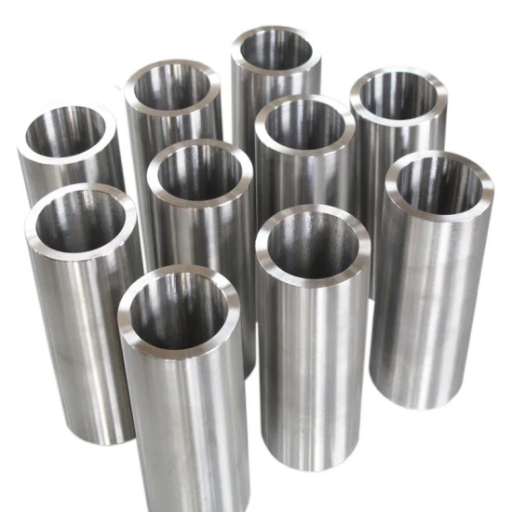
Stainless steel rectangular tube sizes are expressed as the outside dimensions across the flats followed by wall thickness, in an A × B × wall format. Common stock sizes range from 20 × 10 mm up to 200 × 100 mm, with walls from 1.0 mm to 5.0 mm and a standard 6 m length. This guide is the complete, searchable reference: metric and imperial size charts, wall thickness options, weights, lengths, tolerances, and how to order a custom stainless steel rectangular tube size that fits your build.
Size is where most buyers make their decision, and where most RFQs go wrong. A single missing number, or a wall thickness quoted in the wrong unit, turns a perfectly specified order into a container full of unusable tube. This is exactly why a distributor’s one-column size list isn’t enough. This article is the data-complete reference you would expect from a mill, not a reseller, and it pairs with our complete stainless steel rectangular tube guide for grades, standards, and finishes.
Here is what this guide covers: how to read a size designation, a metric dimensions chart, an imperial chart with gauge conversion, wall thickness options, a weight chart in kg/m and lbs/ft, standard lengths and cut-to-length, dimensional tolerances, custom-size capability, and how to verify an order before it ships. All figures follow ASTM A554 and EN 10296-2 conventions. European buyers will recognize these as stainless steel rectangular hollow section (RHS) sizes; our guide to stainless steel RHS sizes and terminology covers the EU naming.
Key Takeaways
- A rectangular tube size is written A × B × wall, outside dimensions across the flats first, then wall thickness (e.g., 40 × 20 × 2 = 40 mm long side, 20 mm short side, 2 mm wall).
- Common stock metric sizes run from 20 × 10 mm to 200 × 100 mm; walls typically range 1.0–5.0 mm, with 6 m as the standard length.
- Wall thickness drives weight, stiffness, and price. A 40 × 20 mm tube in 1.6 mm wall weighs 1.38 kg/m; in 2.6 mm wall it weighs 2.10 kg/m.
- US buyers quote gauge (11 ga = 3.05 mm); metric buyers quote mm. The conversion table below bridges the two.
- Custom A × B × wall sizes are available with a ~500 kg minimum order; a mill confirms feasibility, tooling, and lead time before you commit.
How to Read a Stainless Steel Rectangular Tube Size

The most common specification error isn’t the grade or the finish. It’s the size callout. A stainless steel rectangular tube size uses the outside dimensions across the flats, long side first, followed by wall thickness:
A × B × wall, e.g., 40 × 20 × 2 = 40 mm long side, 20 mm short side, 2 mm wall.
A complete specification adds length, grade, and standard. In full form, an order line reads:
304 / 40 × 20 × 2 × 6000 mm / ASTM A554 / brushed finish
Breaking that down: 304 is the grade, 40 × 20 is the outside dimension across the flats, 2 is the wall thickness in mm, 6000 mm is the length, ASTM A554 is the specification, and brushed is the surface finish. Omit any one of these and you leave room for a costly assumption.
Three mistakes show up repeatedly on RFQs. First, forgetting the wall entirely, which leaves the mill to guess. Second, mixing units, such as ordering a “40 × 20” tube but thinking in inches. Third, quoting the size without a length, which turns a 6 m and a 6.1 m order into a shipping surprise.
When you understand how welded rectangular tube is manufactured, the format makes more sense: the outside dimension is set by the forming rolls, and the wall by the strip thickness that feeds them. How welded rectangular tube is manufactured covers that process in detail.
Stainless Steel Rectangular Tube Sizes Chart (Metric)
Metric buyers work in millimetres, and the size chart below is the one most fabricators and engineers reference. It is curated from the most commonly stocked sizes, ordered small to large. The full production envelope extends further; the larger end is available on order.
| Size A × B (mm) | Common Wall Thicknesses (mm) | Standard Length |
|---|---|---|
| 20 × 10 | 1.0, 1.2, 1.5 | 6 m |
| 25 × 13 | 1.0, 1.2, 1.5 | 6 m |
| 30 × 15 | 1.0, 1.2, 1.5 | 6 m |
| 30 × 20 | 1.0, 1.2, 1.5, 2.0 | 6 m |
| 40 × 20 | 1.0, 1.2, 1.5, 2.0, 2.6 | 6 m |
| 40 × 30 | 1.2, 1.5, 2.0 | 6 m |
| 50 × 25 | 1.2, 1.5, 2.0 | 6 m |
| 50 × 30 | 1.2, 1.5, 2.0, 2.6, 2.9 | 6 m |
| 60 × 40 | 1.2, 1.5, 2.0, 2.6, 2.9 | 6 m |
| 75 × 45 | 1.5, 2.0, 2.6 | 6 m |
| 80 × 40 | 1.5, 2.0, 2.6, 3.0, 4.0, 5.0 | 6 m |
| 80 × 60 | 1.5, 2.0, 2.6, 3.0 | 6 m |
| 90 × 50 | 2.0, 2.6, 3.2 | 6 m |
| 100 × 50 | 1.5, 2.0, 2.6, 3.0, 4.0 | 6 m |
| 100 × 60 | 2.0, 2.6, 3.0, 4.0 | 6 m |
| 100 × 80 | 2.0, 2.6, 3.0, 4.0 | 6 m |
| 120 × 60 | 2.0, 2.6, 3.0, 4.0 | 6 m |
| 120 × 80 | 2.0, 3.0, 4.0 | 6 m |
| 150 × 100 | 3.0, 4.0, 5.0, 6.0 | 6 m |
| 200 × 100 | 3.0, 4.0, 5.0, 6.0 | 6 m |
[Visual: labelled cross-section diagram showing A (long side), B (short side), wall thickness t, and internal/external corner radius.]
The sizes in bold below are the workhorses of the stainless steel rectangular tube range. They dominate handrail, balustrade, frame, and machine-guard builds across every market, and they are the ones most suppliers hold in stock:
40 × 20, 50 × 25, 60 × 30, 80 × 40, 100 × 50, 120 × 60 mm, usually in 1.5 mm and 2.0 mm walls. Some catalogs list the shorter side first, so “20 × 40” in a supplier table means the same 40 × 20 section.
If your application is a handrail or a frame, these are the sizes to start from. Rectangular tube for handrails and balustrade walks through which sizes and grades each job type demands.
Don’t see your size in the chart? Custom A × B × wall combinations are produced on our Wenzhou forming lines. Request custom dimensions and include your application; we will confirm feasibility within 24 hours.
Stainless Steel Rectangular Tube Sizes (Imperial) & Gauge Conversion
Buyers in North America work in inches and gauges, not millimetres. The imperial chart below lists outside dimensions and wall in inches, with weight per foot for Type 304/L and 316/L. Wall is given in both decimal inches and the gauge that buyers actually quote.
| Outside Dimension (in) | Wall (in) | Gauge | Weight (lbs/ft) |
|---|---|---|---|
| 1 × 2 | .120 | 11 | 2.25 |
| 2 × 3 | .120 | 11 | 3.88 |
| 4 × 2 | .180 | 7 | 6.90 |
| 4 × 3 | .250 | 1/4 in | 10.89 |
| 6 × 4 | .250 | 1/4 in | 16.35 |
| 8 × 4 | .375 | 3/8 in | 28.69 |
Gauge to mm Conversion Table
Gauge numbers describe wall thickness, and they don’t convert cleanly to millimetres unless you use a chart. This is the conversion for the walls most commonly stocked in stainless tube:
| Gauge | Decimal Inch | Millimetres |
|---|---|---|
| 16 | .049 | 1.24 |
| 14 | .065 | 1.65 |
| 13 | .083 | 2.11 |
| 12 | .095 | 2.42 |
| 11 | .120 | 3.05 |
| 10 | .134 | 3.40 |
| 9 | .156 | 3.96 |
| 7 | .180 | 4.57 |
| 1/4 in | .250 | 6.35 |
| 3/8 in | .375 | 9.53 |
Why does this matter? A US buyer specifying “11 gauge” and a German buyer specifying “3.05 mm” are describing the same wall, but a mistake in conversion changes weight and fit. When a New York fabricator sent a size callout of “2 × 4” to a supplier, he meant 2 inches by 4 inches. The supplier read it as 2 mm by 4 mm. The discrepancy surfaced only when 3,000 lb of tube arrived at roughly one-tenth the required size, and the re-run cost him a three-week delay and a missed install date. Stating the unit and the wall thickness together removes that entire class of error.
Rectangular Tube Wall Thickness Chart & How to Choose

Wall thickness is the second most common cause of fitment failure, behind corner radius. It controls weight, stiffness, and cost, so it deserves its own decision point.
Standard wall thicknesses run from 0.5 mm to 6.0 mm, with the most commonly stocked walls being 0.8, 1.0, 1.2, 1.5, 2.0, 2.5, 3.0, 4.0, and 5.0 mm. Heavier walls to 10 mm are available on inquiry. In imperial terms, that spans .049 in through .375 in.
How do you choose? Three rules cover most decisions:
- Light loads, cosmetics, or infill: 1.0–1.5 mm. Enough strength for screens, partitions, and decorative frames.
- Structural or load-bearing: 2.0–3.0 mm. This is the range for handrails, machine guards, and equipment supports.
- Heavy structural or abrasive environments: 4.0 mm and up. Used where the tube takes impact, supports significant load, or gets machined with threads and weldments.
The grade matters as much as the wall. 304 vs 316L grade comparison explains when to pay for the extra corrosion resistance, and why fitments fail covers the geometry side of the equation.
Rectangular Tube Weight Chart (kg/m & lbs/ft)
Weight is not a cosmetic detail. It drives freight cost, structural design, and price per meter, and it is the data point missing from nearly every competitor size list. These weights are for the most commonly stocked sizes and walls.
Metric Weight (kg/m)
| Size (mm) | Wall (mm) | Weight (kg/m) |
|---|---|---|
| 40 × 20 | 1.60 | 1.38 |
| 40 × 20 | 2.60 | 2.10 |
| 50 × 30 | 1.60 | 1.88 |
| 50 × 30 | 2.90 | 3.32 |
| 60 × 40 | 2.60 | 3.73 |
| 60 × 40 | 2.90 | 4.23 |
| 80 × 40 | 2.60 | 4.55 |
| 80 × 40 | 4.00 | 6.93 |
| 80 × 40 | 5.00 | 8.47 |
| 90 × 50 | 3.20 | 6.64 |
| 150 × 100 | 8.00 | 27.70 |
| 160 × 80 | 4.00 | 14.30 |
| 180 × 100 | 5.60 | 23.00 |
| 200 × 100 | 4.00 | 18.00 |
Note how wall thickness moves weight. The 40 × 20 mm tube weighs 1.38 kg/m in a 1.6 mm wall and 2.10 kg/m in a 2.6 mm wall. A 6 m length jumps from 8.3 kg to 12.6 kg per bar. Multiply that across a container and the wall choice changes your landed cost by a measurable margin.
Imperial Weight (lbs/ft)
| Outside Dimension (in) | Wall (in) | Weight (lbs/ft) |
|---|---|---|
| 1 × 2 | .120 | 2.25 |
| 2 × 3 | .120 | 3.88 |
| 4 × 2 | .180 | 6.90 |
| 4 × 3 | .250 | 10.89 |
| 6 × 4 | .250 | 16.35 |
| 8 × 4 | .375 | 28.69 |
For section modulus, moment of inertia, and the full calculation method, the rectangular tube weight chart and section properties article holds the exhaustive data.
Standard Lengths & Cut-to-Length
The standard length for stainless steel rectangular tube is 6 m. Custom lengths are available up to 12 m, and for sea freight many buyers order container-optimized 5.8 m lengths, which fit two lengths per 20-ft container and reduce waste and freight cost per bar. North American buyers more often work in 17–24 ft random lengths.
Two practical points matter when you choose a length:
- Cut-to-length and processing: tube can be cut, polished, and bundled to your spec before shipping, so you receive bars ready for the shop floor.
- Freight planning: the difference between 6 m and 5.8 m is not the tube; it is how many lengths fit in a container. Picking a length that maximizes container utilization is the cheapest way to cut landed cost.
If you are shipping internationally, state your preferred length on the RFQ. A 6 m bar that becomes 5.8 m after a trim can be the difference between a full container and a wasted corner.
Dimensional Tolerances, Corner Radius & Shape
Tolerances are where a size chart meets reality. ASTM A554 sets the dimensional limits for welded stainless steel mechanical tubing, and knowing them protects you before the container leaves the mill.
Outside-dimension tolerances across the flats (per ASTM A554):
| Outside Dimension (in) | Tolerance (in) | Tolerance (mm) |
|---|---|---|
| Up to 1.25 | ±0.015 | ±0.38 |
| Over 1.25 to 2.5 | ±0.020 | ±0.51 |
| Over 2.5 to 5.5 | ±0.030 | ±0.76 |
| Over 5.5 to 8.0 | ±0.060 | ±1.52 |
Wall thickness tolerance is ±10% of the specified wall, with tighter ±5% available for precision work. Straightness is held to 1 mm per meter, and twist to roughly 2 mm per meter for structural tube. Concavity or convexity on any face is limited to 1% of the nominal dimension.
The corner radius is the dimension that most often breaks an assembly. The maximum external corner radius is approximately 3 × wall thickness. A handrail contractor once ordered 50 × 30 × 2 mm tube for a balustrade, only to find that his pre-fabricated spigot fittings, sized for a tight-radius tube, would not seat over the delivered corners. The tube was in tolerance, but it was the wrong radius for the fitting. That is the difference between a dimension being “correct” and a part being “fittable.” The corner radius and tolerances explained article covers this geometry in full, including how to specify the radius you need.
Stock vs Custom Sizes: What You Can Order

Not every build fits a catalogue row. A solar mounting frame in Germany needed a 120 × 60 × 3.0 mm section that no distributor stocked. The engineer had three options: weld up from plate, switch to a heavier and more expensive stock size, or find a mill that would roll the exact dimension. He sent the drawing to us, and because the profile is within our forming envelope, we ran it as a made-to-order batch at a roughly 500 kg minimum. The section arrived to dimension, on schedule, and the frame went together without shims.
That is the practical reality of custom stainless steel rectangular tube sizes:
- Non-catalogue A × B × wall combinations are produced made-to-order, with aspect ratios workable up to roughly 5:1.
- Minimum order quantity for a custom size is about 500 kg, with tooling and scheduling folded into the lead time.
- Custom lengths to 12 m and custom finishes are available alongside custom sections.
- One production floor covers standard austenitic grades through duplex 2205.
If you can draw it, we can usually quote it. Send the A × B × wall × length combination to our technical team and they will confirm feasibility, tooling, lead time, and price within 24 hours. You can also review the full stainless steel rectangular tube range and the ASTM A554 grades and testing guide before you write the RFQ.
How to Verify Your Size Before Ordering
A size chart tells you what’s available. Verification tells you what’s actually on its way to you. Three checks protect every order:
1. Measure across the flats, not corner to corner. Use a micrometer or caliper on the flat faces of the tube. Measuring corner to corner gives a false reading because the radius inflates the number. Check both the long side and the short side, then check the wall at both the seam and opposite it.
2. Confirm corner radius against your fittings. If your assembly uses pre-made spigots, clamps, or brackets, confirm the delivered tube radius seats them before it leaves the mill. A fitting sized for a 3 × wall radius will not seat on a tight-radius tube, and vice versa.
3. Demand a dimensional inspection report. A Mill Test Report (MTR) confirms the chemistry, but a dimensional inspection report confirms the geometry. We provide both with each order, backed by in-line laser dimensional gauging on the forming line, so every length is measured rather than sampled. Third-party inspection by SGS, TUV, or Bureau Veritas is supported for buyers who require independent sign-off.
For a China-sourced order, this verification step is the difference between a smooth first container and a claim filed weeks later. The MTR and dimensional report travel with the shipment.
Frequently Asked Questions
What sizes does stainless steel rectangular tube come in?
Common stock sizes range from 20 × 10 mm to 200 × 100 mm, with the most-stocked workhorse sizes being 40 × 20, 50 × 25, 60 × 30, 80 × 40, 100 × 50, and 120 × 60 mm (some catalogs list the shorter side first). Custom A × B × wall combinations are available made-to-order.
What is the standard length of stainless steel rectangular tube?
The standard length is 6 m. Custom lengths are available up to 12 m, and many sea-freight buyers order 5.8 m lengths to maximize container utilization. North American buyers commonly work in 17–24 ft random lengths.
How do I calculate the weight of stainless steel rectangular tube?
Multiply the cross-sectional area of the steel by its density (roughly 7,930 kg/m³ for 304/316). For a rectangular tube, subtract the hollow area from the outside rectangle, then multiply by length. The weight chart in this article covers the most common sizes, and the full weight article details the method and section properties.
What is the most common wall thickness?
1.5 mm and 2.0 mm are the most commonly stocked walls across the standard size range. Structural and heavy-duty work typically moves up to 3.0 mm and above.
What is the difference between stock and custom tube sizes?
Stock sizes are produced continuously and available quickly. Custom sizes are made-to-order for a specific A × B × wall or length, with a minimum order quantity around 500 kg and tooling time folded into the lead time.
How do I read 40 × 20 × 2?
40 is the long side in mm, 20 is the short side in mm, and 2 is the wall thickness in mm. The full specification adds grade, length, standard, and finish, such as 304 / 40 × 20 × 2 × 6000 mm / ASTM A554.
What does “11 gauge” mean in mm?
11 gauge equals .120 decimal inch, which is 3.05 mm. See the gauge-to-mm conversion table in the imperial section above.
Conclusion
Specifying stainless steel rectangular tube sizes comes down to four numbers: A × B × wall × length. Read the size correctly, check it against a chart you can trust, confirm the wall for weight and stiffness, and verify corner radius and dimensions before you commit a container. That sequence turns a purchase into a specification.
This is the reference we built from the mill floor, and it is backed by what we actually produce: ASTM A554, GB/T 12770, and EN 10296-2 compliance, in-line dimensional gauging on every length, and an MTR plus dimensional inspection report with each order. When a size is not in the chart, our Wenzhou lines can usually roll it.
Send us your A × B × wall × length and application, and our technical team will confirm grade, wall, weight, lead time, and price within 24 hours. Request a quote or review the complete stainless steel rectangular tube catalog to start your order.