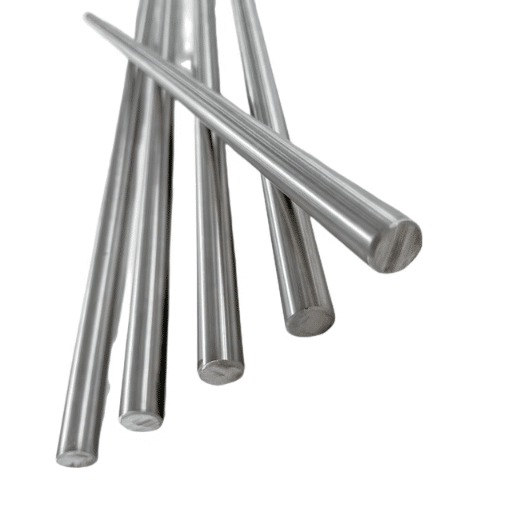
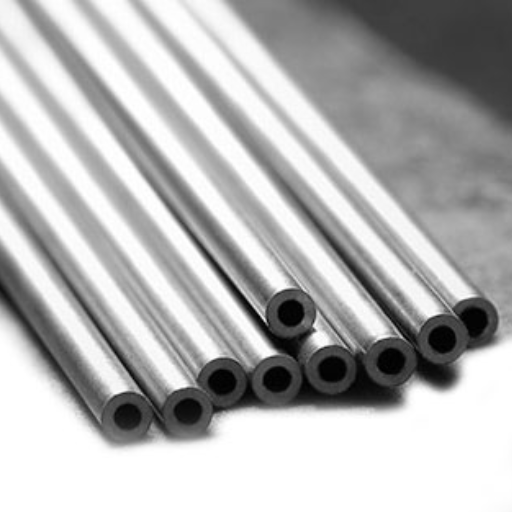
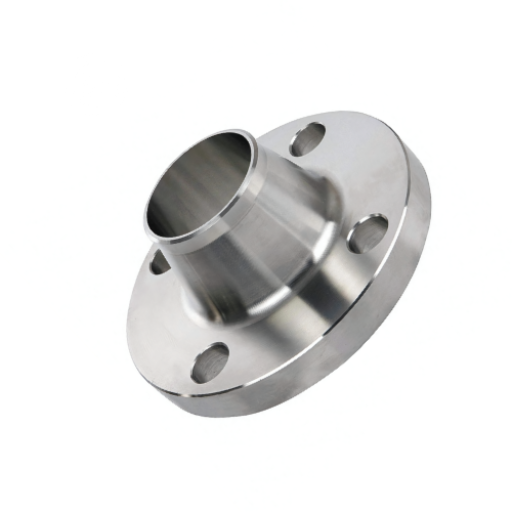
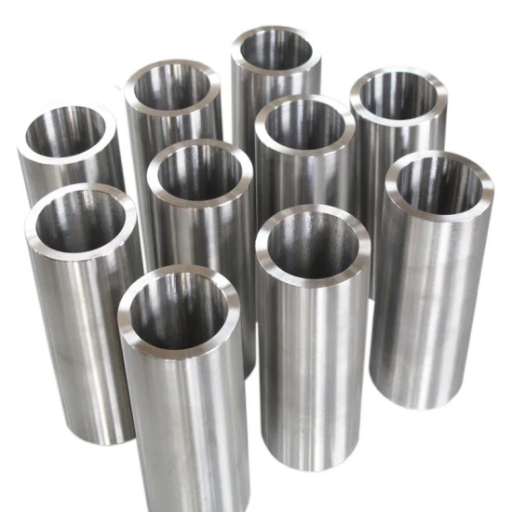
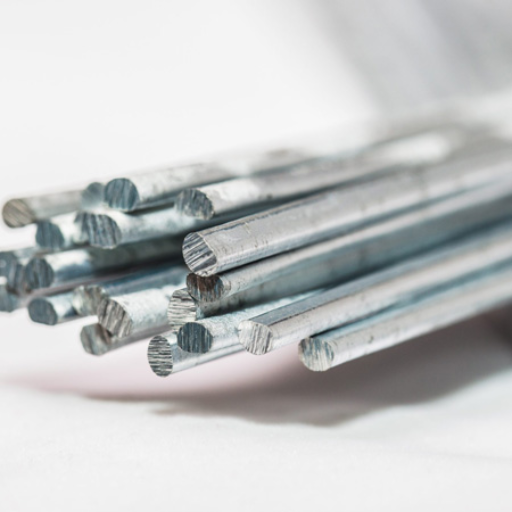
A stainless steel seamless tube is precision tubing manufactured without a welded seam, dimensionally controlled by exact outside diameter (OD) and wall thickness, and governed by ASTM standards such as A213 for heat-exchanger service and A269 for general corrosion-resistant applications. Tube products exist as OD-controlled items, while pipe products use nominal pipe size (NPS) and schedule for their specifications. The distinction between these two factors stops more procurement errors from happening in industrial sourcing than any other element.
What if your last Tuesday specification caused your project to lose three weeks while requiring the entire tube sheet to be redone?
A project engineer in Dubai specified “1-inch Sch 40S seamless stainless tube” for a heat exchanger bundle. The supplier quoted ASTM A312 seamless pipe. The material arrived at our location with an OD measurement of 33.4 mm. The tube sheet had been drilled for 25.4 mm tubes. The engineer had confused the pipe schedule with tube dimensions. The two specification systems are not interchangeable. Three weeks of machining rework and a replacement tube sheet were required because of the error.
If you specify, procure, or inspect stainless steel seamless tube, you already know standards matter. This guide explains what makes tube different from pipe, which ASTM standard applies to your application, how seamless tube is manufactured, and exactly what to include in your procurement specification so the material that arrives matches the material you designed around.
Key Takeaways
- Stainless steel seamless tube is specified by exact OD and wall thickness; pipe is specified by nominal ID (NPS) and schedule. The two are never interchangeable.
- ASTM A213 specifies minimum wall thickness for boiler and heat-exchanger service; ASTM A269 specifies average wall thickness for general service.
- Cold drawing is the central manufacturing step that gives seamless tube its precision tolerances and smooth surface finish.
- Bright annealed (BA) tubing achieves Ra <= 0.4 um without pickling; electropolishing (EP) refines that surface further for pharmaceutical and semiconductor applications.
- Continuous coil lengths up to 200 meters are available for small-diameter tubing, reducing field joints in refrigeration and hydraulic systems.
What Makes Tube Different from Pipe

Most buyers — and more than a few engineers — use “tube” and “pipe” interchangeably. They’re not interchangeable. The difference isn’t simply size. It’s a fundamentally different dimensional philosophy, tolerance system, and specification language.
Dimensional Philosophy: OD-Controlled vs ID-Controlled
Tube is specified by exact OD and wall thickness. All measurements must meet their defined tolerance standards. The 1-inch stainless steel seamless tube has a 25.4 mm outer diameter. The wall thickness shows measurement in millimeters or Birmingham Wire Gauge (BWG) units. There is no ambiguity.
Pipe is specified by Nominal Pipe Size (NPS) and schedule. The NPS number approximately matches the pipe’s internal diameter, but this relationship only exists because of historical reasons. The 1-inch NPS pipe shows a 33.4 mm outer diameter together with an approximate 25.4 mm internal diameter, which Sch 40S provides, although this internal diameter remains unbound by any restrictions. The schedule defines wall thickness, and the standard establishes fixed outer diameter dimensions. A 1-inch NPS pipe will not fit your design when you need a tube sheet drilled to 25.4 mm. It is an unchanging fact that this situation exists.
All downstream activities depend on this distinction because it determines which fittings to use, how to drill tube sheets, what bending radius to choose, and what method to use for pressure-drop calculations.
Tolerance Expectations
The requirements of the applications mandate more stringent tube tolerance standards. The outer diameter of precision-grade seamless tube maintains a tolerance level that allows a deviation of 0.1 millimeters. The standard ASTM A269 permits average-wall tubing to have wall thicknesses that can vary by 10 percent from their specified dimensions. For instrumentation applications, suppliers often hold wall tolerance to +/- 7.5% or better.
The standard ASME B36.19M establishes that seamless pipe permits an outer diameter tolerance which allows either a one percent deviation or a 0.4 millimeter margin, whichever value is greater, while its wall tolerance permits a 12.5 percent deviation. The process piping system permits that level of design flexibility. The design requirements for a heat exchanger tube that needs to be roller-expanded into a tube sheet and for an impulse line with a compression fitting that must create a secure seal, make the solution unacceptable.
Shape and Form
Seamless tube is almost exclusively round, though drawn mechanical tubing can be produced in square or rectangular profiles. The procurement process needs to know that tube suppliers provide their products in continuous coils that reach 200 meters for small OD sizes that range from 6 to 25 mm. Pipe suppliers offer their products in straight lengths, which usually measure 6 meters or 12 meters. The design requirements for your refrigeration or hydraulic system need a long run with minimal joints which makes coil tubing the only practical solution.
Want to see how seamless pipe manufacturing differs from the tube process described here? Read our detailed guide to the seamless pipe manufacturing process, which covers hot piercing, elongation, and finishing steps that form the starting point for both products.
ASTM Standards for Seamless Stainless Steel Tube
Once you know you need tube — not pipe — the next decision is which ASTM standard governs your application. Four standards cover the majority of stainless steel seamless tube procurement. Choosing the wrong one leads to rejected material, warranty disputes, or performance failures in service.
ASTM A213 — Boiler, Superheater, and Heat-Exchanger Tubes
The ASTM A213 / A213M standard establishes requirements for high-temperature and pressure service through its specifications for seamless ferritic and austenitic alloy-steel tubes. This establishes the acceptable standard for boiler tubes, superheater tubes, and heat-exchanger tubes used in power generation, chemical processing, and oil and gas facilities.
The main grades of steel include TP304 and TP304L, TP316 and TP316L and TP321 and TP347, and TP310S. The “TP” prefix indicates “tube and pipe” grade designation, which applies specifically to A213.
The most important purchasing information requires ASTM A213 to establish the minimum wall thickness. The actual wall may be thicker, but it cannot be thinner than the stated dimension. A213 standard does not provide suitable specifications for projects that need precise weight control and exact flow area requirements.
A procurement manager ordered ASTM A213 TP316L tube with 2.0 mm wall thickness for a boiler retrofit. At receiving inspection, several tubes measured 2.15 mm in wall. The woman examined the evidence to determine whether the supplier had supplied more products than necessary. The actual wall thickness of materials complies with ASTM A213 requirements because the standard allows for manufacturers to create materials with wall thicknesses that exceed minimum requirements. The actual wall can exceed the stated dimension, but it must not fall below it. She needed ASTM A269 average-wall tubing because she required precise flow area and weight limits.
ASTM A269 — General Service Seamless and Welded Tubing
The standard ASTM A269 / A269M describes both seamless and welded austenitic stainless steel tubing, which serves the purposes of general corrosion protection and operation in both low and high temperature environments. This standard serves as the primary specification for process tubing and instrumentation tubing, and structural components that do not rely on pressure containment as their main requirement.
The grading system includes 304, 304L, 316, 316L, 321, 347, and 310S grades, which do not require the “TP” prefix. ASTM A269 specifies average (nominal) wall thickness, meaning the wall thickness is controlled to a target value with symmetrical plus and minus tolerance. The minus tolerance exceeds A213’s minimum-wall standard, which results in more accurate dimension and weight specifications.
A269 requires you to specify “seamless” in your purchase order because the standard includes both seamless and welded construction methods.
ASTM A511 — Seamless Stainless Steel Mechanical Tubing
The standard describes the requirements for seamless stainless steel tubing, which ASTM A511/A511M specifies to be used in mechanical applications that require corrosion resistance and attractive appearance and specific mechanical properties, but do not need a pressure rating as their main design component. Think of machinery shafts, structural supports, automotive components, and architectural framing as examples.
A511extensively defines testing requirements that manufacturers must follow to prove their products achieve exact measurements and required strength standards before they can claim their items meet industry standards. The standard defines specifications for tubes that need to match bearing dimensions and pass through seals and support structural weight without containing pressurized liquids.
ASTM A554 — Welded Stainless Steel Mechanical Tubing
ASTM A554 covers welded — not seamless — stainless steel mechanical tubing. The standard is listed here because A554 is commonly mixed up with A511 by buyers. A554 should not be used as a standard when your application needs seamless products that deliver both structural integrity and corrosion resistance. A354 becomes an affordable and suitable option when welded construction meets your requirements for cosmetic appearance and reduced expenses.
How to Choose the Right Standard
Use this decision framework before writing your specification:
- Heat exchangers, boilers, high-temperature pressure service -> ASTM A213 (specify grade with TP prefix; confirm minimum wall is acceptable)
- General process, instrumentation, chemical service -> ASTM A269 (specify “seamless” if welded is unacceptable)
- Structural, mechanical, non-pressure applications -> ASTM A511
- Ornamental, architectural, light structural where welded construction is acceptable -> ASTM A554
For a deeper comparison of seamless and welded construction methods, see our article on seamless vs welded stainless steel pipe considerations that apply equally to tube selection.
How Stainless Steel Seamless Tube Is Manufactured

Seamless tube manufacturing shares its origin with seamless pipe: a solid round billet is heated, pierced into a hollow shell, and elongated. But from that point forward, tube production diverges from pipe production in one critical way — precision cold drawing is not optional. It is the defining step.
Hot Piercing to Hollow Shell
The starting billet for tube production is smaller than pipe billet — typically 50–150 mm diameter for standard tube sizes, compared to 150–300 mm for large-diameter pipe. The metal reaches a temperature between 1,200 and 1,250 degrees Celsius before workers use a Mannesmann rotary mill to create a hollow shell, or they extrude it through a die. The shell retains its original size but has a thick wall and an oxidized surface.
Cold Drawing — The Defining Step for Tube
Seamless tube production depends on cold drawing as its primary process, whereas pipe production treats cold drawing as an optional step for achieving specific technical requirements. The hollow shell is drawn through a hardened steel die, which contains an internal mandrel and a floating plug. The die controls the final OD; the mandrel controls the final inside diameter (ID) and wall thickness.
The process needs more than one drawing pass which requires researchers to use annealing techniques between their drawing sessions in order to achieve wall tolerance of +/- 7.5% or higher accuracy. The surface finish improves dramatically through drawing — Ra 0.8 um or better is routine for cold-drawn seamless tube. The surface quality remains crucial for instrumentation and hydraulic systems and heat-exchanger applications because surface roughness determines sealing strength, flow performance, and resistance to fouling.
Bright Annealing for Tube
The bright annealing process is used in tubing applications because tube applications require surfaces that are clean and free from oxide contamination. The drawn tube is heated to 1,050–1,150 degrees C in a controlled atmosphere of hydrogen and nitrogen (forming gas). The atmosphere prevents oxide formation, which eliminates the requirement for acid pickling.
A mirror-bright surface with Ra values less than or equal to 0.4 um can be achieved on the internal surface. The Ra measurement for standard annealed-and-pickled (AP) tube shows a range of 1.6 to 3.2 um. The difference matters when bacteria, particles, or surface contamination are unacceptable.
Pilger Rolling for Precision
For ultra-precise small-diameter tubing — typically instrumentation and hydraulic sizes below 25 mm OD — pilger rolling (also called cold pilgering) replaces or supplements conventional drawing. A reciprocating mandrel and die reduce the tube in a series of small steps, achieving tighter tolerances and superior concentricity than conventional drawing alone.
Zhongzheng manufactures seamless tubes from 6 mm to 219 mm OD with in-house cold drawing, bright annealing, and electropolishing capability. Every heat is spectrographically verified before entering production. Finished tubes undergo ultrasonic flaw detection and hydraulic pressure testing before shipment.
Grades, Sizes, and Common Specifications
Selecting the right grade is straightforward once you know the service environment. Selecting the right size requires attention to OD, wall thickness, and — for small tubing — gauge number.
Standard Grades
- 304 / 304L: General-purpose austenitic grades with good corrosion resistance in mild environments. 304L’s lower carbon content prevents sensitization during welding. Cost-effective and widely available.
- 316 / 316L: Molybdenum-bearing grades with enhanced chloride resistance for chemical, marine, and pharmaceutical service. 316L is the default for instrumentation and hygienic applications.
- 321 / 347: Stabilized grades with titanium or niobium additions to resist intergranular corrosion during high-temperature service. Common in heat exchangers and exhaust systems.
- 310S: High chromium and nickel content for furnace and burner applications where temperatures exceed 800 degrees C.
- Duplex 2205 / Super Duplex S32750: Mixed ferritic-austenitic microstructures with approximately twice the yield strength of 316L and superior resistance to chloride stress corrosion cracking. For offshore, chemical, and desalination service. See our guide to super duplex S32750 seamless pipe for detailed grade selection in corrosive environments.
Typical Dimensions
- OD range: 1.00 mm to 219 mm (capillary tubes from 0.28 mm OD for specialized applications)
- Wall thickness: 0.2 mm to 8.18 mm (specified by millimeters or BWG gauge number)
- Length: Straight lengths up to 12 meters; continuous coils up to 200 meters for 6–25 mm OD
- U-bend tubes: Available for shell-and-tube heat exchangers per TEMA standards, with leg lengths up to 12 meters
Gauge Number Reference
Tube wall thickness is often specified by Birmingham Wire Gauge (BWG), particularly in North American instrumentation markets. The BWG number is inversely related to wall thickness — higher gauge numbers mean thinner walls. Common instrumentation specifications include:
- 1/4″ OD x 0.035″ wall = approximately 22 BWG
- 3/8″ OD x 0.035″ wall = approximately 22 BWG
- 1/2″ OD x 0.049″ wall = approximately 20 BWG
When procuring from international suppliers, specifying wall thickness in millimeters eliminates gauge-conversion errors.
Applications by Industry

Stainless steel seamless tube serves applications where precision, cleanliness, or corrosion resistance outweigh the cost advantage of welded construction. The ASTM standard, grade, and finish vary dramatically by industry.
Heat Exchangers and Boilers
ASTM A213 TP304, TP316L, and TP321 establish the primary standards for shell-and-tube heat exchangers. The U-bend design is frequently used because TEMA standards require seamless tubes to have bend radii that measure 1.5 times their outer diameter.
The project needs three essential requirements, which include precise outer diameter measurement for successful tube-sheet bending, sufficient wall thickness to withstand pressure, and a surface that maintains its cleanliness to ensure optimal heat transfer performance. The primary failure mode in seawater and brackish water cooling systems occurs through chloride-induced stress corrosion cracking, which leads to the use of 316L and duplex materials for hazardous environments.
For heat-exchanger-specific procurement guidance, explore our stainless steel heat exchanger tube product range and specification options.
Instrumentation and Process Control
ASTM A269 316L bright annealed provides the standard specifications that apply to impulse lines, sample lines, and chromatography tubing. The installation of Swagelok and Parker compression fittings requires operators to maintain exact outer diameter measurements, which they need to achieve successful ferrule connections. A tube that is 0.05 mm undersized will leak. A tube that is oversized will not insert.
Gas and liquid sampling systems require higher levels of cleanliness than what surface finish provides. The tubing needs complete degreasing while maintaining an absence of particulate matter, and it requires either nitrogen purging or capping to eliminate potential contamination. The typical specification requires 1/4″ OD x 0.035″ wall 316L bright annealed material, which has undergone degreasing and capped ends.
Pharmaceutical and Biotechnology
Pharmaceutical tubing needs to comply with ASME BPE standards while maintaining internal surfaces with a maximum roughness of Ra 0.4 um. Bright annealing works for certain applications, but electropolishing is necessary for high-purity water WFI and clean-room gas distribution systems.
The documentation holds equal value to the tubing, which needs to be tested. Pharmaceutical OEMs and contract manufacturers require material certificates and surface finish verification reports, and passivation records, and complete material traceability from melt to final product.
Hydraulic and Pneumatic Systems
Cold-drawn seamless tube provides the strength and concentricity required for high-pressure hydraulic service. Tight OD tolerance ensures consistent fitting seal integrity. Common grades are 304 for general hydraulic service and 316L for marine or corrosive environments.
Food, Beverage, and Dairy
Sanitary tubing is manufactured to 3-A Sanitary Standards and DIN 11850. Bright annealed or electropolished finishes reduce bacterial adhesion and ease CIP (clean-in-place) operations. Coil lengths are preferred for long process lines because they reduce the number of field welds and inspection points.
Surface Finishes and When to Specify Each
The surface finish of a seamless tube is not cosmetic. It determines corrosion resistance, bacterial adhesion, flow characteristics, and fitting compatibility. Four finishes cover the majority of industrial applications.
Annealed and Pickled (AP)
Annealed and pickled is the standard industrial finish. After final annealing, the tube is immersed in acid to remove oxide scale. The result is a dull gray surface with Ra typically 1.6–3.2 um. AP finish is adequate for most process, structural, and low-pressure applications where surface roughness is not a design parameter.
Bright Annealed (BA)
The bright annealed tube undergoes heat treatment under a hydrogen-nitrogen atmosphere which prevents the formation of oxides. The process does not require pickling. The internal surfaces reach a mirror-bright appearance with Ra values less than 0.4 um.
The BA finish specification applies to instrumentation, pharmaceutical, semiconductor, and food-grade applications, which require clean surfaces and low surface roughness. The material is better suited for applications that need to keep acid pickling residues from contaminating their work.
A German pharmaceutical engineer selected bright annealed 316L tubing with Ra values under 0.4 um for use in clean-room environments. The low-cost supplier provided tubing with a standard annealed-and-pickled finish, which he claimed was identical to standard tubing. The tubing arrived with a matte gray internal surface measuring Ra 1.8 um — more than four times the specification. The pickling process removes oxide scale but does not create a smooth surface. Bright annealing produces a mirror finish by preventing oxidation during heat treatment. The project experienced a six-week delay because of the substitute.
We produce our bright annealed stainless steel tube product line through in-house manufacturing, which uses controlled-atmosphere furnaces to create our products and surface verification for each batch.
Electropolished (EP)
Electropolishing functions as an electrochemical method that eliminates surface material through its process, which follows bright annealing to achieve better surface smoothness. The process achieves better cleanliness results, which minimize bacterial attachment compared to using either mechanical or chemical finishing methods.
Pharmaceutical clean rooms, high-purity gas systems, and semiconductor process equipment all require EP as a necessary requirement. The specification requires internal surfaces to reach Ra values below 0.4 um after passivation and documentation. The term “electropolishing” describes a process, while “mirror-polished” does not function as an equivalent visual grade.
Polished (Mechanical)
Mechanical polishing uses abrasive belts or wheels to achieve a specified grit level — 180 grit, 240 grit, 400 grit, or 600 grit. This finish is common for decorative and architectural applications where appearance matters.
Mechanical polishing does not remove inclusions, improve corrosion resistance, or achieve the cleanliness of electropolishing. It is not suitable for pharmaceutical or high-purity applications despite its visual appeal.
How to Specify Stainless Steel Seamless Tube for Procurement
A complete procurement specification eliminates ambiguity, reduces receiving inspection disputes, and ensures the material that arrives matches what your design assumes.
Essential Specification Checklist
Include every applicable item in your purchase technical specification:
- Standard: ASTM A213, A269, or A511 (state the year edition if your project requires it)
- Grade: 304, 304L, 316, 316L, 321, etc. (include UNS number if known)
- OD and wall thickness: Exact dimensions in millimeters; do not reference pipe schedule
- Wall basis: Minimum wall (A213) or average wall (A269)
- Tolerance class: Standard or precision (state specific tolerances if tighter than ASTM default)
- Surface finish: AP, BA, EP, or mechanical polish with grit level
- Length: Straight or coil; cut-to-length or random length
- Straightness tolerance: Critical for automated bending operations; state max deviation per unit length
- Cleanliness: Degreased, capped, nitrogen-purged for high-purity service
- Documentation: Mill Test Report (MTR), dimensional inspection report, surface finish verification, third-party inspection if required
Common Specification Errors to Avoid
- Specifying pipe schedule when tube OD/wall is required. Pipe schedule (Sch 40S, Sch 80S) applies to NPS pipe, not tube. Tube is ordered by exact OD and wall.
- Confusing ASTM A213 minimum wall with A269 average wall. If weight, flow area, or thermal performance depends on exact wall thickness, average wall (A269) gives more predictable results.
- Ordering pickled tube when bright annealed is required. Pickled tube has Ra 1.6–3.2 um. Bright annealed tube achieves Ra <= 0.4 um. They are not interchangeable for instrumentation or hygienic service.
- Ignoring straightness tolerance for automated bending. Automated tube benders require straightness within 1 mm per meter. Random straightness from commodity mills may not comply.
- Failing to specify coil vs straight length. If your design assumes 200 meters of continuous tube and the supplier ships 6-meter straight lengths, you have 33 extra joints to weld and inspect.
What to Verify About Your Supplier
Before placing a critical order, confirm these capabilities:
- Do they operate cold drawing equipment with mandrel support for your OD and wall combination?
- Is bright annealing performed in-house with controlled atmosphere, or subcontracted?
- Can they supply continuous coil lengths for your size range?
- Do they offer U-bend fabrication with heat treatment of the bend zone?
- Can they provide electropolishing and passivation in-house with documented surface verification?
Ready to verify your seamless tube specification before production? Send your technical requirements to Zhongzheng’s engineering team. We confirm grade suitability, dimensional feasibility, and surface finish compatibility within 24 hours — with a formal quotation and lead time.
Frequently Asked Questions
What is the difference between a stainless steel tube and a pipe?
The distinction between stainless steel tube and pipe exists in their respective measurement systems. The Tube measurement system requires precise Outside Diameter and wall thickness measurements. Pipe specifications use Nominal Pipe Size (NPS) and schedule dimensions because its dimensions follow International Design (ID) requirements. The 1-inch tube has an Outside Diameter of 25.4 millimeters. The 1-inch NPS pipe has an Outside Diameter of 33.4 millimeters. They use different ASTM standards, tolerance systems, and fitting families.
What is the difference between ASTM A213 and ASTM A269?
The ASTM A213 standard establishes requirements for seamless alloy-steel tubes that operate at elevated temperatures and pressures in boiler and heat exchanger applications through its minimum wall thickness requirements. The ASTM A269 standard specifies average wall thickness requirements for seamless and welded austenitic tubing which is designed to provide general corrosion-resistant protection. A213 grades carry a “TP” prefix; A269 grades do not.
When should I specify a bright annealed tube instead of a pickled one?
The surface cleanliness with low roughness and oxide-free condition requirements should lead to the selection of bright annealed (BA) as the appropriate material for instrumentation and pharmaceutical, semiconductor, and food-grade applications. The surface roughness requirements should lead to the selection of annealed and pickled (AP) as the appropriate material for general industrial and structural applications.
What grade of stainless steel tube is best for heat exchangers?
TP316L is the most common choice for chemical and marine heat exchangers due to its chloride resistance. TP321 is preferred for high-temperature service above 400 degrees C where carbide precipitation is a concern. For seawater or brackish cooling, consider duplex 2205 or super duplex S32750 for superior stress corrosion cracking resistance.
How is seamless stainless steel tube manufactured differently from pipe?
Both start from a pierced billet, but tube manufacturing relies on cold drawing (or pilger rolling) as the primary sizing and finishing step. Pipe may be finished after hot elongation with only optional cold drawing. Tube requires cold drawing to achieve the tight OD tolerances, wall concentricity, and surface finish that define it as a precision product.
What is Birmingham Wire Gauge (BWG) and how does it relate to tube wall thickness?
BWG is a historical gauge system where higher numbers indicate thinner walls. It is commonly used in North American instrumentation markets. For example, 1/4″ OD x 0.035″ wall is approximately 22 BWG. When procuring internationally, specifying wall thickness in millimeters is more precise.
Can stainless steel seamless tube be supplied in coils?
Yes. Continuous coil lengths up to 200 meters are available for small-diameter tubing, typically 6–25 mm OD. Coil tubing reduces field joints in refrigeration, hydraulic, and long process-line applications. Specify coil delivery in your purchase order if your design requires it.
What surface finish is required for pharmaceutical tubing?
Pharmaceutical tubing typically requires Ra <= 0.4 um on internal surfaces, achieved through bright annealing followed by electropolishing. ASME BPE compliance is standard for bioprocessing equipment. Documentation must include material certificates, surface finish verification, and passivation records.
Conclusion
The term “small pipe” does not accurately describe stainless steel seamless tube because it operates as a high-level product which follows its own precise dimensional standards and ASTM specifications and manufacturing procedures and surface treatment methods. The confusion between tube and pipe and between A213 and A269 results in financial losses which organizations need to spend on rework and material rejections and project delays.
Your specification needs to use tube standards which include ASTM A213 and A269 and exact OD and wall dimensions because this requirement represents the essential first step toward your next procurement. You must check three specific components which include grade, surface finish, and tolerance class against their respective service environment, cleanliness requirement, and fitting or fabrication process.
Zhongzheng’s technical team can evaluate your project specifications to confirm grade and assess dimensional accuracy and surface finish requirements when you assess stainless steel seamless tube manufacturers. Our company produces seamless tubes which range from 6 millimeters to 219 millimeters in exterior diameter while using materials such as 304, 304L, 316, 316L, 321, 310S, 2205, and S32750. Please send us your line list or specification sheet so that we can provide a technical assessment and quotation within 24 hours.