The Gulf Petrochemicals corrosion engineer found clear evidence of material failure when he examined the failure analysis report from October 2023. The heat-affected zone of a welded joint in a high-pressure hydrogen service line showed a longitudinal crack that had developed through its entire length. The specification had called for seamless pipe per ASTM A312 but value engineering approved a cost-saving switch to welded pipe, which caused a catastrophic release that shut down operations for three weeks and created $2.3 million in cleanup expenses. The lesson was expensive but clear: when your process conditions demand seamless, accepting welded is not a compromise—it’s a liability.
You must select between two options when you choose stainless steel pipe for process piping, which will determine both pressure rating, corrosion resistance, and lifecycle cost. The two types of pipes serve separate functions because their selection must match specific needs to maintain system performance. The distinction between the two systems goes beyond academic knowledge since it impacts inspection needs, pressure assessment, and failure patterns.
This guide explains how to properly specify seamless stainless steel pipe through its technical specifications. You will discover the production process of seamless pipes together with the requirements of ASTM A312, the methods used to understand schedules and pressure ratings, and the situations in which seamless pipes must be used and welded pipes can be used instead. The outlined principles function as essential guidelines whether you are developing EPC contract specifications, evaluating vendor submissions, or diagnosing piping system problems.
What is Stainless Steel Seamless Pipe?
Definition and Key Characteristics
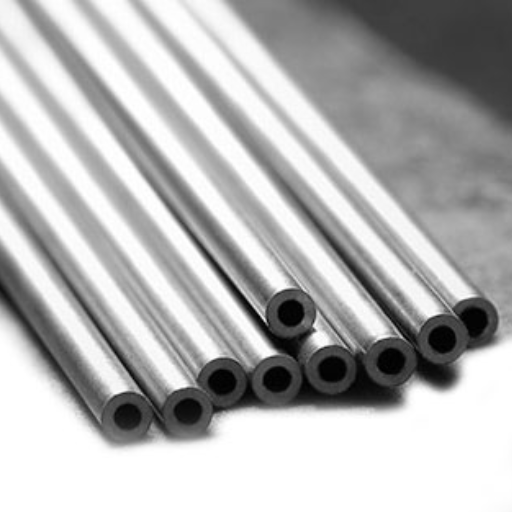
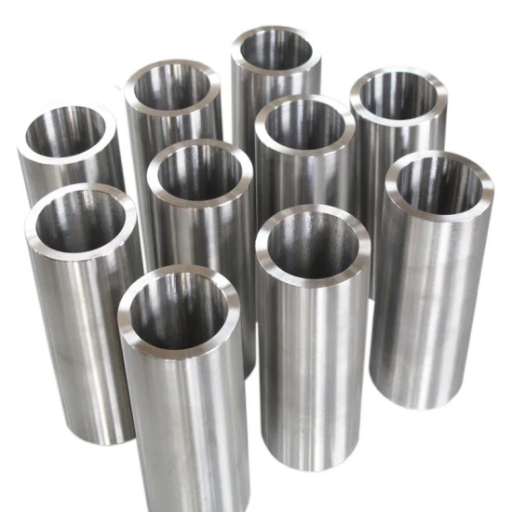
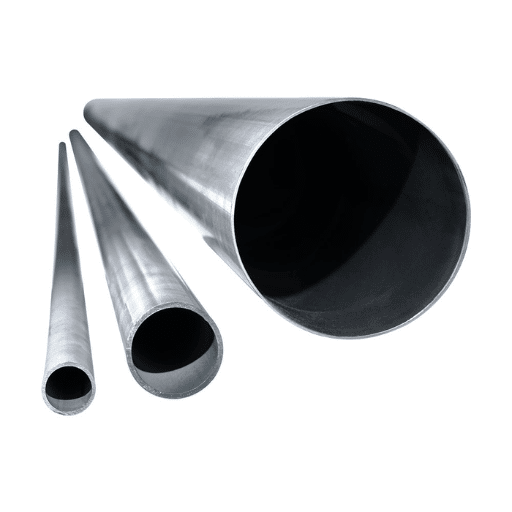
Stainless steel seamless pipe is manufactured without a longitudinal weld seam. Seamless pipe starts from a solid round billet which undergoes hot working to become a hollow tube whereas welded pipe begins from flat strip material that gets joined at its edges. The manufacturing process creates a material which exhibits consistent mechanical characteristics across its entire cross-sectional area.
The absence of a weld seam gives seamless pipe distinct advantages:
- Higher pressure ratings: No weld seam means no weld-related stress concentration or potential failure mode
- Uniform corrosion resistance: No heat-affected zone with altered microstructure
- Better structural integrity: Consistent grain structure throughout the wall thickness
- Superior fatigue resistance: Critical for cyclic loading applications
Seamless pipe is specified under ASTM A312 for austenitic grades (304, 316, 321, 347) and ASTM A790 for duplex and super duplex grades. These standards govern chemical composition, mechanical properties, dimensions, and testing requirements.
Seamless vs Welded Stainless Steel Pipe
| Characteristic | Seamless Pipe | Welded Pipe |
|---|---|---|
| Manufacturing | Solid billet pierced and rolled | Flat strip formed and welded |
| Pressure Rating | 20% higher for equivalent schedule | Lower due to weld seam factor |
| Cost | 30-50% premium over welded | More economical |
| Size Range | Typically NPS 1/8″ to 24″ | Available to NPS 60″+ |
| Wall Thickness | Uniform, consistent | May vary at weld zone |
| Corrosion Resistance | Uniform throughout | HAZ may differ from base metal |
| Typical Standards | ASTM A312, ASTM A790 | ASTM A312, ASTM A778 |
| Best Applications | High pressure, critical service, fatigue loading | Low-moderate pressure, large diameter, cost-sensitive |
The choice between seamless and welded depends on your service conditions. For process piping under ASME B31.3 where pressure ratings approach allowable stress limits, seamless provides margin. For water service at ambient temperature where pressures are modest, welded pipe often suffices.
When to Specify Seamless Pipe
Specify seamless stainless steel pipe when any of these conditions apply:
- High-pressure service: Operating pressures above 1,000 PSI (69 bar)
- Critical safety applications: Piping where failure poses personnel or environmental risk
- Cyclic loading: Systems with frequent pressure or temperature cycling
n- Corrosive environments: Strong acids, chlorides, or sour service (H2S) - Fatigue-sensitive installations: Piping subject to vibration or thermal expansion stresses
- Code requirements: Specifications mandating seamless per project standards
- Sour service: NACE MR0175 applications requiring seamless construction
ASTM A312 Standard Specifications

Scope and Coverage
ASTM A312/A312M is the primary specification governing seamless, welded, and heavily cold-worked austenitic stainless steel pipe. The standard covers pipe intended for high-temperature and general corrosive service. For procurement professionals and engineers, ASTM A312 provides the quality baseline that ensures material fitness for service.
The standard addresses:
- Grades covered: TP304, TP304L, TP304H, TP309S, TP310S, TP316, TP316L, TP316H, TP321, TP321H, TP347, TP347H
- Manufacturing methods: Seamless (SMLS), welded (WLD), heavily cold-worked (HCW)
- Size range: NPS 1/8″ through NPS 48″ (DN 6 through DN 1200)
- Schedules: Sch 5S, 10S, 40S, 80S (standard wall, extra strong, double extra strong also referenced)
ASTM A312M is the metric companion specification, with dimensions expressed in millimeters rather than inches. Both specifications are technically equivalent—specify the version that aligns with your project’s dimensional system.
Chemical Composition Requirements
ASTM A312 specifies maximum and minimum chemical composition limits for each grade. Here are the requirements for the most commonly specified grades:
| Element | TP304 (%) | TP304L (%) | TP316 (%) | TP316L (%) |
|---|---|---|---|---|
| Carbon (max) | 0.08 | 0.035 | 0.08 | 0.035 |
| Manganese (max) | 2.00 | 2.00 | 2.00 | 2.00 |
| Phosphorus (max) | 0.045 | 0.045 | 0.045 | 0.045 |
| Sulfur (max) | 0.030 | 0.030 | 0.030 | 0.030 |
| Silicon (max) | 1.00 | 1.00 | 1.00 | 1.00 |
| Chromium | 18.0-20.0 | 18.0-20.0 | 16.0-18.0 | 16.0-18.0 |
| Nickel | 8.0-11.0 | 8.0-13.0 | 10.0-14.0 | 10.0-14.0 |
| Molybdenum | — | — | 2.0-3.0 | 2.0-3.0 |
The “L” designation indicates low carbon content (maximum 0.035% versus 0.08% for standard grades). This reduced carbon minimizes sensitization—the precipitation of chromium carbides at grain boundaries during welding or high-temperature exposure—which can reduce corrosion resistance in the heat-affected zone.
Mechanical Properties
ASTM A312 requires minimum mechanical properties that ensure pipe can withstand design stresses:
| Grade | Tensile Strength (min) | Yield Strength (min) | Elongation (min) |
|---|---|---|---|
| TP304 | 75 ksi (515 MPa) | 30 ksi (205 MPa) | 35% |
| TP304L | 70 ksi (485 MPa) | 25 ksi (170 MPa) | 35% |
| TP316 | 75 ksi (515 MPa) | 30 ksi (205 MPa) | 35% |
| TP316L | 70 ksi (485 MPa) | 25 ksi (170 MPa) | 35% |
These minimums apply to the pipe in the solution-annealed condition. Cold working during manufacturing (such as cold drawing to achieve tight tolerances) can increase strength but may reduce ductility. The Mill Test Report (MTR) documents actual tested values for the specific heat of material you receive.
Seamless Pipe Manufacturing Process

Raw Material Preparation
Seamless stainless steel pipe production starts with solid round billets which have a diameter range of 100 to 200 millimeters and a length range of 2 to 4 meters. The billets are produced through continuous casting or hot rolling processes which use stainless steel material that meets the chemical composition standards of the designated grade.
At Zhongzheng’s facility in Wenzhou, every billet heat is spectrographically verified before entering production. The optical emission spectrometer analyzes the chemical composition of chromium nickel, molybdenum carbon, and trace elements to verify compliance with ASTM A312 standards. This verification step prevents off-grade material from entering the manufacturing stream.
The billet undergoes heating inside a rotary hearth furnace which operates at temperatures from 1,200°C to 1,250°C (2,192°F to 2,282°F). This heating process softens the steel material which enables its transformation into a hollow shape through the piercing operation.
Hot Rolling Process
The hot rolling of seamless pipe involves three primary operations:
1. Piercing: The heated billet is centered on a piercing mill. A pointed mandrel is driven through the billet center while rollers apply pressure, creating a thick-walled hollow shell. This pierced shell—called a bloom—has an internal diameter roughly equal to the mandrel diameter and a wall thickness significantly thicker than the final pipe.
2. Rolling: The bloom passes through a series of rolling mills that reduce wall thickness and elongate the pipe. Two common mill configurations exist:
- Plug mill: Uses an internal plug to control inner diameter while external rolls reduce wall thickness
- Mandrel mill: Uses a long mandrel bar inserted through the bloom; multiple roll stands reduce the bloom over the mandrel
3. Sizing: After rolling to near-final dimensions, the pipe passes through a sizing mill that achieves the precise outer diameter specified. This final hot forming establishes the pipe’s dimensional conformance to ASTM A312 tolerance requirements.
Cold Drawing (for Precision Dimensions)
For applications requiring tighter tolerances than hot rolling alone can achieve, seamless pipe undergoes cold drawing:
- The hot-rolled pipe is pickled to remove oxide scale
- It’s then drawn through a die with an internal mandrel to reduce diameter and wall thickness simultaneously
- Cold drawing improves dimensional precision—tolerances of ±0.1mm are achievable
- Surface finish is smoother than hot-rolled pipe
- Mechanical properties increase due to work hardening
Cold-drawn seamless pipe is specified when:
- Instrumentation applications require precise flow characteristics
- Heat exchanger tubes need tight OD tolerances for tube sheet rolling
- Hydraulic systems require consistent internal diameters
Heat Treatment
All ASTM A312 seamless pipe must be solution-annealed after final forming. This heat treatment:
- Dissolves chromium carbides that may have formed during hot working
- Restores uniform austenitic microstructure
- Optimizes corrosion resistance
- Relieves residual stresses from manufacturing
Solution annealing involves heating to minimum 1,040°C (1,900°F) for most grades, holding at temperature to ensure carbide dissolution, then rapid cooling (quenching) in water or by other means. The MTR documents that solution annealing was performed.
Dimensions and Schedules

Nominal Pipe Size (NPS) System
Stainless steel seamless pipe is designated by Nominal Pipe Size (NPS), a dimensionless identifier that roughly corresponds to historical pipe dimensions. The NPS system can be confusing because:
- NPS 1/8″ pipe has an actual OD of 0.405″ (10.3mm)
- NPS 1/2″ pipe has an actual OD of 0.840″ (21.3mm)
- NPS 2″ pipe has an actual OD of 2.375″ (60.3mm)
- NPS 12″ pipe has an actual OD of 12.75″ (323.9mm)
The OD is standardized for each NPS—the nominal size does not equal the actual OD, especially for larger sizes. When specifying pipe, always reference both NPS and schedule to define the complete dimensional requirements.
Pipe Schedule Classifications
The schedule number defines wall thickness for a given NPS. Common schedules for stainless steel pipe include:
| Schedule | Wall Thickness Characteristic | Typical Applications |
|---|---|---|
| Sch 5S | Thinnest wall | Low-pressure, weight-sensitive |
| Sch 10S | Light wall | General process piping |
| Sch 40S | Standard wall | Most common for pressure service |
| Sch 80S | Extra strong | High-pressure applications |
| Sch 160 | Double extra strong | Very high pressure |
| XXS | Special heavy wall | Extreme pressure or corrosion allowance |
Note that “S” suffix (5S, 10S, 40S, 80S) indicates stainless steel dimensions per ASME B36.19M. Carbon steel schedules (without the S) follow ASME B36.10M and have different wall thicknesses for the same schedule number.
Dimensional Tolerances
ASTM A312 specifies dimensional tolerances that balance manufacturing practicality with application requirements:
Outer Diameter:
- NPS 1/8″ to 1-1/2″: +1/64″ (-0), ±0.4mm
- NPS 2″ to 4″: +1/32″ (-0), ±0.8mm
- NPS 6″ to 8″: +1/16″ (-0), ±1.6mm
- NPS 10″ and larger: +3/32″ (-0), ±2.4mm
Wall Thickness:
- Minimum wall: +20% (-0)
- Nominal wall (Sch 5S/10S): +20% (-12.5%)
- Welded pipe nominal wall: +20% (-12.5%)
Zhongzheng holds tighter tolerances than ASTM A312 minimums—typically ±10% on wall thickness for seamless pipe—providing additional margin for pressure calculations and ensuring consistent weight per foot.
Pressure Ratings and Design

Pressure-Temperature Ratings
Seamless stainless steel pipe pressure ratings are governed by the applicable piping code—typically ASME B31.3 for process piping. The allowable stress values vary by material grade and design temperature.
For ASTM A312 TP304 seamless pipe under ASME B31.3:
| Temperature (°F) | Allowable Stress (ksi) |
|---|---|
| -20 to 100 | 20.0 |
| 200 | 18.4 |
| 300 | 17.1 |
| 400 | 16.1 |
| 600 | 15.0 |
| 800 | 14.0 |
For ASTM A312 TP316L seamless pipe:
| Temperature (°F) | Allowable Stress (ksi) |
|---|---|
| -20 to 100 | 16.7 |
| 200 | 15.6 |
| 300 | 14.7 |
| 400 | 14.0 |
| 600 | 13.2 |
| 800 | 12.7 |
Note that 316L has slightly lower allowable stress than 304 at ambient temperature but maintains better strength retention at elevated temperatures and superior corrosion resistance in chloride environments.
Calculating Maximum Allowable Working Pressure (MAWP)
The maximum allowable working pressure for seamless pipe can be calculated using:
MAWP = (2 × S × t) / (D – 0.8 × t)
Where:
- S = Allowable stress at design temperature (from code tables)
- t = Nominal wall thickness
- D = Nominal outside diameter
For example, for NPS 4″ Sch 40S (0.237″ wall) TP304 pipe at 100°F:
MAWP = (2 × 20,000 × 0.237) / (4.5 – 0.8 × 0.237) = 2,200 PSI
This calculation assumes seamless construction with no weld joint factor. Welded pipe would require application of a joint factor (typically 0.85 for welded construction), reducing the MAWP accordingly.
Hydrostatic Test Pressure
ASTM A312 requires every seamless pipe to undergo hydrostatic testing unless specifically exempted. The standard test pressure is:
Test Pressure = 1.5 × P × S / (S + 10,000)
Where P is the specified working pressure and S is the allowable stress. Alternatively, many manufacturers test to a standard pressure based on schedule—for Sch 40S pipe, this typically equates to testing at 1,000-2,500 PSI depending on size.
The hydrostatic test:
- Uses clean water as the test medium
- Holds pressure for minimum 5 seconds
- Shows no leakage, weeping, or permanent deformation
- Results are recorded on the MTR
Grades and Applications

304/304L Seamless Pipe
ASTM A312 TP304 is the workhorse grade for general corrosive service. With 18-20% chromium and 8-11% nickel, it provides excellent resistance to oxidation and a wide range of chemicals.
Typical Applications:
- Food and beverage process piping
- Chemical processing (non-chloride service)
- Water treatment systems
- General industrial piping
- Architectural and structural applications
Specify TP304L when welding is required—the lower carbon content (0.035% max versus 0.08%) minimizes carbide precipitation in the heat-affected zone, maintaining corrosion resistance after welding.
316/316L Seamless Pipe
ASTM A312 TP316 adds 2-3% molybdenum to the base 304 composition, dramatically improving resistance to pitting and crevice corrosion in chloride environments. The PREN (Pitting Resistance Equivalent Number) for 316L is approximately 24, versus 18-20 for 304.
Typical Applications:
- Marine and coastal installations
- Chemical processing with chlorides
- Pharmaceutical manufacturing
- Pulp and paper processing
- Heat exchanger tubing
- Offshore platform piping (non-sour service)
At Zhongzheng, 316L represents our highest-volume seamless pipe production grade. The combination of corrosion resistance and weldability makes it the default choice for process piping in demanding environments.
321/347 Seamless Pipe
ASTM A312 TP321 (titanium-stabilized) and TP347 (niobium-stabilized) are specified for high-temperature service above 400°C (752°F). At these temperatures, standard 304/316 grades are susceptible to sensitization during thermal cycling.
The stabilizing elements (Ti or Nb) preferentially combine with carbon, preventing chromium depletion at grain boundaries. This maintains corrosion resistance and mechanical properties in:
- High-temperature heat exchangers
- Steam service piping
- Furnace and kiln applications
- Refinery process piping
Duplex and Super Duplex Seamless Pipe (ASTM A790)
While ASTM A312 covers austenitic grades, duplex stainless steels fall under ASTM A790. These alloys combine austenitic and ferritic microstructures, delivering:
- Higher strength (roughly double the yield strength of 316L)
- Superior chloride stress corrosion cracking resistance
- Better resistance to chloride pitting (PREN 35+ for 2205, 40+ for super duplex)
| Grade | UNS Number | PREN | Typical Applications |
|---|---|---|---|
| Duplex 2205 | S32205 | 35 | Chemical processing, marine |
| Super Duplex 2507 | S32750 | 42 | Offshore oil & gas, sour service |
| Super Duplex Z100 | S32760 | 43 | Seawater systems, subsea |
Specify duplex seamless pipe when:
- Chloride levels exceed 1,000 ppm
- Operating temperatures exceed 50°C in chloride service
- High strength-to-weight ratio is needed
- Sour service (H2S) conditions exist
Zhongzheng manufactures duplex 2205 and super duplex S32750 seamless pipe to ASTM A790, with NACE MR0175 compliance documentation available for sour service applications.
Quality Control and Testing

In-Process Quality Control
At Zhongzheng’s Wenzhou facility, seamless pipe production incorporates quality checkpoints at each manufacturing stage:
Raw Material Verification:
- Optical emission spectrometry confirms chemical composition before production
- Each heat is assigned a unique traceability number
- Billet surface inspection identifies defects that could propagate into finished pipe
Hot Rolling Monitoring:
- Temperature measurement ensures proper piercing and rolling conditions
- Dimensional checks after piercing confirm bloom dimensions
- Wall thickness gauging during rolling prevents out-of-tolerance material from proceeding
Solution Annealing Verification:
- Furnace temperature monitoring confirms minimum 1,040°C is achieved
- Quench rate is monitored to ensure rapid cooling
- Sample hardness testing verifies annealing effectiveness
Non-Destructive Testing (NDT)
Every seamless pipe undergoes comprehensive NDT before shipment:
Ultrasonic Flaw Detection: 100% coverage of pipe body examines for:
- Internal cracks or laminations
- Wall thickness variations
- Inclusions or voids
- Testing follows ASTM E213 or equivalent procedures
Eddy Current Testing: For smaller diameter tubes, eddy current provides rapid detection of:
- Surface-breaking defects
- Wall thickness variations
- Material property variations
Hydrostatic Testing: Every pipe is pressure-tested to verify structural integrity:
- Test pressure calculated per ASTM A312 (typically 1.5× design pressure)
- 5-second minimum hold time
- No leakage or visible deformation permitted
- Test results recorded on MTR
Documentation Package
Seamless pipe shipments from Zhongzheng include comprehensive documentation:
Mill Test Report (MTR) containing:
- Heat number and traceability information
- Chemical composition (actual tested values)
- Mechanical properties (tensile, yield, elongation)
- Heat treatment records (solution annealing confirmation)
- Hydrostatic test results (pressure and acceptance)
- Dimensional inspection results
- Standard compliance statement (ASTM A312/A790)
Additional Documentation (when specified):
- EN 10204 3.1 or 3.2 material certificates
- Third-party inspection reports (SGS, TUV, BV)
- NACE MR0175 compliance certificates
- Supplementary test reports (impact testing, corrosion testing)
Procurement and Sourcing

Specifying Seamless Pipe Requirements
A complete seamless pipe specification should include:
- Standard: ASTM A312 (or ASTM A790 for duplex grades)
- Grade: TP304, TP316L, TP321, etc.
- Size: NPS and schedule (e.g., NPS 4″ Sch 40S)
- Manufacturing: Seamless (SMLS)
- Heat treatment: Solution annealed (required per ASTM A312)
- Testing: Hydrostatic testing (required unless exempted)
- Documentation: MTR requirements, EN 10204 certification level
- Inspection: Third-party inspection requirements if applicable
Example specification:
“ASTM A312 TP316L seamless pipe, NPS 4″ Sch 40S, solution annealed and pickled, hydrostatic tested, with EN 10204 3.1 Mill Test Report.”
Zhongzheng Seamless Pipe Capabilities
From our Lantian Industrial Zone facility, Zhongzheng produces seamless pipe with the following capabilities:
Size Range:
- OD: 6mm to 610mm (0.25″ to 24″ NPS)
- Wall thickness: Sch 5S through Sch XXS
- Lengths: Standard 6m random, custom cut lengths available
Grade Availability:
- Austenitic: 304, 304L, 316, 316L, 321, 347
- Duplex: UNS S31803, S32205 (2205)
- Super Duplex: UNS S32750, S32760
- Custom grades upon inquiry
Special Requirements:
- Cold-drawn precision tolerances
- Electropolished internal surface (Ra ≤ 0.4μm)
- Bright annealed finish
- Third-party inspection support (SGS, TUV, BV, Lloyds)
Lead Times and MOQ
Standard Seamless Pipe (304/316L, common sizes):
- Lead time: 4–6 weeks from order confirmation
- MOQ: 1 ton or negotiable for stock sizes
Custom Dimensions:
- Lead time: 6–8 weeks
- MOQ: Minimum production run (typically 2-5 tons depending on size)
Duplex/Super Duplex:
- Lead time: 8–12 weeks
- MOQ: Higher minimums due to material specialization
Expedited Service:
- Zhongzheng maintains inventory of common 304/316L sizes for rapid shipment
- Contact our technical team for current stock availability
Frequently Asked Questions
What is the difference between seamless and welded stainless steel pipe?
The manufacturing process of seamless pipe begins by taking a solid billet and using piercing and rolling techniques to create a hollow tube that contains no longitudinal weld seams. The production of welded pipe begins with flat strip materials which operators use to create circular tubes through welding at their edge connections. The design of seamless pipe enables it to operate at pressures 20 percent above standard limits because it has continuous corrosion protection and improved strength under repeated stress that makes it suitable for critical high-pressure systems. The production of welded pipe becomes more cost-effective because it works best in applications that require large pipes and operate at lower pressure levels.
What does “Schedule 40” mean for stainless steel pipe?
The Sch system uses dimensionless numbers to determine wall thickness for each Nominal Pipe Size (NPS) pipe. Sch 40 is the most common “standard wall” thickness. The stainless steel industry requires professionals to use schedules with “S” suffixes which include 5S, 10S, 40S and 80S according to ASME B36.19M because these schedules have distinct measurements from carbon steel schedules. The wall thickness of a pipe increases along with its pressure capacity as indicated by higher schedule numbers.
How is seamless stainless steel pipe made?
The seamless manufacturing process begins with a stainless steel billet which operators heat to a temperature of 1,200°C. The process begins with heating a solid stainless steel billet to 1,200°C+. The process begins with heating a solid stainless steel billet to 1,200°C. The process begins with operators inserting a mandrel into the billet to create a hollow shell. The process begins with operators inserting a mandrel into the billet to create a hollow shell. The process begins with operators inserting a mandrel into the billet to create a hollow shell. The shell goes through a rolling procedure which enables its operators to decrease wall thickness while they extend the pipe length.
What is the maximum pressure for 316L seamless pipe?
Pipe pressure ratings depend on the three factors of pipe size and schedule and temperature. The ASME B31.3 standard uses NPS 2″ Sch 40S TP316L seamless pipe at 100°F to establish its maximum allowable working pressure (MAWP) of 3200 PSI. The pressure limit at 400°F decreases to about 2800 PSI. You must use ASME B31.3 allowable stress tables to determine your design conditions.
What is the definition of ASTM A312 TP316L?
The standard specification for seamless and welded and heavily cold-worked austenitic stainless steel pipe is defined by ASTM A312. The term “TP316L” refers to a stainless steel type that contains 16 to 18 percent chromium and 10 to 14 percent nickel and 2 to 3 percent molybdenum with a maximum carbon content of 0.035 percent. The “L” grade is preferred for welded construction to minimize sensitization (carbide precipitation) in the heat-affected zone.
Is seamless pipe suitable for use in high-temperature conditions?
Yes. The seamless pipe made from austenitic stainless steel 304 and 316 and 321 and 347 maintains its strength and oxidation resistance at high temperatures. Both 304 and 316 grades can be used at temperatures up to 800°F (427°C). The stabilized grades 321 and 347 should be specified for service above 800°F because they prevent sensitization at high temperatures. You need to consult ASME B31.3 for allowable stress values that apply to your design temperature.
How can I assess the quality of seamless pipes that Chinese manufacturers produce?
The Mill Test Report needs to be requested by you so that you can examine the report which contains details about chemical composition and mechanical properties. The manufacturer needs to have three specific testing capabilities which include spectrographic analysis and ultrasonic testing equipment and hydrostatic testing facilities. For essential operations, use third-party inspections from organizations such as SGS or TUV. The factory audits at Zhongzheng receive our full acceptance because we offer MTR sample documents to those who need them.
What are the main differences that exist between 304 and 316 seamless pipe?
The primary difference is molybdenum content—316 contains 2-3% molybdenum while 304 has none. The 316 alloy provides better protection against pitting and crevice corrosion than other alloys when exposed to chloride environments found in marine and chemical processing applications. The material 316L shows superior strength properties when exposed to high temperature conditions. The 304 stainless steel material provides a cost-effective solution for non-chloride operations which require moderate temperature use.
Conclusion: Specifying Seamless Pipe with Confidence
Stainless steel seamless pipe represents the premium choice for process piping where pressure, corrosion, or safety considerations demand the highest material integrity. ASTM A312 provides the specification framework that ensures your pipe meets chemical, mechanical, and dimensional requirements—regardless of where it’s manufactured.
The key takeaways for specifying seamless pipe:
- Choose seamless for high-pressure, critical, cyclic, or sour service applications
- Reference ASTM A312 for austenitic grades, ASTM A790 for duplex grades
- Specify complete requirements: standard, grade, NPS, schedule, heat treatment, testing, documentation
- Verify quality through MTR review, manufacturing capability assessment, and third-party inspection when warranted
- Calculate pressure ratings using ASME B31.3 allowable stresses for your design temperature
The production of seamless stainless steel pipes at Zhongzheng combines both Wenzhou manufacturing efficiency and international standards. Our seamless pipe lines produce ASTM A312 TP304, TP316L, TP321, and TP347 pipe from NPS 1/8″ through 24″, with duplex and super duplex capabilities per ASTM A790. The spectrographic testing process confirms every heat. Every pipe undergoes both ultrasonic testing and hydraulic pressure testing. The MTR you receive reflects what’s physically in the pipe.