The emergency call reached David Chen’s phone at 2:47 AM on a Tuesday in March 2024. The 2-inch ball valve on Reactor Unit 7 had failed catastrophically. A 200valvehadjustcauseda200valvehadjustcauseda50,000 production shutdown. The maintenance crew discovered the root cause of the valve failure when they took apart the valve because they found PTFE seats which were meant for 400°F service had been used in 450°F steam applications. The emergency replacement process for the line started after the ball seized when the material degraded.
The operational risk for industrial process piping depends on your choice of ball valve specifications. The wrong seat material, the wrong pressure rating, or the wrong grade of stainless steel can lead to exactly this kind of failure. The ball valve specification process becomes difficult because it requires knowledge about six different factors which are material grade, construction type, seat material, pressure class, end connections, and application-specific requirements.
The guide provides complete technical specifications which help in choosing stainless steel ball valves. The course teaches you how to pick between 304 and 316 grades and when to use 2-piece versus 3-piece construction and when to use specific seat materials based on temperature and chemical environment and why Zhongzheng ASME B16.34 compliant manufacturing guarantees the reliability which your process needs. You will possess the specifications knowledge which enables you to choose the right valves for chemical processing and oil and gas and sanitary applications.
What Is a Stainless Steel Ball Valve?

Basic Construction and Operating Principle
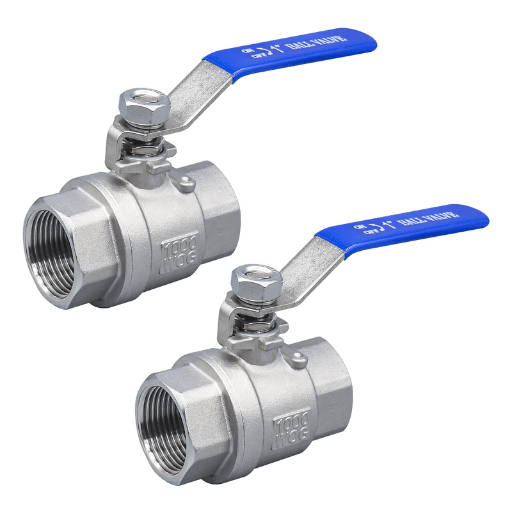
A stainless steel ball valve is a quarter-turn shutoff valve using a perforated spherical ball to control flow. The ball contains a bore (hole) through its center. When the bore aligns with the pipeline, flow is open. Rotating the ball 90 degrees blocks the flow path. This simple mechanism provides reliable sealing, fast operation, and minimal pressure drop when fully open.
Key construction elements:
- Body: The outer shell containing the ball and seats. Investment cast stainless steel (CF8 for 304, CF8M for 316) is the standard manufacturing method.
- Ball: The spherical closure element with a through-bore. Precision-machined to seal against the seats.
- Stem: Connects the ball to the operating handle or actuator. Must be blowout-proof for safety.
- Seats: The sealing surfaces against which the ball seals. Material selection (PTFE, TFM, PEEK, metal) determines temperature and chemical compatibility.
- End connections: Threaded (NPT, BSPT), flanged (ASME B16.5), socket weld, or tri-clamp for sanitary applications.
Floating vs Trunnion-Mounted Ball Design
Floating ball valves: The seats which exist on both sides of the valve maintain support for the ball. The ball moves toward the downstream seat because line pressure pushes it which creates a better seal. The design operates as standard procedure for smaller sizes which reach their maximum at 6 inches and for lower pressure systems which operate below 600 psi in standard construction. The floating ball valve system functions as an economical solution which provides essential performance capabilities for most industrial systems.
Trunnion-mounted ball valves: The ball requires support at its top and bottom through which it connects to the bearing-mounted trunnions. The sealing power of the system remains unaffected by line pressure changes. The design functions as a mandatory requirement for systems that operate at 8 inches and higher and for systems which maintain pressures at ANSI Class 600 and above. The trunnion valve system requires higher expenses because it serves as an essential component for pipeline systems which operate under high-pressure conditions.
Material Specifications: 304 vs 316 Stainless Steel
Stainless steel ball valves are manufactured from cast equivalents of wrought grades:
| Wrought Grade | Cast Equivalent | UNS Designation | Key Applications |
|---|---|---|---|
| 304 | CF8 | J92500 | General industrial, water, non-corrosive fluids |
| 316 | CF8M | J92900 | Chemical, marine, chloride-containing fluids |
| 304L | CF3 | J92500 | Welded construction, carbide precipitation resistance |
| 316L | CF3M | J92900 | Chemical processing, pharmaceutical, low carbon requirement |
When to specify 316 over 304: The 2-3% molybdenum content in 316 provides significantly better chloride corrosion resistance. For seawater, chemical processing, deicing salt environments, or any application with chloride exposure above 50 ppm, specify 316 (CF8M). The cost premium is typically 15-25% but prevents premature failure in corrosive service.
Ball Valve Types and Construction

2-Piece Ball Valves
2-piece ball valves consist of two body sections: one piece contains the ball and one seat, the second piece contains the second seat and end connection. The two halves are joined by threads or bolts.
Advantages:
- Lower cost (typically 30-50% less than 3-piece)
- Compact, lightweight design
- Suitable for the majority of industrial applications
Limitations:
- Cannot be serviced in-line; must be removed from piping for seat replacement
- Lower pressure ratings than 3-piece designs (typically limited to 1000 WOG)
- Threaded connections may be prone to leakage over time
Typical applications: General process piping, water distribution, compressed air systems, non-critical shutoff service where in-line maintenance is not required.
3-Piece Ball Valves
3-piece ball valves feature a central body section containing the ball and seats, flanked by two end pieces. The three sections bolt together.
Advantages:
- In-line maintenance: The center section can be removed while the end pieces remain in the pipeline
- Higher pressure ratings (typically 2000 WOG)
- Full port designs available for maximum flow
- Seats can be replaced without disturbing piping
Limitations:
- Higher cost than 2-piece
- Larger physical envelope (more space required)
Typical applications: Chemical processing, food and beverage, pharmaceutical, any application where frequent cleaning or seat replacement is anticipated. The ability to swing the center body out for maintenance without breaking pipeline connections is invaluable in hygienic and high-purity applications.
2-Piece vs 3-Piece Comparison
| Feature | 2-Piece Ball Valve | 3-Piece Ball Valve |
|---|---|---|
| Cost | Lower (~30-50% less) | Higher |
| Pressure Rating | Up to 1000 WOG | Up to 2000 WOG |
| In-line Maintenance | Not possible | Center section removable |
| Weight | Lighter | Heavier |
| Best For | General shutoff | Critical process, hygienic |
Flanged Ball Valves
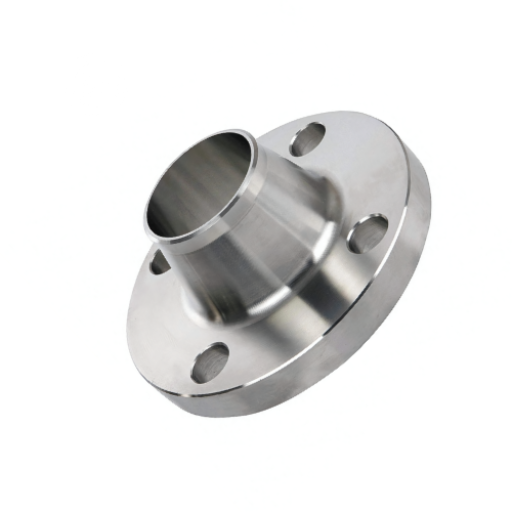
Flanged ball valves feature ASME B16.5 flanged end connections rather than threaded ends. This design is required for larger pipe sizes (2 inches and above in most specifications) and higher pressure classes.
ASME B16.34 Pressure Classes:
- Class 150: 285 psi at ambient temperature
- Class 300: 740 psi at ambient temperature
- Class 600: 1480 psi at ambient temperature
Flanged valves require proper gasket selection and bolt torque for sealing. They provide the most robust connection for permanent installations and are the standard for oil and gas, chemical plant, and power generation applications.
Sanitary Ball Valves
Sanitary ball valves are specifically designed for food, beverage, pharmaceutical, and biotech applications where cleanability and sterility are required.
Key specifications:
- Connections: Tri-clamp (tri-clover) fittings for quick disassembly
- Surface finish: Ra ≤ 0.8μm (32 micro-inch) electropolished internal surfaces
- Standards: 3-A Sanitary Standards, EHEDG guidelines, ASME BPE compliance
- Design: Minimal crevices, self-draining when properly installed
- Materials: 316L (CF3M) with low carbon content to prevent carbide precipitation during welding
CIP/SIP compatibility: Sanitary valves must withstand Clean-In-Place (CIP) and Steam-In-Place (SIP) procedures without degradation. Seat materials must be compatible with caustic cleaning solutions and steam sterilization cycles.
Seat Material Selection Guide

When Maria Santos specified ball valves for her chemical plant’s new sulfuric acid transfer system, she faced a critical seat material decision. The concentrated acid would cause standard PTFE seats to degrade. The metal seats offered corrosion resistance but their price exceeded standard metal seats by four times. The solution required understanding the specific chemical compatibility and temperature requirements of her application.
PTFE (Polytetrafluoroethylene) Seats
PTFE, commonly known by the DuPont brand name Teflon, is the standard seat material for general-purpose ball valves.
Properties:
- Temperature range: -50°F to 400°F (-46°C to 204°C)
- Chemical compatibility: Excellent resistance to most chemicals
- Coefficient of friction: Very low — provides easy operation
- Cost: Lowest cost option
Limitations:
- Cold flow: PTFE deforms under sustained pressure at elevated temperatures
- High cycling: Not suitable for high-cycle applications (thousands of cycles per year)
- Steam service: Not recommended for saturated steam above 150 psi
Best applications: Water, oils, general chemicals, low-to-moderate temperature services, applications with infrequent operation.
TFM 1600/4215 Seats
TFM (modified PTFE) is an enhanced PTFE compound with improved mechanical properties.
Properties:
- Temperature range: -50°F to 450°F (-46°C to 232°C)
- Porosity: Significantly lower than standard PTFE
- Wear resistance: Better for higher-cycle applications
- Chemical resistance: Equivalent to PTFE
Advantages over PTFE: Lower porosity reduces permeation in critical applications. Better mechanical strength allows slightly higher pressures and temperatures. Improved wear resistance extends cycle life.
Best applications: Chemical processing, higher temperature services, applications requiring extended cycle life, vacuum service where low permeability is required.
PEEK Seats
PEEK (Polyetheretherketone) is a high-performance thermoplastic for demanding applications.
Properties:
- Temperature range: -70°F to 550°F (-57°C to 288°C)
- Mechanical strength: Superior to PTFE/TFM
- Abrasion resistance: Excellent for slurry service
- Steam compatibility: Suitable for saturated steam service
Limitations:
- Cost: 3-5× the cost of PTFE
- Chemical resistance: Good but not as universal as PTFE (attacked by concentrated sulfuric acid, some solvents)
Best applications: Steam service, high-temperature chemical service, abrasive slurries, applications requiring mechanical strength beyond PTFE capabilities.
Metal Seats
Metal-to-metal seated ball valves use hardened stainless steel or Stellite-coated seats for extreme service conditions.
Properties:
- Temperature range: Up to 1000°F+ (538°C+)
- Fire-safe compliance: Meet API 607 requirements
- Abrasion resistance: Excellent for solids handling
- Cost: Highest cost option (5-10× PTFE cost)
Best applications: High-temperature steam, fire-safe requirements, abrasive solids service, applications where polymer seats cannot survive. Metal seats are essential for API 607 fire-safe compliance in oil and gas applications.
Seat Material Selection Matrix
| Service Condition | Recommended Seat | Alternative |
|---|---|---|
| General purpose, water, oil | PTFE | TFM |
| Chemical, moderate temp | TFM | PTFE |
| Steam service | PEEK | Metal |
| High temperature (>400°F) | Metal | PEEK |
| Fire-safe required | Metal | — |
| Abrasive/slurry | Metal | PEEK |
| High-cycle (>1000/yr) | TFM | PEEK |
| Food/pharma (sanitary) | PTFE/TFM (FDA) | PEEK (FDA) |
Pressure Ratings and Industry Standards

WOG Ratings Explained
WOG stands for Water, Oil, Gas — the standard pressure rating designation for ball valves.
- 1000 WOG: Rated for 1000 psi at ambient temperature with water, oil, or gas
- 2000 WOG: Rated for 2000 psi at ambient temperature
- 6000 WOG: High-pressure rating for severe service
Temperature derating: WOG ratings are specified at ambient temperature (usually 100°F). As temperature increases, allowable pressure decreases. A 1000 WOG valve may only be rated for 800 psi at 200°F, 650 psi at 300°F, etc. Always check the manufacturer’s pressure-temperature rating chart for your specific service conditions.
ASME B16.34 Compliance
ASME B16.34 is the governing standard for valves — flanged, threaded, and welding end. Key requirements include:
- Pressure-temperature ratings: Established for each material group
- Material groups: Stainless steels fall into Group 2.2 (304, 316, 321, 347)
- Wall thickness requirements: Minimum body wall thickness calculations
- Testing requirements: Shell test at 1.5× rated pressure, seat test at 1.1× rated pressure
Zhongzheng manufactures ball valves to ASME B16.34 specifications with full material traceability and testing documentation.
API 608 Standard
API 608 specifically addresses metal ball valves. Key provisions:
- Fire-safe testing: Requires secondary metal seat contact if soft seats burn away
- Antistatic device: Required for valves in hazardous atmospheres
- Blowout-proof stem: Mandatory stem retention design
- Extended body: Requirements for cryogenic and high-temperature service
ISO 5211 Actuator Mounting
ISO 5211 standardizes the mounting interface between valves and actuators. Key dimensions:
- F-number: Designates flange size (F03, F04, F05, F07, F10, F12, F14, F16)
- Drive shaft: Square or keyed shaft dimensions
- Bolt pattern: Standardized mounting bolt locations
This standardization allows any ISO 5211-compliant actuator to mount to any ISO 5211-compliant valve of the same F-number, regardless of manufacturer.
Applications by Industry

Oil and Gas Production
Ball valves in oil and gas service must handle high pressures, corrosive fluids, and hazardous environments.
Wellhead isolation: Trunnion-mounted ball valves rated ANSI Class 600 or 900 provide reliable shutoff for wellhead Christmas trees. 316 or duplex 2205 construction handles sour gas (H2S) service.
Pipeline block valves: Fully welded or flanged ball valves with metal seats provide long-term reliability for transmission pipelines. API 6D compliance is often specified.
NACE MR0175 compliance: For sour service (H2S-containing fluids), materials must meet NACE MR0175/ISO 15156 requirements for sulfide stress cracking resistance. 316L and duplex grades are typically specified.
Chemical Processing
Chemical plants require valves compatible with aggressive media and wide temperature ranges.
Corrosive chemical handling: 316 stainless steel with TFM or PEEK seats handles most acids and bases. For concentrated sulfuric acid or hydrochloric acid, alloy selection requires careful evaluation.
High-purity chemical distribution: Electropolished 316L valves with minimal dead legs maintain chemical purity for semiconductor and pharmaceutical grade chemicals.
Safety shower/eyewash stations: Quick-opening ball valves provide immediate water flow for emergency equipment. Brass valves were traditionally used; 304 stainless steel is now preferred for corrosion resistance.
Food and Beverage
Sanitary ball valves for food processing must meet hygienic design standards.
CIP/SIP compatibility: Tri-clamp ball valves with PTFE or TFM seats withstand caustic cleaning cycles (CIP) and steam sterilization (SIP) without degradation.
3-A sanitary standards: Valves meeting 3-A Sanitary Standards have been designed specifically for cleanability with minimal crevices and proper radii.
Product contact surfaces: All product-contact surfaces must be 316L stainless steel with surface finishes of Ra ≤ 0.8μm (32 μin) or better.
Zhongzheng supplies sanitary ball valves with Ra ≤ 0.8μm surface finish for hygienic applications, with full 3-A and ASME BPE compliance documentation.
Pharmaceutical and Biotech
Pharmaceutical applications demand the highest purity standards.
ASME BPE compliance: Bioprocessing Equipment standard specifies materials, surface finishes, and design requirements for pharmaceutical manufacturing equipment.
Electropolished surfaces: Internal surfaces finished to Ra ≤ 0.4μm (16 μin) prevent bacterial adhesion and ensure cleanability.
Documentation: Full material traceability, surface finish certification, and quality documentation required for FDA validation processes.
Need sanitary valves for pharmaceutical manufacturing? Request sanitary ball valve specifications with ASME BPE compliance and surface finish certification.
Marine and Seawater
Seawater is one of the most corrosive environments for stainless steel due to high chloride content.
316 minimum requirement: 304 stainless steel is not suitable for seawater exposure. 316 or better is required.
Duplex 2205 for severe service: For continuous seawater immersion or high-velocity seawater, duplex 2205 (UNS S32205) provides superior pitting and crevice corrosion resistance with PREN values of 35+.
Cathodic protection: When installed in systems with cathodic protection, valves must be electrically isolated to prevent stray current corrosion.
Power Generation
Power plants use ball valves for various isolation and drain applications.
Steam service: High-pressure steam requires metal-seated or PEEK-seated valves rated for elevated temperatures. Standard PTFE seats fail in steam service.
Blowdown and drain: Ball valves provide reliable shutoff for boiler blowdown and drain lines. High-cycle operation may require live-loaded stem packing.
Safety Features and Options

Fire-Safe Design
Fire-safe ball valves are designed to maintain sealing during and after a fire, even if polymer seats burn away.
API 607 / ISO 10497 testing: Fire-safe valves undergo standardized fire testing where the valve is exposed to flames while pressurized. After burning, the valve must maintain seat and shell integrity.
Secondary metal seat: Fire-safe designs feature a metal seat surface that contacts the ball if the primary polymer seat is destroyed by fire. This provides metal-to-metal sealing for emergency containment.
Graphite packing: Stem packing materials must be fire-safe (typically flexible graphite) to prevent stem leakage during fire exposure.
Blowout-Proof Stem
A blowout-proof stem design prevents the stem from being ejected from the valve body if internal pressure exceeds the stem retention capability.
Design feature: The stem has a shoulder or retaining ring that captures it within the body. Even if the packing fails completely, the stem cannot exit the valve under pressure.
OSHA compliance: Blowout-proof stems are required by OSHA for many industrial applications to prevent personnel injury from stem ejection.
Anti-Static Device
An anti-static device ensures electrical continuity between the ball, stem, and valve body.
Purpose: Prevents static electricity buildup from fluid flow. Static discharge could ignite flammable vapors in hazardous environments.
Design: A spring-loaded pin maintains contact between the stem and ball, and between the stem and body, providing a continuous electrical path.
ATEX compliance: Required for valves installed in potentially explosive atmospheres under ATEX directives.
Locking Handles
Locking handles allow padlocks to be applied to valves in the open or closed position.
LOTO compliance: Lockout-Tagout (LOTO) procedures require energy isolation devices to be physically locked in the safe position during maintenance. Ball valves with locking handles satisfy OSHA 1910.147 requirements.
Applications: Any valve that may need to be secured during maintenance, cleaning, or emergency procedures.
Valve Sizing and Selection

Cv Value and Flow Calculation
Cv is the flow coefficient representing the number of US gallons per minute of water that will flow through the valve with a 1 psi pressure drop.
CV calculation equation:
Cv = Q × √(SG/ΔP)Where:
- Q = Flow rate (gpm)
- SG = Specific gravity of fluid (water = 1.0)
- ΔP = Pressure drop across valve (psi)
Example sizing: For 100 gpm of water (SG=1.0) with maximum acceptable pressure drop of 5 psi:
Cv = 100 × √(1.0/5) = 100 × 0.447 = 44.7Select a valve with Cv ≥ 45.
Full Port vs Reduced Port
Full port: Ball bore diameter equals the pipe inner diameter. Provides minimal pressure drop (Cv typically 90-95% of equivalent pipe length). Required for pigging operations, slurries, and applications where pressure drop must be minimized.
Reduced port: Ball bore diameter is smaller than pipe ID. More economical but creates higher pressure drop. Standard for most general-purpose applications where pigging is not required.
| Port Type | Flow Capacity | Applications | Cost |
|---|---|---|---|
| Full Port | ~95% of pipe | Pigging, viscous fluids, low ΔP | Higher |
| Reduced Port | ~75% of pipe | General shutoff, water, oil | Standard |
Actuator Sizing
Pneumatic or electric actuators must provide sufficient torque to operate the valve under maximum differential pressure.
Torque requirements depend on:
- Valve size and pressure class
- Seat material (PTFE has lower friction than metal)
- Differential pressure across valve
- Safety factor (typically 1.3-1.5× calculated torque)
Fail-safe configuration: Spring-return actuators fail to open or closed position on air failure. Double-acting actuators maintain position or require stored energy for failure response.
Installation and Maintenance

Proper Installation
Flow direction: Most floating ball valves are bi-directional. Some designs have preferred flow direction marked on the body. Check manufacturer documentation.
Support and stress: Valves should not support piping weight. Provide adequate pipe support to prevent stress on valve bodies, especially for 3-piece designs.
Actuator orientation: Pneumatic actuators should be mounted vertically when possible to prevent moisture accumulation. Electric actuators may have orientation restrictions for heat dissipation.
Maintenance Procedures
Seat inspection intervals: Inspect seats annually for high-cycle applications, every 2-3 years for standard service. Look for wear, deformation, or chemical attack.
Stem packing adjustment: If stem leakage occurs, tighten packing gland nuts in small increments (1/8 turn) until leakage stops. Do not overtighten — increased operating torque will result.
Lubrication: Most ball valves are self-lubricating with system fluid. Do not add external lubricants unless specified by manufacturer — incompatible lubricants can attack seats.
Troubleshooting
| Problem | Likely Cause | Solution |
|---|---|---|
| Seat leakage | Worn seats, debris | Clean ball and seats; replace seats if worn |
| Stem leakage | Worn packing | Adjust or replace stem packing |
| High operating torque | Dry seats, over-tightened packing | Lubricate if permitted; adjust packing |
| Ball binding | Thermal expansion, misalignment | Check installation; verify temperature rating |
Procurement and Specification Best Practices

Key Specification Elements
When requesting quotation for stainless steel ball valves, include these specification elements:
- Material grade: 304 (CF8), 316 (CF8M), 316L (CF3M), or duplex
- Pressure rating: 1000 WOG, 2000 WOG, or ASME Class (150, 300, 600)
- End connections: NPT threaded, flanged (Class), socket weld, tri-clamp
- Seat material: PTFE, TFM, PEEK, or metal
- Port type: Full port or reduced port
- Special features: Fire-safe, anti-static, blowout-proof stem, locking handle
- Certification requirements: ISO 9001, PED, ATEX, API 607
- Testing documentation: Hydrostatic test, pneumatic seat test, material certificates
Cost Considerations
Construction type: 3-piece valves cost 30-50% more than 2-piece but provide in-line maintenance capability.
Material premium: 316 over 304 adds 15-25% to valve cost. Duplex grades add 50-100% but provide superior corrosion resistance.
Sanitary vs industrial: Sanitary tri-clamp valves with electropolish cost 40-60% more than equivalent industrial threaded valves.
Actuation: Pneumatic actuators add 100-200% to manual valve cost; electric actuators add 150-300%.
Lead Times
- Standard industrial valves: 2-4 weeks
- Sanitary/electropolished: 4-6 weeks
- Large quantities: 6-8 weeks
- Custom configurations: 8-12 weeks
- Fire-tested/API certified: Add 2-3 weeks for documentation
Zhongzheng maintains standard 304 and 316 ball valve inventory for urgent requirements, with custom configurations manufactured to specification in our Wenzhou facility.
Frequently Asked Questions
What is the difference between 304 and 316 ball valves?
Two types of ball valves differ from one another because their 304 and 316 designs use different materials. 316 stainless steel contains 2-3% molybdenum which enables it to resist chloride corrosion better than 304.316 (CF8M) should be used for environments which include seawater and chemical processing and sodium chloride levels that exceed 50 parts per million. 304 (CF8) provides sufficient performance for handling water and oil and non-corrosive liquids while costing less. The cast equivalents are CF8 for 304 and CF8M for 316.
What does 1000 WOG mean on a ball valve?
WOG stands for Water, Oil, Gas. The 1000 WOG rating indicates that the valve can handle 1000 psi at room temperature while using water, oil, or gas as operating fluids. The pressure rating becomes lower when the temperature increases, so it is essential to refer to the manufacturer’s pressure-temperature chart which provides specific service conditions.
Can a ball valve be used for throttling?
Standard ball valves serve their main function as on/off valves which do not allow for throttling. When a valve operates in partial open mode, the ball edge experiences high-velocity flow which leads to seat damage and erosion and vibration. For throttling applications, use V-port ball valves which feature segmented ball design, or choose globe valves as your preferred option.
What is the difference between full port and reduced port ball valves?
Full port valves have a ball bore equal to the pipe ID, providing minimal pressure drop (~95% of pipe flow capacity). Reduced port valves use smaller ball bores which operate at 75% of their pipe capacity but deliver cost savings. Full port is required for pigging operations and applications where pressure drop must be minimized.
How do I choose between 2-piece and 3-piece ball valves?
The 2-piece valve system serves better for basic shutoff needs because it requires no maintenance and costs 30-50 percent less than its 3-piece counterpart. The 3-piece valve system serves better for chemical and food/pharma applications which need in-line seat replacement and cleaning processes that must not interrupt piping system operation or for applications which require 2000 WOG pressure ratings.
What characteristics define a fire-safe ball valve?
The fire-safe ball valve creates a seal which remains intact during fire exposure and continues to function after the fire stops burning because the polymer seats will eventually burn away. Fire-safe designs use secondary metal seats which touch the ball when primary seats fail and they include graphite stem packing. The testing requirements for fire-safe design certification are defined in API 607 and ISO 10497. The regulations apply to oil and gas operations as well as chemical production and hazardous fluid handling.
Do ball valves have a flow direction?
The design of most floating ball valves allows them to operate in both directions while maintaining equal sealing performance throughout their entire operational range. Certain designs display their dominant flow direction through a body marking system. Trunnion-mounted valves operate in both directions. The manufacturer documents should contain information about your specific valve model.
What is the Cv value of a ball valve?
The flow coefficient known as Cv indicates the US gallon per minute water flow through a valve which experiences a 1 psi pressure drop. Full port ball valves achieve 90-95 percent of their Cv value which matches the pipe length of their corresponding counterparts. Reduced port valves achieve approximately 75 percent. The Cv values enable you to determine the correct valve size which meets your flow and pressure drop specifications.
How do I mount an actuator to a ball valve?
Both valve and actuator need to meet ISO 5211 mounting standards requirements. The F-number and drive shaft dimensions need to match. The standard F-numbers include F03 which applies to small valves and F05-F07 which fits 1-2 inch valves and F10-F12 which works with 3-6 inch valves and F14+ which functions with 8 or larger inch valves. The required actuator torque needs calculation which includes the safety factor of 1.3 to 1.5 times the valve torque.
Can stainless steel ball valves be used for seawater?
316 stainless steel is the minimum grade for seawater exposure. For continuous immersion or high-velocity seawater, duplex 2205 provides superior corrosion resistance. 304 stainless steel is not suitable for seawater and will experience pitting and crevice corrosion. Consider cathodic protection requirements for submerged installations.
Conclusion
The process of selecting stainless steel ball valves requires knowledge about how material grade and construction type and seat material and application requirements interact with each other. The wrong combination leads to premature failure, unplanned shutdowns, and safety risks. The right specification ensures reliable operation for decades.
The main differences between 316 (CF8M) and 304 (CF8) service applications must be understood. 3-piece construction for in-line maintenance capability, 2-piece for cost-sensitive general service. PTFE seats for general-purpose applications, TFM provides extended life, PEEK serves steam applications and metal operates in fire-safe and extreme temperature environments.
Zhongzheng produces stainless steel ball valves which meet ASME B16.34 and API 608 standards through their use of CF8 (304) and CF8M (316) investment cast bodies. The system offers 2-piece and 3-piece and flanged and sanitary tri-clamp configurations which include PTFE and TFM and metal seat options. Every valve undergoes 100% hydrostatic shell and seat testing with full Mill Test Report documentation.