The semiconductor factory in Arizona experienced a $2 million wafer contamination incident, which their research linked to particulate matter released from incorrectly chosen tubing. The investigation discovered an essential lesson for their research work. The surface finish on stainless steel tubing, which includes bright annealed, electropolished, and standard mill finish, determines the particle generation rates that occur in high-purity gas systems.
The 304 stainless steel grade provides excellent protection against corrosion for clean environments, according to your existing knowledge. The application requires a higher finish level than standard mill finish, yet the use of electropolishing brings extra costs that exceed your budget. The guide includes all necessary specifications together with surface finish information and application instructions for 304 bright annealed stainless steel tubing.
The study will reveal the specific Ra surface roughness measurements that separate bright annealed from other surface treatments while also explaining the situations when BA tubing fulfills your needs and when you need electropolishing. The study will demonstrate how to select ASTM A269-compliant bright annealed tubing for use in pharmaceutical and semiconductor and analytical instrument applications.
What Is Bright Annealed Stainless Steel Tubing?

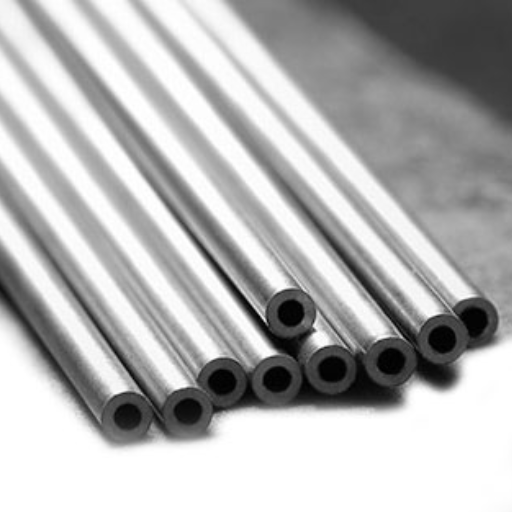
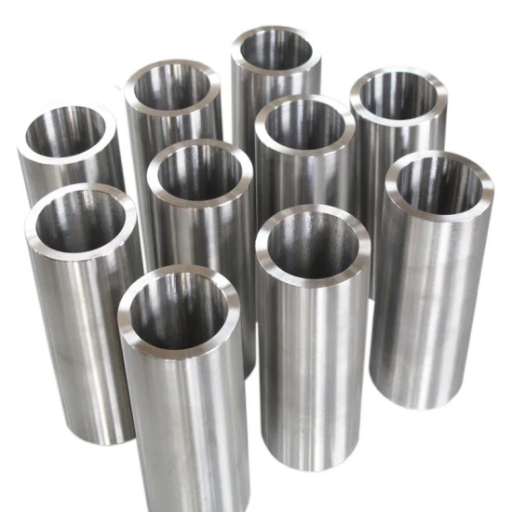
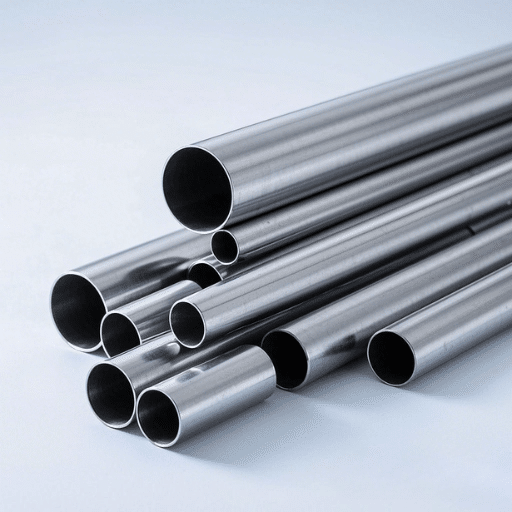
Bright annealed stainless steel tubing is produced as a seamless tube, which undergoes processing through a controlled-atmosphere furnace to achieve an oxide-free surface finish. Bright annealing uses a protective hydrogen-nitrogen atmosphere to prevent oxidation which eliminates the need for acid treatment while producing a bright metallic finish that comes directly from the furnace.
The Bright Annealing Process
The manufacturing sequence begins with cold-drawn seamless tube or precision-welded tube produced to tight dimensional tolerances. The tube travels through a continuous or batch furnace which operates between 1050°C and 1100°C while maintaining a hydrogen-nitrogen controlled atmosphere. This atmosphere prevents the formation of surface oxides that normally occur when stainless steel is heated in air.
The tube undergoes rapid cooling after it leaves the furnace which preserves its microstructure in the solution-annealed state. The process stops carbide precipitation from occurring at grain boundaries which would lead to sensitization that decreases corrosion resistance. The process produces a tube with mechanical properties that have been restored through enhanced corrosion resistance and a bright reflective surface which does not need additional mechanical polishing or chemical treatment.
When the engineering team at Precision Analytics in Boston specified tubing for their new GC-MS laboratory in March 2025, they faced a tight budget with demanding cleanliness requirements. Their consultant recommended bright annealed 304 tubing instead of electropolished — saving 45% on material costs while still achieving the particle control their analytical instruments required. The BA tubing’s Ra 0.4μm surface finish proved sufficient for gas chromatography carrier gas delivery, and the project’s total tubing cost dropped from 48,000to48,000to26,000.
304 Grade Specifics for Bright Annealed Applications
UNS S30400 — the standard 304 grade — contains 18–20% chromium and 8–10.5% nickel, providing excellent corrosion resistance in non-chloride environments. For bright annealed applications, 304 offers several advantages:
- Cost efficiency: Approximately 20–25% lower cost than 316L while maintaining equivalent surface finish capabilities
- Adequate corrosion resistance: Suitable for high-purity water, clean steam, and most process gases
- Weldability: Excellent orbital welding characteristics for high-purity system installation
- Availability: Broader size range and faster delivery than specialty grades
For applications involving chloride exposure, elevated temperatures above 400°C, or aggressive cleaning chemistries, 304L (UNS S30403) with its lower carbon content prevents sensitization during welding and provides better intergranular corrosion resistance.
Surface Finish Characteristics: The Ra Value Explained
The surface roughness of bright annealed 304 tubing reaches Ra 0.3–0.5μm (12–20 microinches) at its standard level. Pharmaceutical and semiconductor applications demand premium grades which establish Ra limits of 0.4 micrometers as their maximum requirement. The improved surface finish between standard mill finish and this product shows better results because it achieves Ra 1.0 to 1.6 while falling short of electropolished surfaces, which reach Ra 0.2 to 0.4.
The Ra value (arithmetical mean roughness) measures the average deviation of the surface profile from the mean line. The Ra value shows that smoother surfaces have microscopic valleys and peaks which create spaces where particles, bacteria, and contaminants can build up. The gas systems which require high purity use smoother surfaces because they decrease the following two elements:
- Particle shedding during pressure cycling
- Moisture retention in dry gas applications
- Surface area available for chemical adsorption
- Risk of microbial attachment in pharmaceutical systems
Bright Annealed vs Electropolished vs Mill Finish: Complete Comparison

Selecting the right surface finish requires understanding the performance-cost tradeoffs between mill finish, bright annealed, and electropolished tubing. Each option serves distinct application requirements with significant cost implications.
Surface Finish Comparison Table
| Finish Type | Ra Value | Cost Factor | Primary Applications |
|---|---|---|---|
| Mill Finish (Annealed & Pickled) | 1.0–1.6μm | 1.0× | General industrial, structural |
| Bright Annealed (BA) | 0.3–0.5μm | 1.3–1.5× | High purity gas, pharmaceutical, analytical |
| Electropolished (EP) | 0.2–0.4μm | 2.0–2.5× | Semiconductor UHP, ultra-high purity |
When to Specify Bright Annealed Tubing
Bright annealed 304 tubing delivers optimal value when your application requires enhanced surface cleanliness without the premium cost of electropolishing. Specify BA tubing for:
High Purity Gas Systems (Non-UHP)
Process gas distribution lines in semiconductor fabs operating at standard purity levels (99.99% and below) benefit from BA tubing’s reduced particle generation without requiring the sub-micron control of electropolished surfaces.
Pharmaceutical Process Lines
Clean steam distribution, process piping for non-purified water, and CIP-compatible product contact surfaces meet regulatory requirements with BA tubing’s smooth, cleanable surface.
Analytical Instruments
Gas chromatography carrier gas lines, mass spectrometer connections, and sampling systems achieve required baseline stability and reduced contamination with BA surface finish.
Food and Beverage Applications
Process lines requiring frequent cleaning but not full sanitary polish specifications use BA tubing as a cost-effective alternative to electropolished or mechanically polished surfaces.
When to Upgrade to Electropolished
Despite its higher cost, electropolishing becomes necessary when:
- Sub-micron particle control is mandatory: Semiconductor UHP gas delivery requiring SEMI F104 compliance
- Maximum corrosion resistance is critical: Electropolishing removes surface iron contamination and enriches the chromium oxide layer
- ASME BPE high-purity water systems: Specifications explicitly requiring electropolished surfaces
- Ultra-high purity applications: Gas purity of 99.999% and above typically requires EP surfaces
The decision between BA and EP often comes down to particle count requirements. While BA tubing achieves surface cleanliness suitable for Class 100 (ISO 5) environments, electropolished tubing meets Class 1 (ISO 3) and more stringent requirements.
Dr. Sarah Chen’s biotech startup in Singapore learned this distinction the hard way. In January 2025, her team installed bright annealed tubing for their cell culture media preparation system, assuming it would meet their USP Class VI requirements. When FDA auditors questioned surface finish documentation for direct product contact, they discovered the specification actually required electropolished tubing per ASME BPE. The replacement cost and installation delay set their timeline back six weeks and added $32,000 to their equipment qualification budget.
Specifications and Standards for 304 Bright Annealed Tubing

International standards define the dimensional, mechanical, and surface requirements for bright annealed stainless steel tubing. Understanding these specifications ensures your procurement documentation aligns with industry requirements and acceptance criteria.
ASTM A269: General Service Seamless and Welded Tubing
ASTM A269 is the most commonly referenced standard for bright annealed 304 tubing. This specification covers seamless and welded austenitic stainless steel tubing intended for general corrosion-resisting and low- or high-temperature service.
Key requirements include:
- Chemical composition: 18.0–20.0% chromium, 8.0–11.0% nickel, maximum 0.08% carbon (0.030% for 304L)
- Mechanical properties: Minimum tensile strength 75 ksi (515 MPa), minimum yield strength 30 ksi (205 MPa)
- Heat treatment: Solution annealing at minimum 1900°F (1040°C) followed by rapid cooling
- Surface condition: Although A269 does not explicitly mandate bright annealing, it permits “bright finish” as a supplementary requirement when specified
When ordering BA tubing to ASTM A269, add supplementary requirement S4 (intergranular corrosion test) for welded tubing and specify “bright annealed finish” in the purchase order.
ASTM A213: Boiler, Superheater, and Heat-Exchanger Tubes
ASTM A213 specifies seamless ferritic and austenitic alloy-steel boiler, superheater, and heat-exchanger tubes. This standard applies when bright annealed tubing will experience elevated temperatures or when more stringent requirements than A269 are necessary.
A213 requirements include:
- Higher minimum tensile strength: 75 ksi (515 MPa) same as A269, but more rigorous testing
- Hydrostatic or non-destructive testing: 100% of tubes must pass eddy current or ultrasonic testing
- Dimensional tolerances: Generally tighter than A269, particularly for outside diameter
- Surface quality: Superior to A269 with stricter defect limitations
For heat exchanger applications requiring bright annealed surfaces — particularly in pharmaceutical clean steam or high-purity water systems — specify ASTM A213 T304 or T304L with bright annealed finish.
ASTM A270: Sanitary Tubing with Bright Annealed Overlap
ASTM A270 describes the seamless and welded austenitic stainless steel tubing which manufacturers produce for dairy and food and beverage applications and for biological and pharmaceutical purposes. While A270 primarily addresses mechanically polished surfaces (No. 3, No. 4, and No. 6 finishes), bright annealed tubing can meet A270 requirements when surface finish specifications align.
The A270 standard defines two categories:
- SF1 (Sanitary Finish 1): Internal surface only polished — bright annealed internal surface may meet this requirement depending on Ra value
- SF4 (Sanitary Finish 4): Both internal and external surfaces polished — bright annealed typically does not meet SF4 requirements without additional processing
Dimensional Tolerances for Precision Applications
Precision bright annealed tubing for instrumentation and analytical applications requires tighter dimensional tolerances than standard industrial tube.
| Dimension | Standard Tolerance | Precision Tolerance |
|---|---|---|
| Outside Diameter (OD ≤ 12mm) | ±0.10mm | ±0.05mm |
| Outside Diameter (OD 12–38mm) | ±0.15mm | ±0.08mm |
| Wall Thickness | ±10% | ±8% |
| Straightness | 2mm/m | 1mm/m |
| Length (cut lengths) | +3mm/-0mm | +1mm/-0mm |
Precision tolerances add 15–25% to base tubing cost but are essential for orbital welding consistency and instrument connection reliability.
Applications by Industry: Where 304 BA Tubing Excels

Bright annealed 304 tubing serves critical functions across multiple high-technology industries. Understanding the specific requirements of each sector helps engineers specify the appropriate surface finish, dimensions, and documentation package.
Semiconductor Manufacturing: High Purity Gas Delivery
Semiconductor fabs rely on 304 bright annealed tubing for bulk gas distribution systems, purge lines, and process gas manifolds operating at standard purity levels. While ultra-high purity (UHP) gas delivery at 99.999%+ purity requires electropolished tubing, BA tubing satisfies the majority of gas distribution needs.
Typical semiconductor applications include:
- Bulk nitrogen distribution: From the central gas source to point-of-use panels
- Compressed dry air (CDA) lines: Tool pneumatics and purge systems
- Process gas trunk lines: Large-diameter distribution before final UHP purification
- Exhaust and vent lines: Non-critical gas handling where particle control still matters
SEMI F104 provides guidance on polymeric components in UHP systems, while SEMI F20 addresses metallic materials. For metallic tubing, the industry relies on ASTM specifications supplemented with surface roughness requirements. Most semiconductor facilities specify Ra ≤ 0.4μm for BA tubing used in gas distribution.
Pharmaceutical and Biotechnology: Clean Steam and Process Piping
The pharmaceutical industry utilizes bright annealed 304 tubing for clean steam distribution, process piping for non-WFI (Water for Injection) applications, and CIP-compatible process lines. ASME BPE (Bioprocessing Equipment) provides the governing standard for surface finishes in pharmaceutical applications.
ASME BPE surface finish designations include:
- SF0: Unpolished, as-received — not suitable for pharmaceutical product contact
- SF1: Mechanically polished to Ra 0.8–1.6μm — acceptable for some utility applications
- SF2: Mechanically polished to Ra 0.4–0.8μm — bright annealed may meet this range
- SF3: Mechanically polished or electropolished to Ra ≤ 0.4μm — high purity applications
- SF4: Electropolished to Ra ≤ 0.4μm — WFI and highest purity requirements
Bright annealed tubing with Ra ≤ 0.4μm can meet SF2 and potentially SF3 requirements depending on the specific Ra measurement. Pharmaceutical engineers should verify their facility’s surface finish requirements against actual profilometer measurements of delivered tubing.
Analytical Instruments: Chromatography and Mass Spectrometry
Laboratory gas delivery systems for chromatography, mass spectrometry, and trace analysis demand tubing surfaces that minimize adsorption and outgassing. Bright annealed 304 tubing provides the surface inertness required for sub-ppb detection limits without the cost premium of electropolished tube.
Key requirements for analytical instrument tubing:
- Surface inertness: Minimal active sites that adsorb analytes
- Low outgassing: Surface cleanliness prevents hydrocarbon and moisture release
- Dimensional consistency: Tight tolerances ensure reliable compression fittings and face seal connections
- Clean packaging: Protection from contamination during shipping and storage
Gas chromatography carrier gas lines particularly benefit from BA tubing. The helium or hydrogen carrier gas flows continuously through the tubing, and any surface contamination affects baseline stability and detection sensitivity. BA tubing’s smooth surface minimizes these effects at significantly lower cost than electropolished alternatives.
Food and Beverage: Cost-Effective Cleanability
Food and beverage processors use bright annealed tubing for process lines where cleanliness matters but full sanitary polish specifications would be economically unjustified. Applications include:
- CIP (Clean-in-Place) supply and return lines: Non-product contact surfaces
- Utility steam: Boiler steam distribution for heating and sterilization
- Process water: Non-potable water for cleaning and flushing
- Vent and drain lines: Non-product contact drainage
The BA surface supports effective CIP cleaning cycles while costing 40–60% less than mechanically polished or electropolished alternatives. For product contact surfaces, processors typically upgrade to sanitary polished or electropolished tubing meeting 3-A or EHEDG standards.
Manufacturing and Quality Control at Zhongzheng

Understanding the manufacturing process and quality verification methods helps procurement professionals evaluate supplier capabilities and ensure received tubing meets specification requirements.
Cold Drawing and Bright Annealing Process
Zhongzheng’s 304 bright annealed tubing production begins with seamless hollows produced by piercing and rolling solid billets. The hollows undergo multiple cold drawing operations through precision tungsten carbide dies, gradually reducing diameter and wall thickness while improving dimensional accuracy.
Cold drawing work-hardens the stainless steel, increasing strength but reducing ductility. The subsequent bright annealing process restores the microstructure:
- Furnace entry: Cold-drawn tube enters the continuous annealing furnace
- Heating zone: Temperature rises to 1050–1100°C in hydrogen-nitrogen atmosphere
- Soaking zone: Temperature held for sufficient time to fully solution-anneal the microstructure
- Cooling zone: Rapid cooling through the sensitization range (450–850°C) to prevent carbide precipitation
- Exit: Bright, oxide-free tube emerges ready for testing and inspection
The controlled atmosphere — typically 75% hydrogen, 25% nitrogen — prevents oxidation and produces the characteristic bright, metallic surface. This atmosphere also reduces any existing surface oxides, contributing to the final surface cleanliness.
Quality Testing and Verification
Every heat of 304 bright annealed tubing undergoes comprehensive testing before shipment:
Surface Roughness Measurement
Profilometer testing using a diamond stylus traversing the surface provides quantitative Ra measurements. Zhongzheng certifies Ra ≤ 0.4μm for standard pharmaceutical/semiconductor grade BA tubing, with test reports documenting actual measured values.
Eddy Current Testing
100% of seamless bright annealed tubing passes through eddy current test coils that detect surface and near-surface defects including cracks, pits, and inclusions. This non-destructive testing method ensures structural integrity without affecting surface finish.
Dimensional Inspection
Outside diameter, wall thickness, ovality, and straightness measurements verify conformance to specified tolerances. Precision grades receive 100% inspection; standard grades use statistical sampling.
Cleanliness Verification
For hydrocarbon-free and particle-critical applications, additional testing includes:
- Residual hydrocarbon analysis: Ensures surfaces are free of oils and lubricants from manufacturing
- Particle count testing: Per SEMI F104 or equivalent for semiconductor applications
- Ion chromatography: Detects ionic contamination for critical electronics applications
Documentation Package
Each shipment of 304 bright annealed tubing includes comprehensive documentation:
- Mill Test Report (MTR): Chemical composition (spectrographically verified), mechanical properties, heat treatment records
- Surface Finish Certificate: Actual Ra measurement values and test methodology
- Dimensional Inspection Report: Measured values for OD, wall thickness, and length
- Cleanliness Certificate: For specified hydrocarbon-free or particle-count requirements
- EN 10204 3.1 Certificate: Available upon request for third-party verification
When the procurement team at a major European pharmaceutical company audited Zhongzheng’s facility in Wenzhou in October 2024, they were specifically looking for surface finish verification capabilities. Their previous supplier had shipped BA tubing with Ra values exceeding 0.8μm — nearly double the specified maximum. At Zhongzheng, they witnessed profilometer testing of each heat, reviewed documented Ra values, and observed cleanroom packaging procedures. The audit concluded with Zhongzheng added to their approved vendor list for critical pharmaceutical projects.
Procurement and Specification Best Practices

Successful procurement of 304 bright annealed tubing requires clear specification of material, dimensions, surface finish, and documentation requirements. The following checklist ensures your RFQ generates accurate quotations and delivers tubing that meets your application requirements.
Essential Specification Elements
When requesting quotations, include these eight elements:
- Material grade: Specify 304 (UNS S30400) or 304L (UNS S30403) for welded applications
- Applicable standard: ASTM A269, A213, or A270 depending on service conditions
- Surface finish: Maximum Ra value (typically ≤ 0.4μm) and bright annealed requirement
- Dimensions: Outside diameter × wall thickness × length (or coil length)
- Form: Straight lengths (specify maximum) or continuous coil
- Cleanliness level: Standard, hydrocarbon-free, or particle-count specified
- Packaging: Standard export or cleanroom-compatible (double-bagged)
- Documentation: MTR requirements, surface finish certificate, EN 10204 3.1 if required
Cost Considerations and Tradeoffs
Understanding cost drivers helps optimize specifications for value:
Surface Finish Upgrades
- Mill finish to bright annealed: 30–50% premium
- Bright annealed to electropolished: Additional 50–80%
- Standard Ra ≤ 0.5μm to precision Ra ≤ 0.4μm: 10–15% premium
Form Factor Considerations
- Coil tubing: Typically 10–15% lower cost per meter than straight lengths due to reduced handling
- Precision cut lengths: Add cutting and deburring charges
- Fixed lengths: May require minimum order quantities
Tolerance Premiums
- Precision OD tolerance (±0.05mm): 15–25% premium over standard
- Enhanced straightness (1mm/m): 10–15% premium
- Special packaging: 5–10% additional
Lead Time Planning
Standard 304 bright annealed tubing from Zhongzheng typically delivers in 3–5 weeks from order confirmation. Factors affecting lead time include:
- Stock availability: Common sizes (6mm, 8mm, 10mm, 12mm OD) often available from stock
- Quantity: Large quantities (10,000m+) may require 6–8 weeks
- Precision requirements: Tight tolerances add 1–2 weeks for additional inspection
- Special testing: Hydrocarbon-free certification or particle counting adds 1 week
- Cleanroom packaging: Additional 3–5 days for double-bag and nitrogen purge
Plan procurement to accommodate these lead times, particularly for project-critical deliveries where stock availability cannot cover urgent requirements.
Frequently Asked Questions
What is the Ra value of bright annealed 304 tubing?
The standard bright annealed 304 tubing establishes a surface roughness between Ra 0.3 and 0.5μm which equals 12 to 20 microinches. Premium grades targeting pharmaceutical and semiconductor applications typically specify Ra ≤ 0.4μm maximum. The mill finish surface which exists between Ra 1.0 and 1.6µm shows better results than this measurement but electropolished tubing shows better results because it reaches Ra 0.2 to 0.4µm.
Can bright annealed tubing be used for semiconductor UHP applications?
Bright annealed tubing serves semiconductor bulk gas distribution and purge lines and process gas manifolds at standard purity levels 99.99 and below. Electropolished tubing becomes necessary for ultra-high purity UHP applications which require 99.999 purity and above because it establishes particle count limits and decreases surface outgassing.
What is the difference between ASTM A269 and A213 for bright annealed tubing?
The general-purpose specification for seamless and welded austenitic tubing which supports most bright annealed applications exists as ASTM A269. The standard ASTM A213 defines seamless boiler superheater and heat-exchanger tubes which must undergo additional testing and maintain more precise size requirements. Use A213 for applications with both elevated temperatures and need for advanced testing.
Can you weld bright annealed tubing without damaging the surface finish?
The preferred method to join bright annealed tubing for high purity applications is orbital welding. The welding process creates a heat-affected zone which changes surface characteristics. Thus, welded systems need inert gas purging and critical applications require post-weld cleaning or passivation to restore surface quality at weld joints.
Is bright annealed tubing compatible with CIP and SIP cleaning cycles?
The bright annealed 304 tubing can undergo both clean-in-place and steam-in-place cleaning procedures. The surface with a smoothness of Ra ≤ 0.4μm enables effective cleaning and sterilization processes. The actual Ra measurement must match ASME BPE requirements for your facility to achieve validation needs required by pharmaceutical operations.
What is the maximum pressure rating for 304 BA tubing?
The pressure rating of a system depends on three factors which include outside diameter and wall thickness and allowable stress at its operational temperature. The 12mm OD × 1.5mm wall 304 tubing system can handle a working pressure of approximately 200 bar which equals 2,900 psi at room temperature. The design code requires designers to use safety factors for all pressure rating calculations according to ASME B31.3 which applies to process piping systems.
How do you clean bright annealed tubing before installation?
The exterior surfaces of BA tubing require cleaning with high-purity isopropyl alcohol or acetone using lint-free wipes. The interior requires cleaning through solvent passage which goes through the tube followed by a nitrogen dry purge process. The use of chlorine-containing cleaners on stainless steel is prohibited. Personnel should wear clean gloves while they handle equipment and they must cover ends of equipment immediately after they finish cleaning to block any possible contamination.
Can 304 bright annealed tubing be used for seawater applications?
The 304 grade material does not meet requirements for seawater applications because it fails to operate well in high chloride environments. The chloride ions present in seawater cause 304 stainless steel to experience both pitting and crevice corrosion. For marine or seawater applications, upgrade to 316L bright annealed tubing or, for severe service, consider super duplex grades like UNS S32750.
What is the difference between 304 and 304L bright annealed tubing?
The two types of bright annealed tubing 304 and 304L differ from each other. The lower carbon content of 304L which permits 0.030% carbon compared to 304 which allows 0.080% carbon makes 304L less likely to experience welding sensitization. For bright annealed tubing that will be welded in service, specify 304L to maintain corrosion resistance in the heat-affected zone. The seamless applications which do not require welding should use 304 because it meets requirements and costs less.
What methods exist to evaluate the surface roughness of bright annealed tubing?
Surface roughness is measured using a contact profilometer with a diamond stylus that traces the surface profile. The instrument calculates Ra (arithmetical mean roughness) from the measured profile. Non-contact optical methods are also available but less common for tubing inspection. Reputable suppliers provide surface finish certificates with actual Ra measurements for each lot.
Conclusion
The metal tubing with bright annealed finish in 304 dimension stands between two extreme surface finishes which include standard mill finish and premium electropolished surfaces. The BA tubing achieves required surface cleanliness standards for high-purity gas systems and pharmaceutical process lines and analytical instruments through its Ra values which range from 0.3 to 0.5 μm. The BA tubing achieves this function at a cost which is 40 to 60 percent lower than that of electropolished alternatives.
The actual surface finish requirements of your application must be understood by you before you can successfully create specifications. The semiconductor UHP gas delivery system and ASME BPE high-purity water system require electropolished surfaces. The most high-purity applications which include bulk gas distribution and clean steam and chromatography systems plus CIP-compatible process lines will benefit from using bright annealed tubing because it delivers the best cost-performance ratio.
The procurement process for 304 BA tubing requires you to provide the ASTM standard which should include A269 for general service and A213 for heat exchangers together with the maximum Ra value which must be less than or equal to 0.4μm and the dimensional tolerances and the required documentation. The supplier needs to have surface finish verification capabilities which you can check through their profilometer testing and cleanliness certification process.
Zhongzheng produces 304 bright annealed tubing which meets ASTM A269 and A213 specifications and provides certified Ra values that do not exceed 0.4μm surface finish. The heat process includes spectrographic verification together with surface testing that uses profilometer equipment and the option to receive cleanroom-compatible packaging which supports semiconductor and pharmaceutical delivery.