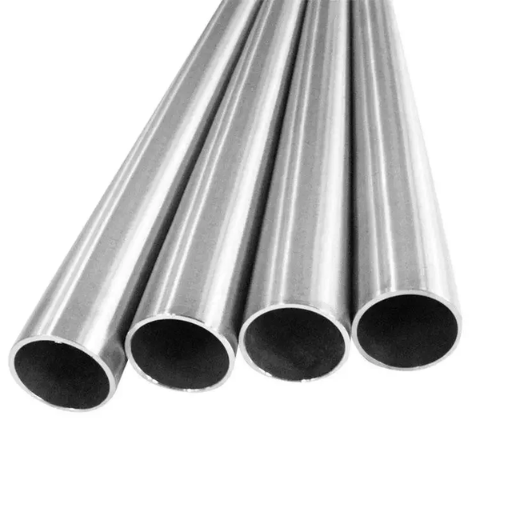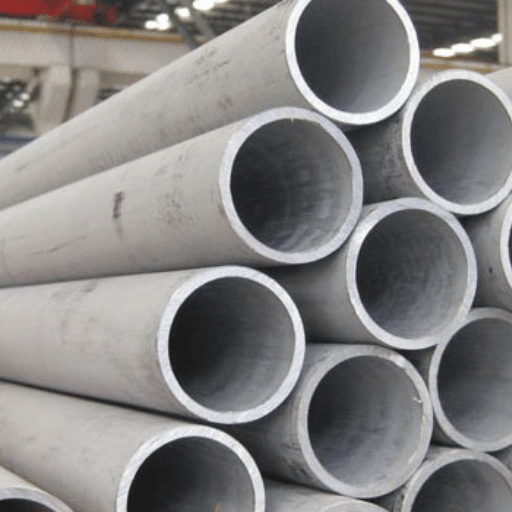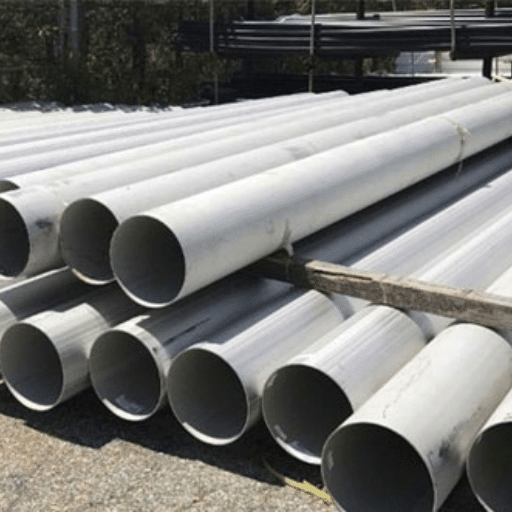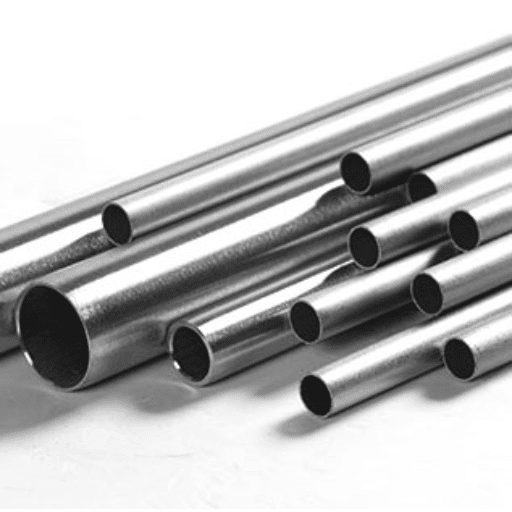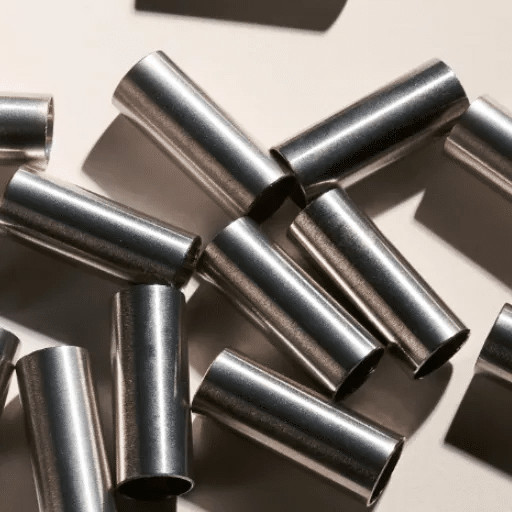
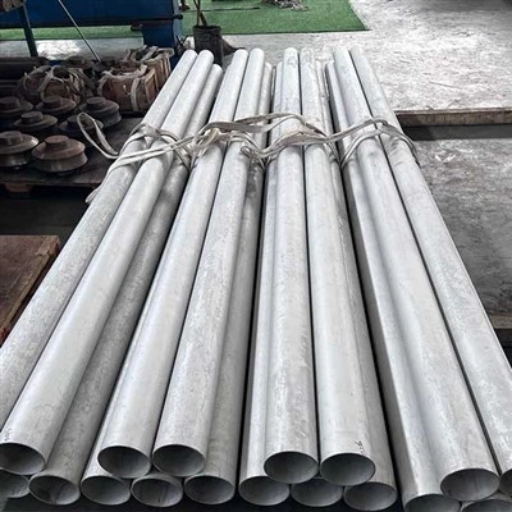
A credible nickel alloy pipe supplier in China will quote a dated price, name the mill that melted the heat, and issue an EN 10204 3.1 certificate with heat-number traceability. A trader will do none of those three things. That single test separates the shortlist from the noise, and it matters more here than in any other stainless purchase.
Search “nickel alloy pipe supplier China,” and you get hundreds of listings and almost no usable price. The problem isn’t finding a supplier. It’s telling a mill from a middleman, and knowing what the material should cost before anyone quotes you.
Nickel alloy pipe runs roughly 8 to 20 times the price of 316L, yet most “China supplier” pages publish neither a number nor a method to verify one. That’s the gap this guide closes. You’ll get dated 2026 price bands by grade and form, a five-step qualification playbook, the MTR red flags that catch grade substitution, and the honest question most suppliers avoid: do you need a nickel alloy at all?
If you’re new to the materials, start with our complete nickel alloy pipe guide and come back for the procurement detail. For the wider sourcing method, our sourcing special alloys from China playbook covers the steps that are shared across alloys.
Key Takeaways
- **Chinese nickel alloy pipe runs roughly 18–90/kgdependingongradeandform∗∗,18–90/kgdependingongradeandform∗∗,28–37/kg for Monel 400, 35–65/kgforweldedInconel625,and35–65/kgforweldedInconel625,and48–90/kg for Hastelloy C-276. Every band is indicative; a validity-dated quotation controls.
- Two inputs move the price between quote and order: LME nickel and the molybdenum price. Molybdenum is only 15–17% of Hastelloy C-276 by weight but 35–45% of its raw-material value.
- Only the original manufacturer can issue an EN 10204 3.1 or 3.2 certificate. A trader issuing one under its own name has produced a legally invalid document.
- Run OES, not XRF, for incoming PMI. XRF cannot read carbon, sulfur or phosphorus, and grade substitution, re-marking 304 as 625, is the most common nickel alloy fraud.
- Sometimes the right answer is duplex, not nickel alloy. Super duplex 2507 covers a large share of chloride duty at a fraction of 625’s price, and a supplier who won’t say so isn’t advising you.
Already have a specification? Send our technical team the grade, UNS number, form, standard and dimensions, and we’ll return a validity-dated quotation with the grade and documentation package confirmed. Send us your specification
Why Source Nickel Alloy Pipe from China
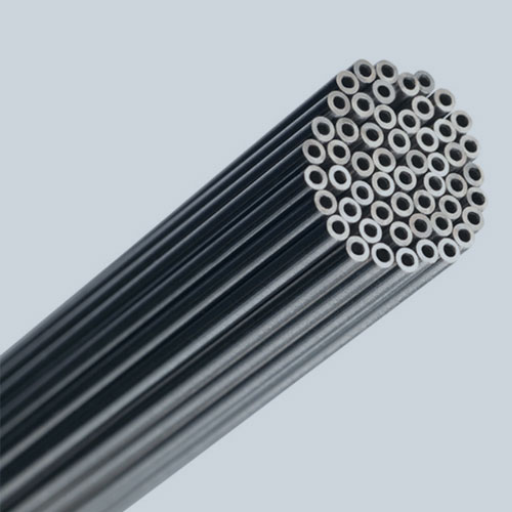
China imports more than 90% of the nickel and chromium it consumes, so it isn’t a low-cost feedstock producer. Its advantage is processing depth. Decades of serving power, chemical and offshore projects have built mature heat-treatment furnaces, ultrasonic and hydraulic test lines, and a certification infrastructure that speaks ASTM, ASME and EN fluently.
The price consequence is real. Chinese mill-direct supply typically runs 10 to 30% below Western mills for the same grade and standard, and the gap is wider on made-to-order sizes than on catalogue stock. For a 2,000 kg Inconel 625 order, that’s a meaningful number on a project’s material budget.
The trade-policy picture shifts, though, and you should price it, not assume it. As of October 2026: US Section 232 derivative tariffs apply in a tiered 10–50% structure with an elevated rate for Chinese origin; the EU’s CBAM carbon border adjustment has been in formal implementation since 1 January 2026 and requires a carbon-footprint report; and EU safeguards raised the out-of-quota stainless tariff from 25% to 50% from 1 July 2026. China’s export VAT rebate on seamless steel pipe sits at 13%. Revalidate every one of these before you build a landed-cost model, because they move quarterly.
The honest framing is this. The cost advantage is real, but the verification burden lands on you. Buy the documentation as carefully as you buy the metal.
How Much Does Nickel Alloy Pipe Cost? 2026 Price Bands
Chinese nickel alloy pipe typically runs 18–55/kg for Nickel 200/201,18–55/kg for Nickel 200/201,28–37/kg for Monel 400, 35–85/kg for Inconel 625 (worked pipe lower,cold−drawn higher),35–85/kg for Inconel 625 (worked pipe lower,cold−drawn higher),25–65/kg for Incoloy 825, and $48–90/kg for Hastelloy C-276. Form matters as much as grade: the cold-drawn route costs 20–40% more than the welded route at the same size. Always ask for a validity-dated quotation.
No competitor ranking for this keyword publishes a real band. Here’s one, drawn from the Chinese market this October and labeled for what it is.
| Grade (UNS) | Family | Form | 2026 indicative price (USD/kg) | Cost driver |
|---|---|---|---|---|
| Nickel 200 / 201 (N02200 / N02201) | Pure Ni | Welded / cold-drawn | 18–55 (bulk >2 t toward the low end) | Nickel content near 99% |
| Monel 400 (N04400) | Ni-Cu | Welded / cold-drawn | 28–37 | ~63% Ni plus Cu |
| Inconel 625 (N06625) | Ni-Cr-Mo-Nb | Welded pipe | 35–65 | Ni ~58%, Mo 8–10%, plus Nb |
| Inconel 625 (N06625) | Ni-Cr-Mo-Nb | Cold-drawn pipe | 58–85 | Form premium plus Mo and Nb |
| Incoloy 825 (N08825) | Ni-Fe-Cr-Mo-Cu | Welded / cold-drawn | 25–65 (welded from ~25) | Lower Ni (38–46%), Mo 2.5–3.5% |
| Hastelloy C-276 (N10276) | Ni-Mo-Cr-W | Welded pipe | 48–70 | Mo drives 35–45% of raw-material value |
| Hastelloy C-276 (N10276) | Ni-Mo-Cr-W | Cold-drawn pipe | 55–90 | Plus form premium |
Read the last column, not just the number. The band is wide because the inputs are volatile, and the buyer who understands the input negotiates better than the one who doesn’t.
Why the Price Moves: LME Nickel and the Molybdenum Link
Every 1,000/t move in the LME nickel price shifts Inconel 625 by roughly 1,000/t move in the LME nickel prices hifts Inconel 625 by roughly 0.50–1.00/kg, because nickel is more than half the alloy by weight. That input was volatile through 2026: it peaked above 19,750/t in early May and eased to about 19,750/t in early May and eased to about 16,275/t by 30 June.
Molybdenum is the sharper lever, and almost nobody explains it. In Hastelloy C-276, molybdenum is only 15–17% of the alloy by weight yet accounts for 35–45% of the raw-material value. Every 10/kgmoveintheMopriceshiftsC−276byroughly10/kgmoveintheMopriceshiftsC−276byroughly1.60/kg. That is why a C-276 quotation can go stale in weeks while an 825 quotation holds for months.
This is the reason a validity date isn’t a courtesy; it’s a specification. When a fabrication shop in Zhejiang held a Hastelloy C-276 quotation for three months before releasing the order, the molybdenum price had moved enough that the original number no longer existed.
The re-quote landed 9% higher and pushed the order past the project’s contingency. Asking “how long is this price good for?” at the quotation stage is free. Discovering the answer at the purchase-order stage is not.
Form and Size: the 20–40% Premium
Nickel alloy pipe is supplied either welded or cold-drawn (seamless), and the choice of forming route changes both the price and the governing standard. Cold-drawn pipe runs roughly 20–40% above welded at the same size, and the premium falls as diameter and wall thickness increase.
Cold-drawn material is the right answer for high pressure, small-bore instrument and umbilical tubing, and every application where a longitudinal weld seam is unwelcome in corrosive service. Welded pipe is the economical correct answer for larger-diameter, lower-pressure runs, provided the weld is made to the right filler chemistry and the MTR records the weld integrity test. Know which one your application actually needs before you ask for a price; the difference between the two quotes can be larger than the difference between two suppliers.
The grade detail lives in the grade articles: Inconel 625 pipe to ASTM B444, Monel 400 pipe and its service limits, and Hastelloy C-276 pipe specifications.
Step 1: Lock the Specification Before You Ask for a Price
An ambiguous RFQ is the single most common procurement failure, and it’s exactly what a grade-substituting supplier exploits. “Inconel pipe, 2 inch” is not a specification. It is an invitation.
A nickel alloy RFQ should carry all of the following before it goes to any supplier:
- UNS grade: N06625, N08825, N04400, N10276, never the trade name alone
- Form: cold-drawn or welded, stated explicitly
- Standard and edition: for example ASTM B444-23, not just “ASTM B444”
- Dimensions: OD × Wall Thickness × Length, to ASME B36.19M (the S-series nickel alloy schedule), not ASME B36.10M
- Condition: annealed or solution-annealed, stated
- Test and certification: PMI, ultrasonic, hydrostatic, EN 10204 3.1 or 3.2
- Quantity, destination and Incoterm
The edition year isn’t pedantry. ASTM revises allowable chemistry and test requirements between editions, and a supplier quoting to a superseded edition may be quoting different material than your engineering team specified. For how the standards layer across the nickel alloy family, see our nickel alloy pipe standards index.
Precision here does one more job. A tight specification tells a serious mill you know the material, and it tells a trader you’re not a soft target. Both effects work in your favor.
Step 2: Find Suppliers, Then Verify They Are Manufacturers
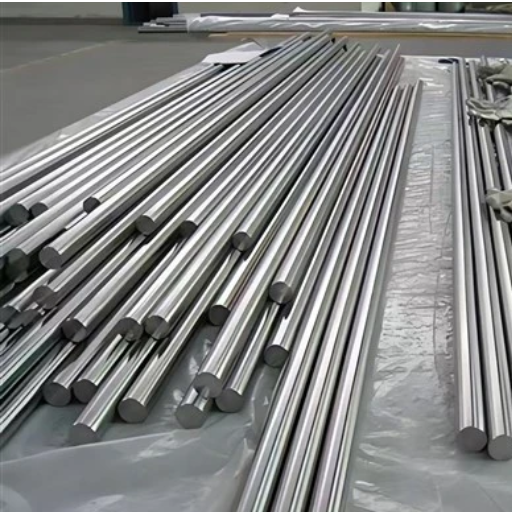
Treat Made-in-China, Alibaba and the GoldSupplier listings as a discovery layer, not a trust signal. They’re excellent for assembling a first list of names. They can’t tell you whether the name on the listing owns a furnace.
From that list, work two channels. First, contact mills directly in the manufacturing clusters, Wenzhou and Zhejiang for pipe and fittings, Jiangsu and Shandong for wider tonnage. Second, cross-check every candidate against China’s National Enterprise Credit Information system, where the registered business scope is public.
The Manufacturer Test
Three checks separate a producer from a reseller, and each one is hard to fake:
- Business license scope: it must include manufacturing, not only trading. This is a public record.
- Melt shop and test lab: ask for a live video walkthrough, not a gallery of stockyard photos. A producer can show you a furnace and a spectrometer; a trader cannot.
- The certificate rule: only the original manufacturer can issue an EN 10204 3.1 or 3.2 certificate. Ask which mill melted the heat.
That third check is the decisive one, and it’s where a familiar story plays out. A buyer shortlisted a “manufacturer” whose prices were competitive and whose paperwork looked complete, including a 3.1 certificate. The certificate carried the supplier’s own name as issuer.
When the buyer asked for the producing mill, the answer was vague. When the buyer asked for a live walkthrough of the melt shop, the camera pointed at a warehouse. The business license settled it: the scope listed trading. No producer, no valid 3.1, no order.
Request a sample MTR and a PMI record for the grade you’re considering, so your QC team can see the documentation package before the order is placed. Our technical team will provide sample material certificates for the duplex and nickel alloy grades we manufacture. Request a sample MTR
Step 3: Read the MTR Like a Materials Engineer
The Mill Test Report is where a nickel alloy purchase is won or lost. It isn’t a formality; it’s the product’s provenance. Five fields must match your purchase order exactly:
- Heat number: traceable to the marking stenciled on the material
- Full chemistry: against the UNS window
- Mechanical properties: yield, tensile, elongation
- Actual hardness values: not a pass/fail tick
- Heat-treatment condition: solution-annealing temperature and time for C-276
Then apply the certificate discipline. EN 10204 defines four types, and the difference between them is the difference between a promise and a proof.
| Type | What it confirms | Who may issue it | Typical use |
|---|---|---|---|
| 2.1 | Statement of compliance with the order | Manufacturer | Non-critical |
| 2.2 | Test report, non-specific inspection | Manufacturer | General industrial |
| 3.1 | Inspection certificate, tests on the actual heat | Manufacturer’s QA, independent of production | Process piping, power |
| 3.2 | Inspection certificate validated by an independent third party | Manufacturer plus SGS / TÜV / BV / DNV | PED Cat. III/IV, offshore, sour service |
The rule that carries the whole article: only the original manufacturer can legally issue a 3.1 or 3.2. A distributor that issues one under its own name has produced an invalid document, even if the chemistry it reports happens to be correct.
The Red Flags
Five patterns should stop a shipment or a payment:
- Chemistry summing to exactly 100.00%. Real spectrographic analyses rarely land on round numbers. An MTR that does was likely copied, not measured.
- Identical results across different heats. Two heats poured from different charges will not report identical chemistry down to the decimal.
- A heat number that doesn’t match the material marking. The pipe on the dock and the paper in your hand must be the same lot.
- Missing heat-treatment data. For C-276, solution annealing at 1120 °C minimum plus quench is not optional; it’s what creates the corrosion resistance.
- A distributor-issued 3.1 or 3.2. See above. It cannot be valid.
“We lost the original MTR but can issue a new one” is the last flag. A real mill keeps digital heat records and can reissue the original PDF. If the record can’t be reproduced, it may never have existed.
Step 4: Verify Independently: PMI, Labs and Third-Party Inspection
Paperwork is necessary and insufficient. Verify the material itself.
Run positive material identification at receiving, and run it by optical emission spectrometry (OES) rather than by XRF. Portable XRF is fast and fine for screening the heavy elements, but it can’t read carbon, sulfur or phosphorus. Those three elements are exactly what exposes a substitution: a 304 stainless re-marked as Inconel 625 will show chromium and nickel in a plausible range on XRF, while its niobium is absent and its molybdenum sits below spec. OES catches it in about thirty seconds.
Grade substitution is the most common nickel alloy fraud precisely because the incentive is enormous. A 300-series stainless sells for a fraction of the 625 price, and the visual difference is nil. This is the story the price-shopped buyer writes:
A fabricator ordered what the certificate called Inconel 625 pipe, chosen on the strength of the lowest quotation in the round. At receiving, OES analysis found no niobium and molybdenum well below the B444 window. The material was a re-marked austenitic stainless.
The independent lab test cost a few hundred dollars, and the lot was rejected before fabrication. In chloride service, the substitution would have surfaced months later as cracking, long after the welds had been made and the pipe buried.
For sour-service projects, verification also covers the NACE MR0175 / ISO 15156 clause: the applicable ISO 15156-3 Annex A table and the hardness requirement belong on the PO, and our nickel alloy pipe for sour service article covers that selection in detail.
Cross-check the heat number against the original mill. Verify 3.2 certificates and any third-party inspection with the issuing body directly: SGS, TÜV, BV, or DNV. And on a first order, build in a 200–500 kg trial with third-party inspection before committing to production volume. A trial order costs less than one spool of bad pipe.
Step 5: Agree Commercial Terms, MOQ and Lead Time
MOQ and lead time vary more by route than by supplier. Match the route to your real requirement.
| Route | Typical MOQ | Typical lead time |
|---|---|---|
| Ready stock (common sizes) | from ~200 kg; some small-bore from 1 piece | ~5–15 working days |
| Made-to-order (trial) | 200–500 kg | ~7–30 days after deposit; up to ~50 days |
| Mill roll (non-stock grade, e.g. exotics) | project volume | 16–24 weeks |
The trap here is a supplier who quotes a stock lead time for a non-stock grade. A C-276 size that isn’t in stock is a mill roll, and a mill roll is measured in months. Ask explicitly: “Is this size in stock, or is it a production run?” The answer changes your project calendar.
On payment, the safe structure for a Chinese steel order is a 30% T/T deposit with 70% against the bill of lading copy, or an irrevocable L/C at sight for new or larger orders. Never pay 100% in advance. Tie the release of any balance to a clean pre-shipment inspection report, so payment follows proof rather than promise. FOB is the standard starting Incoterm: you control freight, insurance and destination clearance, and you confirm the loading port, Ningbo-Zhoushan, Shanghai or Wenzhou.
When a Nickel Alloy Is the Wrong Purchase: the Duplex Question
Here’s the part a commission-driven supplier won’t say. For much of the chloride duty that sends buyers looking for a nickel alloy, super duplex 2507 does the job at a fraction of the price.
Super duplex 2507 carries a PREN above 40 and handles seawater, chlorides and a wide sour-service envelope up to its temperature ceiling near 250–300 °C. Inconel 625 costs roughly 1.5–3 times more. Where 2507’s envelope holds, it’s the better commercial answer, and buying 625 anyway is simply paying a premium for headroom you’ll never use.
Reach for a nickel alloy when one of these is true: the H₂S partial pressure exceeds what super duplex qualifies for, the temperature exceeds duplex’s ceiling, the medium is a severe acid that only C-276 resists, or the consequence of failure (shutdown, lost production, emergency freight) outweighs the material delta.
We make duplex and super duplex pipe, so telling you this costs us margin on the occasional order. It also means the nickel alloy grades we do quote are the ones that are actually required. Our super duplex S32750 corrosion performance article and our when to upgrade from stainless steel to nickel alloy guide both cover where the ladder turns.
Supplier-Qualification Scorecard
Print this. Score every candidate against it before you send an RFQ.
| Dimension | What to confirm | Pass signal |
|---|---|---|
| Capability | Grades, forms, size range, stock vs production | Names the producing mill; video walkthrough of melt shop and test lab |
| Certification | ISO 9001, PED, NACE where applicable | Valid on the certification body’s database, not a scanned PDF |
| Documentation | EN 10204 3.1 / 3.2, MTR with hardness, heat-treatment record | Can issue 3.1 in the manufacturer’s name; 3.2 on request |
| Verification | PMI, ultrasonic, hydraulic, third-party inspection | Supports SGS / TÜV / BV / DNV witness testing |
| Commercial | MOQ, lead time, validity-dated quote, payment terms | Quotes a validity date without being asked |
A supplier who clears all five is a producer. A supplier who clears three is a reseller you may still use, with your own inspection. A supplier who clears fewer is a risk you don’t need.
For the wider method of vetting a Chinese manufacturer, the business-license check, the reference calls, the audit logistics, our stainless steel manufacturer China guide walks through the parts that apply to any alloy.
Frequently Asked Questions
How much does nickel alloy pipe cost per kg?
Indicative 2026 Chinese market bands run 18–55/kg for Nickel 200/201,18–55/kg for Nickel 200/201,28–37/kg for Monel 400, 35–85/kg for Inconel 625,35–85/kg for Inconel 625,25–65/kg for Incoloy 825, and $48–90/kg for Hastelloy C-276. Cold-drawn pipe costs 20–40% more than welded at the same size. Always request a validity-dated quotation, because nickel and molybdenum prices move weekly.
How do I verify a Chinese nickel alloy pipe supplier?
Confirm the business license scope includes manufacturing, require EN 10204 3.1 (or 3.2) certificates with heat-number traceability, check the heat number against the original mill, run incoming PMI with OES rather than XRF, and place a 200–500 kg trial with third-party inspection before committing to production volume.
Is my Chinese supplier a manufacturer or a trader?
Only the original manufacturer can legally issue an EN 10204 3.1 or 3.2 certificate. A trader issuing one under its own name has produced an invalid document. Ask which mill produced the heat, request a live video walkthrough of the melt shop and test lab, and check that the business license scope includes manufacturing, not only trading.
What is the MOQ for nickel alloy pipe from China?
Ready stock often starts around 200 kg, with some small-bore sizes available from a single piece. Made-to-order trials typically run 200–500 kg. Non-stock exotic grades are mill rolls and are quoted by project volume.
How long does it take to get nickel alloy pipe from China?
Stock sizes ship in roughly 5–15 working days. Made-to-order runs take about 7–30 days after deposit, occasionally up to 50 days. A mill roll for a non-stock grade such as C-276 can take 16–24 weeks. Confirm whether your size is stock or a production run before you plan.
What is the difference between EN 10204 3.1 and 3.2?
Type 3.1 is an inspection certificate whose tests are run on the actual heat by the manufacturer’s QA, independent of production. Type 3.2 adds validation by an independent third party. Only the original manufacturer may issue either; 3.2 is required for PED Category III/IV, offshore and much sour service.
What is PMI and why does it matter for nickel alloy pipe?
Positive material identification confirms the alloy grade at receiving. For nickel alloys, run OES rather than XRF, because XRF cannot measure carbon, sulfur or phosphorus. Grade substitution, re-marking 304 stainless as Inconel 625, is the most common nickel alloy fraud, and OES exposes it in about thirty seconds.
Is it cheaper to buy nickel alloy pipe from China than from Europe?
Chinese mill-direct supply typically runs 10–30% below Western mills for the same grade and standard. Landed cost depends on trade policy, though: US Section 232 derivatives, EU CBAM and EU safeguards all affect the final number, so model those before you commit.
Conclusion and Next Step
Sourcing nickel alloy pipe from China is a value-positive strategy if you qualify the supplier the way a materials engineer would. Lock the specification to the UNS grade and the standard edition. Treat the marketplaces as a discovery layer, then verify you’re facing a producer, not a trader.
Read the MTR against the purchase order, and demand a 3.1 or 3.2 certificate only the mill can issue. Verify independently with OES, and transact on terms that tie payment to a clean inspection. And ask the honest question first: whether super duplex already does the job.
Each of these steps is cheap. A few hundred dollars of OES testing and a trial order cost less than a single failed spool. The step you skip is the one a substituting supplier is counting on.
Send us your specification, grade, and UNS number, form, governing standard, OD × Wall Thickness × Length, quantity, application, and destination. Our technical team returns a validity-dated quotation with the grade, condition, and documentation package confirmed within 24 hours, including EN 10204 3.1 (3.2 on request), an MTR with recorded hardness, and PMI records, and we support third-party inspection at our Wenzhou facility. Send us your specifications