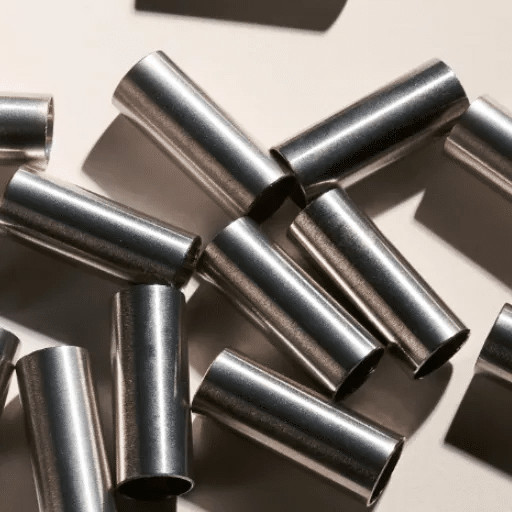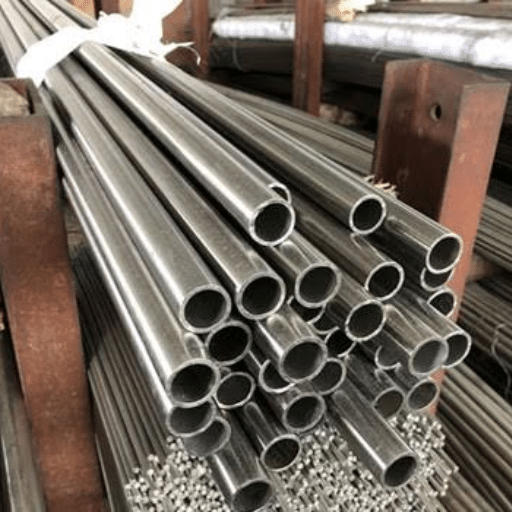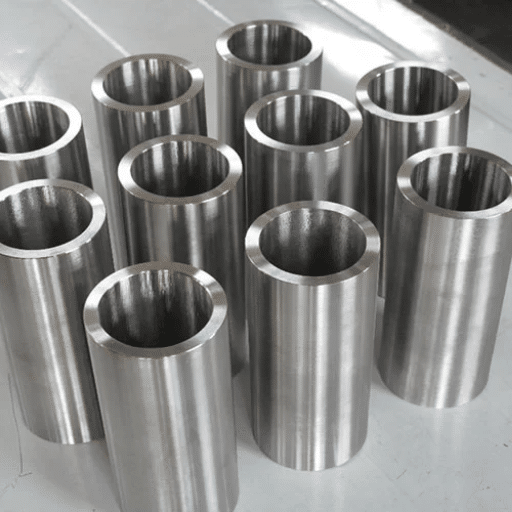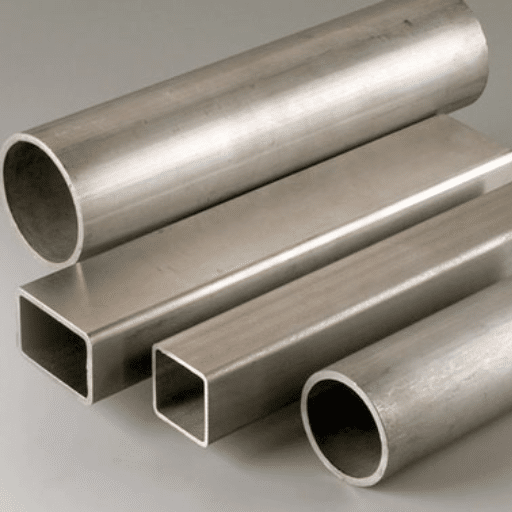
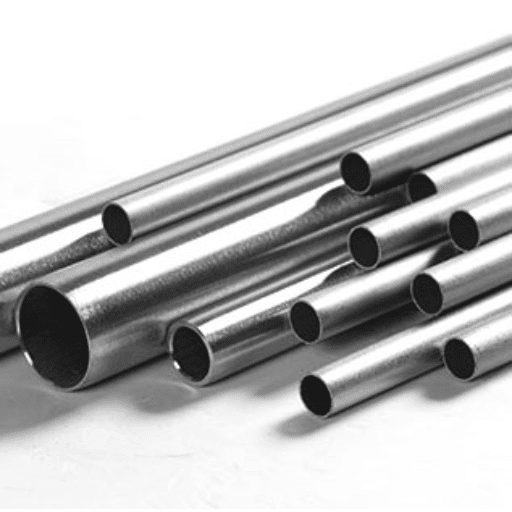
Hastelloy C-276 pipe, also written Hastelloy C276, is a nickel-molybdenum-chromium-tungsten alloy, UNS N10276 (W.Nr. 2.4819), supplied as seamless pipe to ASTM B622 or welded pipe to ASTM B619. It is specified where the process chemistry is aggressive enough that 316L, duplex and super duplex have already been ruled out: hydrochloric and sulphuric acid service, wet chlorine, hypochlorite, and flue gas desulfurization.
What makes that boundary worth understanding is how often it gets drawn in the wrong place. In 2023, a chlor-alkali operator in Gujarat replaced a failed 316L hypochlorite header with C-276 because the 316L had perforated in fourteen months. Two lines away, an engineer had specified C-276 for a dilute sulphuric acid duty at 40 °C, where 2205 duplex would have done the job for roughly a fifth of the material cost. One spec was too low. The other was too high.
If your process is genuinely reducing and aggressive, this article gives you the standard, the form, the corrosion envelope and the documentation package to put on the RFQ. If it is not, this article will tell you so.
Key Takeaways
- Hastelloy C-276 (UNS N10276) resists both reducing and oxidising media. Seamless pipe is ASTM B622, welded pipe is ASTM B619, and welded tube is ASTM B626; the split is by product form, not quality.
- Its PREN computes to about 69 by the standard formula (Cr + 3.3Mo + 16N) and about 75 if tungsten is counted. Quote the arithmetic, not a single number.
- C-276 is not the “best” nickel alloy. Inconel 625 beats it in nitric acid and high-temperature strength; C-22 beats it in oxidising and alternating chemistry. Recommending C-276 where duplex or 625 would do is the costly error.
- Molybdenum at 15–17%, not nickel, is the dominant price driver. Expect roughly 10 to 20 times the price of an equivalent 316L pipe, and insist on a validity-dated quote.
- At equal OD and wall, C-276 weighs about 11% more than 316L because its density is 8.89 g/cm³. That changes support spacing and shipped weight, not just the metal price.
What Is Hastelloy C-276 Pipe?

Hastelloy C-276 is a solid-solution, austenitic nickel-molybdenum-chromium alloy with a deliberate tungsten addition. It is one of the few alloys approved for wet chlorine and chlorine dioxide service, and its combination of molybdenum for reducing media and chromium for oxidising media lets it operate across chemistries that defeat single-purpose alloys.
Hastelloy is a registered trade name, not a grade. The procurement identifier is the UNS number, N10276, and the European equivalent is W.Nr. 2.4819 / NiMo16Cr15W. Put the UNS number on the RFQ, the purchase order and the mill test report, and the trade-name ambiguity disappears.
Where C-276 sits in the material hierarchy matters more than what it contains. It is the top rung of the upgrade ladder that starts at 304, steps to 316L, then to 2205 duplex, then to 2507 super duplex, and then reaches the nickel alloys. Our complete nickel alloy pipe guide maps that ladder family by family. C-276 is the problem-solver of last resort within the Ni-Cr-Mo family, not a default selection.
Not sure whether your stream is that problem? Send our technical team the medium, the concentration, the operating temperature, and the chloride level. We will confirm whether C-276 is the right specification, or whether duplex or 625 will do the job at a fraction of the cost, and return the grade, form, standard, and lead time within 24 hours. Send us your line list
Hastelloy C276 Pipe Specifications, Composition and Standards
Chemical composition and why each element is there
C-276’s composition is a set of deliberate trade-offs. Chromium at 14.5–16.5% is lower than Inconel 625’s roughly 22%, which is precisely why nitric acid is its weak point. Molybdenum at 15.0–17.0% drives both the corrosion resistance in reducing media and the price. Tungsten at 3.0–4.5% improves localised corrosion resistance. The extra-low carbon (0.01% max) and silicon (0.08% max) limits are what allow the alloy to be used in the as-welded condition without sensitisation in the heat-affected zone.
| Element | Range (wt%) | Function |
|---|---|---|
| Nickel | Balance (≈57 nominal) | Austenitic matrix |
| Chromium | 14.5–16.5 | Oxidising-media resistance |
| Molybdenum | 15.0–17.0 | Reducing-media resistance; primary cost driver |
| Tungsten | 3.0–4.5 | Localised corrosion resistance |
| Iron | 4.0–7.0 | Balance and cost control |
| Cobalt | 2.5 max | Residual element |
| Carbon | 0.01 max | Prevents grain-boundary precipitation |
| Silicon | 0.08 max | Limits sensitisation |
| Manganese | 1.0 max | Deoxidation residual |
| Vanadium | 0.35 max | Residual element |
Confirm these limits against a current mill MTR and ASTM B622-23 Table 1 before releasing a purchase order. Suppliers differ on the carbon and phosphorus maxima, and that difference is exactly what the MTR exists to settle.
Mechanical and physical properties
C-276 is a corrosion alloy, not a strength alloy. Minimum tensile strength is 690 MPa (100 ksi), 0.2% yield is 283 MPa (41 ksi), and elongation is 40% minimum in the solution-annealed condition. That yield figure is below duplex 2205’s roughly 450 MPa, so if your driver is pressure containment rather than corrosion, a duplex grade will usually give you more wall-thickness efficiency for less money.
The property that surprises buyers most is density. At 8.89 g/cm³, C-276 is about 11% heavier than 316L at 8.0 g/cm³. Weight per metre is approximately:
W (kg/m) ≈ 0.0279 × t (mm) × [OD (mm) − t (mm)]The consequence is commercial, not academic. A C-276 spool that looks dimensionally identical to the 316L it replaces is heavier, shifts your support spacing, and adds roughly 11% to delivered tonnage before you account for the alloy premium. Buyers who convert a 316L line list to C-276 on a per-kg comparison alone underestimate the material cost. For the dimensional framework, see our guide to pipe schedule dimensions.
Which standard covers which form
This is the mapping no supplier page assembles cleanly, and it is the reason “ASTM B622 vs B619” gets searched so often.
| Product form | Standard | Notes |
|---|---|---|
| Seamless pipe and tube | ASTM B622 / ASME SB622 | Current edition B622-23; specifies chemical, tensile, hydrostatic and non-destructive electric testing per piece |
| Welded pipe | ASTM B619 / ASME SB619 | Ordered by NPS and schedule |
| Welded tube | ASTM B626 / ASME SB626 | Ordered by OD and wall; includes as-welded, cold-worked and solution-annealed classes |
| Plate, sheet, strip | ASTM B575 | Feedstock for welded pipe |
| Bar and rod | ASTM B574 | Bar and rod stock |
| Fittings | ASTM B366 | Pipe fittings of the same alloy family |
| Forgings | ASTM B564 | Flanges and forged components |
| European equivalent | DIN 17751 | W.Nr. 2.4819 |
B622 covers seamless pipe and tube. B619 covers welded pipe. B626 covers welded tube. The B619/B626 split is about product form, not quality. Both are fully specified, tested products.
The PREN figure, with the arithmetic shown
Pitting Resistance Equivalent Number is quoted for C-276 as everything from 48 to 75 across the market. The spread is not a metallurgical controversy; it is arithmetic done inconsistently, and the honest answer is to show the working.
By the standard formula used in ASTM G48 practice and ISO 15156-3 convention:
PREN = %Cr + 3.3 × %Mo + 16 × %N
At mid-range composition (Cr 16, Mo 16, N ≈ 0), that gives PREN ≈ 69.
Some sources use the tungsten-inclusive variant, Cr + 3.3 × (Mo + 0.5 × W), which at W 3.75 gives PREN ≈ 75.
Publish both, and say which is which. One caveat applies to both: PREN is a screening tool for ranking alloys, not a service-life guarantee. It does not capture temperature, chloride concentration, oxidising potential or flow regime, and it does not predict crevice corrosion reliably. A supplier who presents a single PREN as a performance promise is selling, not specifying. The same distinction governs PREN and chloride resistance in practice further down the ladder.
Sizes, schedules and the make-versus-buy split
Seamless C-276 in ASTM B622 is commonly quoted from roughly 6 mm to 219 mm OD (1/8″ to 8″ NB), with individual mills claiming up to 610 mm. Welded B619 pipe covers small NPS through large diameter, and the welded route is where large-OD and thin-wall C-276 becomes economic. Schedules follow the standard stainless series: 5S, 10S, 40S, 80S, 160 and XXS. Lengths are single random, double random or cut to order, with 6 m and 12 m being the usual catalogue entries.
Corrosion Resistance: What C-276 Resists, and What It Doesn’t
Hydrochloric and sulphuric acid
Hastelloy C276 pipe’s defining strength is reducing-acid service. In dilute hydrochloric acid it performs well, and its advantage over 316L and 254SMO becomes dramatic above roughly 5% HCl concentration, the point at which the stainless grades begin to fail rapidly. The HCl azeotrope sits near 20%, and C-276 is a common specification at and below it.
In sulphuric acid, C-276 performs well to excellent across the full concentration range, and holds up in dilute and moderately concentrated solutions up to roughly 70 °C. Above that, and in more concentrated acid, chlorides and oxidising contaminants change the picture and the decision moves toward C-22.
Wet chlorine, chlorine dioxide and hypochlorite
This is C-276’s flagship application. It is one of a small number of alloys listed as approved for wet chlorine service, and it is widely used in chlorine dioxide generation and hypochlorite handling. The Chlorine Institute’s Pamphlet 6 wet-chlorine table lists a maximum temperature of 400 °C for the alloy; if you need the moisture threshold above which dry chlorine becomes wet chlorine, take it from the pamphlet itself, not from a supplier page.
The practical warning is that chlor-alkali service punishes assumptions. C-276 handles wet chlorine, but dry chlorine service, liquid chlorine handling and chlorine-contaminated hydrocarbons each carry their own material rules, and the presence of water changes the governing mechanism completely.
Seawater, pitting and crevice corrosion
C-276’s localised corrosion resistance is where it separates most sharply from Inconel 625. In natural seawater testing, C-276 showed crevice attack on 0% of creviced sides against 50% for 625. In seawater chlorinated to 1 ppm, the gap widens further. Critical pitting temperature sits near 150 °C for C-276 against roughly 90 °C for 625, and critical crevice temperature near 80 °C against roughly 50 °C.
Treat these as directional rankings rather than design values. Test conditions vary between studies, and you should confirm the method against your project standard before writing a temperature into a specification.
Where C-276 is the wrong choice
C-276 has real limits, and naming them is more useful than repeating that it is highly corrosion-resistant.
- Nitric acid and strongly oxidising media. With chromium at 14.5–16.5%, C-276 is outmatched. In boiling 5% HNO₃ + 1% HF, the corrosion rate is roughly 8 mpy against 0.5 mpy for C-22. For nitric acid service, specify 625 or C-22.
- Alternating or mixed oxidising/reducing chemistry. In a boiling mixed acid of 23% H₂SO₄ + 1.2% HCl + 1% FeCl₃ + 1% CuCl₂, C-276 corrodes at roughly 55 mpy against 7 mpy for C-22. Where the chemistry alternates between oxidising and reducing, C-22 is the safer specification.
- Stress-corrosion cracking under severe halide conditions. In screening tests in ZnBr₂ and HCl environments, C-22 showed no cracking while C-276 cracked. This is an unusual duty, but if your process involves heavy brines or acid halides under stress, screen for it.
- Strength-driven duties. If a duplex grade meets the corrosion requirement, C-276’s lower yield strength and much higher price make it the wrong answer. Below C-276 on the ladder, super duplex 2507 carries a PREN above 40 at a fraction of the cost.
One Gnee article and one Haynes note both gesture at these limits; almost no commercial page turns them into a selection rule. That is the difference between a datasheet and an engineering recommendation.
Hastelloy C276 vs Inconel 625 vs C-22: Choosing the Right Ni-Cr-Mo Alloy
Neither alloy is universally better. C-276 beats Inconel 625 in hydrochloric acid and reducing media, and far outstrips it in chloride pitting and crevice resistance. In natural seawater, crevice attack was 0% for C-276 against 50% for 625. Inconel 625 wins on nitric acid resistance and high-temperature strength.
| Service condition | C-276 (N10276) | Inconel 625 (N06625) | C-22 (N06022) |
|---|---|---|---|
| Dilute HCl, reducing | Excellent | Moderate | Excellent |
| Sulphuric acid | Good to excellent | Good | Excellent |
| Nitric acid, oxidising | Poor | Excellent | Moderate |
| Wet chlorine / ClO₂ | Approved | Limited | Approved |
| Seawater crevice attack | 0% attacked | 50% attacked | Low |
| CPT / CCT (indicative) | ≈150 °C / ≈80 °C | ≈90 °C / ≈50 °C | ≈150 °C / ≈85 °C |
| Mixed oxidising/reducing acid | ≈55 mpy | Limited data | ≈7 mpy |
| Tensile / yield (min) | 690 / 283 MPa | 827 / 414 MPa | 690 / 283 MPa |
| Relative cost | Highest | High | Higher than 625 |
When 625 is the better answer
Choose Inconel 625 pipe specifications when the duty is oxidising rather than reducing, when nitric or phosphoric acid dominates, when you need higher strength at temperature, or when the chloride level is moderate and the deciding factor is elevated-temperature mechanical performance rather than localised corrosion. In many nitric acid and high-temperature oxidation duties, 625 is both the technically correct and the cheaper choice.
When C-22 is the better answer
C-22 is the specification for two situations C-276 handles less well: chemistry that alternates between oxidising and reducing states, and weld-critical construction in strongly oxidising service. Its higher chromium and lower molybdenum balance produce better performance in the mixed-acid and halide cracking tests cited above. If a project engineer tells you the stream “swings,” that is the signal to look at C-22 rather than defaulting to the more familiar C-276 name.
Want the numbers applied to your actual stream rather than a table? Send us the chemistry and we will tell you which of the three the duty requires, including when the answer is the cheaper one. Talk to our technical team
Temperature Limits and Heat Treatment

The corrosion-service limit versus the oxidation limit
Hastelloy C-276 pipe has two different temperature limits, and datasheets usually quote only the reassuring one. Its oxidation limit is roughly 980 °C in clean, flowing air. Its corrosion-service limit is far lower, about 677 °C, and that is the number that governs process service.
Treat the two as unrelated. The 980 °C figure describes how the alloy behaves as a hot structural material in clean air. The 677 °C figure describes the temperature above which the corrosion-resistance mechanism itself degrades. A specification that quotes 980 °C for a chemical process stream has quoted the wrong number.
Catastrophic oxidation under deposits and in stagnant conditions
There is a third limit, and it sits below both of the others. In stagnant conditions, or beneath solid deposits and scale that prevent oxygen replenishment at the surface, C-276 can suffer catastrophic oxidation at temperatures well under its nominal limits. This is not a slow, predictable corrosion rate; it is rapid local wastage that catches operators by surprise because the bulk temperature looks safe.
The engineering response is to specify the alloy only where flow is maintained and deposits are controlled, and to treat stagnant low points, dead legs and fouled surfaces as separate design problems.
Solution annealing and the forbidden heat-treatment window
C-276 is supplied solution-annealed at approximately 1121 °C (2050 °F) and water-quenched, with a hold time of roughly 10 to 30 minutes depending on section thickness. The quench is not optional; slow cooling through the precipitation range allows secondary phases to form and degrades both corrosion resistance and toughness.
Never stress-relieve C-276 in the 649–760 °C range. Sigma and mu phases form on extended exposure across roughly 650–1050 °C, and the intermetallic precipitation that results strips away the corrosion resistance the grade was selected for. When a fabricator asks for a post-weld heat treatment on C-276, the correct answer is that the alloy is designed for as-welded service and does not require one.
Some engineers argue that 1121 °C is marginal for heavy sections and that 1150–1200 °C gives more complete dissolution. That is a real disagreement in the industry, and for thick-wall work the answer should come from the mill’s qualified heat-treatment procedure rather than a general figure.
Welding and Fabrication
Filler metal, and the substitution error that ruins the weld
Hastelloy C276 pipe is welded with ERNiCrMo-4 filler for GTAW and GMAW (AWS A5.14) and ENiCrMo-4 electrodes for SMAW. Solid wire is the correct choice for most pipe work; flux-cored wire is not recommended in this alloy.
The substitution error is the one that costs projects. Because 625 filler and 316 filler are more familiar and often already in the shop, they get used on C-276 base metal. The resulting weld metal is not C-276, and it corrodes preferentially. The weld becomes the failure point in exactly the service the alloy was specified for. Match the filler to the base metal, and document the filler heat number in the weld record.
Heat input, interpass temperature and bead discipline
C-276 needs low heat input, generally in the range of 0.5–1.5 kJ/mm, though qualified procedures span wider. Keep interpass temperature at or below 93 °C as a conservative limit; some procedures allow up to 150 °C. Use stringer beads rather than wide weave passes, keep the arc voltage low, and avoid excessive dilution of the weld pool by the base metal.
Shielding and purging matter too. Use 100% argon, or an argon-helium mix for thick sections, and back-purge the root. The oxide that forms on C-276 is tenacious and difficult to remove, and entrapped oxide in the root is a corrosion initiation site.
Preheat is not required, and post-weld heat treatment is not required. Both of those are advantages over the duplex grades, where phase balance must be managed after welding.
NACE MR0175 sour service
For sour service, C-276 is listed as an acceptable corrosion-resistant alloy in the solution-annealed condition under NACE MR0175 / ISO 15156-3. The key acceptance conditions are a maximum hardness of 35 HRC (roughly 200 HBW) and total cold work of no more than 20%. As-welded condition is acceptable without post-weld heat treatment, which suits C-276’s metallurgy, but weld-deposit hardness still has to be verified.
Strain-hardened tube, pipe and fittings fall under a different limit, capping at 40 HRC and 180 ksi tensile. If your sour-service specification reaches into C-276, verify the requirements against ISO 15156-3 Annex A and its tables, and have the hardness testing written into the inspection plan rather than assumed from the MTR.
Hastelloy C276 Pipe Price, Lead Time and Procurement
What actually drives a C-276 price: molybdenum, not nickel
Almost every supplier page says nickel prices drive the cost of nickel alloys. For C-276 that is the wrong emphasis, and getting it right is worth real money.
Molybdenum at 15–17% is C-276’s dominant input by both mass and volatility. Through 2026, molybdenum has traded near $60–70/kg and has moved sharply, while nickel has sat considerably lower per tonne by comparison. Because molybdenum is a much larger share of C-276’s alloy content than of 316L’s, a move in the molybdenum index hits C-276 pricing harder and faster.
The practical consequence for procurement: a C-276 price is a snapshot of a volatile input, not a catalogue number. Any quote without a validity date is not a quote. It is an estimate.
Indicative 2026 bands and why quotes expire
As a planning range, welded C-276 pipe has been indicated at roughly 38–65/kg and seamless at roughly 38–65/kg and seamless at roughly 48–95/kg in 2026, FOB China, depending on size, wall and form. Against an equivalent 316L pipe, that is roughly 10 to 20 times the price, welded at the lower end, seamless at the upper.
These are indicative bands only. They are not offers; they carry no date, and they will be wrong in six months. Ask any supplier for a validity period in writing, and expect a short one. Our nickel alloy vs stainless steel comparison sets out where that multiple is worth paying and where the cheaper rung does the job.
Lead time and MOQ
Seamless C-276 lead time has been reported in the 20–30 week range from order to delivery, driven by limited mill capacity in the grade and by the annealing and testing sequence. Welded pipe generally runs shorter. Minimum order quantities are typically set by the mill’s minimum heat size rather than by the customer’s line list, so a small-diameter, mixed-size order may round up substantially.
Lock in three things before you commit: the validity date of the price, the confirmed delivery week rather than a lead-time band, and the documentation package. Those three, not the headline number, determine whether the material arrives when your construction sequence needs it.
Documentation, Verification and the RFQ Checklist

MTR, EN 10204 3.1 and 3.2, and heat-number traceability
Every Hastelloy C276 pipe should arrive with a Mill Test Report showing chemical composition and mechanical properties for the actual heat, cross-referenced to the heat number stamped or marked on the pipe. For most projects, an EN 10204 3.1 certificate, issued by the manufacturer’s own inspection department, is sufficient. Where the end client or EPC requires independent verification, EN 10204 3.2 brings in a third-party inspector to validate and countersign the results.
For sour service and for any duty where C-276 was specified after a corrosion failure, consider 3.2 as standard rather than an upgrade. The cost is small relative to the cost of discovering a documentation gap after the material is installed.
PMI: C-276 and C-22 are visually identical
C-276 and C-22 are indistinguishable by appearance, marking colour or weight in the field. In a mixed stockroom holding both grades, or on a site where both were delivered, a mis-issued length is a realistic failure mode and it will not be visible at inspection.
Positive Material Identification is therefore not optional in this alloy class. Verify every piece by XRF or optical emission spectrometry against the heat number, and record the results. If a supplier cannot provide PMI records or accommodate your own PMI programme, that is a qualification question, not a paperwork detail. Our guide to qualifying an overseas pipe supplier sets out the audit questions, MTR checks and OES verification behind that answer.
Before you order, ask for a sample MTR and a PMI record so your QC team can review the documentation package ahead of the purchase order. Request a sample documentation pack
What to put on the RFQ
- Grade and UNS number: C-276, UNS N10276 (or W.Nr. 2.4819)
- Product form and standard: seamless to ASTM B622, welded to ASTM B619, welded tube to ASTM B626
- Dimensions: OD × wall thickness × length, or NPS and schedule
- Quantity and units: metres or pieces, with total weight
- Service condition: medium, concentration, temperature, chloride level and whether the stream alternates
- Condition: solution annealed and pickled, or as-welded
- Testing: hydrostatic or non-destructive electric test per standard; PMI; hardness testing if sour service
- Documentation: MTR, EN 10204 3.1 or 3.2, third-party inspection requirements
- Marking and traceability: heat number on each piece, plus packaging and shipping marks
Send that list and a C-276 quote becomes comparable between suppliers. Send a partial list and you will receive prices for materially different products.
Frequently Asked Questions
Is Hastelloy C-276 magnetic?
No, in the annealed condition. C-276 is an austenitic, face-centred cubic alloy and is essentially non-magnetic. Welds can show slight magnetic response as a result of segregation in the weld pool, which is normal and does not indicate a material problem.
Is Hastelloy C-276 better than Inconel 625?
Neither is universally better. C-276 is superior in hydrochloric acid, reducing media and chloride pitting and crevice resistance. Inconel 625 is superior in nitric acid and other strongly oxidising media, and offers higher strength at elevated temperature. The correct choice follows the chemistry, not the price or the name.
What is the difference between Hastelloy C-276 and C-22?
C-22 has higher chromium and lower molybdenum and tungsten than C-276. That rebalance makes C-22 the better choice in oxidising and alternating chemistry, and in weld-critical service where mixed acids or halide cracking are a risk. C-276 remains stronger in strongly reducing acid service. They look identical, so PMI is mandatory when both grades are in play.
Does C-276 need post-weld heat treatment?
No. C-276 is designed for as-welded service, preheat is not required, and post-weld heat treatment is not required. In fact, stress-relieving C-276 in the 649–760 °C range should be avoided entirely, because the intermetallic precipitation that forms there reduces corrosion resistance.
What is the maximum temperature for Hastelloy C-276 pipe?
There are two answers, and they apply to different things. The oxidation limit is roughly 980 °C in clean, flowing air. The corrosion-service limit is about 677 °C. For process service the lower figure governs, and in stagnant conditions or under solid deposits the alloy can suffer catastrophic oxidation below that limit.
What is Hastelloy C-276 equivalent to?
The direct equivalents are UNS N10276, W.Nr. 2.4819 and NiMo16Cr15W. It is not equivalent to 316L, duplex or super duplex. It is a different material class with a different corrosion envelope and a much higher cost. The nearest alloy-family alternatives are C-22 (N06022) and Inconel 625 (N06625), and neither is a drop-in substitute.
Is Hastelloy a trade name or a grade?
Hastelloy is a registered trade name. The grade is defined by its UNS number, N10276. Specify the UNS number on the RFQ and the purchase order, and accept the trade name only as a familiar label for the same material.
Conclusion: Specify C-276 for the Chemistry, Not the Prestige
Hastelloy C-276 pipe earns its place at the top of the upgrade ladder, but it earns it for specific chemistry rather than general superiority. The decision reduces to five points.
First, confirm the duty is predominantly reducing and aggressive: hydrochloric or sulphuric acid, wet chlorine, chlorine dioxide, hypochlorite. Second, choose the form and standard deliberately: B622 for seamless, B619 for welded pipe, B626 for welded tube. Third, check the limit cases, and be prepared to move to 625 for oxidising media or C-22 for alternating chemistry. Fourth, budget against the molybdenum index rather than the nickel price, and expect roughly 10 to 20 times the cost of equivalent 316L. Fifth, build the verification into the order: MTR, PMI and a hardness check if the service is sour.
Where any of those five points comes back ambiguous, the cheaper grade is usually the correct one, and a supplier who tells you so is worth more than one who quotes C-276 for everything.
Send us your line list or your process chemistry: medium, concentration, temperature and chloride level. Our technical team will confirm whether C-276 is the right specification, or whether duplex or 625 will do the job at a fraction of the cost, and return grade, form, standard and lead time within 24 hours. Start your C-276 enquiry