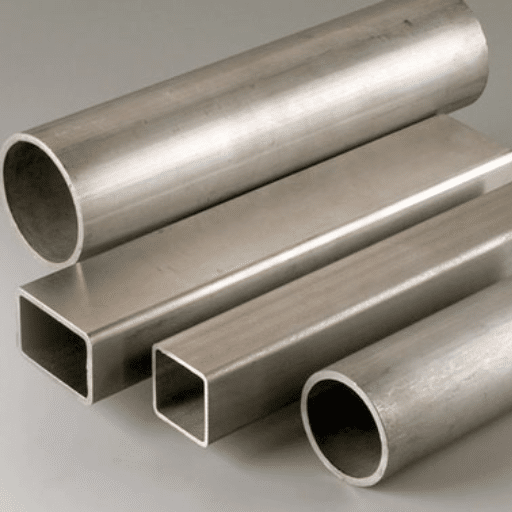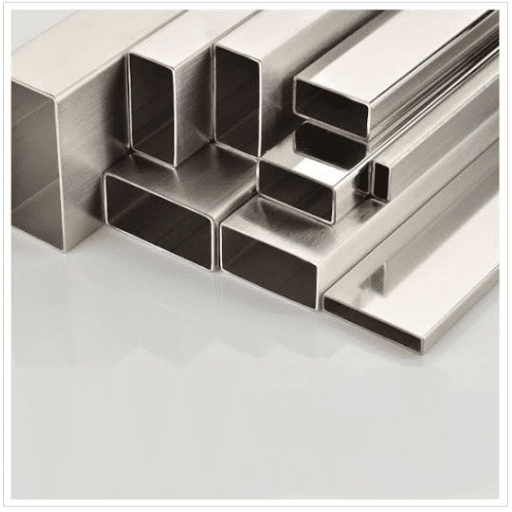
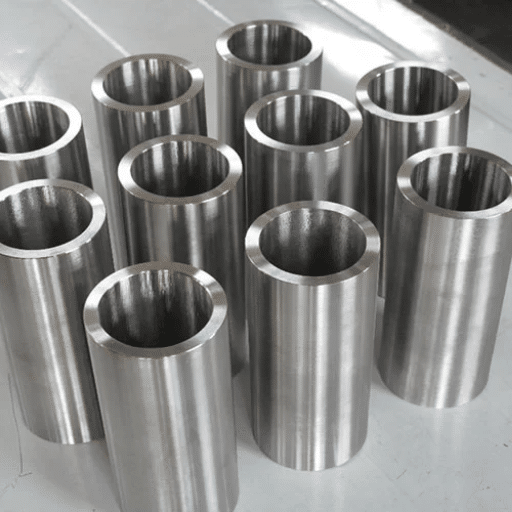
Nickel alloy pipe is a seamless or welded tubular product in which nickel is the base element by weight, not iron. The four commercial families are Monel (Ni-Cu), Inconel (Ni-Cr), Incoloy (Ni-Fe-Cr) and Hastelloy (Ni-Mo-Cr). You specify one when 316L, or even super duplex 2507, has run out of corrosion allowance or temperature headroom.
In April 2025, a procurement engineer named Daniel was reviewing a hydrofluoric acid alkylation unit for a refinery in Rotterdam. His line list had carried 316L for years. But wall loss on the acid-return line had doubled in eighteen months, and an inspector flagged pitting on three spool pieces.
His first replacement quote came back at four times the 316L budget. A second quote, for a nominally identical grade, came back at less than half. Daniel had two problems: the wrong material, and no way to tell which quote was real.
What you will get: a grade-by-grade reference covering Inconel 625, Monel 400, Hastelloy C-276, Incoloy 825 and more. You also get the ASTM standard map, verified 2026 price bands, and a six-step selection method. We write this as a manufacturer that runs the QC on its own documentation, and we will tell you plainly when a cheaper duplex grade is the smarter specification. Send us your line list and our technical team will confirm grade, schedule and documentation in 24 hours.
Key Takeaways
- Stainless steel is iron-based with 8-11% nickel. Nickel alloy pipe is nickel-based at 30% or more, often above 50%, which is why the price gap is 7-20x rather than 20%.
- Inconel 625 (UNS N06625) ships in two conditions: Grade 1 annealed for service to 593 °C, and Grade 2 solution-treated above that threshold where creep resistance matters.
- Hastelloy C-276 (UNS N10276) carries a PREN of 69 or higher against roughly 26 for 316L. That is the numeric reason it survives wet chlorine and hydrochloric acid.
- Monel 400 corrodes in seawater at less than 0.025 mm per year and is effectively immune to chloride stress corrosion cracking. It is weak in oxidizing acids like nitric.
- For many chloride duties, super duplex 2507 is the smarter and cheaper specification. We say so in the cost section, because being right once earns the next order.
- ASME B36.19, not B36.10, governs nickel alloy pipe dimensions. Because nickel alloys are denser than stainless, kg/m weight differs at the same OD and wall.
What Is Nickel Alloy Pipe?

Nickel alloy pipe is a tubular product in which nickel is the base element by weight, typically 30% or higher and frequently above 50%. Chromium, molybdenum, copper, iron, and niobium are added to build specific corrosion or high-temperature properties. Often described as a nickel-based alloy pipe, it is made to ASTM B444, B622, B619, B165, B423, and related standards, and used where stainless steels cannot hold up. The same material in smaller diameters is supplied as nickel alloy tube for heat-exchanger and instrumentation duty.
The defining line is the base metal. In stainless steel, iron is the base and nickel sits between roughly 8 and 11%. In a nickel alloy, that relationship flips: nickel becomes the matrix, and iron, if present, is an addition. Everything downstream changes with it, including welding procedure, machinability, and ultrasonic inspection frequency.
For the stainless baseline, the stainless equivalent, ASTM A312 is the right starting point. One disambiguation first, because it catches buyers regularly: cupronickel is not a nickel alloy. Copper-nickel grades such as C70600 and C71500 are copper-based with nickel as the addition, a different family entirely. If that is your application, the copper-nickel tubes (C70600/C71500) guide covers it properly.
Nickel Alloy vs Stainless Steel Pipe: How They Differ
| Property | Stainless steel (316L) | Nickel alloy (typical) |
|---|---|---|
| Base element | Iron | Nickel |
| Nickel content | 10-11% | 30% to 70%+ |
| PREN | ≈ 26 | 48 to 70+ |
| Service temperature | to ~ 550 °C (oxidation-limited) | to ~ 1100 °C, grade-dependent |
| Relative price | baseline | 7-20x |
| Chloride SCC resistance | Limited | High to immune, grade-dependent |
Stainless is a corrosion-resistant form of steel. A nickel alloy is a different material system that shares some alloying elements. Treat the jump as a re-specification, not a grade swap.
The Four Nickel Alloy Families: Monel, Inconel, Incoloy, Hastelloy
Four families cover nearly every industrial nickel alloy pipe enquiry, and they are defined by what is added to the nickel. The naming has a specific origin: these are INCO (International Nickel Company) trademarks. Grades above 50% nickel took the “Inconel” name, while those below 50% became “Incoloy.”
| Family | Base chemistry | Signature property | Representative grades |
|---|---|---|---|
| Monel | Ni-Cu | Seawater and hydrofluoric acid resistance | Monel 400, Monel K500 |
| Inconel | Ni-Cr | High-temperature strength, oxidation resistance | Inconel 600, 625, 718 |
| Incoloy | Ni-Fe-Cr | Cost-effective mid-tier corrosion resistance | Incoloy 800/800H, 825 |
| Hastelloy | Ni-Mo-Cr | Severe corrosion, wet chlorine, mixed acids | Hastelloy C-276, C-22 |
Monel (Ni-Cu): Seawater and Hydrofluoric Acid
Monel is nickel alloyed primarily with copper, typically 28 to 34% copper in Monel 400. Monel pipe stands out in seawater and hydrofluoric acid, two environments that destroy most stainless grades, and it is effectively immune to chloride stress corrosion cracking.
The established application is HF alkylation unit piping in refineries, where Monel 400 has been the specification for decades. It is also common in offshore seawater cooling and firewater systems. The honest limit: Monel is weak in strongly oxidizing acids such as nitric.
Inconel (Ni-Cr): High-Temperature Strength and Oxidation Resistance
Inconel grades are built on a nickel-chromium base, and Inconel pipe is chosen for high-temperature strength and oxidation resistance. Chromium forms a tenacious chromium oxide (Cr₂O₃) passive film, and the chemistry holds mechanical strength where stainless would creep or scale.
Inconel 625 is the pipe grade you will meet most often, combining nickel, chromium and molybdenum with niobium for strength. Inconel 600 is the older Ni-Cr workhorse for elevated-temperature service with moderate corrosion, and Inconel 718 is a precipitation-hardening grade used more in bar than pipe.
Incoloy (Ni-Fe-Cr): The Cost-Effective Middle Tier
Incoloy grades add substantial iron to the nickel-chromium base, which lowers cost while keeping much of the corrosion resistance. This is the sensible middle tier: more capable than duplex, less costly than a full Inconel. Incoloy 825 is the acid and sour-service grade, with molybdenum and copper added to handle sulphuric and phosphoric acid plus sour gas wells containing H₂S, CO₂ and chlorides. Incoloy 800 and 800H are high-temperature grades for furnace and heat-exchanger service.
Hastelloy (Ni-Mo-Cr): The Severe-Corrosion Answer
Hastelloy is the family you reach for when nothing else survives, and Hastelloy pipe is its most common industrial form. These are nickel-molybdenum-chromium alloys, and in the C-family grades molybdenum reaches 15 to 17%. That is what pushes corrosion resistance far beyond stainless.
Hastelloy C-276 handles wet chlorine, hypochlorite, hydrochloric acid, and mixed acids where both oxidizing and reducing conditions occur. That combination defeats nearly every stainless. The trade-off is cost and machinability: it is among the most expensive pipe materials per kilogram and it work-hardens aggressively.
Grade-by-Grade Reference: 625, 400, C-276, 825, 200/201 and More
This is the table to bookmark. It maps each grade to its UNS number, its European W.Nr. designation, its family, and the two ASTM standards governing it in seamless and welded form.
Note that a standard lists a product and its test requirements. It does not tell you which grade to choose.
| Grade | UNS | W.Nr. | Family | Seamless standard | Welded standard |
|---|---|---|---|---|---|
| Nickel 200 | N02200 | 2.4066 | Commercially pure Ni | ASTM B161 | ASTM B725 / B163 |
| Nickel 201 | N02201 | 2.4068 | Pure Ni (low carbon) | ASTM B161 | ASTM B725 / B163 |
| Monel 400 | N04400 | 2.4360 | Ni-Cu | ASTM B165 | ASTM B725 |
| Monel K500 | N05500 | 2.4375 | Ni-Cu-Al (age-hardened) | ASTM B865 | Not applicable |
| Inconel 600 | N06600 | 2.4816 | Ni-Cr-Fe | ASTM B167 | ASTM B517 |
| Inconel 625 | N06625 | 2.4856 | Ni-Cr-Mo-Nb | ASTM B444 | ASTM B705 |
| Inconel 718 | N07718 | 2.4668 | Ni-Cr-Fe-Nb (PH) | ASTM B983 / B670 | Not applicable |
| Incoloy 800 / 800H | N08800 / N08810 | 1.4876 | Ni-Fe-Cr | ASTM B407 | ASTM B514 |
| Incoloy 825 | N08825 | 2.4858 | Ni-Fe-Cr-Mo-Cu | ASTM B423 | ASTM B704 |
| Hastelloy C-276 | N10276 | 2.4819 | Ni-Mo-Cr-W | ASTM B622 | ASTM B619 |
| Hastelloy C-22 | N06022 | 2.4602 | Ni-Cr-Mo-W | ASTM B622 | ASTM B619 |
| Alloy 20 | N08020 | 2.4660 | Ni-Fe-Cr-Mo-Cu | ASTM B729 | ASTM B464 |
General requirements sit in ASTM B829 for cold-worked seamless nickel alloy pipe and tube, and ASTM B775 for welded nickel alloy pipe.
Inconel 625 (N06625): Grade 1 vs Grade 2 Delivery Condition
Inconel 625 is the most-specified nickel alloy pipe grade, and it ships in two delivery conditions buyers regularly confuse. Grade 1 (annealed) is for service up to 593 °C. Grade 2 (solution annealed) is for service above 593 °C, where creep and rupture resistance control. Specify the condition, not just the grade, or you may receive a heat that is technically 625 but wrong for your temperature.
The governing standard is ASTM B444, current edition B444-23 (July 2023). References to B444:18 or B444:16 are out of date. B444 covers N06625 plus N06852 and N06219 in cold-worked seamless pipe and tube, with ASTM B705 as the welded counterpart. Inconel 625 has a PREN of approximately 48 to 51, clearly above super duplex 2507 for pitting resistance while adding high-temperature capability duplex cannot match.
Monel 400 (N04400): Seawater, Hydrofluoric Acid, and a 480 °C Limit
Monel 400 is the nickel-copper grade, with nickel at 63% or higher and copper at 28 to 34%. Its seawater corrosion rate is below 0.025 mm per year, and it is effectively immune to chloride stress corrosion cracking. That makes it a default for seawater cooling, firewater and HF alkylation service.
Mechanically it is moderate: tensile 480 to 550 MPa, yield 172 to 240 MPa, elongation 35 to 50%, hardness around 70 HRB, density 8.80 to 8.84 g/cm³. On maximum service temperature, you will see supplier pages claim up to 550 °C. State the conservative 480 °C unless your own engineering basis justifies more.
Hastelloy C-276 (N10276): PREN 69 and Above, for Wet Chlorine and HCl
Hastelloy C-276 is the benchmark severe-corrosion grade, with molybdenum at 15 to 17%, chromium at 14.5 to 16.5% and tungsten at 3 to 4.5% in a nickel balance. Its pitting resistance is the highest of any common pipe grade, and it is worth showing how the number is derived so you can audit it: PREN = %Cr + 3.3(%Mo) + 16(%N). Using the mid-point of each specified range gives 15.5 + 3.3(16) + 16(0) = 68.3, rising above 69 through the upper half of the molybdenum range and to roughly 70 at the top. That is why most published data cites C-276 at PREN 69 or higher. If a supplier lists C-276 at a PREN of 48, that figure is wrong.
Annealed mechanical values: tensile 690 MPa or higher, yield 283 MPa or higher, elongation 40% or higher, hardness around 220 HB or less. Density is 8.89 g/cm³, melting range 1325 to 1370 °C, and the alloy is non-magnetic. Seamless pipe is made to ASTM B622 and welded pipe to ASTM B619.
Incoloy 825 (N08825): Sulphuric and Phosphoric Acid, and Sour Gas Wells
Incoloy 825 is the nickel-iron-chromium grade with molybdenum and copper additions, made to ASTM B423 seamless and ASTM B704 welded. It is the sensible answer for sulphuric and phosphoric acid service. It also appears widely in sour gas wells, where production tubing, casing and flowlines must resist H₂S, CO₂ and chlorides together. It costs meaningfully less than Hastelloy and Inconel 625, making it the grade to consider when a full severe-corrosion alloy exceeds the duty.
Nickel 200 and 201 (N02200 / N02201): Caustic Service and the 315 °C Line
Nickel 200 and 201 are commercially pure nickel, with 201 the low-carbon version that resists embrittlement at elevated temperature. Their defining application is caustic service, since they resist sodium hydroxide and other alkalis where stainless grades suffer caustic stress corrosion cracking. Nickel 200 is limited to about 315 °C in the graphitization range, above which carbon precipitation degrades the material, so Nickel 201 is specified for higher-temperature caustic duty. Both are made to ASTM B161 in seamless form.
Other Grades: Inconel 600, Alloy 20, Incoloy 800/800H, Monel K500
A short tour of the supporting cast. Inconel 600 (ASTM B167) serves elevated-temperature duty with moderate corrosion. Alloy 20 (ASTM B729 seamless, B464 welded) is the classic sulphuric acid grade. Incoloy 800 and 800H (ASTM B407) suit furnaces and reformer tubes. Monel K500 (ASTM B865) is the age-hardened Monel 400, with roughly double the yield strength, for downhole and marine components.
Governing ASTM Standards: B444, B622, B619, B165, B423 and Their Welded Pairs
Nickel alloy pipe standards come in seamless and welded pairs. Specifying the wrong one is a common and expensive mistake.
| Grade | Seamless standard | Welded standard |
|---|---|---|
| Inconel 625 | ASTM B444 | ASTM B705 |
| Hastelloy C-276 | ASTM B622 | ASTM B619 |
| Monel 400 | ASTM B165 | ASTM B725 |
| Incoloy 825 | ASTM B423 | ASTM B704 |
| Nickel 200/201 | ASTM B161 | ASTM B163 / B725 |
| Inconel 600 | ASTM B167 | ASTM B517 |
| Alloy 20 | ASTM B729 | ASTM B464 |
| General requirements | ASTM B829 | ASTM B775 |
What each standard tests is consistent across the family: chemical composition, tensile properties, hydrostatic pressure, and a nondestructive electric test, with flattening and flare tests on some products.
Two details separate a careful specification from a sloppy one. First, cite the edition year, for example, ASTM B444-23 for Inconel 625. That signals you know the current revision and forces your supplier to quote against it. Second, pair the material standard with the dimensional standard, which for nickel alloy pipe is ASME B36.19.
For how the same documentation discipline applies to the stainless line, the ASME B36.19 pipe schedule chart is a companion resource.
Forms, Sizes & Schedules: What Is Stockable vs Made-to-Order

Nickel alloy pipe is almost entirely made-to-order. Unlike 304 and 316 it does not sit on shelves in every size, so lead time and minimum order quantity are real variables to plan around.
Seamless vs Welded Nickel Alloy Pipe
Seamless pipe is produced by piercing and cold-working a solid billet, so it has no longitudinal weld seam. Welded pipe is formed from strip or plate, welded along its length, then often cold-drawn to size. Seamless typically costs 20 to 40% more.
The choice is not purely economic. Seamless is preferred for high-pressure service, for sour service under NACE MR0175 / ISO 15156, and where the weld seam would be an inspection and corrosion liability. Welded pipe is entirely acceptable for many lower-pressure duties, particularly where the weld has been properly solution-annealed and tested.
Schedules and Dimensions
Nickel alloy pipe dimensions follow ASME B36.19, the same standard governing stainless and duplex pipe. Many competitor pages get this wrong by citing ASME B36.10, which covers carbon and alloy steel pipe. Under B36.19, nickel alloy pipe uses the S-series schedules: 5S, 10S, 40S and 80S, with 160 and XXS available at larger sizes.
There is a weight trap worth knowing. Nickel alloys are denser than stainless, ranging from about 8.19 to 8.89 g/cm³ against roughly 8.0 for 316L. So for the same outside diameter and wall thickness, a nickel alloy pipe weighs more per metre than a stainless pipe. When a weight chart gives you a number, confirm which material density it assumes, because freight, handling and support calculations depend on it.
Selection Framework: Matching Alloy to Medium, Temperature and Pressure
Here is the six-step method a corrosion or materials engineer actually walks through. Follow it in sequence, because skipping the early steps is how buyers end up quoting a nickel alloy they do not need.
- Define the service envelope. Medium and concentration, operating and design temperature, pressure, and whether chlorides, H₂S or oxygen are present. Write these down before looking at grades.
- Screen for outright incompatibilities. Eliminate grades that fail in your specific medium. Monel in nitric acid is off the table regardless of how good it is in seawater.
- Shortlist grades. For most chloride and acid duties the shortlist is 316L, duplex 2205, super duplex 2507, Incoloy 825 and Inconel 625. Add Hastelloy C-276 only if the medium includes wet chlorine, hypochlorite or mixed acids.
- Check fabrication constraints. Can the grade be welded with the available procedures? Nickel alloys demand controlled heat input and cleanliness, which can rule out an otherwise correct choice.
- Compare life-cycle cost. Not just purchase price. Include expected service life, replacement downtime, and the cost of premature failure.
- Specify inspection. Now, and only now, write the testing requirements: PMI, MTR, ultrasonic testing, third-party inspection.
Applied to a real line, a chloride-bearing stream at 120 °C with a modest H₂S partial pressure might be evaluated as follows. 316L is eliminated on chloride SCC risk. Duplex 2205 is borderline at that temperature with H₂S present. Super duplex 2507 is the cost-rational first answer. Incoloy 825 handles the sour component comfortably and is the step up if the duplex margin is thin.
Inconel 625 is reserved for where temperature or chloride level climbs further, or where the project specification does not accept duplex. That is the upgrade ladder in action, covered in the duplex vs super duplex comparison.
Two factors engineers underweight: velocity and erosion, which can defeat an alloy whose static corrosion resistance is fine, and galvanic coupling, where a nickel alloy bolted to a less noble material drives accelerated attack on the other component. Neither shows up in a corrosion table, and both change the answer.
Corrosion Performance: PREN, Seawater, Sour Service and Acids
Corrosion is the reason you are reading this. Four concepts cover the decision.
PREN Explained
The Pitting Resistance Equivalent Number ranks an alloy’s resistance to pitting and crevice corrosion in chloride environments. The formula is PREN = %Cr + 3.3(%Mo) + 16(%N). The weighting reflects reality: molybdenum is about three times as effective as chromium at resisting chloride pitting, and nitrogen more effective still.
| Alloy | Approximate PREN | Family |
|---|---|---|
| 316L | ≈ 26 | Austenitic stainless |
| Duplex 2205 | ≈ 34 | Duplex stainless |
| Super duplex 2507 | ≈ 43 | Super duplex stainless |
| Inconel 625 | 48-51 | Nickel alloy |
| Hastelloy C-276 | ≈ 69 (68-70) | Nickel alloy |
The number is a screening tool, not a guarantee. A high PREN says nothing about resistance to reducing acids, caustic, or high-temperature oxidation. But as a first filter on chloride service it is the fastest available, and the jump from super duplex 2507 at 43 to Hastelloy C-276 at 69 is the numeric reason the severe-corrosion grades exist.
Hydrochloric, Sulphuric and Phosphoric Acid Service
Acid service splits into oxidizing and reducing conditions, and the distinction decides the grade. Reducing acids such as hydrochloric attack the passive film and defeat most stainless grades. That is where Hastelloy C-276 and its high molybdenum content come in.
Sulphuric and phosphoric acid service is the home territory of Incoloy 825 and Alloy 20, particularly at moderate concentration and temperature. Where concentration and temperature are both high, C-276 is the safer specification. The Nickel Institute publishes detailed corrosion data for these environments and is the reference to consult for a specific concentration and temperature pair.
Sour Service: NACE MR0175 and ISO 15156 Group 4
Sour service, meaning production fluids containing H₂S, is governed by NACE MR0175 / ISO 15156. In ISO 15156-3, both Inconel 625 and Incoloy 825 fall into Group 4, solid-solution nickel-based alloys.
The hardness limits are real but not universal. As a working reference, annealed Inconel 625 is limited to 35 HRC (287 HBW) and annealed Incoloy 825 to 35 HRC (200 HBW) under ISO 15156-3 Annex A. Type 4c cold-worked material is permitted to 40 HRC at a yield strength up to 1034 MPa for downhole equipment. The caveat a careful specification must carry: the applicable ISO 15156-3 table governs and must be checked per application. Sources differ on whether solution heat-treated solid-solution alloys carry environmental restrictions at all, and one widely cited datasheet lists Alloy 625 with an H₂S partial pressure ceiling. Do not accept a supplier who asserts a single global limit.
One trap catches experienced buyers: cold-worked Inconel 625 beyond roughly 15% reduction may be rejected for sour service even when the hardness test passes, because the residual cold work itself is the concern. Where an 825 component contacts a 625 component, a 40 HB hardness differential is required. The sour service grade selection discussion in our duplex cluster covers the crossover in more detail.
Cost and Total Cost of Ownership: When the Premium Is Justified
Nickel alloy pipe costs roughly 7 to 20 times the price of 316L. That is the honest headline, and it is why the most valuable part of this section is the last one, where we explain when you should not buy it.
2026 Indicative Price Bands
Nickel alloy pipe price per kg varies by a factor of three across the common grades. These are indicative 2026 bands for pipe and tube, in US dollars per kilogram. They are the ranges to expect from a mill-direct enquiry, not distributor list prices, which typically run 15 to 30% higher.
| Alloy | Form | 2026 indicative price (USD/kg) |
|---|---|---|
| Nickel 200 / 201 | Pipe/tube | 25-45 |
| Inconel 625 | Pipe/tube | 26-33 |
| Monel 400 | Pipe/tube | 28-37 |
| Monel K500 | Pipe/tube | 37-43 |
| Hastelloy C-22 | Plate (reference) | 48-80 |
| Hastelloy C-276 | Welded pipe | 48-70 |
| Hastelloy C-276 | Seamless pipe | 55-90 |
Two structural notes. Chinese mill-direct supply typically runs 10 to 20% below Western mill pricing, a genuine cost advantage and not a quality signal either way. And every figure here is indicative only, so always request a validity-dated quote, because the input metals move.
The Molybdenum Link
Hastelloy C-276 pricing behaves unlike the other grades. Molybdenum is 15 to 17% of the alloy by weight, but it drives 35 to 45% of the raw-material value, because molybdenum trades far above nickel and chromium. Every 10perkilogrammoveinthemolybdenumpriceshiftsC−276pricingbyroughly∗∗10perkilogrammoveinthemolybdenumpriceshiftsC−276pricingbyroughly∗∗1.60 per kilogram**. When a C-276 quote looks high or low against a benchmark, check the molybdenum price on the date it was issued before you question the supplier.
When Duplex 2205 or Super Duplex 2507 Is the Smarter Specification
This is the section where a supplier earns trust, so we will be direct. For a large share of chloride duties, super duplex 2507 is the correct and cheaper answer, and specifying a nickel alloy instead would be over-specification. If your service temperature is moderate and your chloride level is within the duplex envelope, a 2507 pipe at PREN 43 will often outlast the equipment it is installed in, at a fraction of the nickel alloy price.
A maintenance planner at a chemical plant in Gujarat learned this the useful way. In 2023 his team had budgeted a Hastelloy C-276 replacement for a caustic and chloride wash line running at 60 °C. A materials consultant asked one question about the actual chloride concentration and temperature, and the answer moved the line inside the super duplex 2507 envelope.
The plant installed 2507 instead, booked the saving against the next turnaround, and returned to the same supplier for its genuine severe-corrosion applications. Over-specifying is a cost, and a good supplier should help you avoid it.
Our complete duplex stainless steel guide and the super duplex S32750 corrosion performance reference cover where that envelope sits. The ladder in summary: 316L for benign chloride service, the 316L-to-duplex step when chlorides and temperature rise together, super duplex 2507 when they rise further or sour service enters, and a nickel alloy only when the medium (wet chlorine, hydrochloric acid, strong reducing acids) or the temperature genuinely puts duplex out of reach.
There is a case where the premium is unambiguously justified: life-cycle cost. A refinery alkylation line, a wet-chlorine scrubber, or a sour gas flowline that fails early does not just cost the pipe. It costs the outage, the lost production and the emergency freight. Where the failure mode is a shutdown, the cheapest material is the one that never fails.
Quality, Documentation and Verification
This is where a manufacturer page can show what a content site cannot. It is also the part of the specification that protects you. Nickel alloys demand more verification than stainless, not less, for one reason: many of these alloys are visually identical. A length of Inconel 625 and a length of Inconel 600 look the same on the rack, as do C-276 and C-22. If material mix-up happens anywhere in a supply chain, it happens here, and it is catastrophic in service.
PMI (XRF and OES): Why Nickel Alloys Demand It
Positive Material Identification is a non-destructive chemical check on the finished product. Two technologies matter. XRF is portable and fast, while OES (optical emission spectrometry) is more accurate and can measure carbon. For nickel alloys that difference matters, because XRF cannot reliably read carbon, and carbon discriminates between grades like Nickel 200 and 201.
The right practice is PMI at more than one stage: incoming raw material, in-process, and finished pipe before dispatch, all recorded against the heat number. On our stainless and duplex lines that check runs on imported optical emission spectrometers, and on nickel alloy supply we specify the same discipline in the purchase order, stage by stage.
MTR Contents and EN 10204 3.1 vs 3.2
The Mill Test Report is the traceability document for a heat of material. It carries the heat number, chemical analysis, mechanical test results, the applicable standard and edition, and the results of the required tests.
The certification level matters as much as the content. EN 10204 3.1 is issued by the manufacturer’s own inspection department, declaring conformance to the order. EN 10204 3.2 is issued by the manufacturer but countersigned by an independent inspection body authorised by the purchaser. For critical nickel alloy service, 3.2 is the stronger document, and it is the one to require when a project specification or regulator demands independent verification.
Ultrasonic Testing at Coarse Grain
Standard ultrasonic testing runs at higher frequency to detect small defects. Nickel alloys have a coarse, sometimes columnar grain structure, especially in welds, and that structure scatters high-frequency sound. The consequence: UT on nickel alloy pipe runs at lower frequency, typically 1.0 to 1.5 MHz, for usable penetration. If your inspection plan specifies a frequency that works on carbon steel, raise it with the testing house before the order, not after.
Everything above ties back to the heat number, stamped or stencilled on each length and linking the pipe to the MTR, PMI record and certification. Without it, documentation is just paper.
How to Source Nickel Alloy Pipe from a China Manufacturer

China is a significant source for nickel alloy pipe, and the Wenzhou region of Zhejiang has the deepest concentration of special-alloy mills, including several that publish ASTM B444 and B622 capability. Choosing among nickel alloy pipe manufacturers comes down to documentation discipline rather than price. This checklist mirrors our sourcing special alloys from China guide, adapted for nickel grades.
- State the full specification. Grade and condition (for 625, Grade 1 or Grade 2), UNS number, ASTM standard with edition year, form (seamless or welded), and dimensions as OD × Wall Thickness × Length.
- State quantity and length pattern. Single random, double random, or fixed lengths. This drives yield and price more than most buyers expect.
- State the documentation package. MTR, PMI record, EN 10204 3.1 or 3.2, and any project-specific certificates.
- State the testing requirements. Hydrostatic, ultrasonic (and at what frequency), eddy current, or others.
- State the inspection arrangement. Whether you appoint a third-party inspection (TPI) agency, and whether it must be present at specified stages. A vendor reluctant to accommodate TPI is telling you something useful.
- Ask for a validity-dated quote. Given the molybdenum exposure on C-276, an undated quote is not usable.
- Confirm lead time and MOQ per grade. Nickel alloys are made-to-order, so these are real constraints, not formalities.
One honest note on scope, because it matters for planning. Nickel alloys are a specialist line in our own production, quoted on an inquiry basis alongside our established stainless and duplex ranges. We would rather say that up front than have you build a schedule around an assumption. Every order, nickel alloy included, carries the documentation chain described above: MTR data, PMI records, dimensional inspection, and a certification level matched to your specification.
Want to see the documentation before you commit? Request a sample MTR and PMI record from a recent heat and review the paperwork yourself. Scrutiny is the right posture with a new supplier, and we would rather answer it early.
Frequently Asked Questions
What is nickel alloy pipe?
Nickel alloy pipe is tubular product in which nickel is the base element by weight, usually 30% or more and often above 50%, made to standards such as ASTM B444, B622 or B165. It is specified for corrosion or high-temperature service where stainless steels are not adequate.
What is the difference between Inconel and Monel?
Inconel is a nickel-chromium family built for high-temperature strength and oxidation resistance, such as Inconel 625. Monel is a nickel-copper family built for seawater and hydrofluoric acid resistance, such as Monel 400. Inconel handles heat; Monel handles seawater and HF.
Nickel alloy vs stainless steel: what is the difference?
Stainless steel is iron-based with 8 to 11% nickel. A nickel alloy is nickel-based, with nickel at 30% or more and often above 50%. That inversion of the base element is why nickel alloys resist chloride, acid and high-temperature attack that defeats stainless, and why they cost 7 to 20 times more.
Which nickel alloy is best for seawater?
Monel 400 is the established seawater grade, corroding at less than 0.025 mm per year and effectively immune to chloride stress corrosion cracking. Super duplex 2507 is a cost-effective alternative for many seawater systems, and the choice usually comes down to temperature, velocity and cost.
What ASTM standard covers Inconel 625 pipe?
Inconel 625 seamless pipe and tube is covered by ASTM B444, currently at edition B444-23. The welded pipe counterpart is ASTM B705. General requirements for seamless nickel alloy pipe sit in ASTM B829.
What is the difference between Inconel and Incoloy?
The names come from INCO trademarks and follow nickel content. Grades above 50% nickel became Inconel (Ni-Cr, for high temperature), while grades below 50% nickel became Incoloy (Ni-Fe-Cr, the cost-effective mid-tier). Inconel 625 and Incoloy 825 are the two pipe grades to know.
When should I use Hastelloy instead of Inconel?
Use Hastelloy C-276 when the medium includes wet chlorine, hypochlorite, hydrochloric acid, or mixed acids where both oxidizing and reducing conditions occur. Inconel 625 handles high temperature and many corrosive duties, but it does not match C-276 in reducing-acid and wet-chlorine service.
What is PREN and why does it matter for nickel alloy pipe?
PREN is the Pitting Resistance Equivalent Number, calculated as %Cr + 3.3(%Mo) + 16(%N). It ranks resistance to chloride pitting and crevice corrosion. 316L is about 26, super duplex 2507 about 43, Inconel 625 about 48 to 51, and Hastelloy C-276 69 or higher.
What is the maximum temperature for Monel 400 pipe?
A commonly cited maximum service temperature is about 480 °C, and that is the figure to use unless your engineering basis supports more, since some sources claim up to 550 °C. The chemical limit is often more binding: Monel is unsuitable in strongly oxidizing acids such as nitric.
Is cupronickel a nickel alloy?
No. Cupronickel grades such as C70600 and C71500 are copper-based alloys with nickel as an addition, which places them in the copper alloy family. This is a common point of confusion, and if your application calls for copper-nickel, our copper-nickel tube guide covers that material properly.
Conclusion and Next Step
Nickel alloy pipe is the tier above stainless and duplex in the material ladder, and specifying it should be deliberate. Stainless is iron-based with a nickel addition. A nickel alloy inverts that, and the inversion buys chloride and high-temperature performance no stainless can match, at 7 to 20 times the price.
Four points to carry away. First, the four families are defined by what is added to nickel: Monel for seawater and HF, Inconel for high temperature, Incoloy for cost-effective mid-tier acid and sour service, Hastelloy for severe corrosion. Second, the ASTM seamless and welded standards come in pairs, so cite the right one with its edition year, for example, ASTM B444-23 for Inconel 625.
Third, PREN gives you a fast, auditable filter on chloride service, and it shows why C-276 at 69 and above sits where it does. Fourth, and most important, a nickel alloy is not always the right answer. Super duplex 2507 is the cost-rational first specification for a large share of chloride duties, and a supplier who tells you that is worth more than one who does not.
Documentation is what makes the choice safe. PMI, a complete MTR, the correct certification level, and ultrasonic testing run at the right frequency for coarse grain are not optional extras on a nickel alloy order.
Send us your line list. Give us the medium, temperature, pressure and required standard, and our technical team will confirm grade, condition, schedule and documentation within 24 hours. Reach the team through our contact page, and if the answer is that a duplex grade serves you better, we will tell you that instead.