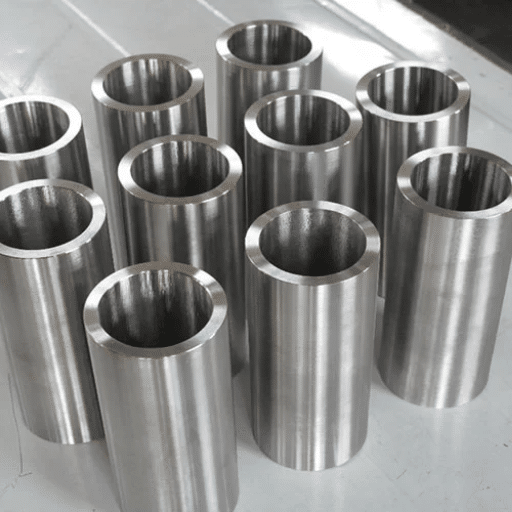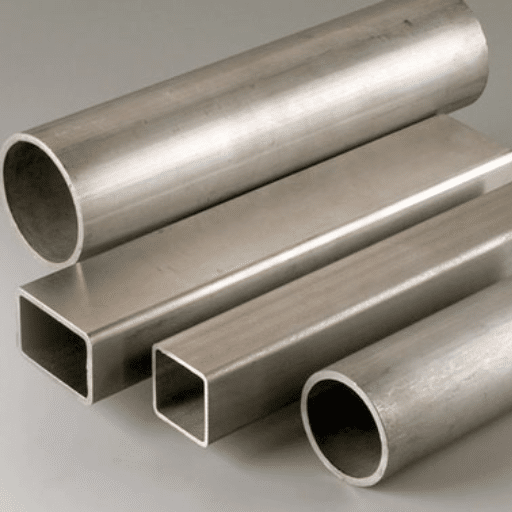
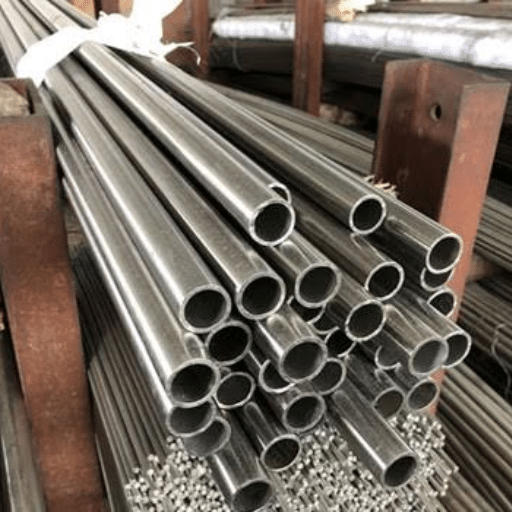
Inconel 625 pipe is a solid-solution nickel-chromium-molybdenum-niobium alloy (UNS N06625, W.Nr. 2.4856) supplied as seamless pipe to ASTM B444 or welded pipe to ASTM B705. It is specified for chloride-bearing and sour service where 316L and even super duplex 2507 run out of corrosion allowance, and for high-temperature service where Grade 2 solution-annealed material takes over above 593 °C.
That last clause is where most orders go wrong.
In March 2025, a fabrication contractor in the Middle East placed a purchase order for 6-inch Inconel 625 seamless pipe for a flare line. The drawing said “Alloy 625, ASTM B444.” The material arrived with a valid Mill Test Report showing full compliance. Eighteen months later, a creep assessment flagged the hot section as underspecified. The mill had shipped Grade 1, the annealed condition. It is the standard delivery, it passed every inspection, and it was the wrong condition for a line running at 640 °C.
Nothing on the paperwork was fraudulent. The specification was incomplete.
This guide covers what ASTM B444 actually limits, how Grade 1 and Grade 2 differ and why, the weld parameters that decide whether the joint survives, the sour-service rules under ISO 15156-3, and 2026 price bands split by product form. If you are placing 625 pipe on the material ladder, this is the page that tells you which condition to write on the PO. For the wider family picture, our complete nickel alloy pipe guide covers how 625 relates to 825, C-276 and Monel.
Key Takeaways
- Inconel 625 pipe is a two-condition material. Grade 1 (annealed, min 871 °C) delivers 414 MPa minimum yield; Grade 2 (solution annealed, min 1083–1093 °C) delivers only 276 MPa, yet Grade 2 is the correct choice above 593 °C, where creep and rupture rather than room-temperature yield govern design.
- PREN for 625 runs 48–51, against 42–47 for super duplex 2507 and roughly 26 for 316L. Seawater corrosion rate is below 0.025 mm/year.
- Sour service under NACE MR0175 / ISO 15156-3 places 625 in Group 4, with a supply hardness limit commonly cited at 35 HRC max. Cold work beyond roughly 15% reduction can disqualify material even when hardness passes.
- Welding is straightforward but parameter-sensitive: heat input below 1.2 kJ/mm, interpass temperature below 100 °C, stringer-bead technique, ERNiCrMo-3 or ENiCrMo-3 filler.
- 2026 indicative pricing runs 35–65 USD/kg for welded pipe and 50–90 USD/kg for seamless. Super duplex 2507 is roughly 1.5–3× cheaper per kg and is the smarter buy below its temperature and chloride envelope.
What Is Inconel 625 Pipe?

Inconel 625 pipe is a nickel-based superalloy pipe containing approximately 58–61% nickel, 20–23% chromium, 8–10% molybdenum and 3.15–4.15% niobium plus tantalum. It is produced to ASTM B444 (seamless) or ASTM B705 (welded) and is used in sour gas, seawater, chemical process and high-temperature service.
“Inconel 625” and “Alloy 625” name the same material. Inconel is a Special Metals trade name; Alloy 625 is the generic designation used by other mills and in most procurement documents. The UNS number N06625 and the European W.Nr. 2.4856 resolve any ambiguity, and a competent supplier will quote all three.
The niobium is what separates 625 from Inconel 600. At 3.15–4.15%, Nb plus Ta combines with molybdenum to provide solid-solution strengthening and to form the gamma-double-prime (γ″) phase that gives the alloy its high annealed strength. Inconel 600, with no niobium, is a different and generally weaker material for this service. The two look identical on the rack.
Want a second opinion on a 625 specification before you order? Send us your line list with service temperature, medium, pressure and required standard, and our technical team will confirm the correct condition and documentation within 24 hours.
Grade 1 vs Grade 2: The Decision Most Buyers Get Wrong
Grade 1 and Grade 2 are not quality tiers. They are different heat treatments producing different property balances for different service windows, and the split sits at roughly 593 °C (1100 °F).
| Item | Grade 1 | Grade 2 |
|---|---|---|
| Condition | Annealed | Solution annealed |
| Heat treatment, minimum | 871 °C (1600 °F) | 1083–1093 °C (2000 °F) |
| Yield strength (0.2%), minimum | 414 MPa (60 ksi) | 276 MPa (40 ksi) |
| Tensile strength, minimum | 827 MPa (120 ksi) | 690 MPa (100 ksi) |
| Elongation, minimum | 30% | 30% |
| Service window | To approximately 593 °C | Above approximately 593 °C |
| Typical use | General corrosive service | Creep and rupture service |
Read the yield row twice. Grade 2 has a lower room-temperature yield strength than Grade 1, 276 MPa against 414 MPa. Buyers routinely assume the higher number means a better material, and order Grade 2 as an upgrade. That assumption is wrong in both directions.
The reason is grain structure. Grade 1’s lower annealing temperature (871 °C minimum) retains a finer grain and the strengthening γ″ phase, which raises room-temperature strength. Grade 2 is solution annealed at 1083–1093 °C, which dissolves precipitates and coarsens the grain. That coarser, cleaner structure is more stable at elevated temperature, where creep and stress-rupture, not yield, control the design. Above 593 °C, Grade 2 outperforms Grade 1 over time even though it looks weaker on a datasheet.
Two caveats matter. First, Grade 2 is not a blanket upgrade: long-term exposure above roughly 600 °C can embrittle the alloy, so the upper temperature bound needs its own assessment. Second, the condition must appear on the PO. “Inconel 625 pipe, ASTM B444” alone permits either grade, and a mill will normally ship Grade 1.
Write it as: ASTM B444-23 Grade 2, solution annealed, UNS N06625, with the service temperature stated. That single line prevents the failure described at the top of this article.
Chemical Composition and What Each Element Does
ASTM B444 sets the following limits, in weight percent.
| Element | Range/maximum | Role |
|---|---|---|
| Ni | Balance (~58–61%) | Austenitic matrix; base corrosion resistance |
| Cr | 20.0–23.0 | Passive oxide film; oxidation resistance |
| Mo | 8.0–10.0 | Pitting and crevice resistance in chlorides |
| Nb + Ta | 3.15–4.15 | Solid-solution and γ″ strengthening; high-temperature stability |
| Fe | ≤ 5.0 | Residual; kept low |
| C | ≤ 0.10 | Controlled to limit carbide precipitation |
| Si | ≤ 0.50 | Residual |
| Mn | ≤ 0.50 | Residual |
| Al | ≤ 0.40 | Residual; deoxidation |
| Ti | ≤ 0.40 | Residual |
| P | ≤ 0.015 | Residual |
| S | ≤ 0.015 | Residual |
Chromium builds the passive film that resists oxidizing media. Molybdenum provides the pitting and crevice resistance that chlorides attack, and it is the most expensive element in the melt after nickel. Niobium supplies the high-temperature strength that makes 625 useful in creep service and in weld overlays. Carbon is capped at 0.10% to limit carbide precipitation at grain boundaries, which would otherwise sensitise the material to intergranular attack.
A caution on published composition: some supplier listings quote copper at 1.0–1.4%. Copper is not an intentional addition in ASTM B444 and is not part of the specification. Treat such listings as an accuracy signal about the rest of the page.
PREN: The Number Behind the Corrosion Claim
Pitting Resistance Equivalent Number is calculated as:
PREN = %Cr + 3.3(%Mo) + 16(%N)
Using typical composition (21.5% Cr, 8.7% Mo, negligible N), Inconel 625 lands at PREN 48–51. For comparison, super duplex 2507 sits at 42–47 and 316L at roughly 26.
One honest caveat that most pages omit: niobium is not counted in the standard PREN formula, even though it contributes to 625’s real-world corrosion performance. The calculation is conservative for this alloy, not flattering. Cite it as a comparison index, not as a corrosion rate.
Mechanical and Physical Properties
Grade 1 and Grade 2 properties are set out in the table under Grade 1 vs Grade 2 above. Beyond tensile requirements, B444 specifies minimum elongation of 30% for both grades and a longitudinal impact energy of 125 J/cm² minimum at 20 °C.
Physical properties are consistent across grades:
| Property | Value |
|---|---|
| Density | 8.42 g/cm³ |
| Melting range | ~1290–1350 °C |
| Thermal conductivity | 14.8 W/m·K |
| Thermal expansion | 12.4 µm/m·°C |
| Modulus of elasticity | 207 GPa |
| Electrical resistivity | 10.3 µΩ·cm |
| Magnetic response | Non-magnetic |
Service range is commonly cited as −196 °C to 815 °C, with oxidation resistance holding to higher temperatures under favourable conditions. The alloy retains useful strength well into the high-temperature range, which is the whole reason Grade 2 exists.
Density has a practical consequence. At 8.42 g/cm³ against 8.0 g/cm³ for 316L, an Inconel 625 pipe of identical OD × Wall Thickness × Length weighs roughly 5% more than the stainless equivalent. On a large order that is a material cost difference your weight calculation should already reflect.
ASTM B444, B705, B704 and the Governing Standards
The standard you cite depends on the product form, and the pair is frequently mixed up.
| Product form | Standard |
|---|---|
| Seamless pipe and tube | ASTM B444 / ASME SB444 (B444-23 current) |
| Welded pipe | ASTM B705 / ASME SB705 |
| Welded tube | ASTM B704 / ASME SB704 |
| General requirements, seamless | ASTM B829 |
| General requirements, welded | ASTM B775 |
| Fittings | ASTM B366 |
| Dimensions | ASME B36.19 |
ASTM B444 covers chemical composition, tensile properties, hydrostatic testing and nondestructive electric testing. It also sets the heat-treatment condition for each grade. Edition currency matters: B444-23 is the current edition; orders citing B444:18 or B444:16 reference superseded text and should be corrected.
A common specification error is citing ASME B36.10 for dimensions. B36.10 governs carbon and alloy steel pipe. Nickel alloy pipe dimensions follow ASME B36.19, with the S-series schedules 5S, 10S, 40S and 80S, and 160/XXS at larger sizes. Check the schedule against our ASME B36.19 pipe schedule chart before the order is placed, because substituting B36.10 wall thicknesses into a 625 line is a mismatch that only surfaces at fit-up.
Seamless vs Welded Inconel 625 Pipe
Seamless pipe is produced by piercing and rolling a solid billet. The finished product has no longitudinal weld seam and carries a higher cost and a longer lead time. It is the default for high-pressure and sour service, where a weld seam represents both a corrosion site and an inspection liability.
Welded pipe is formed from strip or plate and longitudinally welded, typically by TIG. It is dimensionally consistent, available in larger diameters more economically, and suitable for many lower-pressure and utility duties. The weld is subject to the same testing regime as the pipe body.
The cost differential is real. Welded pipe runs roughly 35–65 USD/kg; seamless runs 50–90 USD/kg. Specify seamless when the pressure class, the sour-service assessment, or the project specification requires it. Specify welded when it does not, and take the savings without apology.
Corrosion Performance and Sour Service

Seawater and Chloride Service
Inconel 625 resists pitting, crevice corrosion and chloride stress corrosion cracking at levels that defeat duplex stainless steels. Published Nickel Institute seawater corrosion rates sit below 0.025 mm/year, against roughly 0.05 mm/year for super duplex 2507. The PREN of 48–51 explains the margin. For how these figures are generated and verified in practice, see how duplex corrosion resistance is tested and verified.
Sour Service Under NACE MR0175 / ISO 15156-3
Inconel 625 is classified in Group 4 of ISO 15156-3, solid-solution nickel-based alloys, and is widely used in H₂S-bearing service. Three points govern a compliant order.
The supply hardness limit is commonly cited at 35 HRC maximum, though one bar datasheet quotes 287 HBW for ASTM B446 Grade 1, which is roughly equivalent. Alleima’s Sanicro 625 datasheet goes further and states the alloy is acceptable with no environmental limits in respect of H₂S partial pressure or elemental sulfur. That is the strongest published claim available, and it is the reason 625 is so often specified for sour gas.
The complication is cold work. Material cold worked beyond roughly 15% reduction in area may be rejected for sour service even when hardness testing passes, because the residual cold work is itself the concern. Where an Inconel 825 component contacts a 625 component, a 40 HB hardness differential is required to avoid preferential attack. Confirm the governing table in ISO 15156-3 (AMPP/NACE) for your specific application rather than relying on a single universal limit, and cross-check against our sour service grade selection guidance.
Where 625 Is Not the Right Answer
Honest limits matter more than sales language. Inconel 625 does not match Hastelloy C-276 in wet chlorine, hypochlorite, or mixed reducing-acid environments. Where chlorinated seawater pushes beyond 625’s envelope, C-276 is the material. Long-term exposure above roughly 600 °C can embrittle 625, and the cold-work exclusion above can remove it from consideration regardless of hardness. If your medium is on this list, specifying 625 is not conservative. It is simply wrong.
Welding Inconel 625 Pipe
Inconel 625 has good to very good weldability, and TIG/GTAW is the first-choice process. SMAW and gas-shielded arc welding are also used. The alloy is widely selected for dissimilar-metal joints and for weld overlay on carbon steel, a large application that buyers outside fabrication rarely consider.
The parameter discipline is what separates a sound joint from a cracked one:
| Parameter | Recommendation |
|---|---|
| Heat input | Below 1.2 kJ/mm |
| Interpass temperature | Below 100 °C (210 °F) |
| Bead technique | Stringer bead |
| Filler, TIG/MIG | ERNiCrMo-3 (S Ni 6625) |
| Filler, SMAW | ENiCrMo-3 (E Ni 6625) |
The logic parallels the discipline required in welding duplex stainless steel: high heat input and slow cooling promote detrimental phase formation and coarse grain growth, and 625’s high nickel content makes it sluggish and prone to lack of fusion if travel speed drops. Keep the interpass temperature down, keep the beads stringers, and do not let the joint soak. Publish the parameters in the welding procedure specification before fabrication, not after the first radiograph.
Applications: Where 625 Pipe Is Specified
Inconel 625 pipe is specified wherever chlorides, H₂S and temperature combine beyond what stainless and duplex steels tolerate:
- Subsea flowlines and risers, where 2507 is defeated by temperature or where the project specification does not accept duplex
- Umbilical tubing, where resistance to chloride SCC is the governing requirement
- Wellhead and Christmas tree components, under NACE MR0175 assessment
- Seawater cooling and firewater systems, particularly where chlorination raises the corrosion duty
- Chemical process piping and heat exchangers handling mixed acids and chlorides
- Flue gas desulfurisation ducting and scrubbers, where wet/dry cycling defeats stainless
- Weld overlay on carbon steel, where 625 clad provides corrosion resistance at a fraction of solid-alloy cost
The alloy also appears in aerospace and nuclear applications through AMS 5581 and related specifications, which demonstrates the breadth of the grade but rarely drives pipe procurement.
Inconel 625 vs Super Duplex 2507 vs Incoloy 825 vs Hastelloy C-276
This is the comparison that decides most 625 orders.
| Alloy | PREN | Min yield (MPa) | Seawater rate (mm/yr) | Relative cost | Governing standard | Choose when |
|---|---|---|---|---|---|---|
| Inconel 625 | 48–51 | 414 (Gr 1) | < 0.025 | Baseline | ASTM B444 / B705 | Chlorides plus H₂S, or above duplex temperature limits |
| Super duplex 2507 | 42–47 | 550 | < 0.05 | ~1.5–3× lower | ASTM A790 / A928 | Below ~250 °C, chloride-bearing, not severely sour |
| Incoloy 825 | ~34 | 241 | < 0.05 | Lower than 625 | ASTM B423 | Moderate chloride plus sulfuric/phosphoric acid |
| Hastelloy C-276 | ≥ 69 | 355 | < 0.025 | Highest | ASTM B622 / B619 | Wet chlorine, hypochlorite, mixed reducing acids |
The practical verdict deserves stating plainly. In 2024, a European chemical producer specified 625 for a 120 °C chloride-bearing process line with only trace H₂S. A consultant review found super duplex 2507 satisfied the corrosion duty at that temperature and chloride level. The substitution cut material cost by more than half and delivered pipe two months sooner. The engineer had not made an error of competence. He had defaulted to the most corrosion-resistant alloy he knew because the specification process did not force a comparison.
Super duplex is roughly 1.5–3× cheaper per kg than 625 and is the correct answer below its temperature and chloride envelope. Review our super duplex S32750 corrosion performance data before defaulting upward. The honest tiering principle applies at grade level too: specify 625 when 2507 genuinely cannot do the job, and you will get a better hearing from your project team when you do.
Inconel 625 Pipe Price and Cost Drivers
Indicative 2026 pricing, split by product form:
| Product form | Indicative 2026 price (USD/kg) |
|---|---|
| Welded pipe (ASTM B705) | 35–65 |
| Seamless pipe (ASTM B444) | 50–90 |
| Custom spools / non-standard | 55–85+ |
These are indicative bands, not quotes. Request validity-dated pricing, because the input moves monthly.
The reason is the composition. Raw material accounts for over 60% of Inconel 625 pricing, and nickel at roughly 61% of the alloy dominates that figure:
| Element | Share | Indicative 2026 price | Contribution |
|---|---|---|---|
| Ni | ~61% | ~$17/kg | ≈ $10.4/kg |
| Cr | ~21.5% | ~$7–10/kg | ≈ $1.5–2.2/kg |
| Mo | ~8.7% | ~$40–50/kg | ≈ $3.5–4.4/kg |
| Nb | ~3.5% | ~$55–65/kg | ≈ $1.9–2.3/kg |
| Raw-material floor | ≈ $17–19/kg |
That floor is why a blended “pipe and tube” figure below roughly 30 USD/kg should be treated with suspicion for seamless product. Every 1,000/t∗∗moveintheLMEnickelpriceshifts625pipepricingbyroughly∗∗1CNY/kg,about1,000/t∗∗moveintheLMEnickelpriceshifts625pipepricingbyroughly∗∗1CNY/kg,about0.14/kg. Distributors add 15–30% over mill base, while Chinese mill-direct pricing typically runs 10–20% below Western mills.
When you compare quotes, compare the form as well as the number. A welded-pipe price against a seamless-pipe price is not a saving; it is a different product.
Quality, Documentation and Verification
Inconel 625 is visually identical to Inconel 600, just as C-276 is indistinguishable from C-22 on the rack. Documentation is the only defence, and this is where the zero-defect discipline earns its place.
Positive Material Identification by XRF or OES is the core control. Portable XRF will separate 625 from 600 by niobium content in seconds; OES gives full chemistry to the B444 limits. PMI belongs at three points: incoming raw material, in-process, and finished pipe.
A fabricator in Southeast Asia learned this at incoming inspection. Nine lengths of 6-inch pipe arrived stencilled and certified as Inconel 625. The MTR matched the heat numbers on the bundle. A hand-held XRF gun, run across every length rather than the two the procedure required, read niobium at trace levels on three of them. Those three were Inconel 600. They had been bundled into the shipment from a different heat at the stockist, and only a length-by-length PMI sweep caught them before they went into a sour-service spool. The cost of that sweep was a morning’s labour. The cost of the alternative does not bear calculating.
Mill Test Reports must carry the heat number, the full chemical analysis, the mechanical results, the heat-treatment condition, and the standard with edition year. Under EN 10204 3.1, the MTR is issued by the manufacturer’s own inspection department. Under 3.2, an independent authorised inspector signs. For sour service and offshore projects, 3.2 is often mandatory.
Hydrostatic testing to B444 or B705 confirms pressure integrity. Ultrasonic testing on 625 requires attention: the alloy’s coarse grain scatters high-frequency sound, so lower-frequency probes and reference blocks of the same alloy are needed for meaningful results. Eddy current testing covers surface and near-surface defects on smaller diameters.
Heat-number traceability should run from the mill certificate through to the stencil on the finished pipe, and stencilling must survive shipping. Where third-party inspection is required, coordinate the release points with the inspector before production starts, not after.
Buying Inconel 625 Pipe: Specification Checklist

Use this list when writing the enquiry. Each line has a failure mode behind it.
- Grade and condition, Grade 1 or Grade 2, with the service temperature stated
- UNS number, N06625, plus W.Nr. 2.4856 where European standards apply
- ASTM standard with edition year, B444-23 for seamless, B705 for welded
- Form, seamless or welded, stated explicitly
- Dimensions as OD × Wall Thickness × Length, with the ASME B36.19 schedule
- Quantity and length pattern, random lengths or fixed cut lengths
- Testing, hydrostatic, ultrasonic, eddy current, PMI, as applicable
- Documentation, MTR content and EN 10204 3.1 or 3.2
- Third-party inspection, named agency and release points
- Delivery and certification of origin, if the project requires it
If your purchase route runs through China, our guidance on qualifying a Chinese stainless steel manufacturer and on sourcing special alloys from China covers the audit steps that sit outside the specification itself.
Frequently Asked Questions
What is Inconel 625 pipe used for?
Inconel 625 pipe is used in sour gas and oil service, subsea flowlines and risers, seawater cooling and firewater systems, chemical process piping, heat exchangers, flue gas desulfurisation ducting, and high-temperature service above 593 °C with Grade 2 material. It is also widely used as weld overlay on carbon steel.
What is the difference between Inconel 625 Grade 1 and Grade 2?
Grade 1 is annealed at a minimum of 871 °C and delivers 414 MPa minimum yield; Grade 2 is solution annealed at 1083–1093 °C and delivers 276 MPa. Grade 1 suits general corrosive service to about 593 °C; Grade 2 is correct above that, where creep and rupture govern.
What ASTM standard covers Inconel 625 pipe?
Seamless pipe and tube are covered by ASTM B444 (current edition B444-23); welded pipe by ASTM B705; welded tube by ASTM B704. General requirements appear in B829 for seamless and B775 for welded product. Dimensions follow ASME B36.19.
What is the chemical composition of Inconel 625?
Nickel balance at roughly 58–61%, chromium 20.0–23.0%, molybdenum 8.0–10.0%, niobium plus tantalum 3.15–4.15%, iron 5.0% maximum, carbon 0.10% maximum. Silicon, manganese, aluminium and titanium are each capped at 0.40–0.50%.
What is the yield strength of Inconel 625 pipe?
Grade 1 has a minimum 0.2% yield strength of 414 MPa (60 ksi) with 827 MPa minimum tensile. Grade 2 has a minimum yield of 276 MPa (40 ksi) with 690 MPa minimum tensile. Both grades require 30% minimum elongation.
What is the maximum temperature for Inconel 625 pipe?
Commonly cited service range is −196 °C to 815 °C, with oxidation resistance to higher temperatures under favourable conditions. Grade 1 is limited to roughly 593 °C; above that, Grade 2 is required, with long-term embrittlement above about 600 °C assessed separately.
Is Inconel 625 suitable for sour service?
Yes. ISO 15156-3 classifies it in Group 4 with a supply hardness limit commonly cited at 35 HRC maximum, and one mill datasheet states acceptance with no environmental limits for H₂S partial pressure or elemental sulfur. Cold work beyond about 15% reduction can disqualify it regardless of hardness.
Is Inconel 625 better than super duplex 2507?
Only above 2507’s temperature and chloride envelope. Inconel 625 has higher PREN (48–51 vs 42–47) and a lower seawater corrosion rate, but super duplex 2507 is roughly 1.5–3× cheaper per kg and has higher yield strength. Below the duplex limits, 2507 is the correct and cheaper choice.
Is Inconel 625 weldable, and how?
Yes, weldability is good to very good. TIG/GTAW is the first choice, with SMAW also suitable. Use heat input below 1.2 kJ/mm, interpass temperature below 100 °C, stringer-bead technique, and ERNiCrMo-3 (TIG) or ENiCrMo-3 (SMAW) filler.
Why is Inconel 625 so expensive?
Roughly 61% of the alloy is nickel and about 8.7% is molybdenum, both high-cost elements. Raw material accounts for over 60% of finished pricing, giving a raw-material floor near 17–19 USD/kg before conversion, testing and margin. Every 1,000/tmoveinLMEnickelshiftspricingbyabout1,000/tmoveinLMEnickelshiftspricingbyabout0.14/kg.
Conclusion and Next Step
Inconel 625 pipe is a two-condition material, and the condition is a design decision, not a purchasing preference. Grade 1’s 414 MPa minimum yield suits general corrosive service to about 593 °C; Grade 2’s 276 MPa exists because creep and rupture control above that threshold, and it is the correct choice there despite the lower number. Ordering “Inconel 625 pipe, ASTM B444” without a grade is how the flare-line failure at the top of this page happens.
The rest of the specification follows from the same discipline. Cite ASTM B444-23 Grade 1 or Grade 2 and confirm the dimension against ASME B36.19. Weld with heat input below 1.2 kJ/mm and interpass below 100 °C using ERNiCrMo-3 filler. Confirm the ISO 15156-3 table for sour service and check for cold work beyond 15%. Budget 35–65 USD/kg for welded and 50–90 USD/kg for seamless in 2026, and compare quotes form against form.
And before you default upward, check whether super duplex 2507 solves the problem at a fraction of the cost. Sending a buyer to the cheaper correct answer is how a specification page earns trust.
Send us your line list, service temperature, medium, pressure, and required standard, and our technical team will confirm the correct condition, schedule, and documentation within 24 hours. We can also issue a sample MTR and PMI record for an Inconel 625 heat so you can verify the documentation before you commit.