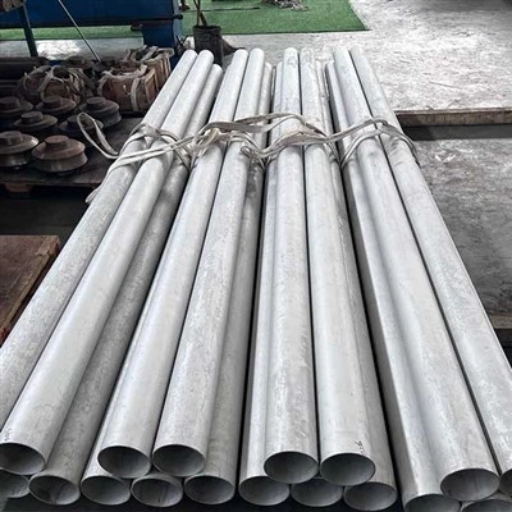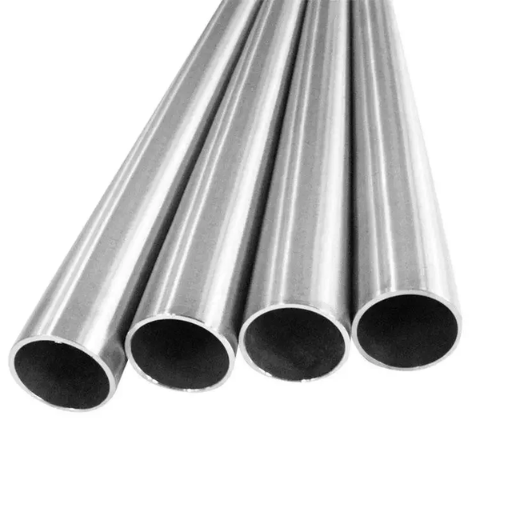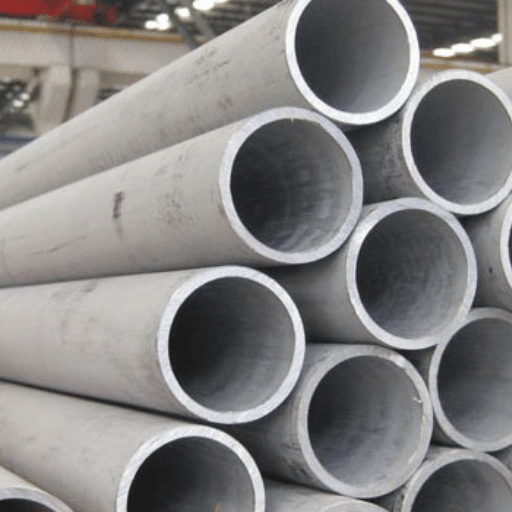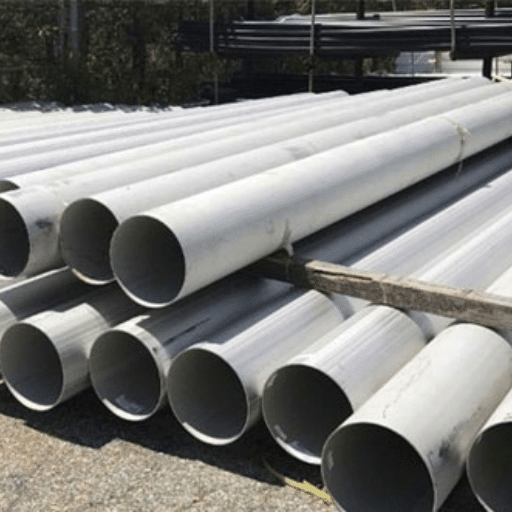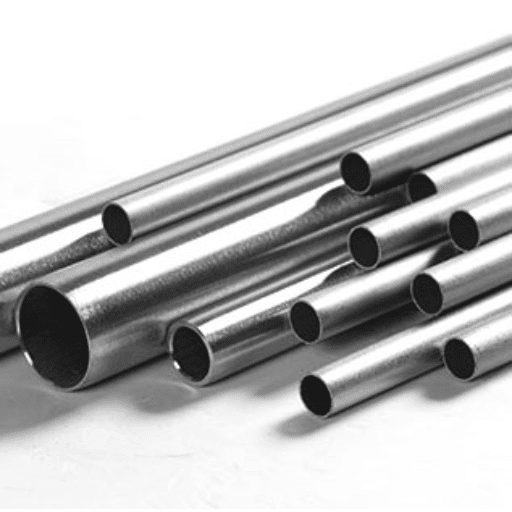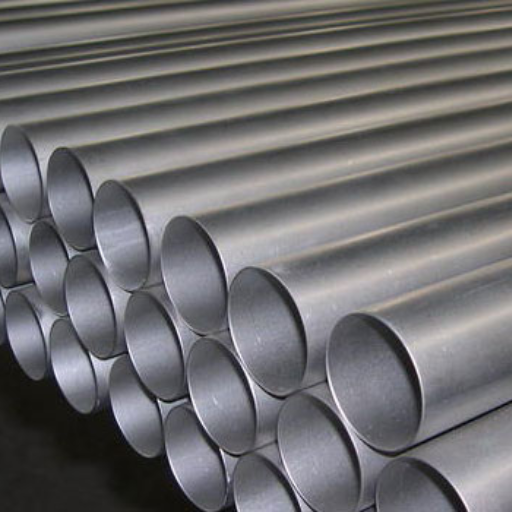
Incoloy 825 pipe is a nickel-iron-chromium alloy pipe (UNS N08825, W.Nr. 2.4858) supplied as a seamless product to ASTM B423, welded pipe to ASTM B705, and seamless heat-exchanger tube to ASTM B163. It is the value nickel alloy: it carries sulfuric and phosphoric acid service that 316L and duplex cannot survive, at a cost well below Inconel 625.
That positioning is exactly why 825 orders get argued about.
In 2024, a fertiliser producer on the Gulf Coast specified Incoloy 825 for the acid-side evaporator and heat exchanger of a wet-process phosphoric acid unit. Procurement pushed back hard: 316L was a fifth of the price, and the datasheets both said “stainless.” The plant metallurgist held the line, and his defence was a single line on a corrosion chart. Wet-process phosphoric acid carries fluorides, sulfates and chlorides from the ore, and 316L pits in that mix within months. The 825 was not an upgrade for comfort. It was the difference between a five-year service life and a five-month one.
He won the argument with numbers, not adjectives. That’s the standard this page applies to every claim it makes about the grade.
Below: the ASTM B423 composition and property limits, the form-to-standard map that trips up most purchase orders, the acid-service performance that justifies the premium, the honest limits, and 2026 price bands split by product form. For how 825 sits among the other nickel alloys, our complete nickel alloy pipe guide carries the full family picture.
Key Takeaways
- Incoloy 825 pipe is made to a form-specific standard. Seamless pipe and tube are ASTM B423, seamless heat-exchanger tube is ASTM B163, welded pipe is ASTM B705, and welded tube is ASTM B704. Citing B704 for welded pipe is a real error that fails receiving inspection.
- Composition is Ni 38–46%, Cr 19.5–23.5%, Mo 2.5–3.5%, Cu 1.5–3.0% and Ti 0.6–1.2%. At PREN ≈ 31 it sits above 316L (≈24) and Alloy 20 (≈28) but well below 2507 (≈43) and 625 (≈48–51).
- ASTM B423 is the one 825 tubular standard that covers both a hot-finished annealed and a cold-worked annealed condition: 172 MPa minimum yield versus 241 MPa, and allowable design stress of 114 MPa versus 146 MPa. The condition changes wall thickness.
- 825 is the flagship material for wet-process phosphoric acid and dilute-to-intermediate sulfuric acid, where the copper addition gives tolerance 316L lacks. It is not suitable above roughly 70% sulfuric acid, and stagnant seawater crevices are its failure mode.
- Sour service under NACE MR0175 / ISO 15156-3 places 825 in Group 4 with a supply hardness limit commonly cited at 35 HRC max. Severe sour or HPHT duty routes to 625.
- 2026 indicative pricing runs 22–48 USD/kg for welded pipe and 29–58 USD/kg for seamless, against 35–95 USD/kg for Inconel 625. The raw-material floor is roughly 10–11 USD/kg versus 17–19 USD/kg for 625.
What Is Incoloy 825 Pipe?
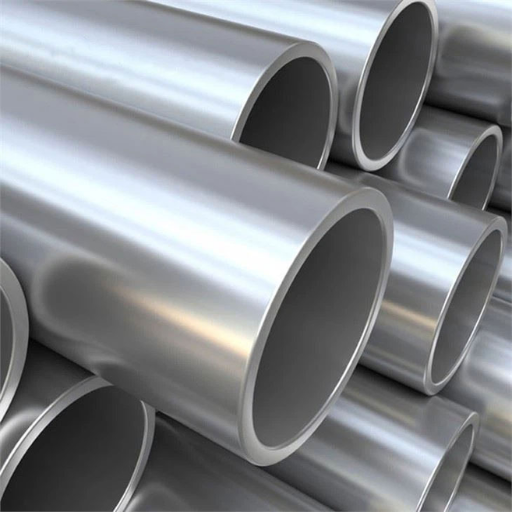
Incoloy 825 pipe is a solid-solution nickel-iron-chromium alloy pipe with molybdenum, copper, and titanium additions, used for sulfuric and phosphoric acid service, moderate sour gas, and marine and chemical process duty where stainless and duplex steels fall short.
Three designations resolve any ambiguity in a purchase order. The UNS number is N08825, the European designation is W.Nr. 2.4858 (NiCr21Mo), and the grade also sells as Sanicro 41, BÖHLER L825, and BS NA14. A competent supplier quotes all of them.
One naming point is worth stating once. You will see this grade sold as “Inconel 825.” That is a misnomer. Inconel and Incoloy are both Special Metals trademarks, and the split between them is nickel content: grades above roughly 50% nickel took the Inconel name; grades below took Incoloy. Alloy 825 runs 38–46% nickel, so it is an Incoloy, never an Inconel. If a supplier lists “Inconel 825,” note it, and check the rest of the page.
Inconel 625 and Monel 400 sit on either side of 825 on the ladder, and comparing the nickel alloy families shows where each grade earns its place. 825’s own position is narrow and useful: it is the grade you specify when the medium is an acid that stainless cannot take but the temperature and chloride load do not yet justify 625.
Want a second opinion on an 825 specification before you order? Send us your line list with medium, concentration, temperature and required standard, and our technical team will confirm grade suitability and documentation within 24 hours.
Incoloy 825 Chemical Composition and What Each Element Does
ASTM B423 sets the following limits, in weight percent.
| Element | Range/maximum | Role |
|---|---|---|
| Ni | 38.0–46.0 | Austenitic matrix; the base of the corrosion resistance |
| Cr | 19.5–23.5 | Passive oxide film; resistance to oxidizing media |
| Fe | 22.0 min (balance) | Matrix; keeps cost below the high-nickel grades |
| Mo | 2.5–3.5 | Pitting and crevice resistance in chlorides |
| Cu | 1.5–3.0 | Tolerance to sulfuric and phosphoric acid |
| Ti | 0.6–1.2 | Stabilization against sensitization and intergranular attack |
| C | 0.05 max | Capped to limit carbide precipitation |
| Mn | 1.00 max | Residual |
| Si | 0.50 max | Residual |
| Al | 0.20 max | Residual; deoxidation |
| S | 0.030 max | Residual |
| P | 0.03 max | Residual |
Two elements do the work that defines this grade. Copper is the acid-service ingredient, and it is why 825 tolerates dilute and intermediate sulfuric acid where 316L does not. Molybdenum handles the chlorides that come with real process streams. Titanium stabilizes the alloy against sensitization, which is the reason welded 825 does not need post-weld heat treatment for corrosion resistance. Chromium builds the passive film, and carbon is held at 0.05% maximum to limit the carbide precipitation that would otherwise consume the titanium’s protection.
PREN: The Number Behind the Corrosion Claim
Pitting Resistance Equivalent Number is calculated as:
PREN = %Cr + 3.3(%Mo) + 16(%N)
Using mid-range composition (21.5% Cr, 3.0% Mo, negligible N), Incoloy 825 lands at approximately 31. For context, 316L sits near 24, Alloy 20 near 28, 904L at 34–37, super duplex 2507 near 43, Inconel 625 at 48–51, and Hastelloy C-276 at 69 or above.
One honest caveat: sources quote 825 anywhere between 26 and 33 depending on which PREN variant is used, since an alternative formula weights molybdenum at 1.5 rather than 3.3 and gives a lower figure. The formula, not the single number, is what an engineer should check. Cite PREN as a comparison index, not as a corrosion rate.
Mechanical and Physical Properties
ASTM B423 covers two delivery conditions for seamless 825, and they carry different strength floors. This is a distinction most pages omit.
| Standard / form and condition | Tensile, min | Yield (0.2%), min | Elongation, min | Allowable stress |
|---|---|---|---|---|
| B423 seamless, hot-finished & annealed | 517 MPa | 172 MPa | 30% | 114 MPa |
| B423 seamless, cold-worked & annealed | 588 MPa | 241 MPa | 30% | 146 MPa |
| B163 seamless exchanger tube, annealed | 588 MPa | 241 MPa | 30% | 145 MPa |
| B704 welded tube, annealed | 588 MPa | 240 MPa | 30% | n/a |
| B705 welded pipe, annealed | 588 MPa | 240 MPa | 30% | n/a |
Read the yield row twice. The cold-worked annealed condition delivers 241 MPa minimum yield against 172 MPa for hot-finished, which is a 40% difference, and the allowable design stress follows it: 146 MPa against 114 MPa. That’s not a marketing distinction. Allowable stress sets wall thickness, and wall thickness sets cost. Where a buyer accepts the default hot-finished condition on a line that a cold-worked annealed product would have covered at a thinner wall, the over-specification is invisible and expensive.
Write the condition on the PO. “Incoloy 825 seamless pipe, ASTM B423” alone permits either, and the mill will supply whichever suits its schedule.
Physical properties are stable across conditions:
| Property | Value |
|---|---|
| Density | 8.14 g/cm³ |
| Melting range | 1370–1400 °C |
| Thermal conductivity | 10.7–11.1 W/m·K |
| Thermal expansion | ~14.0–14.1 µm/m·°C |
| Electrical resistivity | 113–118 µΩ·cm |
| Magnetic response | Non-magnetic |
| Solution-anneal window | 940–980 °C |
Density has a practical consequence. At 8.14 g/cm³ against 8.0 g/cm³ for 316L, an 825 pipe of identical OD × Wall Thickness × Length runs roughly 2% heavier than the stainless equivalent. On a large order that weight difference belongs in your calculation before it reaches the freight quote.
ASTM B423, B163, B705 and B704: Which Standard for Which Form
The standard you cite depends on the product form, and this is where 825 purchase orders most often go wrong.
| Product form | Standard |
|---|---|
| Seamless pipe and tube | ASTM B423 / ASME SB423 |
| Seamless heat-exchanger and condenser tube (to 3 in. OD) | ASTM B163 / ASME SB163 |
| Welded pipe | ASTM B705 / ASME SB705 |
| Welded tube | ASTM B704 / ASME SB704 |
| General requirements, seamless | ASTM B829 |
| General requirements, welded pipe | ASTM B775 |
| Fittings/plate / bar forgings | ASTM B366 / B424 / B425 |
The trap is the last pair. B704 is welded tube. B705 is welded pipe. They’re not interchangeable, and citing B704 for welded pipe is a common and consequential error: a receiving inspector who checks the mill certificate against the PO will hold the shipment, and the material won’t release until the paperwork is corrected. A welded 825 pipe order citing B704 is a stopped shipment waiting to happen.
ASTM B423 itself covers what you would expect of a tube standard: chemical composition, tensile properties, and a nondestructive electric test, with hydrostatic testing available. Edition currency matters too, so cite the year, such as B423-22, and require the supplier to quote against it.
The dimensional standard is ASME B36.19, which governs nickel alloy pipe using the S-series schedules. ASME B36.10 governs carbon and alloy steel pipe, and substituting its wall thicknesses into an 825 line is a mismatch that only surfaces at fit-up. Our nickel alloy pipe standards index covers how the B-series standards relate across the family.
Seamless vs Welded Incoloy 825 Pipe
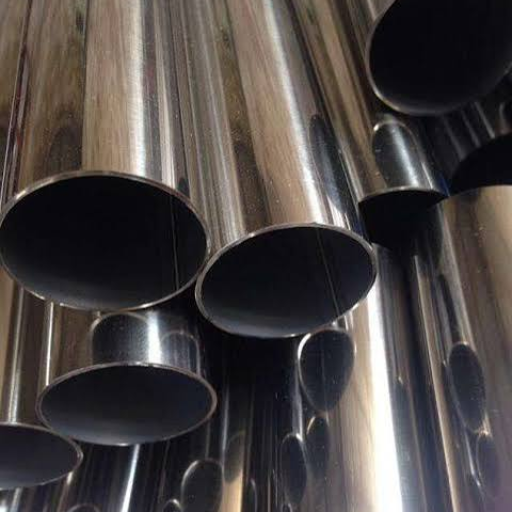
Seamless 825 is produced by piercing and rolling a solid billet, so the finished pipe has no longitudinal weld seam. It carries the higher cost and the longer lead time, and it is the default for high-pressure, sour and cyclic service, where a weld seam is both a corrosion site and an inspection liability.
Welded 825 is formed from strip or plate and longitudinally welded, usually by TIG. It is dimensionally consistent, available in larger diameters more economically, and fully adequate for lower-pressure and utility duty. The weld is subject to the same testing regime as the pipe body.
The cost differential is real. Welded 825 runs roughly 22–48 USD/kg; seamless runs 29–58 USD/kg. Specify seamless when the pressure class, the sour-service assessment, or the project specification demands it. Specify welded when it does not, and bank the difference.
Corrosion Performance: Where 825 Wins, and Where It Does Not
Sulfuric Acid
Incoloy 825 is excellent in dilute to intermediate sulfuric acid, generally below about 50% concentration, where the copper addition gives specific tolerance and 825 performs near the level of far more expensive grades. Above roughly 70% concentration, the alloy degrades, and where continuous chloride contamination is present, the correct step-up is to a higher-molybdenum alloy such as Inconel 625 or Hastelloy C-276.
That half-limit is the honest statement most supplier pages omit. Sell 825 as a sulfuric-acid grade without qualification, and you’ll eventually put it somewhere it can’t survive.
Phosphoric Acid: The Flagship Application
This is 825’s signature duty. Wet-process phosphoric acid carries fluorides, sulfates and chlorides from the ore, and the copper-plus-molybdenum combination is specifically effective against that mix. ASTM B424, the plate and sheet standard for the same alloy, references 825 in its appendix guidance as the standard selection for phosphoric acid extraction tanks, piping and heat exchangers.
The proof point to cite is service in 54% P₂O₅ at 90 °C, in phosphoric acid evaporators, heat exchangers, and dip tubes. 316L fails this duty on the fluoride content, and 904L is defeated where chlorides run high. For the wet-process evaporator, 825 is not one option among several. It is the selection.
Seawater and the Crevice-Corrosion Limit
You will read on many supplier pages that 825 is “excellent in seawater.” The precise statement is narrower, and the difference matters.
Flowing ambient seawater is tolerable. Stagnant crevices are the failure mode. Typical critical pitting temperature (CPT) for 825 is roughly 25–30 °C and critical crevice temperature (CCT) is roughly 5–15 °C, measured by ASTM G48 Method A. Ambient seawater at 25–35 °C therefore sits inside the failure region for any crevice-bearing geometry, such as gasketed flanges or tube-to-tubesheet joints. Design for flowing service, avoid crevices, and if the duty requires either stagnant chlorides or elevated temperature, specify a higher-PREN alloy instead.
Stating this limit is what makes the rest of the page believable. A grade that is sold as good for everything is good for nothing in particular.
Nickel Institute publishes the service data behind these figures. For how the underlying corrosion resistance is measured and verified, see our related work on when to upgrade from stainless steel to nickel alloy.
Sour Service Under NACE MR0175 / ISO 15156
Incoloy 825 is classified in Group 4 of ISO 15156-3, the solid-solution nickel-based alloys, alongside 625 and C-276. It is qualified for mild-to-moderate sour service, meaning moderate H₂S partial pressure and chloride levels, with stricter limits for surface use than for downhole equipment. The supply hardness limit is commonly cited at 35 HRC maximum, and the recommended operating temperature in sour or corrosive service stays below about 540 °C.
Two cautions belong in the specification. First, the Group 4 limits are table-dependent, not universal: the governing ISO 15156-3 table must be confirmed for the specific H₂S partial pressure, chloride concentration, temperature and pH of your application. Second, 825 is not intended for severe sour or HPHT duty. Where the H₂S load or temperature is severe, the correct route is up to Inconel 625. Our nickel alloy pipe for oil and gas guide carries the full sour-service framework, and the sour service grade selection guidance covers where duplex and nickel alloys divide. Check the governing table in ISO 15156-3 (AMPP/NACE) before the order is placed.
Welding Incoloy 825 Pipe
Incoloy 825 has good to very good weldability, and TIG/GTAW is the first-choice process. The parameter discipline isn’t complicated:
| Parameter | Recommendation |
|---|---|
| Process | TIG/GTAW first choice; GMAW and SMAW also suitable |
| Filler, TIG/MIG | ERNiCrMo-3 (AWS A5.14) |
| Filler, SMAW | ENiCrMo-3 (AWS A5.11) |
| Interpass temperature | Below 150 °C; tighten to below 100 °C for aggressive acid service |
| PWHT | Generally not required |
| Stabilizing anneal, if specified | 920–980 °C with rapid cooling |
Two points deserve attention. First, the preferred filler is over-alloyed relative to the base metal: ERNiCrMo-3 is a 625-type consumable at roughly 22% Cr and 9% Mo, which tolerates dilution and keeps the weld metal at least as corrosion-resistant as the 825 base. A matching filler exists, but it isn’t the first choice where pitting or stress corrosion cracking drives the design.
Second, the weld metal has a temperature ceiling in sulfur-bearing service. ERNiCrMo-3 is scale-resistant to about 1200 °C in sulfur-free atmospheres, but in sour atmospheres it is limited to roughly 500 °C. If the joint sits in a hot sour stream, that limit governs the design even where the base metal would allow more. One further note: where 825 joins a stainless steel component, the stainless leg remains chloride-SCC-susceptible in hot chlorides, so relocate the joint or upgrade the stainless side rather than relying on the weld.
Applications: Where 825 Pipe Is Specified
Incoloy 825 pipe appears wherever acid and moderate chlorides combine beyond what stainless and duplex can take:
- Wet-process phosphoric acid evaporators, heat exchangers, extraction piping and dip tubes
- Sulfuric acid pickling lines, spent-acid systems and heating coils, below the concentration limit
- Flue gas desulfurisation scrubbers and ducting in coal-fired power, where wet/dry cycling defeats stainless
- Nuclear fuel reprocessing dissolvers handling nitric and hydrofluoric acid media
- Sour gas wellhead tubing, casing and flowlines in moderate sour service
- Seawater-cooled heat exchangers in flowing, crevice-free designs
- Chemical process piping in sulfuric and phosphoric acid production
In 2023, an FGD scrubber operator in Southeast Asia replaced a 316L spray header for the second time in four years. The wet/dry cycling zone was chloride-rich and the stainless grade was simply out of its depth. The switch to 825 took the replacement interval from annual to multi-year, and the higher metal price was recovered long before the third failure would have occurred.
Incoloy 825 vs Inconel 625 vs Super Duplex 2507 vs 316L
This is the comparison that decides most 825 orders.
| Alloy | PREN | Min yield (MPa) | Cost position | Governing standard | Choose when |
|---|---|---|---|---|---|
| 316L | ~24 | 170 | Lowest | ASTM A312 / A269 | No chlorides, no acid duty |
| Super duplex 2507 | ~43 | 550 | Low | ASTM A790 / A928 | Chloride-bearing, below its temperature and crevice limits, no acid duty |
| Incoloy 825 | ~31 | 172–241 | Middle | ASTM B423 / B705 | Sulfuric or phosphoric acid, moderate chlorides, moderate sour |
| Inconel 625 | 48–51 | 414 | Highest of the three | ASTM B444 / B705 | Severe chlorides, severe sour, high temperature, or concentrated acid |
The verdict deserves stating plainly. Below the duplex envelope, super duplex 2507 is cheaper and correct for chloride service without acid duty. Where an acid medium rules duplex out, 825 is the value nickel alloy, delivering the required corrosion performance at a cost well below 625. Inconel 625 earns its premium only where temperature, concentration or severity genuinely demand it.
A 2022 case makes the point. An engineering contractor specified Inconel 625 for a 120 °C chloride-bearing acid line on a European chemical project, defaulting to the most corrosion-resistant alloy on the list. A consultant review found Incoloy 825 satisfied the acid duty at that temperature, and the substitution cut material cost by more than a third and pulled delivery forward by six weeks. The engineer had not made an error of competence. The specification process simply had not forced a comparison against the cheaper correct grade.
Review Inconel 625 pipe specifications and super duplex S32750 corrosion performance before defaulting upward. Specifying the grade that is correct, which is sometimes not the most expensive one, is how a specification earns trust.
Incoloy 825 Pipe Price and Cost Drivers
Indicative 2026 pricing, split by product form:
| Product form | Indicative 2026 price (USD/kg) |
|---|---|
| Welded pipe (ASTM B705) | 22–48 |
| Seamless pipe (ASTM B423) | 29–58 |
| Heavy-wall / XXS seamless | 40–78 |
These are indicative bands, not quotes. Nickel moves monthly, so always request validity-dated pricing.
The reason 825 is cheaper than 625 is compositional, and the arithmetic can be shown openly. Raw material accounts for roughly half to 60% of finished pricing, and nickel dominates that figure:
| Element | Share of alloy | Indicative 2026 price | Contribution |
|---|---|---|---|
| Ni | ~42% | ~$17/kg | ≈ $7.1/kg |
| Cr | ~21.5% | ~$8–10/kg | ≈ $1.7–2.2/kg |
| Mo | ~3.0% | ~$40–50/kg | ≈ $1.2–1.5/kg |
| Cu | ~2.25% | ~$8–10/kg | ≈ $0.2/kg |
| Raw-material floor | ≈ $10–11/kg |
Compare that floor against Inconel 625’s ≈ 17–19/kg, computed the same way from its roughly 6117–19/kg, computed the same way from its roughly 611,000/t move in the LME nickel price; shifts 825 pricing by roughly $0.42/kg, so validity-dated quotes are not a formality.
When you compare quotes, compare the form as well as the number. A welded-pipe price against a seamless-pipe price isn’t a saving; it’s a different product with different assurance.
Quality, Documentation and Verification
Incoloy 825 is visually hard to distinguish from other austenitic nickel grades on the rack, and documentation is the only reliable defence. Three controls carry the weight.
Positive Material Identification by XRF or OES is the core check. Portable XRF separates 825 from 316L and from 625 in seconds on the molybdenum and copper signature; OES gives full chemistry to the B423 limits. PMI belongs at three points: incoming raw material, in-process, and finished pipe.
Mill Test Reports must carry the heat number, the full chemical analysis, the mechanical results, the heat-treatment condition, and the standard with edition year. Under EN 10204 3.1, the MTR is issued by the manufacturer’s own inspection department; under 3.2, an independent authorised inspector signs. For sour service and offshore projects, 3.2 is often mandatory.
Hydrostatic testing to B423 or B705 confirms pressure integrity, while ultrasonic testing and eddy current testing cover internal and surface defects. Heat-number traceability should run from the mill certificate through to the stencil on the finished pipe, and that stencil must survive shipping. Where third-party inspection is required, coordinate the release points with the inspector before production starts, not after.
A stockist in the Middle East learned this the hard way in 2023. A bundle of pipe arrived stencilled and certified as Alloy 825, with an MTR that matched the heat numbers. A length-by-length PMI sweep, run across every piece rather than the two the procedure required, read copper at trace levels on four lengths. Those four were 316L, bundled into the shipment from a different heat. The sweep cost a morning’s labour, and it stopped a corrosion failure in the acid side of a plant before it started.
Buying Incoloy 825 Pipe: Specification Checklist
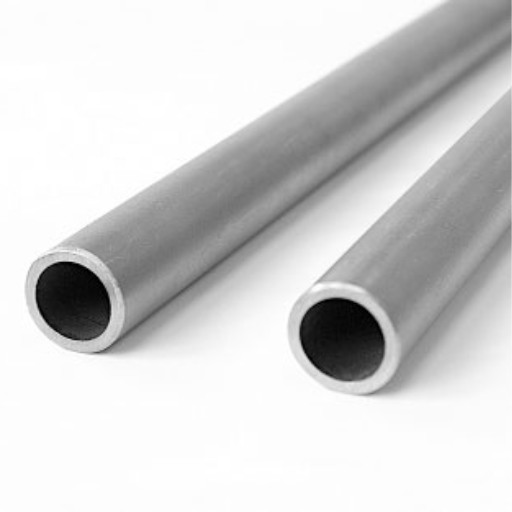
Use this list when writing the enquiry. Each line has a failure mode behind it.
- Grade and UNS number, Incoloy 825 / UNS N08825, plus W.Nr. 2.4858 where European standards apply
- ASTM standard with edition year, B423 for seamless, B705 for welded pipe, B163 for exchanger tube
- Delivery condition, hot-finished annealed or cold-worked annealed, with the service pressure stated
- Form, seamless or welded, stated explicitly
- Dimensions as OD × Wall Thickness × Length, with the ASME B36.19 schedule
- Quantity and length pattern, random lengths or fixed cut lengths
- Testing, hydrostatic, ultrasonic, eddy current, PMI, as applicable
- Documentation, MTR content and EN 10204 3.1 or 3.2
- Third-party inspection, named agency and release points
- Service data, medium, concentration, temperature and chloride level, so the grade fit can be confirmed
Frequently Asked Questions
What is Incoloy 825 pipe used for?
Incoloy 825 pipe is used for wet-process phosphoric acid service, dilute-to-intermediate sulfuric acid service, flue gas desulfurisation scrubbers, nuclear fuel reprocessing dissolvers, moderate sour gas tubing and flowlines, seawater-cooled heat exchangers, and chemical process piping in acid production.
What is the difference between Incoloy 825 and Inconel 625?
825 is a nickel-iron-chromium alloy at 38–46% nickel and PREN ≈ 31, priced at roughly 22–58 USD/kg. 625 is a nickel-chromium-molybdenum-niobium alloy at 58–61% nickel and PREN 48–51, priced at roughly 35–95 USD/kg. 825 is the value grade for acid service; 625 is for severe chlorides, severe sour gas and high temperature.
What ASTM standard covers Incoloy 825 pipe?
Seamless pipe and tube are covered by ASTM B423; seamless heat-exchanger tube by ASTM B163; welded pipe by ASTM B705; welded tube by ASTM B704. General requirements appear in B829 for seamless product and B775 for welded pipe. Dimensions follow ASME B36.19.
What is the chemical composition of Incoloy 825?
Nickel 38.0–46.0%, chromium 19.5–23.5%, iron 22.0% minimum (balance), molybdenum 2.5–3.5%, copper 1.5–3.0%, titanium 0.6–1.2%. Carbon, manganese, silicon, aluminium, sulfur and phosphorus are each capped, with carbon at 0.05% maximum.
Is Incoloy 825 resistant to sulfuric and phosphoric acid?
Yes, with qualification. It is excellent in dilute to intermediate sulfuric acid (generally below about 50%) and is a flagship material for wet-process phosphoric acid, cited in service at 54% P₂O₅ and 90 °C. It is not suitable above roughly 70% sulfuric acid or with continuous chloride contamination.
Is Incoloy 825 suitable for seawater?
Partly. Flowing ambient seawater is tolerable, but stagnant crevices are the failure mode: typical critical pitting temperature is 25–30 °C and critical crevice temperature is 5–15 °C by ASTM G48 Method A. Avoid crevices, and specify a higher-PREN alloy for stagnant or elevated-temperature seawater.
Is Incoloy 825 suitable for sour service under NACE MR0175?
Yes, for mild-to-moderate sour service. ISO 15156-3 classifies it in Group 4 with a supply hardness limit commonly cited at 35 HRC maximum and a recommended operating temperature below about 540 °C. Severe sour or HPHT duty routes to Inconel 625.
What is the maximum temperature for Incoloy 825 pipe?
In sour or corrosive service, keep the operating temperature below about 540 °C. In sulfur-bearing atmospheres the ERNiCrMo-3 weld metal is limited to roughly 500 °C. Melting range is 1370–1400 °C, and the solution-anneal window is 940–980 °C.
Is Inconel 825 the same as Incoloy 825?
Yes, they name the same material, and “Incoloy 825” is the correct designation. Inconel and Incoloy are Special Metals trademarks split by nickel content, and 825 at 38–46% nickel falls in the Incoloy range. The UNS number N08825 resolves any ambiguity.
Why is Incoloy 825 cheaper than Inconel 625?
It contains far less nickel (42% against 61%) and far less molybdenum (3% against 8.7%), both high-cost elements. That gives 825 a raw-material floor of roughly 10–11 USD/kg against 17–19 USD/kg for 625, and the finished price gap follows.
Conclusion and Next Step
Incoloy 825 pipe is a value nickel alloy, and the value is real only when the specification is disciplined. Cite ASTM B423 for seamless pipe and tube, B163 for exchanger tube, and B705 for welded pipe, never B704, which covers welded tube. State the delivery condition, because the hot-finished and cold-worked annealed versions differ by 40% in minimum yield and by a full wall-thickness calculation in allowable stress.
Then let the application decide the grade. For wet-process phosphoric acid and dilute-to-intermediate sulfuric acid, 825 is the correct and cost-efficient selection. For chloride service with no acid duty, super duplex 2507 is cheaper and correct. For severe chlorides, severe sour gas or concentrated acid, 625 or C-276 takes over. Budget 22–48 USD/kg for welded and 29–58 USD/kg for seamless in 2026, and compare quotes form against form.
The buyers who get the most out of this grade are the ones who let the medium, the concentration and the temperature choose the alloy, rather than the other way round. That is where a specification page turns into a reliable pipeline.
Send us your line list, medium, concentration, temperature, and required standard, and our technical team will confirm grade suitability, schedule, and documentation within 24 hours. We can also provide a sample MTR and PMI record for an Incoloy 825 heat so you can verify the documentation before you commit.