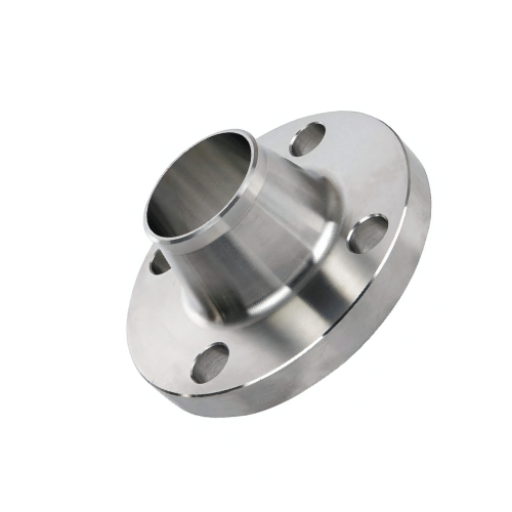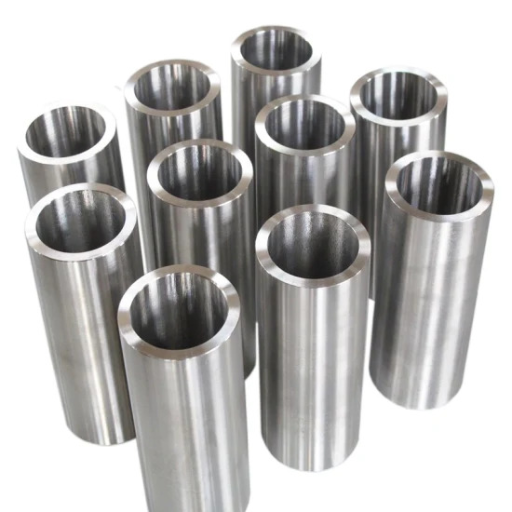
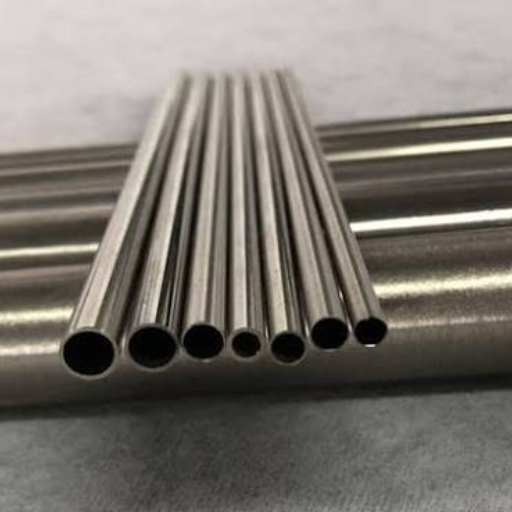
Inconel 625 and Inconel 600 are different alloys and not interchangeable. 600 is a nickel-chromium-iron alloy with no molybdenum and no niobium. 625 takes the same nickel-chromium base and adds 8 to 10% molybdenum and 3.15 to 4.15% niobium, and every other difference in this comparison follows from those two additions.
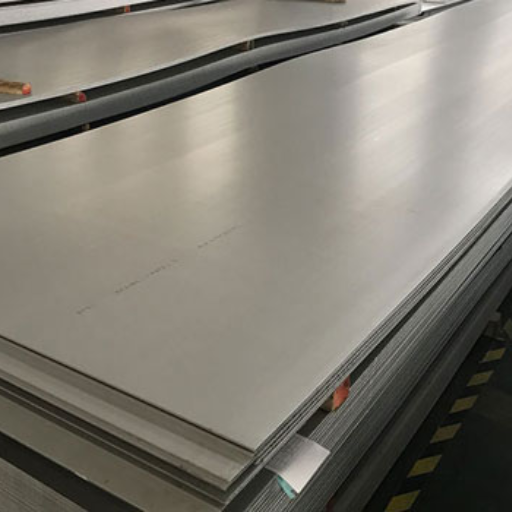
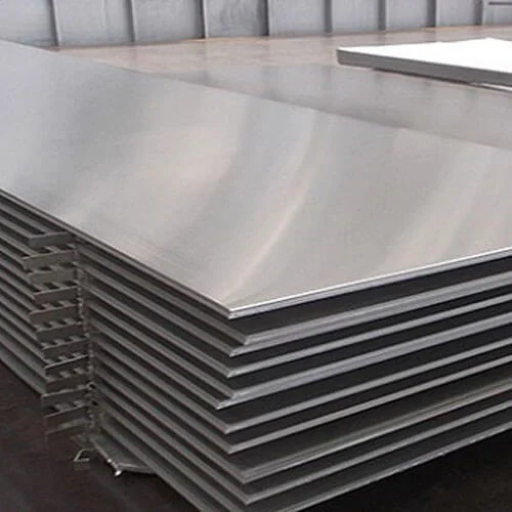
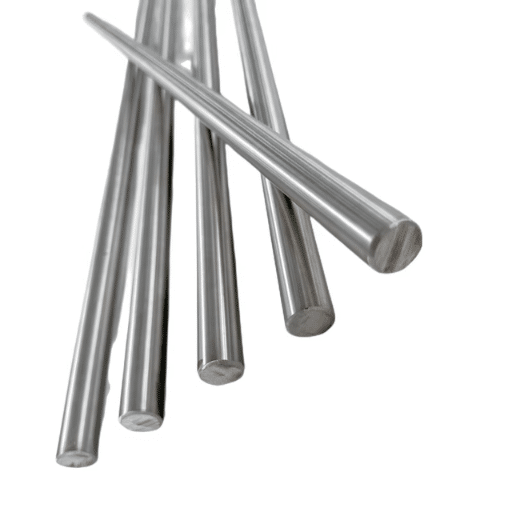
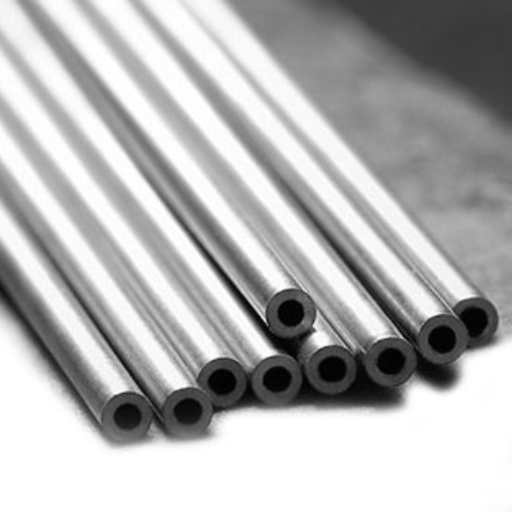
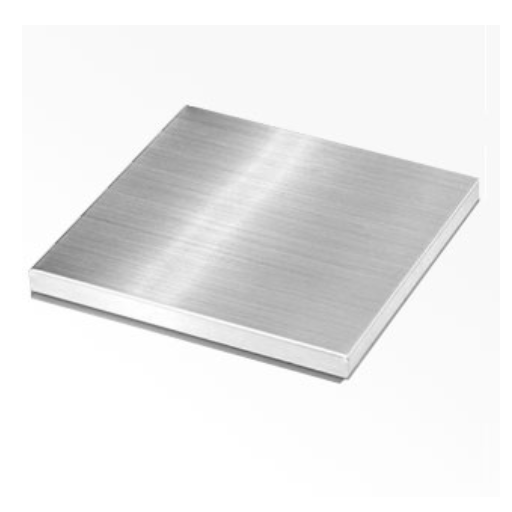
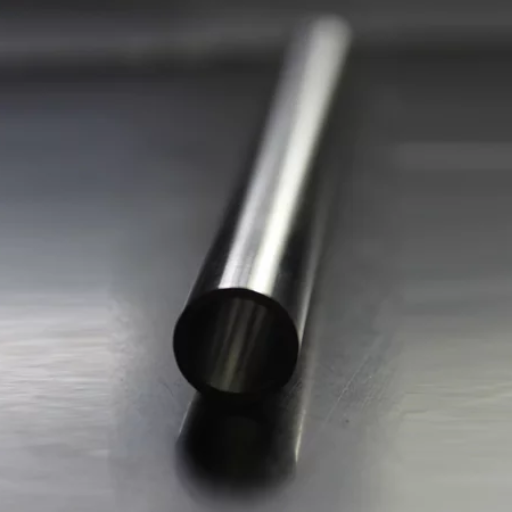
Put a length of each on the rack and nothing in the workshop will separate them. The colour is the same, the finish is the same, the weight agrees to within 0.12%, and neither responds to a magnet.
That is why the substitution keeps happening. A line calls for 625, a stockist offers 600 as an equivalent at a substantial saving, and the paperwork looks close enough to sign. In a chloride line, that saving lasts until commissioning. In a carburising furnace, the reverse holds, and 625 is the money burned.
Ask the Inconel 600 vs 625 question at the quotation stage, and it costs nothing to answer. Ask it after commissioning, and it costs the line. What follows are the four differences that decide a purchase, the numbers behind them, and the one test that settles which alloy is in the bundle.
Key Takeaways
- 600 has no molybdenum and no niobium. 625 carries 8 to 10% Mo and 3.15 to 4.15% Nb, and that is the whole difference between them.
- 625’s yield advantage over 600 is 1.73 times in Grade 1 but only 1.15 times in Grade 2, the condition most corrosion-service 625 is supplied in.
- Density is 8.43 against 8.44 g/cm³ and both alloys are paramagnetic. Weighing a piece and testing it with a magnet both prove nothing.
- The two alloys share exactly one ASTM product specification, B564 for forgings. Plate, sheet, tube, pipe and bar each have separate governing documents.
- 600 is the furnace alloy and 625 is the chloride alloy. Neither one is the general answer.
Send us the certificate or the line list and we will confirm which alloy and which standard each line actually is, before your inspector reaches the same conclusion. Our technical team replies within 24 hours. Start the check here.
Inconel 625 vs 600 at a Glance
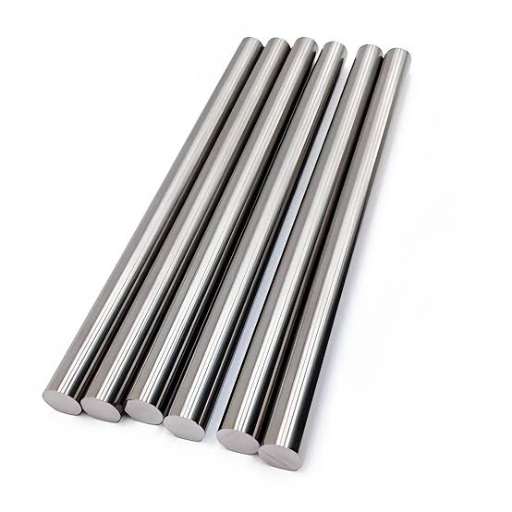
Inconel 600 contains no molybdenum and no niobium. Inconel 625 adds 8 to 10% molybdenum and 3.15 to 4.15% niobium to the same nickel-chromium base. That single difference roughly triples pitting resistance and lifts yield strength by 15% to 73%, depending on the condition supplied.
| Property | Inconel 600 (N06600) | Inconel 625 (N06625) |
|---|---|---|
| Base system | Ni-Cr-Fe | Ni-Cr-Mo-Nb |
| Nickel | 72% min | 58% min |
| Chromium | 14 to 17% | 20 to 23% |
| Molybdenum | none | 8 to 10% |
| Niobium plus tantalum | none | 3.15 to 4.15% |
| Yield, annealed (ratio to 600) | 240 MPa (1.00) | 414 MPa Grade 1 (1.73) / 276 MPa Grade 2 (1.15) |
| Tensile, annealed | 550 MPa | 827 MPa Grade 1 / 690 MPa Grade 2 |
| Density | 8.43 g/cm³ | 8.44 g/cm³ |
| PREN, approximate | 16 | 50 |
| Oxidation ceiling | about 1,095 °C | about 980 °C |
| Load-bearing ceiling | 650 to 700 °C | about 650 °C |
| Plate, sheet, strip | ASTM B168 | ASTM B443 |
| Seamless tube | ASTM B167 | ASTM B444 |
| Bar | ASTM B166 | ASTM B446 |
| W.Nr. / equivalent | 2.4816, NC15Fe, NS312 | 2.4856, GH3625 |
| Relative price | 1.0 | 1.7 to 2.2 |
The two empty rows in the 600 column drive the corrosion, strength and price rows below them.
Inconel 600 Composition: What Niobium and Molybdenum Buy You
Inconel 600 is a solid-solution alloy. Nickel at 72% or more carries the corrosion resistance, chromium at 14 to 17% forms the passive layer, and iron at 6 to 10% makes up the balance. Nothing in it precipitates on aging, so its strength is whatever the solid solution and carbides give it.
Inconel 625 keeps that base and changes two things. Molybdenum at 8 to 10% adds resistance to reducing acids and to chloride pitting. Niobium at 3.15 to 4.15% combines with the molybdenum to strengthen the alloy and forms the gamma double prime phase (γ″, Ni₃Nb) that carries much of its annealed strength.
The pitting resistance equivalent number makes the corrosion gap legible. It is calculated as chromium plus 3.3 times molybdenum plus 16 times nitrogen. For 600 that gives roughly 16. For 625 it gives roughly 50.
Treat that as an order of magnitude. PREN was developed for stainless steels and is unreliable for high-nickel alloys, but it is still worth stating: on the pitting index Inconel 600 sits below 304 stainless steel, and the trade name implies otherwise. The 625 vs 718 comparison sets out the PREN method and what it does not tell you.
Strength: Why “625 Is Twice as Strong” Is Only Half True
Every comparison page says 625 is nearly twice as strong as 600. That holds in Grade 1 and collapses to about 15% in Grade 2, and which condition you are buying decides the price you should pay.
Grade 1 is annealed at a minimum of 871 °C. It delivers 414 MPa minimum yield and roughly 827 MPa tensile.
Grade 2 is solution annealed at 1,083 to 1,093 °C. It delivers 276 MPa minimum yield and roughly 690 MPa tensile.
Inconel 600, annealed, delivers 240 MPa yield and 550 MPa tensile. Run the division. Against Grade 1, 625’s yield advantage is 1.73 times. Against Grade 2, it is 1.15 times.
The second number is the one that matters in a corrosion application, because solution annealing is the condition that delivers the corrosion resistance 625 is bought for. A buyer specifying 625 against chlorides is usually buying Grade 2, and paying roughly double the price of 600 for about 15% more yield.
That can still be the right purchase. Three times the pitting resistance is a fair trade in a chloride line. It should be a deliberate decision, not an accident of whichever condition the mill ships.
The 625 pipe specification works through that condition decision in full, including the pressure-vessel calculation it changes.
Temperature: Two Ceilings Made of Different Things
Both alloys stop carrying load at about the same temperature, and for completely different reasons. 600 runs out of strength. 625 runs out of microstructure.
Inconel 600 is single-phase, so nothing changes with time at temperature. Its oxidation resistance holds to about 1,095 °C, and its load-bearing limit sits near 650 to 700 °C because it has no precipitation strengthening to add. That combination is why 600 is the furnace alloy: muffles, retorts, radiant tubes, heat-treat fixtures and thermocouple sheaths.
Inconel 625 is stronger at every temperature, and still the wrong choice in a furnace. Above roughly 650 °C the gamma double prime phase transforms to the equilibrium delta phase, and the strength the buyer paid for goes with it. Oxidation resistance also tops out lower, near 980 °C.
Read those two paragraphs together and the inversion appears. The stronger alloy is the less suitable one for sustained high-temperature duty, because its strength is microstructurally unstable exactly where a furnace operates.
One physical number follows from the same split. 600 conducts heat at about 14.8 W/m·K at room temperature; 625 manages about 9.8, and in a heat exchanger or furnace that 50% gap changes the surface area calculation.
Corrosion: Where 600 Is Fine and Where It Fails
In chlorides, 625 wins decisively. Pitting, crevice corrosion, seawater, brackish cooling water and chloride-bearing process streams all sit inside 625’s capability and outside 600’s.
In oxidising acids, nitric acid and caustic service, 600 is adequate and cheaper. It also machines more freely than 625, which matters on a large fitting or manifold scope. A caustic evaporator does not need molybdenum, and specifying 625 there buys margin nobody asked for.
In reducing acids, 600 is out of its depth. Molybdenum is the reason 625 exists, and hydrochloric and sulphuric service is where that shows.
The most expensive verdict on 600 came from the nuclear industry. Alloy 600 was the standard steam-generator tubing in pressurised water reactors, and it developed primary water stress corrosion cracking in service. The industry moved new and replacement steam generators to Alloy 690, and the US Nuclear Regulatory Commission records that thermally treated 690 has yet to show the cracking 600 did. That is a stress corrosion failure measured in replacement steam generators rather than test coupons.
Sour service is simpler still. N06600 is not a listed alloy under NACE MR0175 and ISO 15156, so a specification naming 600 alongside 625 for wet H₂S service will not pass a materials engineer’s review without a documented qualification. The nickel alloy sour service guide covers the listing and the exclusions in full.
Where neither alloy is right: above about 650 °C under load with chlorides present, and any duty needing a precipitation-hardened grade’s strength. The Nickel Institute publishes corrosion and high-temperature property data for both alloys, which is where to check a specific medium against a specific temperature.
Standards and Verification: The Paperwork Is the Only Defence
One Shared Specification Out of Six
| Product form | Inconel 600 | Inconel 625 |
|---|---|---|
| Plate, sheet, strip | ASTM B168 | ASTM B443 |
| Seamless pipe and tube | ASTM B167 | ASTM B444 |
| Welded tube | ASTM B516 | ASTM B704 |
| Welded pipe | ASTM B517 | ASTM B705 |
| Rod and bar | ASTM B166 | ASTM B446 |
| Forgings | ASTM B564 | ASTM B564 |
Only B564, for forgings, covers both alloys as a product specification. Every other product form has a different governing document, which produces a consequence most buyers meet the hard way: a purchase order mixing the two alloys cannot cite one standard across all its lines. The paperwork has to split line by line.
ASTM International publishes each separately, and the edition matters as much as the number. An order citing a superseded edition invites rejection even when the material is correct.
The confusion starts on the flat-product side. Inconel 600 genuinely is a B168 alloy; 625 is not, and B443 governs it, which is why catalogues group them wrongly. The Inconel 625 sheet guide explains that error.
Reconciling trade names at the same time? The full Inconel 625 designation map resolves UNS, W.Nr., GH and the rest in one table.
Why No Field Test Works
Inconel 600 has a density of 8.43 g/cm³. Inconel 625 has 8.44. That is 0.12% apart, so on a 500 kg lot the difference is 0.6 kg, which sits inside the mill’s own weight tolerance. Weighing the bundle tells you nothing.
Both alloys are austenitic and paramagnetic at room temperature, so a magnet will not pick either one out of a mixed bundle. Colour, finish and stencil conventions are identical too, so the eye is not a test.
Chemistry is. Portable X-ray fluorescence reads niobium directly, and niobium is the discriminator: 3.15 to 4.15% in 625, absent in 600. Where XRF is not permitted on site, optical emission spectrometry or laboratory wet chemistry is the fallback.
The certificate is the other half. It has to state the UNS number rather than the trade name, the heat number, and the governing standard with its edition. A certificate reading “Inconel” and nothing else proves nothing, because both alloys answer to that name.
Already holding an MTR you are not certain about? Send it over and we will check the alloy, the standard and the product form against each other before your inspector does. Request the review.
Inconel 600 vs 625: Price and the Over-Specification Trap
The ratio between them runs roughly 1.7 to 2.2 to one in flat product. That is an estimate for Chinese domestic supply in early 2026, based on listings of about CNY 180 per kilogram for 600 plate against CNY 300 to 400 for 625. It moves with nickel, molybdenum and niobium, and it is not an export price.
Take a 500 kg order. At 625 pricing the material is roughly double the 600 figure. What the difference buys is pitting resistance, a chloride ceiling and a stronger weld deposit. In a chloride line that is the entire point of the purchase, and in a carburising furnace it buys nothing, because 625’s strength advantage is unstable at the temperature the furnace runs at.
The decision, in practice:
- Choose 600 when the duty is oxidation, carburising or nitriding above 650 °C at low stress, the medium is caustic or nitric acid, and no chloride is present.
- Choose 625 when chlorides, seawater or brackish water are present at any temperature, the medium is a reducing acid, or you need Grade 1 yield above 400 MPa below 650 °C.
Get that wrong in the first direction and you waste money on an advantage that anneals out within the first production cycle. Get it wrong in the second and the failure is scheduled for commissioning plus one.
The Inconel 625 pipe price guide covers the raw-material floor behind the ratio and why quotes expire.
Inconel 625 vs 600: Frequently Asked Questions
What is the difference between Inconel 600 and Inconel 625?
Inconel 600 (UNS N06600) is Ni-Cr-Fe with neither molybdenum nor niobium. Inconel 625 (UNS N06625) is Ni-Cr-Mo-Nb, carrying 8 to 10% Mo and 3.15 to 4.15% Nb. It is a different alloy system rather than a higher grade, with its own standard, a higher yield and a far higher chloride ceiling.
Which is stronger, Inconel 600 or Inconel 625?
625, in both conditions, but by very different margins. Grade 1 625 yields 414 MPa against 600’s 240 MPa, a factor of 1.73. Grade 2 625 yields 276 MPa, a factor of 1.15. Most corrosion-service 625 is supplied as Grade 2.
Can Inconel 625 replace Inconel 600?
In chloride, seawater or reducing-acid duty, yes, and it is usually the upgrade. In a furnace, retort or heat-treat application, no. 625’s gamma double prime strengthening converts to delta phase above roughly 650 °C, so the strength advantage does not survive the service temperature.
Is Inconel 600 magnetic?
No. It is austenitic and paramagnetic at room temperature, as is 625. Neither alloy responds to a magnet, which is why a magnet is not a material identification test.
Can Inconel 600 and 625 be welded together?
Yes. ERNiCrMo-3 to AWS A5.14 is the usual filler for 625 and the conservative choice for a 600-to-625 joint, because it matches the more highly alloyed side. Welding 600 to itself takes ERNiCr-3. No preheat, and no post-weld heat treatment where corrosion resistance matters.
What is the maximum service temperature of Inconel 600?
Two different numbers, often confused. Oxidation resistance holds to about 1,095 °C continuously. Load-bearing capability tops out near 650 to 700 °C, because 600 has no precipitation strengthening. A muffle at 1,000 °C carries almost no stress; a structural member at 800 °C does.
How do you tell Inconel 600 from 625?
Chemistry only. Density differs by 0.12%, both are paramagnetic, and the surface finish is identical. Portable XRF reads niobium at 3 to 4% in 625 and nothing in 600, and the mill certificate should state the UNS number rather than the trade name.
Conclusion: Two Elements, One Decision
Two elements decide this. Molybdenum and niobium are present in 625 and absent from 600, and the strength gap, the corrosion gap, the price gap and the standard split all follow from that one fact.
So the Inconel 625 vs 600 question reduces to four checks: which condition the 625 is supplied in, what temperature the part actually reaches under load, whether chlorides are present, and which standard governs each product form on the line.
Get those four right and the alloy choice makes itself. Leave any of them to the mill’s default and it surfaces at receiving inspection, or later in service.
Send us the line list with alloy, form and standard exactly as written, and we will confirm what governs each line and where the two alloys cannot be substituted. We reply within 24 hours. Get a second opinion.