Inconel 625 is a solid-solution, corrosion-first nickel alloy: UNS N06625, PREN 48–51, seamless pipe to ASTM B444, no post-weld heat treatment required. Inconel 718 is a precipitation-hardened, strength-first nickel alloy: UNS N07718, about 1,034 MPa aged yield, pipe to ASTM B983, and it reaches that strength only after a two-step aging treatment. Put simply, choose 625 for chlorides, seawater, and sour service, and for load-bearing duty above roughly 700 °C; choose 718 for high-strength, fatigue-loaded, and cryogenic parts below that ceiling.
That is the whole comparison in two sentences. The expense usually comes from not reading the second one carefully.
In 2024, a piping engineer in the UK was asked to specify an alloy for a high-strength spool. He pulled two datasheets side by side. Inconel 625 listed 414 MPa minimum yield. Inconel 718 listed 1,034 MPa. He ordered 718. Six weeks later, the fabricator called: the spools had to be welded; welding destroys the aged condition in the heat-affected zone, and re-aging a completed spool set is a furnace job the schedule could not absorb. The datasheets were both correct and both misleading. They didn’t state the condition each number belonged to.
This Inconel 625 vs 718 guide is written to close that gap. It covers how the two alloys differ at the metallurgical root, the aged-versus-annealed trap that decides your yield strength, which standard governs each pipe form, how the weldability and cost actually compare, and a choose-X-if table you can hand to a project team. For the deeper 625 specification, our Inconel 625 pipe specifications sit one level up; for the wider family, start with our complete nickel alloy pipe guide.
Key Takeaways
- Inconel 625 is solid-solution strengthened (molybdenum plus niobium); Inconel 718 is precipitation-hardened (gamma-double-prime and gamma-prime phases from niobium, titanium and aluminium). That one difference drives strength, temperature ceiling, weldability and cost.
- Inconel 718’s 1,034 MPa minimum yield exists only after aging at 720 °C for 8 hours plus 620 °C for 8 hours. In the solution-annealed condition, 718 is roughly 625’s strength (about 380–550 MPa). Never compare aged 718 against annealed 625 without stating the condition.
- On corrosion, 625 wins clearly: PREN 48–51 versus about 28.5 for 718, on molybdenum of 8–10% versus 2.8–3.3%. Inconel 718 is not recommended for continuous seawater immersion.
- The temperature limits are different kinds of ceiling. Inconel 718’s is a strength limit near 700 °C, where its strengthening phase coarsens; 625’s is an oxidation limit near 980 °C. Conflating the two is a specification error.
- Pipes have different governing standards: 625 to ASTM B444 (seamless), B705 (welded) and B704 (welded tube); 718 to ASTM B983, with B637 for bar and B670 for plate. Which Inconel is cheaper depends on form, not just metal.
Inconel 625 vs 718: At a Glance

Inconel 625 and Inconel 718 are both nickel-based superalloys, but they are built to solve different problems. Whichever way you write it, Inconel 718 vs 625 or 625 vs 718, the material facts and the verdict are the same; only the search order differs. The generic designations Alloy 625 vs Alloy 718 name the same two materials. Inconel 625 is a corrosion-resistant alloy whose strength comes from elements dissolved in its matrix. Inconel 718 is a high-strength alloy whose strength comes from heat-activated precipitates, and it trades corrosion resistance for that strength.
| Item | Inconel 625 | Inconel 718 |
|---|---|---|
| UNS / W.Nr. | N06625 / 2.4856 | N07718 / 2.4668 |
| Strengthening | Solid solution (Mo + Nb) | Precipitation (γ″ + γ′) |
| Typical chemistry | Ni 58–61%, Cr 20–23%, Mo 8–10%, Nb 3.15–4.15%, Fe ≤5% | Ni 50–55%, Cr 17–21%, Mo 2.8–3.3%, Nb 4.75–5.5%, Fe balance |
| Yield strength, min | 414 MPa (annealed, Grade 1) | 1,034 MPa (aged) |
| Tensile strength, min | 827 MPa (annealed) | 1,275 MPa (aged) |
| PREN | 48–51 | ≈ 28.5 |
| Temperature character | Oxidation-resistant to ~980 °C | Strength-limited to ~650–704 °C |
| Pipe standard | ASTM B444 / B705 | ASTM B983 |
| Weld / PWHT | ERNiCrMo-3, no PWHT | ERNiFeCr-2, solution + age |
Want a second opinion before you write the specification? Send us your service temperature, medium, pressure and required standard, and our technical team will confirm which alloy is correct and issue the relevant documentation within 24 hours.
The Core Difference: Solid-Solution vs Precipitation Hardening
The Inconel 625 vs 718 difference that governs everything else is how each alloy gets its strength, so it’s worth getting this right before any number.
Inconel 625 is a solid-solution alloy. Molybdenum and niobium are dissolved directly into the nickel-chromium matrix, and their atoms distort the crystal lattice just enough to resist slip. There’s no aging step, no precipitate to form and therefore no heat treatment after delivery beyond the mill anneal. What you receive is what the alloy is.
Inconel 718 is a precipitation-hardened alloy. Its strength comes from tiny intermetallic particles, principally gamma-double-prime (γ″, Ni₃Nb) with some gamma-prime (γ′, Ni₃(Al,Ti)), that form only when the alloy is held at temperature. The niobium, titanium and aluminium in the chemistry are there to build those particles. Until the alloy is aged, they are dormant.
This distinction explains four things at once. It explains why 718 is stronger (precipitates block dislocation motion far more effectively than dissolved atoms). It explains why 718 has a temperature ceiling (those same precipitates coarsen and convert to a harmful phase above about 700 °C). It explains why 718 is harder to weld (welding destroys the precipitates and the joint must be re-aged). And it explains why 718 costs more as a finished part (the aging and the harder machining are both added costs).
If you remember one line from this article, make it this: 625 is strong because of what is dissolved in it; 718 is strong because of what has been grown inside it.
Which Is Stronger? The Aged-vs-Annealed Trap
Inconel 718 is the stronger alloy. In the aged condition, it delivers a minimum 0.2% yield strength of 1,034 MPa (150 ksi) and 1,275 MPa (185 ksi) tensile strength, roughly 2.5 times the yield of annealed 625. Its hardness, at approximately 331 HBW (about 36–40 HRC), is also far above 625’s 180–220 HBW.
The trap is the condition. Those 718 numbers belong to material that has been solution-treated and then aged. Before aging, solution-annealed 718 sits near 380–550 MPa yield, which is in the same territory as annealed 625. The strength advantage isn’t a property of the alloy as-shipped. It’s a property of the alloy after a specific heat treatment.
| Property | Inconel 625 (annealed, Grade 1) | Inconel 718 (aged) |
|---|---|---|
| Yield strength (0.2%), min | 414 MPa (60 ksi) | 1,034 MPa (150 ksi) |
| Tensile strength, min | 827 MPa (120 ksi) | 1,275 MPa (185 ksi) |
| Elongation, min | 30% | 12% |
| Hardness | ~180–220 HBW | ≈ 331 HBW (~36–40 HRC) |
| Condition required | Mill annealed | Solution + age (720 °C/8 h + 620 °C/8 h) |
Notice the elongation row as well. Inconel 718 gains strength by giving up ductility: 12% minimum elongation against 30% for 625. For a pressure boundary subject to thermal cycling, that reduction in ductility is a real design input, not a footnote.
The practical consequence for pipe is the point the engineer in the introduction missed. Aging 718 is a furnace operation at two temperatures with a controlled ramp between them. A mill can age straight lengths before it ships them.
A fabricator that welds those lengths into a spool can’t restore the aged condition in the heat-affected zone without re-aging the entire assembly, which for a large spool set may be impractical or impossible. If your 718 pipe requires full aged strength after fabrication, that must be designed into the fabrication sequence before the material is ordered.
Write the purchase line correctly and none of this surprises you: Inconel 718, UNS N07718, ASTM B983, solution annealed and aged, with the fabrication sequence and any post-weld heat treatment stated on the enquiry.
Chemical Composition: Why One Resists Corrosion, and One Resists Load
The composition tables tell the whole story, and it’s worth reading them as chemistry rather than as a checklist.
| Element | Inconel 625 (ASTM B444) | Inconel 718 (ASTM B637 / B983) |
|---|---|---|
| Ni | Balance (~58–61%) | 50.0–55.0 |
| Cr | 20.0–23.0 | 17.0–21.0 |
| Mo | 8.0–10.0 | 2.80–3.30 |
| Nb (+Ta) | 3.15–4.15 | 4.75–5.50 |
| Fe | ≤ 5.0 | Balance (~18–19) |
| Ti | ≤ 0.40 | 0.65–1.15 |
| Al | ≤ 0.40 | 0.20–0.80 |
| C | ≤ 0.10 | ≤ 0.08 |
Molybdenum is the corrosion driver, and Inconel 625 carries roughly three times as much of it: 8–10% against 2.8–3.3%. That single difference is why 625 resists chlorides so well and 718 does not. Iron is the strength and cost driver in the other direction. Inconel 718 has a balance of iron near 18–19% (it is a nickel-iron alloy), which lowers its raw material cost but does nothing for corrosion. And niobium, titanium, and aluminium are the precipitation triad in 718, which is why they appear at much higher or more tightly specified levels than in 625.
PREN: The Number Behind the Corrosion Claim
Pitting Resistance Equivalent Number is calculated as:
PREN = %Cr + 3.3(%Mo) + 16(%N)
Using typical composition, Inconel 625 lands at PREN 48–51. Inconel 718, with its lower chromium and much lower molybdenum, lands at approximately 28.5. For scale, 316L sits near 26 and super duplex 2507 near 43.
One honest caveat that most pages omit: niobium, which 718 carries at 4.75–5.5%, is not counted in the standard PREN formula, and it does not rescue 718’s low score. The low molybdenum is what defeats it in chloride service. Cite PREN as a comparison index, not as a corrosion rate.
Corrosion Resistance: 625 Is the Clear Winner
If strength is 718’s territory, corrosion is emphatically 625’s. At PREN 48–51 against 28.5, Inconel 625 resists pitting, crevice corrosion, and chloride stress corrosion cracking at levels 718 cannot match.
| Service condition | Inconel 625 | Inconel 718 |
|---|---|---|
| Seawater, continuous immersion | Resistant | Not recommended |
| Chloride SCC | Essentially immune | Good, but inferior |
| Reducing and oxidising acids | Broad resistance | Moderate |
| Sour service, ISO 15156-3 | Group 4, 35 HRC max typical | Group 4, condition-dependent |
| Supercritical water | Better | Prone to more serious pitting |
The seawater row deserves emphasis because it is where the two alloys are most often confused. Inconel 625 performs well in chlorinated seawater and firewater duty. Inconel 718 is not recommended for continuous seawater immersion, and its lower PREN is the reason. A plant engineer who selects 718 for a seawater cooling loop because it is “the stronger Inconel” has chosen the wrong property to optimise.
The other honest caveat runs the risk of over-trusting 625. In wet chlorine, hypochlorite, and mixed reducing-acid environments, even 625 runs out of corrosion allowance, and Hastelloy C-276 for wet chlorine and mixed acids is the correct material. Both alloys are strong choices inside their envelopes and wrong choices outside them.
For sour service, both alloys fall in Group 4 of NACE MR0175 / ISO 15156-3, and the governing control is hardness and condition. Inconel 625 is commonly supplied at a 35 HRC maximum, with cold work beyond about 15% reduction excluded regardless of hardness reading. For 718, because the alloy is hard only after aging, the aged hardness must be checked against the applicable table rather than assumed. This is a discussion to have with the mill, not to leave to the purchase order.
Temperature Limits: Two Different Kinds of Ceiling

The temperature comparison is where the most common specification error lives, because the two limits are not the same kind of number.
Inconel 718’s ceiling, near 650–704 °C, is a strength limit. Above it, the γ″ precipitates that give the alloy its strength coarsen and convert to the delta (δ) phase, and the strength collapses. The number is a design limit for load-bearing and creep service.
Inconel 625’s headline number, near 980 °C, is an oxidation limit. It tells you how hot the alloy can be before its protective oxide film fails in air. It says nothing about load-bearing capacity, which for 625 is modest and tends to fall away well below that. Many pages state “718 to 700 °C” and “625 to 980 °C” side by side as if they were interchangeable. One is a strength limit and one is an oxidation limit, and treating them as the same thing is how a designer over-specifies one alloy and under-protects the other.
Inconel 718 also has an advantage in the cold that rarely appears in comparison tables: its toughness at cryogenic temperatures is excellent, which is why it is used in LNG and downhole cryogenic service.
State the condition and the type of limit with every temperature figure. A number without its context is the most dangerous kind of number in a material specification.
ASTM Standards: What to Specify for Pipe, Tube, Bar and Plate
This is where most supplier pages are quietly wrong, and where getting it right is a genuine competence signal. The standard depends on the product form.
| Product form | Inconel 625 | Inconel 718 |
|---|---|---|
| Seamless pipe/tube | ASTM B444 / SB444 | ASTM B983 / SB983 |
| Welded pipe | ASTM B705 / SB705 | Project spec (or B983 cold-worked) |
| Welded tube | ASTM B704 / SB704 | AMS 5589 / 5590 |
| Bar/forgings | ASTM B446 | ASTM B637 / SB637 |
| Plate/sheet / strip | ASTM B443 | ASTM B670 / SB670 |
| Dimensions | ASME B36.19 | ASME B36.19 |
The common mis-citation is citing B637 or B670 as the 718 pipe standard. They are not. ASTM B637 covers precipitation-hardening nickel alloy bar, forgings, and forging stock; ASTM B670 covers plate, sheet and strip. The specification that governs 718 seamless pipe and tube, in the cold-worked, cold-worked-and-aged, or solution-annealed-and-aged conditions, is ASTM B983, current edition B983-21. A supplier page that lists B637 as the 718 pipe standard is telling you it has not read the scope.
Dimensions follow ASME B36.19, not B36.10. B36.10 governs carbon and alloy steel pipe; nickel alloy and stainless pipe use the S-series schedules. Check every dimensional line against our full nickel alloy standards index and the schedule chart before the order is placed, because a wall-thickness mismatch between these two standards surfaces only at fit-up.
Welding Inconel 625 vs 718: The Fabrication Decision
Weldability is the section a pipe buyer should read first, because it drives fabrication cost and schedule more than any datasheet number.
Inconel 625 has excellent weldability and is the default dissimilar-joint and overlay material. Use ERNiCrMo-3 (TIG/MIG) or ENiCrMo-3 (SMAW) filler, keep heat input low and interpass temperature under 100 °C, and no post-weld heat treatment is required for corrosion service. The as-welded condition is usable, which is precisely why 625 is so often chosen for field-fabricated piping and cladding.
Inconel 718 is weldable but demanding. Use ERNiFeCr-2 (S Ni 7718) filler, or ENiCrFe-3 for lower-strength SMAW joints. The material must be welded in the solution-annealed condition, and after welding, it requires solution annealing plus aging to restore strength. The alloy is susceptible to strain-age cracking and heat-affected-zone liquation cracking, and Laves phase can form in the weld metal. These are not theoretical risks; they are the reason 718 weld procedures are qualified with care.
For a 625-to-718 dissimilar joint, the usual choice is ERNiCrMo-3 (625 filler), because it tolerates dilution and does not require aging. But state the limitation clearly, because it is a common and costly mistake: ERNiCrMo-3 does not respond to aging. It cannot substitute for ERNiFeCr-2 where aged-condition strength is required.
The discipline here echoes what governs welding high-alloy nickel and duplex grades: control the heat input, control the interpass temperature, and put the parameters in a written procedure before fabrication begins, not after the first radiograph. If your project is 718 and the joints need full strength, the sequence is weld, then age, and the furnace availability belongs on the schedule.
Inconel 625 vs 718: Cost and Which Is Cheaper
There’s no single answer, and any page that gives you one is simplifying past the point of usefulness. Which alloy is cheaper depends on the form and the condition, and the two effects pull in opposite directions.
Raw material favours 718. Inconel 718 contains more iron and less nickel and molybdenum than 625, so the base metal costs less per kilogram. If you are comparing bare mill forms, 718 is commonly the cheaper of the two.
Finished product often favours 625. Inconel 718 needs an aging heat treatment, is harder to machine and wears tooling faster, and its aerospace and AMS grades carry supply-chain premiums. Once the part is finished, the premium frequently reverses.
Indicative 2026 bands, split by form, show the spread:
| Form/source | Inconel 625 (USD/kg) | Inconel 718 (USD/kg) |
|---|---|---|
| Standard mill forms | 58–110 | 52–95 |
| Aerospace sheet | 85–130 | 75–115 |
| Pipe (indicative) | 28–55 | 30–45 |
| Bar (indicative) | 45–65 | 55–85 (aerospace) |
These bands are indicative, not quotes, and they overlap heavily. The correct reading is not “718 is the cheaper Inconel.” It is: assume nothing and price the actual form and condition. Both alloys run roughly 8–20× equivalent 316L, both track the LME nickel price, and both require a validity-dated quote because the input moves monthly.
A procurement manager learns this the hard way. When a buyer compared quotes for a machined manifold, the 718 bar price was lower than 625 bar, so the order went to 718. The finished, aged manifold then arrived more expensive than the 625 equivalent would have been, because the aging operation and the slower machining had been added on top. The sticker price on the metal was right; the total cost of ownership was not.
For pipe buyers, there is also a density consequence to carry into any weight-based calculation. Inconel 625 at 8.42 g/cm³ is denser than Inconel 718 at 8.19 g/cm³, so at identical OD × Wall Thickness × Length, 625 pipe weighs roughly 2–3% more per metre. Confirm the figures against our nickel alloy pipe weight chart so your material budget reflects the alloy you actually order.
Applications: When Each Alloy Is the Right Answer
The two alloys map onto two different industries, and knowing which side of the line your application falls on resolves most specifications.
Inconel 625 is the process-industry alloy:
- Subsea flowlines, risers and umbilical tubing, where chloride service and no-PWHT fabrication dominate
- Seawater cooling and firewater systems, especially with chlorination
- Sour gas and H₂S-bearing wellhead and Christmas tree components
- Chemical process piping and heat exchangers handling mixed acids and chlorides
- Flue gas desulfurisation ducting and scrubbers
- Weld overlay and cladding on carbon steel
Inconel 718 is an aerospace and high-strength alloy:
- Jet engine turbine discs and compressor blades
- Gas turbine hot-section components, below the ~700 °C strength limit
- High-strength fasteners and bolting
- Downhole tools and completions hardware
- Cryogenic service in LNG and downhole applications
The dividing question is simple: is your governing requirement corrosion and fabrication simplicity, or strength, fatigue, and high-temperature creep? The first points to 625, the second to 718. Where an application needs both, that tension is the specification, and it should be resolved on paper before material is ordered. For how these grades relate to the other nickel families, see comparing the nickel alloy families.
Which Should You Choose? A Decision Table
Use this table to select a direction, then confirm the detail against the relevant standard.
| Choose Inconel 625 if… | Choose Inconel 718 if… | Choose neither if… |
|---|---|---|
| Chloride, seawater or chlorinated cooling service | You need aged yield strength above ~1,000 MPa | Your chloride duty is below ~250 °C and not severely sour |
| Sour service under ISO 15156-3 | Fatigue-loaded, rotating or high-strength structural parts | Your duty is within super duplex 2507’s envelope |
| Service above ~700 °C | Cryogenic toughness is required | Your medium is wet chlorine or hypochlorite |
| Fabrication must avoid post-weld heat treatment | Gas-turbine or aerospace hot-section duty below ~700 °C | N/A |
The “choose neither” column is the one that saves the most money, and it’s the one suppliers rarely volunteer. Super duplex 2507 is roughly 1.5–3× cheaper per kilogram than either Inconel, and below its temperature and chloride envelope it does the same job.
When a European chemical producer specified 625 for a 120 °C chloride-bearing line with only trace H₂S, a review found that super duplex S32750 corrosion performance satisfied the duty at that temperature and chloride level. The substitution cut material cost by more than half. The engineer hadn’t erred; the specification process had simply never forced the comparison.
Sending a buyer to the cheaper correct answer is how a specification page earns trust. Default upward only when the envelope genuinely demands it.
Quality, Documentation and Verification
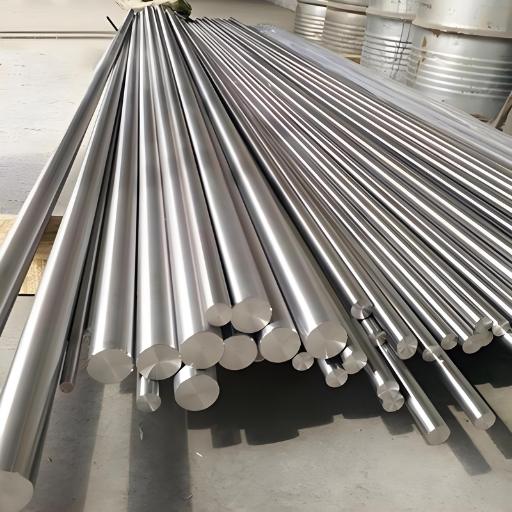
Inconel 625, 718 and 600 are visually similar on the rack, and no datasheet tells them apart once stencils are lost. Documentation and testing are the only defence.
Positive Material Identification by XRF or OES is the core control. Portable XRF separates 625 from 600 by niobium content in seconds; OES gives full chemistry to the specification limits. Inconel 718’s niobium-plus-titanium signature also makes it identifiable. PMI applies to incoming raw material, in-process, and finished pipe.
Mill Test Reports must carry the heat number, the full chemical analysis, the mechanical results, the heat-treatment condition, and the standard with its edition year, because the condition on that report is what tells you whether 718 has actually been aged. Under EN 10204 3.1, the MTR is issued by the manufacturer’s own inspection department; under 3.2, an independent authorised inspector signs. For sour service and offshore projects, 3.2 is often mandatory, and the ISO 15156-3 Group 4 table should be specified explicitly rather than left to the mill.
Hydrostatic testing, ultrasonic testing, and eddy current testing confirm pressure integrity and internal soundness, and hardness and tensile testing confirm the delivered condition. Heat-number traceability should run from the mill certificate to the stencil on the finished pipe, and the stencilling must survive shipping. Where third-party inspection is required, agree the release points before production starts.
We can issue a sample MTR and PMI record for an Inconel 625 or 718 heat so your team can verify the documentation format before committing to an order.
Frequently Asked Questions
What is the difference between Inconel 625 and Inconel 718?
Inconel 625 is a solid-solution nickel-chromium-molybdenum-niobium alloy (UNS N06625) selected for corrosion resistance. Inconel 718 is a precipitation-hardened nickel-iron alloy (UNS N07718) selected for high strength after aging. 625 resists chlorides far better; 718 is roughly 2.5× stronger in the aged condition.
Which is stronger, Inconel 625 or 718?
Inconel 718, in the aged condition, with a minimum yield strength of 1,034 MPa against 414 MPa for annealed 625. The advantage exists only after the two-step aging treatment; solution-annealed 718 is roughly 625’s strength.
Which has better corrosion resistance, Inconel 625 or 718?
Inconel 625, clearly. Its PREN of 48–51 against about 28.5 for 718 reflects molybdenum of 8–10% versus 2.8–3.3%. Inconel 718 is not recommended for continuous seawater immersion.
Is Inconel 718 harder than 625?
Yes, in the aged condition. Aged 718 runs approximately 331 HBW (about 36–40 HRC) against 180–220 HBW for annealed 625. In the solution-annealed condition, the hardness difference is much smaller.
What is the maximum service temperature of 625 vs 718?
Inconel 718 is strength-limited to roughly 650–704 °C, above which its precipitates coarsen. Inconel 625 resists oxidation to about 980 °C, though that is an oxidation figure, not a load-bearing limit.
Why is Inconel 718 precipitation-hardened and 625 not?
Because of chemistry. Inconel 718 contains niobium, titanium and aluminium in the proportions needed to form γ″ and γ′ precipitates on aging. Inconel 625 relies on molybdenum and niobium dissolved in solution, and is designed around corrosion resistance rather than peak strength.
Can Inconel 625 and 718 be welded together?
Yes. A 625-to-718 dissimilar joint is normally made with ERNiCrMo-3 (625) filler, which tolerates dilution and needs no aging. Note that 625 filler does not respond to aging, so it cannot be used where aged-condition strength is required.
Is Inconel 718 suitable for sour service or seawater?
For sour service, both alloys fall in Group 4 of ISO 15156-3, with hardness and condition controls. For seawater, no: Inconel 718 is not recommended for continuous immersion, and 625 is the correct choice.
Which is more expensive, 625 or 718?
It depends on form. Raw material favours 718 (more iron, less nickel and molybdenum); finished, aged or aerospace product often favours 625 because of the aging step and machining cost. Price the specific form and condition.
Which Inconel is used for pipes, 625 or 718?
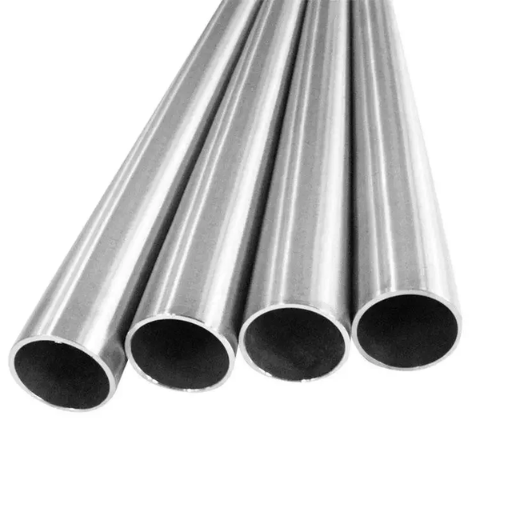
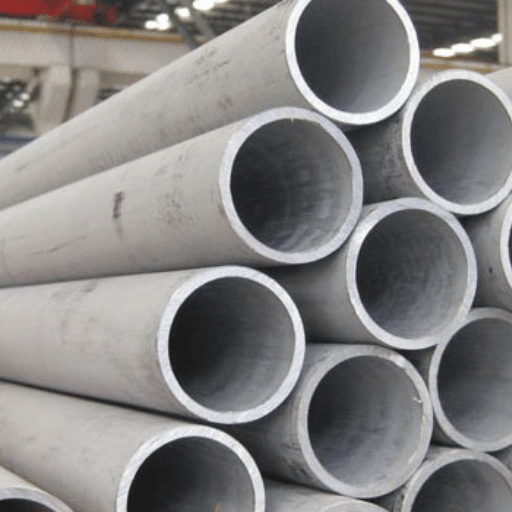
Both, in different service. Inconel 625 pipe, to ASTM B444 (seamless) or B705 (welded), dominates chloride and sour service. Inconel 718 pipe to ASTM B983 is used where aged strength and fatigue resistance govern.
Conclusion and Next Step
The Inconel 625 vs 718 choice is less about rivals than about specialists. Inconel 625 is the corrosion and fabrication alloy: solid-solution strengthened, PREN 48–51, no post-weld heat treatment, seamless to ASTM B444. Inconel 718 is the strength alloy: precipitation-hardened, 1,034 MPa aged yield, pipe to ASTM B983, and it reaches that strength only after a two-step aging treatment that must be planned around fabrication. Read as Inconel 718 vs 625, the same logic holds in reverse: if your governing requirement is strength, 718 leads; if it is corrosion, 625 does.
The three lines that prevent most costly mistakes are these. Label the condition whenever you compare the two; aged 718 against annealed 625 is not a fair fight. Separate 718’s strength limit near 700 °C from 625’s oxidation limit near 980 °C, because they are different kinds of numbers. And quote the correct standard for each form, which means ASTM B983 for 718 pipe, not B637 or B670. Before defaulting to either Inconel, ask whether super duplex 2507 solves the problem at a fraction of the cost.
Send us your service conditions, temperature, medium, pressure and required standard, and our technical team will confirm whether Inconel 625, Inconel 718 or a duplex grade is the correct and most economical choice, with grades, standards and documentation within 24 hours. Nickel-based alloys such as 625 and 718 are supplied on a project basis following technical review, so include your form, dimensions, and quantity in the enquiry. We can also issue a sample MTR and PMI record for verification before you commit.