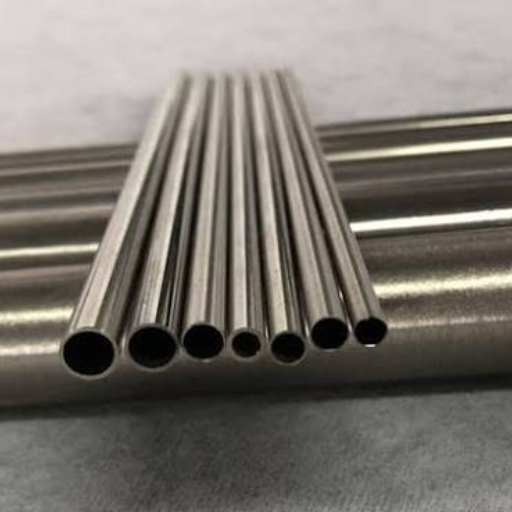
The difference between 316 and 316L stainless steel comes down to one specified element, carbon, and it changes two things: whether a weld survives, and how much wall a pressure line needs. ASTM A240 caps 316 at 0.08% carbon and 316L at 0.030%; ASTM A312 caps the same two grades at 0.08% and 0.035%. Nothing else in the specification moves.
That last sentence contains a correction most pages miss. Search this comparison and nearly every result tells you 316L is limited to 0.03% carbon, full stop. That number is right for plate, sheet and strip.
Buy 316L pipe to A312 or 316L tube to A213 and the mill may legally ship 0.035%, which is 17% more carbon than the figure you budgeted for. For small-diameter tube the footnote allows 0.040%.
So the practical question isn’t which grade is better. It’s which consequence you can live with.
Pick 316L for the weldability and you give up 17.1% of specified yield and roughly 16.5% of ASME code allowable stress. Pick 316 for the strength and a welded joint that never sees a solution anneal becomes a corrosion site. Most of the answers online pick a side and stop. This guide gives you both columns, the standard numbers behind them, and the four questions that settle it.
Key Takeaways
- The two grades share every specified element except carbon. Same chromium 16.0–18.0%, nickel 10.0–14.0%, molybdenum 2.00–3.00%. Identical PREN, so 316L buys no pitting resistance.
- The carbon limit depends on the product form. 0.030% in ASTM A240 plate, 0.035% in A312 pipe and A213 tube, and 0.040% permitted for small-diameter tube by footnote. A single “0.03%” answer is wrong for three of the four.
- 316L runs 17.1% lower on specified yield. 170 MPa against 205 MPa to A240. ASME B31.3 allowable stress drops from 20.0 to 16.7 ksi, so a pressure-governed line needs roughly 20% more wall.
- Low carbon prevents weld decay, and ASTM A262 measures it. Welding lifts 316 from 36 to 41 mils/yr in Practice B; 316L stays at 26.
- 316L stops at 454 °C under ASME Section VIII Division 1. Above 427 °C, B31.3 requires 0.04% carbon or higher for its listed stress values.
Specifying one of these grades for a pressure line? Send us the line list with design pressure, design temperature and the governing code, and our technical team will confirm which grade the wall calculation actually requires and whether dual certification covers it. We reply within 24 hours. Request the grade review.
316 vs 316L Stainless Steel at a Glance
The comparison table below carries the whole argument. Read the carbon row first, then the allowable-stress row, and notice how little else differs.
| Property | 316 (UNS S31600) | 316L (UNS S31603) |
|---|---|---|
| Carbon, ASTM A240 flat product | 0.08% max | 0.030% max |
| Carbon, ASTM A312 pipe / A213 tube | 0.08% max | 0.035% max |
| Chromium | 16.0–18.0% | 16.0–18.0% |
| Nickel | 10.0–14.0% | 10.0–14.0% |
| Molybdenum | 2.00–3.00% | 2.00–3.00% |
| Yield, 0.2% offset (A240) | 205 MPa | 170 MPa |
| Tensile (A240) | 515 MPa | 485 MPa |
| Hardness, max | 217 HB | 217 HB |
| PREN (Cr + 3.3Mo + 16N) | ~24–26 | ~24–26 |
| ASME B31.3 allowable stress, ambient | 20.0 ksi | 16.7 ksi |
| Section VIII Div 1 ceiling | 816 °C | 454 °C |
Five of the eleven rows are identical. The differences sit in carbon, the two mechanical minimums that follow from it, and two code values that follow from those.
That is the whole difference between 316 and 316L stainless steel, and it fits in one table because there is nothing else to list.
Worth stating plainly because so many pages get it wrong: the hardness is the same. Both grades carry a 217 HB maximum to A240. Any source telling you 316L is softer or harder than 316 is describing a single heat, not a specification.
If you want the full grade landscape rather than this one pair, the 304 vs 316 comparison covers where molybdenum enters the picture in the first place.
316 vs 316L: The Carbon Limit Depends on Which Standard You Bought To
Here is the sentence that should appear on every 316 vs 316L stainless steel page, and appears on almost none: 316L has no single carbon limit. It has four, and the one that applies to your order depends on the product form you specified.
| Product form | Standard | 316 | 316L |
|---|---|---|---|
| Plate, sheet, strip | ASTM A240 / ASME SA-240 | 0.08 max | 0.030 max |
| Seamless and welded pipe | ASTM A312 / ASME SA-312 | 0.08 max | 0.035 max |
| Boiler and heat-exchanger tube | ASTM A213 / ASME SA-213 | 0.08 max | 0.035 max |
| General-service tube | ASTM A269 / ASME SA-269 | 0.08 max | 0.035 max |
The 316L stainless steel composition differs from 316 in exactly one line: chromium 16.0–18.0%, nickel 10.0–14.0% and molybdenum 2.00–3.00% are identical, and carbon is capped at 0.030% or 0.035% depending on the product form.
The gap between 0.030 and 0.035 isn’t metallurgical drift. The pipe and tube specifications were written around drawing operations, where tight carbon control costs passes through the die, and the committees set the ceiling where the mills could hold it economically. Flat product could hold 0.030%, so A240 says 0.030%.
A213 adds a footnote that every tube buyer should read once: “For small diameter or thin walls, or both, where many drawing passes are required, a carbon maximum of 0.040% is necessary in Grades TP304L, TP304LN, TP316L, and TP316LN.” A269 uses the same 0.040% allowance and defines the trigger as an outside diameter below 0.500 in (12.7 mm) or a minimum wall below 0.049 in (1.2 mm).
What this means at goods-in
You specified 316L tube to A213 with a 0.030% requirement, a supplier ships 0.038% carbon, and the MTR is compliant with the standard you named. Nothing is wrong with the material. The purchase specification borrowed a number from the wrong product form.
That happens more than it should, and it costs a rejected lot and a month of schedule. The fix is procedural: quote the standard alongside the carbon limit, every time. “316L, 0.035% max C, ASTM A312” is unambiguous. “316L, 0.03% max C” invites an argument at receiving inspection.
Our A312 specification guide sets out the chemistry and mechanical tables for pipe in full, and the A240 standard itself is the reference for flat product.
What Low Carbon Buys: Weld Decay and the A262 Evidence
Austenitic stainless steel holds its corrosion resistance in a chromium oxide film. Heat a 316 weld into the 427–816 °C (800–1,500 °F) band and the carbon in the steel combines with chromium at the grain boundaries as chromium carbide. The chromium leaves the adjacent metal depleted, that narrow band loses its film, and an aggressive medium attacks the boundary before it touches the grain. This is sensitization, and the visible outcome in a welded line is weld decay.
Lower carbon means less carbide to form. That’s the entire mechanism, and it’s the reason 316L exists. It’s also the only place in the 316 vs 316L decision where the L grade is unambiguously the better metal.
The mechanism is convincing and abstract. The test data is neither.
The ASTM A262 numbers
A mill technical sheet for 316/316L (ATI, citing A240 and SA-240) publishes the following ASTM A262 results. Base metal against welded, same alloy. This is the evidence behind every 316 vs 316L stainless steel claim about weldability:
| Practice | Condition | 316 | 316L |
|---|---|---|---|
| B (Streicher), corrosion rate | Base metal | 36 mils/yr (0.9 mm/a) | 26 mils/yr (0.7 mm/a) |
| B, corrosion rate | Welded | 41 mils/yr (1.0 mm/a) | 26 mils/yr (0.7 mm/a) |
| E (copper–copper sulfate) | Base metal | No fissures on bend | No fissures |
| E | Welded | Some fissures on weld (unacceptable) | No fissures |
| A (oxalic acid etch) | Base metal | Step structure | Step structure |
| A | Welded | Ditched (unacceptable) | Step structure |
Read the Practice B pair again. Welding raises 316 from 36 to 41 mils/yr, a 14% deterioration. Welding leaves 316L at 26, unchanged. The same pattern shows in the qualitative tests: 316 ditches at the weld in Practice A, and 316L holds a step structure.
That’s a specification claim, a mechanism, and an experiment agreeing with each other. It’s also the reason the L grade earns its place on any welded assembly that won’t see a post-weld anneal.
For a walkthrough of what sensitization looks like on a real weld cross-section, the video below covers the heat-affected zone and the carbide precipitation pattern this section describes:
When to specify L, and when not to
| Condition | Grade | Why |
|---|---|---|
| Welded, no post-weld anneal | 316L | Carbides never form; A262 confirms the rate stays flat |
| Welded, fully solution annealed afterwards | 316 | The anneal dissolves carbides and restores grain-boundary chromium |
| Not welded at all | 316 | No sensitization risk, and you keep the 205 MPa yield |
| Wall over 11.1 mm (7/16 in.) | 316L, or re-anneal | Thick sections hold heat through a weld pass |
| Sustained service 427–816 °C | Neither | Even the L grades sensitize; use 321, 347 or 316H |
Specify the L grade when the assembly is welded and cannot be solution annealed afterwards, when the section is thick enough to hold heat through a weld pass, or when the service environment attacks grain boundaries. A mill sheet puts the wall threshold at 7/16 in (11.1 mm), noting that cross sections over that size “usually require annealing.”
Skip it when the part is welded and fully annealed afterwards, because the anneal dissolves the carbides and restores the chromium to solution. Skip it when the part isn’t welded at all, where the carbon difference does nothing for you and the yield gap does real harm.
One caution the mill sheet adds and competitor pages omit: the L grades aren’t immune for life. “Continuous or prolonged exposure at 800-1500°F (427-816°C) can be harmful from this standpoint with 316L and 317L alloys,” and stress relieving between 593 and 816 °C “may cause some slight embrittlement.” Low carbon covers the short thermal cycle of welding. It doesn’t cover a furnace.
For the welding side in more depth, what weldability means in practice covers procedure and filler selection across the austenitic grades.
What Low Carbon Costs: 17% of the 316 Yield Strength
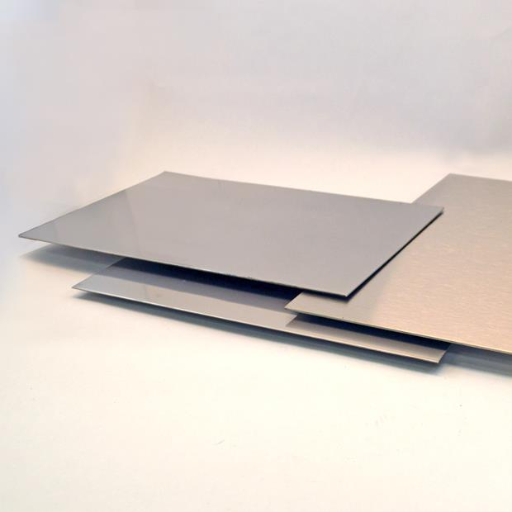
Carbon strengthens austenitic stainless steel, so removing it costs strength, and the standards quantify the loss precisely. The 316L stainless steel yield strength is specified at 170 MPa; the 316 stainless steel yield strength holds at 205 MPa. These are the minimum mechanical properties required by ASTM A240 and ASME SA-240:
| Property | 316 | 316L | Gap |
|---|---|---|---|
| Yield, 0.2% offset | 205 MPa (30,000 psi) | 170 MPa (25,000 psi) | −17.1% |
| Tensile | 515 MPa (75,000 psi) | 485 MPa (70,000 psi) | −5.8% |
| Elongation in 2 in. | 40.0% | 40.0% | none |
A312 holds the same yield and tensile figures but drops elongation to 35% for both grades, one of several places where the pipe and plate tables diverge.
That 17.1% is a floor on a certificate, not a feeling. It becomes money through the ASME code.
The B31.3 allowable-stress table
ASME B31.3 Process Piping, Table A-1 lists basic allowable stress in tension for each grade and temperature. For A312 pipe:
| °F | 100–300 | 400 | 500 | 600 | 650 | 700 | 750 | 800 | 850 | 900 | 1000 |
|---|---|---|---|---|---|---|---|---|---|---|---|
| TP316 | 20.0 | 19.3 | 18.0 | 17.0 | 16.6 | 16.3 | 16.1 | 15.9 | 15.7 | 15.6 | 15.3 |
| TP316L | 16.7 | 15.7 | 14.8 | 14.0 | 13.7 | 13.5 | 13.2 | 12.9 | 12.7 | 12.4 | 11.8 |
At ambient the gap is 16.5%, and it widens with temperature rather than narrowing: by 1,000 °F the two columns read 15.3 and 11.8, a 23% difference.
Wall thickness scales inversely with allowable stress, because thickness is what the stress divides into. Divide 20.0 by 16.7 and you get 1.198, so where pressure governs the design, a 316L line needs about 20% more wall than the same line in 316 to carry the same pressure at the same diameter.
Working the number
Take an NPS 4 line, 114.3 mm outside diameter, at 2,000 psig (13.79 MPa), designed to B31.3 with a longitudinal weld joint factor of 1.0, a Y coefficient of 0.4, and no corrosion allowance. B31.3’s thickness equation reduces to t = P·D / (2·(S·E + P·Y)).
For 316, S is 20.0 ksi (137.9 MPa), and t comes to 5.50 mm. For 316L, S is 16.7 ksi (115.1 MPa), and t comes to 6.53 mm.
One millimetre of extra wall on every metre of that line. It also changes what’s on the shelf: 6.53 mm doesn’t match a schedule, so you move to the next one up and buy more steel than the calculation asked for.
The inverse case deserves a mention because it’s where the argument falls apart. Run 300 psig on the same NPS 4 line and B31.3’s minimum-thickness rule and mill tolerance govern long before allowable stress does. Both grades land on the same nominal wall. The 20% penalty applies to pressure-governed designs, not to every line, and quoting it universally is its own kind of error.
The nuance that contradicts the headline
Specified minimums favour 316. Real heats don’t follow that ranking as neatly as the table suggests. Representative room-temperature properties from the mill sheet, in the annealed condition at 1.0 mm and 1.5 mm thickness:
| Condition | 316 yield / tensile | 316L yield / tensile |
|---|---|---|
| Annealed | 265 / 583 MPa | 299 / 612 MPa |
| 20% cold reduction | 680 / 769 MPa | 696 / 839 MPa |
These are typical values from specific heats with different nickel contents, not minimums, and 316L comes out slightly ahead at both conditions. Don’t over-read it. Design to the minimum, because that’s the number your certificate guarantees.
The useful takeaway is narrower and more honest: the specified minimums favour 316, and typical heats don’t reliably reproduce the ordering. Assume the floor, not the ceiling.
Temperature: Where 316L Stops Being an Option
Ask for a maximum service temperature for 316L and you’ll get a different answer from every page you read. That’s because the answer isn’t a property of the alloy. It’s a property of the code the equipment is designed to.
| Source | 316 | 316L | Scope |
|---|---|---|---|
| ASME Section VIII Div 1 | 816 °C (1,500 °F) | 454 °C (850 °F) | Pressure vessels |
| ASME B16.34 | listed to 1,000 °F | 455 °C (850 °F) | Valve pressure–temperature ratings |
| ASME B31.3 Table A-1 | listed to 1,000 °F | listed to 1,000 °F | Process piping, with a carbon condition |
| AS 1210 | no figure given | 450 °C | Australian pressure vessels |
Under Section VIII Division 1, 316L stops at 454 °C. Under B31.3, the table tabulates it to 1,000 °F, but with a note attached that most summaries drop.
B31.3 note (27), the one that matters
For TP316L above 427 °C (800 °F), the listed stress values apply only where carbon content is 0.04% or higher. A related note applies the same condition above 538 °C.
Read that against the carbon limits in the first section and the trap closes. A 316L heat certified at 0.030% carbon is legal, correct and fully compliant, and it cannot use the high-temperature allowable stress values in the table for 316L. The grade qualifies for hot service on paper. The heat you received may not.
That’s the honest cost of the L suffix, and it’s not usually framed that way. Low carbon buys weldability and gives up high-temperature design headroom in exchange.
What to specify instead
Above 427 °C, the right answer usually isn’t 316L. It’s 316 where the wall has margin, 316H where it doesn’t, or a stabilized grade such as 321 or 347 where the sensitization window will be traversed in service. Where oxidation resistance above 800 °C is what you need, molybdenum stops helping and 310S takes over.
If your medium is the problem rather than your temperature, the corrosion data behind the L-grade choice walks through chloride pitting and the lead 316L holds over 304.
What the L Grade Does Not Buy
Three corrections, because the internet has this wrong in a consistent direction.
It does not improve pitting resistance
PREN, the pitting resistance equivalent number, is Cr + 3.3Mo + 16N. Both grades carry 16.0–18.0% chromium and 2.00–3.00% molybdenum, so both land in the same band, roughly 24 to 26 depending on where in the range the heat sits.
316L buys zero pitting resistance over 316. The L changes carbon, and carbon isn’t in the formula. Pages that discuss carbon and pitting in adjacent paragraphs leave a false impression; say it directly instead.
It does not resist stress corrosion cracking any better
The mill sheet is blunt about this: “Although the low carbon ‘L’ grades offer no advantage as regards SCC resistance, they are better choices for service in the stress relieved condition in environments which might cause intergranular corrosion.”
Chloride SCC needs three things at once: halide ions, residual tensile stress, and a temperature above roughly 120 °F (49 °C). The stress comes from cold work or from welding. Where that combination exists, duplex 2205 is the answer, not a lower-carbon austenitic.
It does not improve oxidation resistance
316 and 317 resist oxidation in air to about 1,600–1,650 °F (871–899 °C). The same mill sheet notes that 316 performs “somewhat inferior to that of 304 stainless steel which has slightly higher chromium content.” Carbon plays no part in any of it.
The pattern across all three: in any 316 vs 316L stainless steel decision, L is a welding grade. It isn’t an upgrade grade, and pricing it as one is a quiet way to lose money on a project that didn’t need it.
Not sure which failure mode your service actually presents? Send us the medium, chloride level and operating temperature, and we will tell you whether the risk is weld decay, pitting or chloride cracking. Three different problems with three different answers. Describe your service conditions.
Dual Certification: Where 316 vs 316L Stainless Steel Stops Mattering
Most of this argument disappears for plate and sheet, because mills routinely supply dual-certified 316/316L. The material meets the 316L carbon limit and the 316 mechanical minimums at the same time, so one heat satisfies both.
Where it stops being simple is documentation.
The grade on the MTR governs the design. You can’t take the L-grade carbon and the standard-grade allowable stress and combine them in one calculation unless the certificate says the material meets both. Properties don’t mix between grades.
External pressure is where dual certification trips people up. The ASME external-pressure charts differ by grade, HA-2 for 316 and HA-4 for 316L. A vessel designed on the HA-2 chart with dual-certified material needs the certificate to support that chart selection explicitly.
Ask three questions before the purchase order:
- Does the MTR state both grade designations, or only one?
- For dual-certified material, does it state the carbon value against the L requirement and the mechanicals against the standard grade?
- For external-pressure service, does the documentation name the chart used and the grade it applies to?
A supplier who can answer all three in writing is a supplier whose material will survive receiving inspection. For dual certified 316 316L stock, that paperwork set is the difference between a line item and a working purchase order.
This is the discipline behind how we verify grade at goods-in: every heat is spectrographically checked before it enters production, so the carbon figure on the certificate reflects a measurement of your material rather than a claim about it.
316 vs 316L Stainless Steel: Four Questions That Settle It
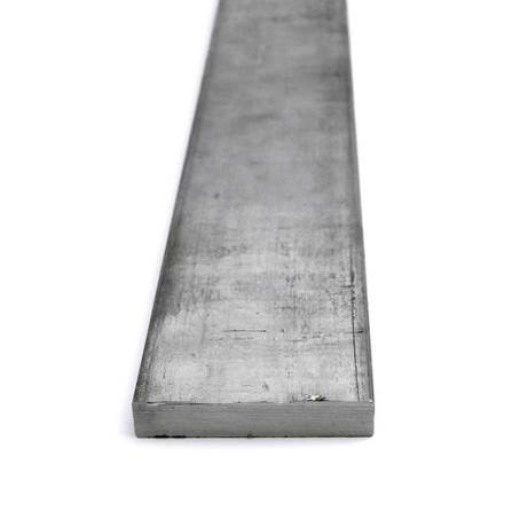
Work down this list and the grade follows. Each question eliminates a branch rather than scoring an option.
First: is the assembly welded, and will it be solution annealed afterwards? If it’s welded and won’t be annealed, specify the L grade. This question alone settles most of the volume, because most fabricated pipe and tube never sees a post-weld anneal.
Second: does allowable stress govern the wall thickness? If the design is pressure-governed and the margin is tight, the 20.0 versus 16.7 ksi gap is real money and 316 wins. If minimum thickness or mill tolerance governs, this question is moot and the first one decides.
Third: is service above 427 °C? If it is, 316L loses access to the B31.3 high-temperature values unless carbon sits at 0.04% or higher, and Section VIII stops it at 454 °C. Move to 316, 316H, or a stabilized grade.
Fourth: is the threat chloride stress corrosion cracking rather than weld decay? If chloride, residual stress and temperature above 49 °C all apply, neither grade is the answer and duplex 2205 is.
| Your situation | Specify |
|---|---|
| Welded, no post-weld anneal, ambient service | 316L |
| Welded, solution annealed afterwards | 316 |
| Unwelded, pressure-governed, tight margin | 316 |
| Welded, pressure-governed, adequate margin | 316L, wall recalculated |
| Service above 427 °C | 316, 316H, 321 or 347 |
| Chloride SCC risk above 49 °C | Duplex 2205 |
| Plate or sheet, either duty | Dual-certified 316/316L |
| Small-diameter tube, thin wall | 316L, up to 0.040% C by footnote |
For the pipe dimension and rating tables that follow from the grade decision, 316L seamless pipe dimensions and pressure ratings carries the schedules and the welding guidance in full.
316 vs 316L Stainless Steel: Frequently Asked Questions
Is 316L stronger than 316?
No. ASTM A240 specifies 170 MPa minimum yield for 316L against 205 MPa for 316, a 17.1% reduction, and 485 MPa against 515 MPa on tensile. Typical annealed and cold-worked heats don’t always reproduce that ranking, but the minimums are what your certificate guarantees and what the design must use.
What does the L stand for in 316L?
Low carbon. The suffix marks the variant with a reduced carbon ceiling, which limits chromium carbide formation during welding and preserves intergranular corrosion resistance in the heat-affected zone.
What are the downsides of 316L stainless steel?
Three, and they’re specific. Lower allowable stress, so pressure-governed lines need about 20% more wall. A lower temperature ceiling, 454 °C under ASME Section VIII Division 1. And no advantage at all in pitting resistance, stress corrosion cracking or oxidation resistance, which is where most buyers expect a premium to show up.
Is 316L better than 316 for welding?
Yes, for any joint that won’t be annealed afterwards. ASTM A262 Practice B shows welded 316 rising from 36 to 41 mils/yr while welded 316L holds at 26, and Practice A shows 316 ditching at the weld where 316L keeps a step structure. That’s the case for the grade, and it’s measurable.
Is 316L food grade?
Both grades are. The mill technical sheet notes NSF acceptance for food preparation and storage across 316, 316L, 317 and 317L. In hygienic service the L grade matters for one reason: welded sanitary lines that don’t get a post-weld anneal need the low-carbon heat chemistry to avoid a sensitized zone at the weld. Our 316L sanitary tube covers the product side.
What is dual-certified 316/316L?
A single heat that meets both specifications at once: carbon at or below the L ceiling, mechanicals at the 316 minimums. It’s common in plate and sheet and far less common in pipe. The MTR has to state both grades for the dual claim to stand.
Can I substitute 316L for 316 in an existing design?
Not without rechecking the wall calculation. The allowable stress drops 16.5% at ambient, so a line designed to 316 values with little margin will fail a 316L check. Where the design is thickness-governed rather than stress-governed, the substitution is usually clean.
When does 316H matter instead?
316H carries a carbon minimum of 0.04% and a high-temperature anneal, which is exactly the condition B31.3 note (27) asks for above 427 °C. Where the service temperature is the constraint rather than weldability, H is the grade that keeps the allowable stress values available.
Conclusion: Buy the Property, Not the Suffix
The choice comes down to one element and two consequences, and neither is hidden.
Carbon at 0.030% or 0.035% instead of 0.08% prevents chromium carbide from forming at a weld, which ASTM A262 measures as a corrosion rate that stays flat instead of climbing 14%. In exchange you accept 170 MPa instead of 205 MPa, a B31.3 allowable stress of 16.7 ksi instead of 20.0, roughly 20% more wall on a pressure-governed line, and a 454 °C ceiling under Section VIII Division 1.
Four things to carry into the purchase order:
- Quote the carbon limit with the standard attached, because A240 and A312 don’t agree.
- Check whether the design is stress-governed before you trade strength for weldability.
- Check the service temperature against the code that governs the equipment, not against a generic maximum.
- Ask for both grade designations on the MTR when you buy dual-certified material.
Get those four right and the suffix on the certificate stops being a preference and becomes what it should have been all along: a documented consequence.
Send us your line list. Include design pressure, design temperature, the governing code and whether each line is welded, and our technical team will confirm which grade the calculation requires, flag any line where dual certification covers both, and return the answer within 24 hours. Request the grade review.