The failure of a valve seal in a pharmaceutical filling line or a dairy processing circuit results in more than just a need for maintenance work. The incident results in an entire batch becoming contaminated which leads to production halting and an investigation into compliance regulations. The valve specification needs to reflect different requirements between industrial service operations and the current situation.
To specify a sanitary ball valve correctly you need to make three decisions before starting your catalogue search. You need to choose the appropriate material grade which will protect your process fluid and cleaning regime. You need to select a surface finish which will fulfill your regulatory requirements. You need to select a certification package which will meet both your client requirements and inspection authority standards.
The guide provides complete information about grade selection requirements Ra surface finish standards certification standards 3-A ASME BPE EHEDG connection types and the necessary supplier requirements needed to place an order.
What Is a Sanitary Ball Valve?

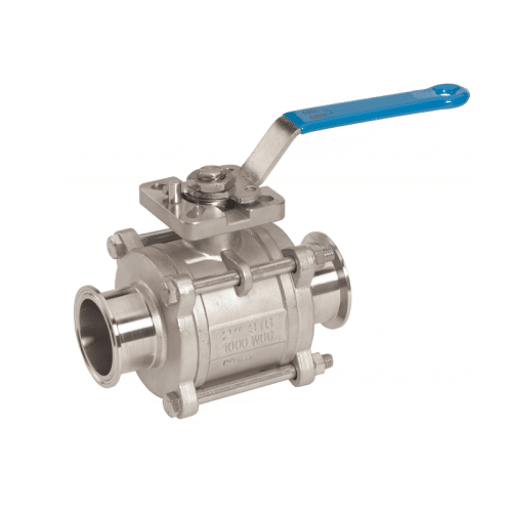
The stainless steel sanitary ball valve operates as an unrestricted valve that maintains continuous flow while eliminating all internal spaces to protect sanitary operations in food processing, dairy production, brewery operations, beverage manufacture, pharmaceutical work, and biotechnology facilities. The valve maintains flow control through a 90-degree rotation of its drilled ball within the valve body which establishes its main design elements that differentiate it from standard industrial ball valves. The design requirements serve as an initial step for engineers and procurement teams who need to assess our sanitary valve product range before they can proceed with supplier evaluation.
Key design features that define a sanitary ball valve:
- Full-bore, cavity-free ball: No crevices or dead legs where product can accumulate, bacteria can grow, or cleaning solution can pool
- 3-piece body construction: Allows complete disassembly for inspection and deep cleaning without removing the valve from the pipeline
- Smooth, crevice-free wetted surfaces: Interior surfaces are mechanically polished or electropolished to a defined Ra value, eliminating surface defects that harbor microorganisms
- Self-draining geometry: Valve body is designed so product drains fully when the line is emptied, preventing standing fluid
- CIP/SIP compatibility: Withstands clean-in-place (CIP) chemical cycles and steam-in-place (SIP) sterilization at 121-134 degrees C without seal degradation (with correct elastomer selection)
Sanitary Ball Valve vs Industrial Ball Valve: Why the Distinction Matters
Procurement teams sourcing under time pressure sometimes ask whether a standard industrial ball valve can substitute for a sanitary-grade unit in food or pharma service. The answer is no — and the differences are material, not cosmetic.
| Parameter | Sanitary Ball Valve | Industrial Ball Valve |
|---|---|---|
| Surface finish (wetted) | Ra ≤ 0.8 micron (standard); Ra ≤ 0.4 micron (pharma) | No specification; typically Ra 1.6-3.2 micron or rough cast |
| Body material certification | EN 10204 Type 3.1 MTR required | Material certificate optional |
| Body design | 3-piece, crevice-free, self-draining | 2-piece or 3-piece, no hygienic design requirement |
| Connection ends | Tri-clamp, DIN 11851, butt weld, SMS | NPT thread, ANSI flange, socket weld |
| Regulatory compliance | 3-A, ASME BPE, EHEDG, FDA 21 CFR | None required |
| Seal material | FDA-compliant PTFE, EPDM, silicone | PTFE, NBR, graphite (not necessarily FDA-compliant) |
| Cleaning | Designed for CIP/SIP in-line cleaning | Requires removal for cleaning |
An industrial ball valve installed in a CIP system will trap product in its body cavity, create bacterial adhesion sites on its rough internal surface, and likely fail its first regulatory audit. Specify to the correct standard from the start.
Material Selection: 316L vs 304 for Sanitary Ball Valves

The default material for a 316L sanitary ball valve — and for all food, dairy, pharmaceutical, and brewery service — is 316L stainless steel (UNS S31603). Here is why the choice is not arbitrary.
Why 316L Is the Standard
316L contains 2-3% molybdenum in addition to the 16-18% chromium and 10-14% nickel of standard austenitic grades. The addition of molybdenum creates hygienic applications because it enhances protection against pitting and crevice corrosion which chloride ions from CIP cleaning chemicals and dairy products and saline pharmaceutical buffers and brewery wort.
The “L” designation means carbon content is held to ≤ 0.03% (versus ≤ 0.08% for standard 316). The welding heat-affected zone establishes a lower carbon limit which prevents carbide precipitation that would decrease corrosion resistance at butt-welded sanitary valve connections.
CF3M functions as the equivalent specification for valve body castings according to ASTM A351 because it represents the cast austenitic equivalent of 316L which contains the same low-carbon and molybdenum content.
When 304 Is Acceptable
304 stainless steel (18% Cr, 8% Ni, no molybdenum) can be specified for a food grade ball valve in stainless steel applications limited to:
- Potable water service with low chloride content (below 200 ppm Cl-)
- Dry food conveying applications with no wet CIP requirement
- Non-corrosive process fluids where EHEDG or 3-A certification is not required
For any application involving CIP with chlorinated sanitizers, marine or coastal environments, or pharmaceutical-grade process media, 304 provides insufficient chloride corrosion resistance. Specify 316L. For a detailed technical breakdown of the chemistry and performance differences, see our 304 vs 316 stainless steel comparison.
Seal Material Selection
The ball and seat seals must be FDA-compliant and CIP/SIP compatible. Standard options:
| Seal Material | Temp Range | FDA Status | CIP Compatible | SIP Compatible |
|---|---|---|---|---|
| PTFE | -20 to +180 C | FDA 21 CFR 177.1550 | Yes | Limited (softens above 120 C under load) |
| EPDM | -10 to +120 C | FDA 21 CFR 177.2600 | Yes | Yes (121 C steam) |
| Silicone | -60 to +200 C | FDA 21 CFR 177.2600 | Yes | Yes |
| PTFE-encapsulated EPDM | -20 to +150 C | Both compliant | Yes | Yes |
For pharmaceutical SIP applications requiring 134 C steam sterilization, silicone or high-temperature EPDM compounds are specified. Confirm the valve manufacturer’s seal material batch certification against FDA 21 CFR part numbers at order stage.
Surface Finish Requirements for Sanitary Ball Valves

Surface roughness is not just an aesthetic specification. Bacterial adhesion, biofilm formation, and cleanability are directly related to the Ra (arithmetic mean roughness) value of the wetted surface. Regulatory bodies quantify this, and your supplier should document it.
Ra Values by Application
| Application | Internal Ra Requirement | Surface Treatment |
|---|---|---|
| Food processing (general) | Ra ≤ 0.8 micron | Mechanical polish |
| Dairy / 3-A standard | Ra ≤ 0.8 micron | Mechanical polish |
| Brewery / beverage | Ra ≤ 0.8 micron | Mechanical polish |
| Pharmaceutical (GMP) | Ra ≤ 0.4 micron | Electropolished |
| Biotech / biopharmaceutical | Ra ≤ 0.38 micron | Electropolished + passivated |
| High-purity semiconductor | Ra ≤ 0.25 micron | Electropolished + passivated |
Electropolished vs Mechanically Polished
Mechanical polishing uses abrasion to remove material from surfaces which creates a specific surface pattern that contains microscopic grooves which can hold bacteria even when surface roughness reaches measurements of Ra 0.8 micron.
Electropolishing is an electrochemical process that removes surface material through uniform dissolution which results in the removal of surface profile peaks, creating a non-directional passive surface with smooth appearance. The result is both a lower Ra value and a chromium-enriched surface layer that improves corrosion resistance beyond what mechanical polishing achieves.
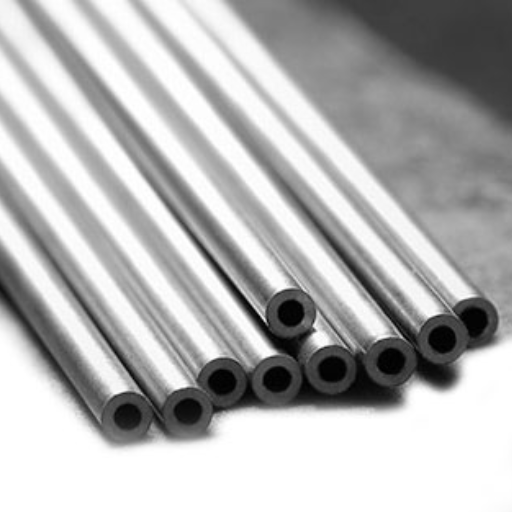
Electropolishing serves as a necessary procedure for all pharmaceutical and biotech operations. ASME BPE specifies it for high-purity fluid service, and FDA process validation documentation requires quantified surface finish records. Zhongzheng’s in-house electropolishing facility produces interior surfaces to Ra ≤ 0.4 micron with documented surface finish measurement reports included in the order documentation package. The same surface finish standards apply to electropolished stainless steel tubing used in high-purity pharmaceutical distribution systems.
Key Certifications and Regulatory Standards
Specifying a sanitary ball valve without identifying the applicable regulatory standard leaves your documentation package incomplete. Each market and industry sector has a governing standard:
3-A Sanitary Standards (USA — Dairy and Food)
The hygienic equipment design standards for fluid milk and dairy products and egg products in North American markets receive regulation through standards which 3-A Sanitary Standards, Inc. administers. The presence of a 3-A symbol on a valve indicates that an independent evaluation confirmed the valve’s compliance with hygienic design standards, which assess material composition and surface finish and crevice-free construction and cleanability.
The standards of 3-A 85-03 (Three-way valves) and its related standards apply to ball valves used in dairy service. The equipment documentation for the valve must include the 3-A certificate if your end-client or USDA-inspected facility requires 3-A certification.
ASME BPE (Pharmaceutical and Biotech)
The ASME BPE standard regulates the bioprocessing equipment used in pharmaceutical and biopharmaceutical facilities throughout most international markets. The standard establishes material specifications which include 316L and CF3M and it defines surface finish requirements through Ra values that vary by service category and it establishes weld quality and dimensional standards for sanitary tubing and fittings. The FDA mandates BPE compliance as a fundamental condition for all pharmaceutical manufacturing facilities that require FDA inspections.
The BPE standard mandates that sanitary ball valves must have a full-bore design which requires documented surface finish and complete dimensional compliance. Buyers should request ASME BPE compliance documentation alongside the standard MTR.
EHEDG (European Food and Beverage)
The European Hygienic Engineering and Design Group (EHEDG) certification applies to equipment for food and beverage processing in EU-regulated markets. The EHEDG organization conducts independent tests to assess three design elements which include hygienic design and cleanability and material suitability. The EU food safety regulations which include EC 1935/2004 (food contact materials) require documentation for EHEDG-certified valves.
FDA 21 CFR Part 177.2600
This U. S. Food and Drug Administration regulation governs rubber compounds which are used in food contact applications that include valve seals. The valve body seal material needs to be identified according to 21 CFR 177.2600 for EPDM and 21 CFR 177.1550 for PTFE because 316L stainless steel already meets FDA requirements. The order process demands that you request both the seal material data sheet and the FDA compliance reference.
EN 10204 Type 3.1 — Material Test Certificate
The documentation requirement exists as a mandatory component which needs to accompany every sanitary valve that comes from a certified manufacturer. The manufacturer’s authorized inspection representative issues the Type 3.1 certificate which displays the complete chemical makeup and mechanical characteristics of the material together with its heat treatment state, which can be traced back to the original raw material heat number.
International buyers who have received counterfeit or substituted material from Chinese suppliers understand why this certification matters. The EN 10204 Type 3.1 MTRs which Zongzheng sanitary valve orders include are based on the verified raw material composition from spectrographic analysis.
Connection Types: Choosing the Right End Connection

The connection type determines maintenance access, installation flexibility, and compatibility with your existing pipeline system.
| Connection Type | Standard | Typical Application | Key Feature |
|---|---|---|---|
| Tri-Clamp (TC) | ASME BPE, ISO 2852 | Pharma, biotech, brewery | Quick-disconnect for frequent maintenance access |
| DIN 11851 | DIN 11851 | Dairy (Europe), food processing | Threaded union; common in EU dairy plants |
| SMS | SMS 1145 | Dairy (Scandinavia) | Common in Nordic dairy industry |
| IDF | ISO 2853 | Dairy (International) | Similar to tri-clamp but different clamp geometry |
| Butt Weld | ASME BPE, DIN 11850 | Pharmaceutical, high-purity | Permanent, crevice-free joint; preferred for sterile systems |
| RJT | BS 4825 | Dairy, food (UK) | Recessed joint threaded fitting |
Tri-clamp The most prevalent standard for tri-clamp sanitary ball valves in North American breweries and beverage operations and pharmaceutical facilities exists because it enables quick valve removal during inspection or replacement procedures without needing to cut the pipeline. The ISO 2852 standard governs the ferrule dimensions. Tri-clamp valves integrate directly with sanitary tri-clamp and DIN fittings for complete system assembly.
Butt weld is specified for pharmaceutical clean rooms and biopharmaceutical service where the process demands crevice-free, non-removable joints. Weld quality to ASME BPE orbital welding standards is required. For butt-weld valve installations, specify matching DIN 11850 sanitary tube to ensure dimensional compatibility and full traceability documentation.
DIN 11851 dominates European dairy installations. If you are supplying equipment for a European dairy, confirm DIN 11851 — specifying tri-clamp into a DIN system requires adapters that create crevice risks.
Actuation Options: Manual, Pneumatic, and Electric
Standard sanitary ball valves require manual operation through the use of a T-handle or L-handle which has a locking mechanism. The valve body features ISO 5211 mounting pads which allow pneumatic and electric actuators to be attached for automated CIP cycles and process automation and remote operation.
Manual handle: The system suits users who need to run the equipment only once they gain access to its controls. CIP control applications require standardization through locking handles which users can lock in both open and closed states.
Pneumatic actuator: The most common choice for automated food and pharmaceutical process lines. Double-acting and spring-return pneumatic cylinders enable users to achieve rapid and dependable actuation through basic control systems. Users need to choose a fail-safe position either spring-return to open or spring-return to closed based on their required process safety standards.
Electric actuator: The system operates best in environments where compressed air does not exist and systems require position feedback through 4-20 mA or discrete I/O for process control integration. Electric actuators increase expenses through extra cabling requirements but they enable users to achieve exact position management.
Three-way configuration: T-port or L-port three-way sanitary ball valves enable flow to be directed between two outlet pipes or they enable the combination of two incoming flow streams. The system finds its application in dairy product routing and CIP return circuits and pharmaceutical buffer distribution.
How to Qualify a Sanitary Ball Valve Supplier

The difference between a sanitary ball valve that passes your first inspection and one that fails in service often comes down to documentation — specifically, what the supplier can prove about the material they shipped. Here is what to require before placing an order:
1. EN 10204 Type 3.1 Mill Test Report: Chemical composition (Cr, Ni, Mo, C, N, and trace elements) spectrographically verified from the actual material heat used. Not a generic grade data sheet — a heat-specific test result traceable to the material in your order.
2. Surface finish measurement report: Documented Ra value for internal wetted surfaces, measured on a production sample from your order batch. Not a stated capability — a measured result.
3. Seal material FDA compliance certificate: Reference to FDA 21 CFR part number for the specific elastomer compound used in your order, not a generic claim.
4. Applicable standard compliance certificate: 3-A symbol certificate, ASME BPE compliance statement, or EHEDG certificate — whichever standard your project requires.
5. Dimensional inspection report: OD, connection dimensions, and face-to-face length verified against the applicable standard (ASME BPE or DIN).
6. Third-party inspection support: For critical pharmaceutical or food safety applications, the supplier should accommodate SGS, Bureau Veritas, or TUV inspection at their facility before shipment. Zhongzheng supports third-party inspection (TPI) with advance notification of production completion and test readiness.
A supplier who cannot provide all six documents is not qualified for regulated food or pharma service, regardless of price.
FAQ
What is a sanitary ball valve?
The sanitary ball valve functions as a complete pipe valve which contains no hidden areas and operates through its stainless steel construction to maintain hygiene throughout food processing and dairy processing and pharmaceutical production and biotechnology operation. The valve operates with a different design than industrial ball valves because it features a smooth internal surface finish which meets Ra requirements of 0.8 micron or lower and it uses a 3-piece body design which allows for in-line cleaning and operates with CIP and SIP systems and it meets 3-A and ASME BPE and EHEDG regulatory requirements.
What is the difference between a sanitary ball valve and an industrial ball valve?
Industrial ball valves are not suitable for hygienic service because their surface finish requirements remain unspecified and they contain design elements which permit bacteria accumulation and their sealing materials fail to meet FDA standards for contact with food. Sanitary ball valves exist as dedicated solutions which enable clean operation and follow all regulations while their CIP/SIP systems use certified 316L stainless steel which meets documented surface finishing requirements.
What stainless steel grade is used for sanitary ball valves?
The standard material for sanitary ball valves uses 316L (UNS S31603) stainless steel. The material contains 2 to 3 percent molybdenum which delivers the necessary chloride corrosion protection needed for CIP cleaning with chemical agents and for dairy and saline processing. The equivalent specification for valve body castings follows CF3M standards according to ASTM A351. The material 304 exists as a viable choice for non-CIP uses with low chloride exposure although it should not be used in food processing or pharmaceutical environments.
Pharmaceutical sanitary ball valves need a specific surface finish requirement.
ASME BPE requires Ra ≤ 0.4 micron (electropolished) for high-purity pharmaceutical and biopharmaceutical fluid service. Standard food processing and dairy service requires Ra ≤ 0.8 micron, which can be achieved by mechanical polishing. The surface finish of a product needs to undergo measurement and documentation because the product specification requires it to be demonstrated through physical evidence.
What certifications should a sanitary ball valve have for pharmaceutical use?
The minimum documentation package for pharmaceutical service includes: ASME BPE compliance documentation, EN 10204 Type 3.1 material test certificate (with spectrographic chemical composition), surface finish measurement report (Ra value), FDA 21 CFR compliance certificate for seal materials, and dimensional inspection report. Third-party inspection support from SGS, Bureau Veritas, or TUV is standard for critical pharmaceutical projects.
What connection type should I specify for a sanitary ball valve?
The most common specification for North American pharmaceutical and brewery and beverage service requires Tri-clamp (ISO 2852) because it enables quick valve removal without cutting the pipeline. European dairy and food processing facilities use DIN 11851 as their standard connection type. Butt weld is specified for permanent pharmaceutical clean room installations where crevice-free joints are required. Match the connection standard to your existing pipeline system.
Conclusion
The process of selecting a sanitary ball valve for food or pharmaceutical applications requires more than product catalogs because it involves choosing specific materials and certification methods together with needed documentation. The right specification starts with 316L for chloride-containing process media and CIP cleaning environments, establishes the required Ra surface finish against your regulatory standard (Ra ≤ 0.8 micron for food/dairy, Ra ≤ 0.4 micron electropolished for pharmaceutical), and identifies the governing certification (3-A, ASME BPE, or EHEDG) before a connection type or size is discussed.
The system will function correctly if you make appropriate choices and obtain necessary documents that demonstrate your system meets all requirements because the valve will maintain its operational capabilities throughout its entire lifespan without becoming a failure point in your sanitary system.
Key decisions in summary:
- Material: 316L (UNS S31603) for all food, dairy, brewery, and pharmaceutical service; CF3M castings for valve bodies
- Surface finish: Ra ≤ 0.8 micron for standard food/dairy; Ra ≤ 0.4 micron electropolished for pharmaceutical
- Certifications: Match to your regulatory requirement — 3-A (dairy/food USA), ASME BPE (pharmaceutical), EHEDG (EU food)
- Connection: Tri-clamp for maintenance-access systems; butt weld for permanent pharmaceutical pipelines
- Documentation: EN 10204 Type 3.1 MTR + surface finish report + seal material FDA certificate
Zhongzheng produces sanitary ball valves from 316L stainless steel which they finish through their in-house electropolishing process until they reach Ra 0.4 micron. The valves offer three connection options which include tri-clamp, DIN 11851, and butt-weld, while users can choose between manual and pneumatic control systems. Every order includes EN 10204 Type 3.1 MTRs based on spectrographically verified material composition.
Reference Sources
- 3-A Sanitary Standards, Inc. — Hygienic Design Standards for Dairy and Food Equipment
https://www.3-a.org/ - EHEDG (European Hygienic Engineering and Design Group) — Hygienic Equipment Certification
https://www.ehedg.org/