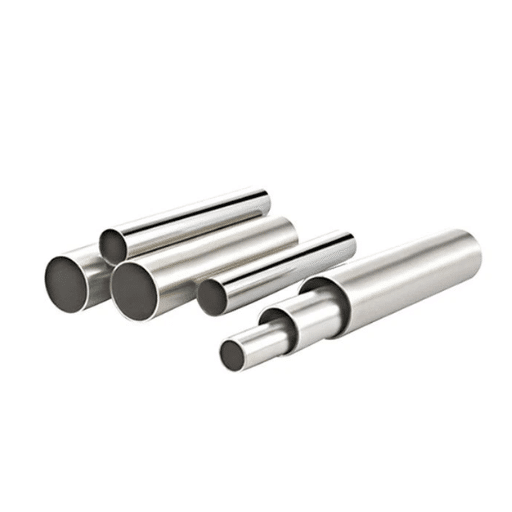
ASTM A790 duplex seamless pipe is the standard specification for seamless and straight-seam welded ferritic/austenitic stainless steel pipe used in general corrosive service. It covers duplex and super duplex grades such as UNS S31803, S32205, S32750, and S32760, and it defines the chemical composition, mechanical properties, heat treatment, testing, and documentation buyers must verify before accepting material.
What if three suppliers quote “ASTM A790 duplex pipe” for the same project, yet only one shipment actually matches your seamless specification? This happens more often than procurement teams expect. The standard number alone does not guarantee the manufacturing method, grade, heat treatment, or test regime your application demands.
We understand that specifying duplex pipe for offshore, chemical, or sour service is a risk management decision, not just a purchase. This guide explains exactly what ASTM A790 covers, how it differs from ASTM A928 and ASTM A789, which grades to choose, what tests are required, and how to write a purchase specification that prevents substitution and receiving inspection failures.
Key Takeaways
- ASTM A790 covers seamless and straight-seam welded duplex/super duplex pipe without filler metal; ASTM A928 covers EFW pipe with filler metal.
- Common grades are UNS S31803, S32205 (duplex 2205), S32750 (super duplex 2507), and S32760 (super duplex Zeron 100).
- All pipe must be solution-annealed and rapidly water-quenched; target ferrite content is 35-65% (40-60% optimal).
- Required tests include tension, hardness, hydrostatic or nondestructive electric test; ASTM A923 intermetallic phase testing is supplementary but critical for severe service.
- A complete RFQ should state UNS grade, seamless manufacturing method, NPS/Schedule, length, end finish, tests, ferrite range, NACE compliance, and certificate type.
What Is ASTM A790?

ASTM A790 / A790M, Standard Specification for Seamless and Welded Ferritic/Austenitic Stainless Steel Pipe, is the governing ASTM document for duplex and super duplex pipe intended for corrosive service. The standard emphasizes resistance to stress corrosion cracking and chloride attack, which is why it is the default specification for process piping in chemical plants, offshore platforms, and desalination facilities.
The latest edition contractors should reference for contractual use is ASTM A790/A790M-24. Always confirm the edition year in your purchase order, because chemistry limits, testing options, and marking requirements can change between editions.
ASTM A790 vs ASME SA790
ASME SA-790 adopts the same technical requirements as ASTM A790 for use in ASME Boiler and Pressure Vessel Code construction. The metallurgy, testing, and dimensions are identical. The difference is jurisdictional: specify ASTM A790 when your project uses ASTM-referenced piping codes, and ASME SA-790 when the governing document is the ASME BPVC. At Zhongzheng, we produce and document material to either designation on the same production line, so the MTR can reference the standard your inspector expects.
Product Forms Covered by ASTM A790
ASTM A790 recognizes two primary product forms:
- Seamless pipe — produced by piercing and rolling a solid billet with no longitudinal weld seam. This is the form selected when pressure integrity, uniform circumferential properties, and absence of a heat-affected zone are required.
- Straight-seam welded pipe — produced by automatic welding without filler metal. This is not the same as EFW pipe with filler.
ASTM A790 does not cover electric-fusion-welded (EFW) pipe made with filler metal. That application belongs to ASTM A928/A928M.
Want to confirm whether seamless or welded is right for your line list? Send us your pressure, temperature, and chloride conditions and our technical team will recommend the correct ASTM A790 duplex seamless pipe form within 24 hours.
ASTM A790 vs Related Standards
Buyers frequently confuse ASTM A790 with adjacent standards. The distinctions matter because each standard carries different chemistry, testing, and procurement rules.
ASTM A790 vs ASTM A928
| Feature | ASTM A790 | ASTM A928 |
|---|---|---|
| Manufacturing method | Seamless and straight-seam welded without filler metal | EFW with filler metal, Classes 1-5 |
| Weld seam | None (seamless) or autogenous straight seam | Longitudinal or spiral EFW seam with filler |
| Common grades | S31803, S32205, S32750, S32760 | S31803, S32205, S32750, S32760 plus matching filler classifications |
| Typical use | High-pressure, sour service, seamless-requiring systems | Large-diameter, lower-pressure corrosive service |
Specify ASTM A790 when your piping specification prohibits filler-metal welds or demands seamless construction. Specify ASTM A928 when large-diameter EFW construction is acceptable and your project allows welded pipe with qualified filler metal.
ASTM A790 vs ASTM A789
ASTM A790 covers pipe, which is ordered by nominal pipe size (NPS) and schedule. ASTM A789 covers tubing, which is ordered by outside diameter (OD) and wall thickness. Both standards cover the same grade families, and both require solution annealing. The difference is dimensional convention and end-use: pipe connects into flanged or welded piping systems; tubing is used in heat exchangers, instruments, and small-bore hydraulic lines.
ASTM A790 vs ASTM A312
ASTM A312 governs seamless, straight-seam welded, and heavily cold-worked austenitic stainless steel pipe such as 304/L and 316/L. ASTM A790 governs ferritic/austenitic duplex and super duplex grades. The two standards should not be interchanged: duplex grades have roughly twice the yield strength of 316L and require controlled ferrite-austenite balance, different filler metals, and different heat treatment windows.
For a deeper comparison of duplex and super duplex grades, read our duplex 2205 vs super duplex 2507 comparison.
Grades Covered Under ASTM A790

ASTM A790 lists several duplex and super duplex grades. The four most commonly procured are below.
UNS S31803 and S32205 (Duplex 2205)
UNS S32205 is the modern, nitrogen-refined successor to S31803. S32205 specifies a tighter nitrogen range — typically 0.14-0.20% — which improves pitting resistance and weldability. Most new projects should specify S32205 rather than the legacy S31803 designation. The PREN (Pitting Resistance Equivalent Number) for S32205 is approximately 34-36, calculated as:
PREN = %Cr + 3.3(%Mo) + 16(%N)
UNS S32750 (Super Duplex 2507)
UNS S32750 contains roughly 25% chromium, 7% nickel, 4% molybdenum, and 0.24-0.32% nitrogen. It delivers a PREN of 40 or higher, together with a minimum yield strength of 550 MPa (80 ksi). S32750 is the default choice for subsea flowlines, seawater injection systems, and sour service manifolds where chloride stress corrosion cracking is a concern.
UNS S32760 (Super Duplex Zeron 100)
UNS S32760 adds tungsten and copper to the super duplex base. PREN typically reaches 40-43, and the grade offers enhanced resistance to sour service and hot seawater. It is often specified for severe H2S environments and high-temperature brine applications.
Grade Selection Quick Reference
| Grade | PREN | Yield Strength | Best For |
|---|---|---|---|
| S31803 | ~30-33 | ≥ 450 MPa (65 ksi) | Legacy specs, general duplex |
| S32205 | ≥ 34 | ≥ 450 MPa (65 ksi) | Chemical, marine, desalination |
| S32750 | ≥ 40 | ≥ 550 MPa (80 ksi) | Offshore, subsea, sour service |
| S32760 | ≥ 40 | ≥ 550 MPa (80 ksi) | Severe sour service, hot seawater |
For detailed S32750 properties and schedules, see our UNS S32750 super duplex pipe specifications.
Mechanical Properties and Testing Requirements
ASTM A790 defines minimum mechanical properties by grade and requires a defined set of tests to prove conformance.
Minimum Mechanical Properties
For UNS S32205, ASTM A790 requires a minimum tensile strength of 620 MPa (90 ksi), minimum yield strength of 450 MPa (65 ksi), and minimum elongation of 25%. For UNS S32750, the minimum tensile strength rises to 800 MPa (116 ksi) and the minimum yield strength to 550 MPa (80 ksi). Hardness limits are also specified and must be verified for sour service qualification under NACE MR0175/ISO 15156.
Required Tests
Every lot of ASTM A790 seamless pipe must undergo:
- Tension test — confirms tensile strength, yield strength, and elongation.
- Hardness test — verifies the material is within the specified hardness range.
- Hydrostatic test or nondestructive electric test (NDE) — proves pressure integrity or detects surface and near-surface flaws.
- Flattening test — required for welded pipe to evaluate ductility of the weld seam.
For seamless pipe, hydrostatic or NDE is the buyer’s election. Hydrostatic testing is common when the pipe will see defined pressure service; NDE is preferred when preserving internal dryness is important.
Supplementary Testing
For critical service, buyers should specify supplementary requirements including:
- ASTM A923 — detection of detrimental intermetallic phases (sigma, chi) by Methods A, B, or C.
- Charpy impact testing — required for low-temperature or cryogenic design minimums.
- Positive Material Identification (PMI) — performed at receiving to confirm grade before installation.
At Zhongzheng, A923 Method C testing and PMI verification can be included in the standard documentation package. Request a quote for ASTM A790 duplex seamless pipe with the test regime your project requires.
Heat Treatment and Microstructure
The performance of duplex pipe depends on phase balance. Get the heat treatment wrong, and the pipe becomes brittle or loses corrosion resistance.
Solution Annealing Requirement
ASTM A790 requires all pipe to be solution-annealed and rapidly water-quenched. Typical solution annealing temperatures are:
- UNS S32205: minimum 1040°C (1904°F)
- UNS S32750: 1025-1125°C (1877-2057°F)
The quench rate is just as important as the temperature. Slow cooling allows chromium nitrides, sigma phase, and chi phase to precipitate. These intermetallic phases embrittle the material and create corrosion susceptibility.
Ferrite-Austenite Phase Balance
ASTM A790 targets a ferrite content of 35-65%, with 40-60% considered optimal for most applications. We measure ferrite content by Feritscope or by quantitative metallography per ASTM E562 on representative samples from each heat. The result is recorded on the MTR so your receiving inspector can verify it against the specification.
Dimensions, Sizes, and Tolerances
ASTM A790 seamless pipe is ordered using the same dimensional conventions as other ASME pipe.
NPS and Schedule Range
Common supply range is NPS 1/8 to NPS 30, with schedules including Sch 5S, 10S, 40S, 80S, STD, XS, and XXS. The “S” suffix indicates stainless steel dimensions per ASME B36.19M. Wall thickness and weight per foot follow ASME B36.19 schedules.
Dimensional Standards
- ASME B36.19M / ANSI B36.19 — defines nominal dimensions for stainless steel pipe.
- ASTM A999 / A999M — covers general requirements for alloy and stainless steel pipe, including tolerances on diameter, wall thickness, length, and straightness.
Surface Finish and End Preparation
ASTM A790 seamless pipe is typically supplied in a pickled finish to remove oxide scale from heat treatment and restore the passive layer. Ends can be plain, beveled for welding, or threaded when specified. Each pipe is marked with heat number, grade, and standard reference to maintain traceability.
Applications for ASTM A790 Seamless Pipe

The combination of high strength, chloride resistance, and sour service capability makes ASTM A790 seamless pipe the right choice for several aggressive environments.
Oil & Gas and Offshore
Flowlines, risers, manifolds, and subsea jumpers use S32205 and S32750 to resist chloride-induced stress corrosion cracking and pitting. When H2S is present, NACE MR0175/ISO 15156 compliance becomes mandatory, and hardness must be controlled to 32 HRC maximum for duplex grades.
Chemical and Petrochemical
Chloride-rich process piping, heat exchanger tubes, and reactor feed lines specify duplex 2205 as a cost-effective upgrade from 316L. The higher strength also allows thinner wall selections and reduced pipe support loads.
Desalination and Marine
Seawater intake, brine discharge, and high-pressure reverse osmosis piping rely on S32205 and S32750. The PREN advantage over austenitic grades translates to longer service life in seawater and brackish water.
Power and Pulp & Paper
Flue gas desulfurization (FGD) systems, cooling water circuits, and pulp digesters use ASTM A790 pipe where chloride levels or low pH would shorten the life of carbon steel or standard austenitic grades.
A procurement team for a Middle Eastern chemical plant once issued an RFQ for “duplex 2205 pipe per ASTM A790.” One supplier quoted welded pipe, another quoted seamless, and a third quoted ASTM A928 EFW pipe. None of the quotes were interchangeable. When the engineer rewrote the specification to include “UNS S32205, seamless manufacturing method, NPS 4 Sch 40S, ASTM A923 Method C supplementary testing,” only two qualified suppliers could respond. Both deliveries passed receiving inspection on the first attempt.
How to Specify ASTM A790 Seamless Pipe
A vague RFQ invites substitution. A complete specification protects your project.
Purchase Specification Checklist
Include every item that matters to your application:
- ASTM A790/A790M edition year
- UNS grade (S32205, S32750, S32760, etc.)
- Seamless manufacturing method
- NPS and Schedule, or OD × wall thickness
- Length and quantity
- End finish (plain, beveled, threaded)
- Heat treatment condition (solution-annealed and pickled)
- Required tests (tension, hardness, hydrostatic/NDE, A923)
- Ferrite content range (target 40-60%)
- NACE MR0175 compliance if sour service applies
- Certificate type (EN 10204 3.1 or 3.2)
- Third-party inspection requirements (SGS, TÜV, Bureau Veritas, DNV)
Sample Specification Line
ASTM A790/A790M, UNS S32205 seamless duplex stainless steel pipe, NPS 6, Sch 40S, 6 m random length, plain ends, solution-annealed and pickled, hydrostatically tested, ferrite content 40-60%, ASTM A923 Method C supplementary test, with EN 10204 3.1 MTR.
This single line removes ambiguity about grade, manufacturing method, dimensions, tests, and documentation. If your project also requires matching fittings, consider our ASTM A815 duplex stainless steel fittings to maintain grade consistency across the system.
Quality Verification and MTR Checklist
The Mill Test Report (MTR) is your primary evidence that the pipe meets specification. Review it before the material reaches your fabricator.
Essential MTR Content
A complete ASTM A790 seamless pipe MTR should show:
- Heat number and traceability to the purchase order
- Chemical composition, including nitrogen content
- Mechanical test results (tensile, yield, elongation, hardness)
- Heat treatment records (temperature and quench method)
- Ferrite content measurement
- Hydrostatic or NDE test reference
- ASTM A923 test results if supplementary testing was specified
- Standard designation and edition
Red Flags to Watch For
Reject or quarantine material if the MTR shows any of the following:
- Missing nitrogen content or nitrogen below the S32205 minimum of 0.14%
- Ferrite content outside 35-65%
- No documented solution annealing and quenching
- Grade substitution, such as S31803 sold as S32205
- Hardness exceeding NACE MR0175 limits for sour service
A QA manager at a Houston valve fabricator received a shipment of “ASTM A790 S32205 seamless pipe.” The MTR showed nitrogen at 0.09%, below the 0.14% minimum for S32205 and closer to the old S31803 specification. The material was technically still duplex, but not the grade specified. The buyer rejected the lot and requested replacement with certified S32205, avoiding a potential specification failure in the customer’s H2S service application.
Third-Party Inspection
For high-value or critical projects, coordinate third-party inspection through agencies such as SGS, TÜV, Bureau Veritas, DNV, or Lloyd’s Register. Witness testing can cover hydrostatic testing, ultrasonic flaw detection, dimensional inspection, chemical verification, and MTR review. Zhongzheng supports TPI coordination at our Wenzhou facility and provides advance notice when pipe is ready for witness testing.
Ready to verify documentation before your next order? Request a sample MTR package for ASTM A790 duplex seamless pipe and compare it against your project specification.
Sourcing ASTM A790 Seamless Pipe from China
International buyers have good reason to verify a Chinese manufacturer’s actual capability before placing an ASTM A790 order. Trading companies and small resellers often quote material they do not produce themselves.
Manufacturer Capability Verification
Before issuing a purchase order, confirm the following:
- The supplier operates its own seamless duplex production line, not just a trading desk.
- Sample MTRs show actual ferrite content and nitrogen values.
- Testing equipment includes optical emission spectrometers, ultrasonic flaw detectors, and hydrostatic testers.
- The facility can perform or coordinate ASTM A923 intermetallic phase testing.
- Quality system documentation supports EN 10204 3.1 or 3.2 certificates.
An EPC contractor in Southeast Asia needed both ASTM A790 S32205 seamless pipe for high-pressure chloride service and ASTM A815 duplex fittings for the same system. By sourcing both from a single Wenzhou manufacturer with one quality system and unified MTR format, the contractor reduced inspection documentation by 30% and avoided flange-to-pipe grade mismatch risks.
Zhongzheng Advantage
Zhongzheng manufactures seamless stainless steel pipe and super duplex stainless steel pipe at our Wenzhou facility against ASTM A790, ASME SA-790, and related standards. Every heat is spectrographically verified before production. Finished pipe is ultrasonically tested and hydraulically proven. We provide full traceability from heat to finished pipe, 24-hour technical response for specification questions, and single-source supply of seamless pipe, welded pipe, fittings, and flanges under one ASTM-based quality system.
Frequently Asked Questions
What is ASTM A790?
ASTM A790 is the standard specification for seamless and straight-seam welded ferritic/austenitic stainless steel pipe. It covers duplex and super duplex grades such as S31803, S32205, S32750, and S32760, defining chemical composition, mechanical properties, heat treatment, and testing for general corrosive service.
Is ASTM A790 seamless or welded?
ASTM A790 covers both seamless and straight-seam welded pipe produced without filler metal. The buyer must specify which form is required. EFW pipe with filler metal is covered by ASTM A928.
What is the difference between ASTM A790 and ASTM A928?
ASTM A790 covers seamless and straight-seam welded duplex pipe without filler metal. ASTM A928 covers electric-fusion-welded duplex pipe made with filler metal in Classes 1-5.
What grades are included in ASTM A790?
Common grades include UNS S31803, S32205 (duplex 2205), S32750 (super duplex 2507), and S32760 (super duplex Zeron 100). The standard also covers other ferritic/austenitic grades.
What tests are required under ASTM A790?
Required tests are tension, hardness, hydrostatic or nondestructive electric test, and flattening for welded pipe. Supplementary tests such as ASTM A923 intermetallic phase detection can be specified for critical service.
What is the ferrite content requirement for ASTM A790 pipe?
ASTM A790 targets 35-65% ferrite, with 40-60% considered optimal for most applications. Ferrite content is measured by Feritscope or metallographic methods.
Can ASTM A790 pipe be used in sour service?
Yes, when the specified grade and heat treatment meet NACE MR0175/ISO 15156 requirements. Duplex grades in sour service are typically limited to 32 HRC maximum hardness.
How do I verify genuine ASTM A790 seamless pipe?
Verify the MTR for correct UNS grade, nitrogen content, ferrite range, heat treatment record, and test references. Perform PMI at receiving, and specify third-party inspection for high-risk orders.
What is the difference between S31803 and S32205?
S32205 is the nitrogen-refined successor to S31803 with a higher minimum nitrogen content and improved pitting resistance. Most modern projects should specify S32205.
What certificate should I request for ASTM A790 seamless pipe?
Request an EN 10204 3.1 certificate for mill-certified test results, or EN 10204 3.2 when independent third-party verification is required by your project or end client.
Conclusion
ASTM A790 duplex seamless pipe is the right specification when your project cannot tolerate a longitudinal weld seam in high-pressure, high-chloride, or sour service. Success depends on more than quoting the standard number. You need the correct UNS grade, documented solution annealing, verified ferrite content, the right test regime, and an MTR that proves every requirement was met.
The most common procurement failures we see are not metallurgical. They are specification failures: welded pipe supplied against a seamless requirement, S31803 substituted for S32205, or missing A923 documentation for a critical service. Each of these can be prevented with a clear purchase specification and a qualified manufacturer.
Zhongzheng produces ASTM A790 seamless duplex and super duplex pipe at our Wenzhou facility with full spectrographic verification, ultrasonic testing, hydrostatic testing, and traceable MTR documentation. Send us your line list or specification, and our technical team will confirm grade, schedule, tests, and delivery within 24 hours.