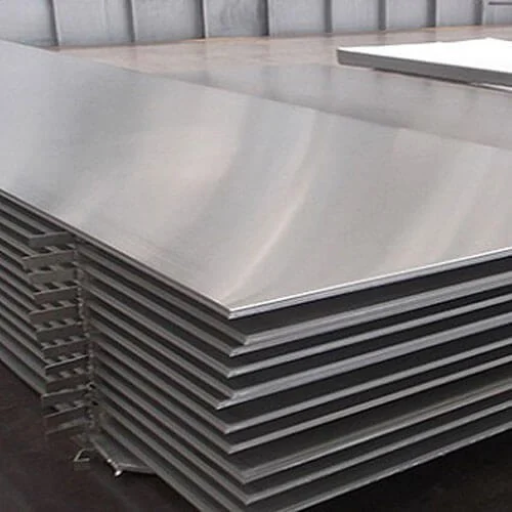
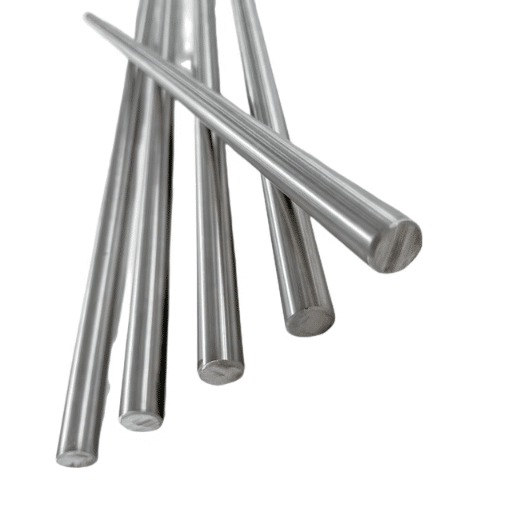
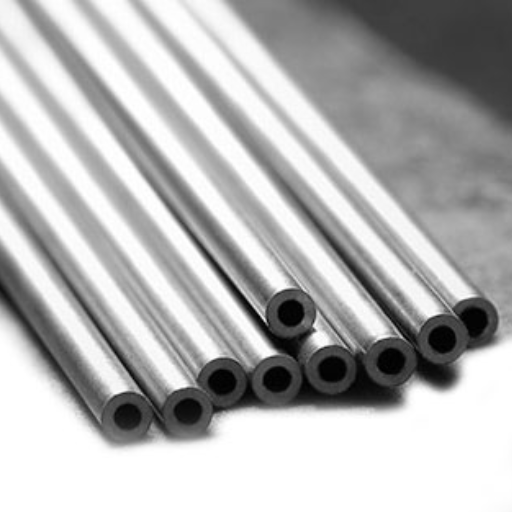
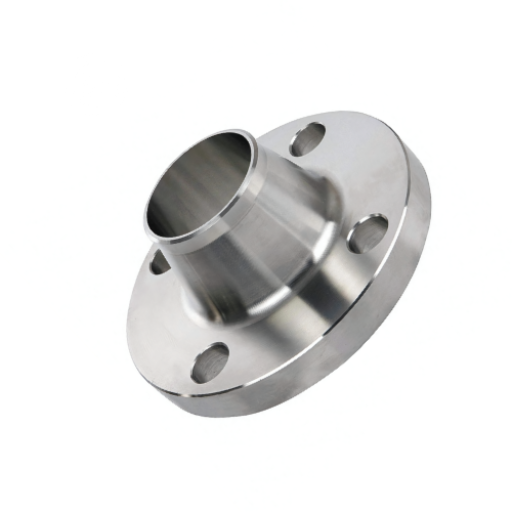
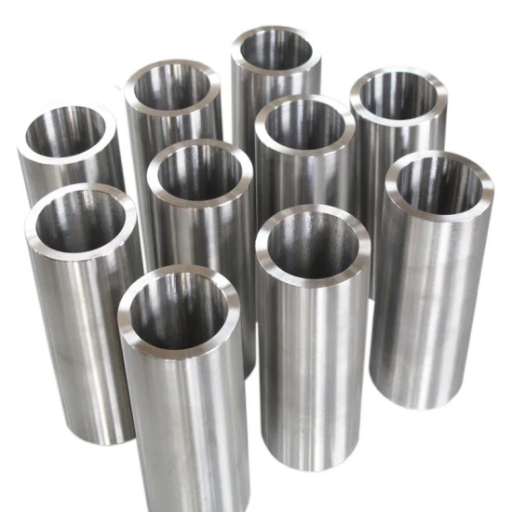
Duplex stainless steel pipe is the right choice for corrosive, high-pressure environments where standard austenitic grades like 316L are not enough. For a broader introduction to duplex metallurgy, see our complete duplex stainless steel guide. Duplex 2205 (UNS S32205) and super duplex 2507 (UNS S32750) offer roughly twice the yield strength of 316L. They also resist chloride stress corrosion cracking far better than 316L. These two properties make them standard specifications for offshore oil & gas, chemical processing, and desalination plants.
If you are a procurement engineer deciding whether duplex pipe fits your project, the answer depends on three variables: chloride concentration, operating pressure, and service temperature. This guide explains the metallurgy, grades, standards, and real-world applications of duplex stainless steel pipe. You will also learn how to verify that your duplex stainless steel pipe manufacturer delivers genuine duplex material. A certificate alone is not enough.
Key Takeaways
- Duplex stainless steel pipe combines austenitic and ferritic microstructures, delivering roughly twice the strength of 316L with superior chloride resistance.
- Duplex 2205 (UNS S32205) is the workhorse grade for chemical processing and marine environments; super duplex 2507 (UNS S32750) is reserved for the most aggressive sour and seawater service.
- ASTM A790 covers seamless and welded duplex pipe; NACE MR0175/ISO 15156 governs sour service (H2S) qualification.
- PREN values above 35 for 2205 and above 40 for 2507 are the numbers procurement engineers use to justify the upgrade over 316L.
- Zhongzheng manufactures duplex 2205 and super duplex S32750 pipe to ASTM A790 with full MTR documentation and 24-hour technical quotation support.
What Is Duplex Stainless Steel Pipe?

Duplex stainless steel pipe starts as a family of alloys with a two-phase microstructure: approximately 50% ferrite and 50% austenite. This balanced structure gives duplex grades a combination of high mechanical strength and exceptional corrosion resistance that neither phase achieves on its own.
The key alloying additions are chromium (19–28%), molybdenum (up to 5%), and nitrogen. Nitrogen is especially important. It stabilizes the austenite phase, improves pitting resistance, and increases yield strength without reducing toughness. As a result, engineers can specify thinner wall thickness than 316L for the same pressure rating, reducing weight and installed cost.
Mini-story: An engineering team in the North Sea specified 316L for a seawater cooling system to save on initial material cost. Within 18 months, chloride-induced pitting appeared at weld seams. The replacement specification used duplex 2205 pipe. The installed cost was higher upfront, but the asset has now operated for 12 years without a corrosion-related failure. The procurement manager later told us the upgrade paid for itself in avoided downtime.
Duplex stainless steel pipe is not a single grade. It is a category that includes lean duplex, standard duplex, and super duplex alloys. The grade you select must match the severity of the service environment. Using 2205 where 2507 is required risks premature failure; using 2507 where 2205 is sufficient adds unnecessary cost.
Why Duplex Pipe Outperforms Austenitic Grades
Strength Advantage
Duplex 2205 has a minimum yield strength of approximately 450 MPa (65 ksi). By comparison, 316L typically offers 170–220 MPa (25–32 ksi). Therefore, a duplex pipe can handle higher pressure with thinner walls, or support longer spans with less structural support. For offshore platforms and modular process skids, this translates into lower fabrication weight and reduced installation labor.
Pitting Resistance and PREN
The Pitting Resistance Equivalent Number (PREN) is the standard calculation engineers use to compare corrosion resistance. The formula is:
PREN = %Cr + 3.3(%Mo) + 16(%N)Typical values:
| Grade | PREN Range | Approximate Yield Strength |
|---|---|---|
| 316L | 24–26 | 170–220 MPa |
| Duplex 2205 | 34–36 | ~450 MPa |
| Super Duplex 2507 | 40–43 | ~550 MPa |
A PREN above 35 is generally considered the threshold for reliable resistance to seawater and chloride-rich process streams. Super duplex grades push this above 40, which is why they are specified for subsea manifolds, seawater injection lines, and highly sour hydrocarbon service.
Stress Corrosion Cracking Resistance
Austenitic grades like 304 and 316L are susceptible to chloride stress corrosion cracking (SCC) above roughly 60°C in chloride-containing environments. Duplex microstructures are far more resistant to SCC because the ferrite phase interrupts crack propagation. This is one reason duplex stainless steel pipe is preferred for hot, chloride-laden process fluids in refineries and chemical plants.
Cost Position
Duplex grades contain less nickel than 316L, which can reduce raw material cost volatility. However, duplex pipe requires more careful welding and heat treatment, so fabrication costs are higher. The total installed cost usually favors duplex when the design can take advantage of thinner wall thickness or when the service life extension is considered.
Common Duplex Stainless Steel Pipe Grades
Duplex 2205 (UNS S32205)
Duplex 2205 is the most widely used duplex grade. Its nominal composition is 22% chromium, 5% nickel, and 3% molybdenum. It offers an excellent balance of strength, corrosion resistance, and weldability. Duplex 2205 pipe is the default choice for:
- Chemical process piping
- Marine and offshore seawater systems
- Heat exchangers
- Desalination plants
- Pulp and paper processing
Super Duplex 2507 (UNS S32750)
Super duplex 2507 contains 25% chromium, 7% nickel, and 4% molybdenum, plus higher nitrogen. It delivers PREN values above 40 and is specified for the most demanding applications. Zhongzheng’s super duplex stainless steel pipe product range covers seamless and welded pipe in UNS S32750 for offshore, sour service, and high-chloride applications. Super duplex stainless steel pipe is common in:
- Offshore oil & gas production and subsea equipment
- Sour gas service (H2S/CO2 environments)
- Seawater injection and firewater systems
- High-chloride chemical processes
- Deepwater umbilical and riser systems
Lean Duplex Grades
Lean duplex grades such as LDX 2101 and 2304 contain lower nickel and molybdenum content. They offer lower cost than 2205 with better strength than 316L, but their corrosion resistance is more limited. Lean duplex is appropriate for structural applications, mild corrosive environments, and projects where the primary driver is strength-to-weight improvement rather than extreme corrosion resistance.
ASTM Standards for Duplex Stainless Steel Pipe

ASTM A790 / A790M is the primary specification for seamless and welded ASTM A790 duplex pipe. It defines chemical composition, mechanical properties, heat treatment, and testing requirements. ASTM A789 covers duplex stainless steel tubing for general service, while ASTM A928 covers welded pipe made with filler metal addition.
For fittings and flanges used with duplex pipe, ASTM A182 and ASTM A815 define the forging and wrought fitting requirements. ASME B31.3 (process piping) and ASME B31.4/B31.8 (pipeline transportation) provide the design codes that govern how duplex pipe is rated for pressure and installed in hydrocarbon service.
When your application involves hydrogen sulfide (H2S), NACE MR0175 / ISO 15156 governs material qualification. This standard defines hardness limits and environmental thresholds that the duplex grade must meet to avoid sulfide stress cracking. Reputable duplex stainless steel pipe manufacturers document this compliance on the MTR and can arrange third-party verification if required.
CTA: Need duplex pipe that meets ASTM A790 and NACE MR0175 for your project? Request a 24-hour technical quote from Zhongzheng →
Applications by Industry
Oil & Gas and Offshore
Offshore platforms expose piping to simultaneous high chloride concentrations, elevated pressures, and in many cases H2S. Duplex stainless steel pipe was specifically developed for this environment. It is used for flowlines, risers, manifolds, seawater cooling, and firewater systems in duplex pipe offshore applications. Super duplex 2507 is typically specified for subsea components where replacement or repair is extremely expensive.
Mini-story: A Gulf of Mexico operator switched from 316L to super duplex S32750 pipe for a seawater injection system. The original 316L line required a corrosion allowance that added wall thickness and weight. The super duplex design used thinner walls, reduced offshore welding hours, and eliminated the planned corrosion monitoring program. The project engineer cited the decision as one of the few material upgrades that simultaneously cut weight and improved reliability.
Chemical and Petrochemical Processing
Duplex pipe handles chloride-containing process fluids, organic acids, and sour gas streams that would attack standard austenitic grades. It is used in reactors, distillation columns, heat exchangers, and storage tank piping. In addition, the higher strength allows smaller-diameter pipe runs in high-pressure hydrogenation units.
Desalination and Water Treatment
Seawater reverse osmosis (SWRO) plants use large quantities of duplex 2205 pipe for intake, brine discharge, and high-pressure pumping systems. The combination of chloride resistance and strength makes it more economical than nickel alloys over the plant lifecycle while outperforming 316L in aggressive seawater.
Pulp and Paper
Pulp mills use duplex pipe in digesters, evaporation equipment, and bleaching stages where chloride and sulfur compounds are present. The material withstands the cyclic wet-dry conditions that cause pitting in lower grades.
How to Specify Duplex Stainless Steel Pipe
A proper duplex pipe specification includes more than just the grade. Procurement engineers should define:
- Grade and UNS number: UNS S32205 for duplex 2205, UNS S32750 for super duplex 2507.
- Manufacturing method: Seamless (ASTM A790) or welded (ASTM A928, with appropriate filler metal).
- Size and wall thickness: OD, wall thickness, and schedule per ASME B36.19 or project requirements.
- Heat treatment: Solution annealing and quenching are required to achieve the correct duplex microstructure.
- Ferrite content: Typically 35–65% by volume, often specified as 40–60% for optimal balance.
- Testing requirements: Hydrostatic test, ultrasonic testing, dye penetrant inspection, and impact testing at specified temperatures.
- Documentation: Mill Test Report (MTR) with chemical analysis, mechanical properties, heat treatment records, and NACE compliance where applicable.
Incorrect welding or heat treatment can destroy the duplex microstructure. If the ferrite-austenite balance is wrong, the pipe becomes brittle and loses corrosion resistance. This is why sourcing from a qualified duplex stainless steel pipe manufacturer matters as much as the grade selection itself.
Quality Verification: What Buyers Should Demand

Verifying a duplex stainless steel pipe before shipment is the only way to confirm that the material matches the specification. Procurement engineers should require documented testing across chemical composition, mechanical properties, corrosion resistance, and non-destructive examination.
Spectrographic Composition Verification
Verify every heat of raw material with an optical emission spectrometer before it enters production. The MTR must reflect the actual measured composition, not just the ordered composition. For duplex pipe, key elements to check are chromium, nickel, molybdenum, nitrogen, and carbon content.
Mechanical and Corrosion Testing
The MTR should include tensile strength, yield strength, elongation, and hardness values. For sour service, hardness testing per NACE MR0175 is mandatory. Intergranular corrosion testing (ASTM A923) is commonly specified for duplex grades to confirm that the microstructure is not sensitized.
Non-Destructive Testing
Test every seamless duplex pipe ultrasonically for internal defects. Inspect every welded duplex pipe radiographically or ultrasonically along the weld seam. Hydrostatic testing confirms pressure integrity before shipment.
Third-Party Inspection Support
For high-value or critical service orders, request witness testing by an independent agency such as SGS, Bureau Veritas, TÜV, or Lloyd’s Register. A capable manufacturer coordinates inspector access, notifies you when tests are ready, and supplies the inspection test plan (ITP) in advance.
Mini-story: A procurement manager for a Middle Eastern EPC contractor received an unusually low quote for duplex pipe. He asked for the MTR and noticed the nitrogen content was below the minimum for UNS S32205. The supplier admitted the material was a lean duplex grade mislabeled as 2205. The buyer avoided a costly specification failure by verifying the chemical composition before order placement.
Sourcing Duplex Stainless Steel Pipe from Zhongzheng
Zhongzheng manufactures duplex 2205 (UNS S32205) and super duplex S32750 seamless and welded pipe at our Wenzhou facility. Production is governed by ASTM A790, A789, and A928, with full MTR documentation including chemical composition, mechanical properties, and heat treatment records.
Our QC workflow includes:
- Imported optical emission spectrometry for every heat
- Ultrasonic flaw detection on seamless pipe
- Hydrostatic pressure testing to project or standard requirements
- Dimensional inspection for OD, wall thickness, and straightness
- Third-party inspection coordination (SGS, TÜV, Bureau Veritas)
Whether you need duplex pipe for offshore oil & gas, chemical processing, or desalination, our technical team responds within 24 hours. We confirm grade suitability, available dimensions, pricing, and lead time in every quotation.
CTA: Send your duplex pipe specification, including grade, OD, wall thickness, and standard, and receive a complete quote within 24 hours.
FAQ
What is the difference between duplex and super duplex stainless steel pipe?
Duplex 2205 has a PREN of approximately 34–36 and is used for general chloride-containing service. Super duplex 2507 has a PREN above 40 and is specified for the most aggressive offshore, sour, and high-pressure environments. Super duplex also has higher yield strength, allowing thinner wall designs.
What is PREN and why does it matter for duplex pipe?
PREN (Pitting Resistance Equivalent Number) is calculated as %Cr + 3.3(%Mo) + 16(%N). It predicts resistance to pitting and crevice corrosion in chloride environments. For seawater service, a PREN above 35 is generally required; super duplex exceeds 40.
What ASTM standard covers duplex stainless steel pipe?
ASTM A790 / A790M covers seamless and welded duplex stainless steel pipe. ASTM A789 covers duplex tubing. ASTM A928 covers welded pipe with filler metal addition. Fittings and flanges are covered by ASTM A182 and ASTM A815.
Is duplex stainless steel pipe better than 316L for corrosion resistance?
Yes, for chloride-rich and high-pressure environments. Duplex 2205 has roughly twice the yield strength of 316L and significantly better resistance to pitting, crevice corrosion, and chloride stress corrosion cracking. However, 316L remains adequate for many lower-chloride, lower-pressure applications at lower cost.
What is NACE MR0175 compliance for duplex pipe?
NACE MR0175 / ISO 15156 defines the requirements for materials used in sour service environments containing hydrogen sulfide (H2S). For duplex and super duplex pipe, compliance includes hardness limits and environmental thresholds that must be documented on the MTR.
When should I specify super duplex instead of duplex 2205?
Specify super duplex 2507 when the chloride concentration is very high, when H2S is present, when the design temperature is near the upper limit for 2205, or when the cost of failure far exceeds the material premium. Typical applications include subsea equipment, sour gas flowlines, and high-pressure seawater systems.
Can Zhongzheng supply custom duplex pipe dimensions?
Yes. Zhongzheng’s seamless and welded production lines accommodate non-standard OD, wall thickness, and length combinations. Submit your dimensional specification and applicable standard, and our technical team will confirm feasibility, MOQ, and lead time within 24 hours.
Conclusion
Duplex stainless steel pipe is not a niche material. It is the standard engineering choice for high-chloride, high-pressure environments where the cost of failure exceeds the material premium. Duplex 2205 handles the majority of chemical, marine, and desalination applications. Super duplex 2507 steps up to the most aggressive offshore and sour service conditions.
The specification is only as good as the material documentation behind it. Always verify the grade, the PREN, the applicable ASTM standard, and the MTR traceability before accepting delivery. When your project requires genuine duplex pipe with full ASTM and NACE compliance, Zhongzheng’s manufacturing and QC team can deliver the documentation and quality your engineering team needs.