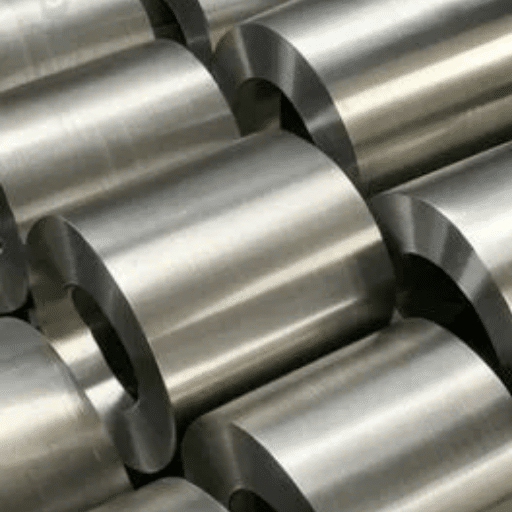
Stainless steel possesses heat conductivity abilities, but its performance falls short of copper and aluminum. The common austenitic grades 304 and 316 stainless steel demonstrate heat conduction abilities that measure between 14 and 16 W/m·K. The material conducts heat at one-tenth the speed of aluminum and one-twenty-fifth the speed of copper.
The daily work of engineers and procurement managers leads them to select stainless steel as their primary material for heat transfer applications. The reason is simple. Stainless steel provides three essential abilities which pure conductors fail to deliver: corrosion resistance, mechanical strength, and high-temperature stability. Industrial systems require these properties because they possess greater importance than the speed of thermal production.
The guide will explain stainless steel thermal conductivity through straightforward language. You will learn how it compares to other metals, why alloy composition changes heat transfer, and which grade suits your application. The document will show you which situations benefit from using low thermal conductivity.
Does Stainless Steel Conduct Heat? The Short Answer

Stainless steel conducts heat, but it is a poor conductor compared with most engineering metals. Here is how the numbers compare at room temperature:
| Metal | Thermal Conductivity (W/m·K) | Relative to Stainless Steel |
|---|---|---|
| Copper | ~385-400 | 24-28x higher |
| Aluminum | ~205-250 | 13-16x higher |
| Carbon steel | ~45-60 | 3-4x higher |
| Ferritic stainless steel (430) | ~25 | 1.5-1.8x higher |
| Austenitic stainless steel (304/316) | ~14-16 | Baseline |
These values come from standard engineering handbooks and ASM International data. They represent typical room-temperature figures. Actual conductivity changes with temperature, alloy chemistry, and heat treatment.
The key takeaway is this. Stainless steel does not fail in heat transfer applications because of low conductivity. Engineers design around it. They select wall thicknesses, surface areas, and flow rates that compensate for the lower value. In exchange, they gain decades of corrosion-free service.
How Stainless Steel Thermal Conductivity Compares to Other Metals
Stainless Steel vs. Aluminum
Aluminum conducts heat about 13 to 16 times faster than austenitic stainless steel. Aluminum’s thermal conductivity ranges from 205 to 250 W/m·K, while 304 stainless steel sits at about 16 W/m·K.
This gap explains why aluminum dominates heat sinks, automotive radiators, and electronics cooling. Aluminum also weighs less, which helps in aerospace and transportation applications.
However, aluminum lacks the corrosion resistance and mechanical strength of stainless steel. In chemical plants, offshore platforms, and food processing facilities, aluminum corrodes too quickly. Stainless steel endures. That is why many stainless steel seamless pipe installations in corrosive environments specify austenitic grades even when heat transfer is a design concern.
Stainless Steel vs. Carbon Steel
Carbon steel conducts heat approximately three to four times faster than austenitic stainless steel, according to the study. Carbon steel thermal conductivity ranges from 45 to 60 W/m·K depending on grade and composition.
Boilers and pressure vessels, and structural applications benefit from carbon steels because these sites do not face high corrosion risks. However, carbon steel develops rust. Carbon steel needs protective coatings or linings or cathodic protection in damp acidic environments and salty environments. Stainless steel needs none of that.
Engineers compare lifecycle costs for two different materials when a project needs both heat transfer capacity and protection against corrosion. Stainless steel maintains slower heat transfer rates compared to other materials but it prevents all maintenance shutdowns and equipment replacement intervals.
Stainless Steel vs. Copper
Copper is the benchmark for thermal conductivity among common engineering metals. At roughly 385 to 400 W/m·K, copper conducts heat about 24 to 28 times faster than 304 stainless steel.
Copper remains the first choice for heat exchanger tubes, electrical bus bars, and high-performance cookware. But copper is expensive, soft, and prone to corrosion in certain environments. In seawater, ammonia, and some industrial chemicals, copper degrades rapidly.
Stainless steel does not replace copper in pure heat transfer duty. It replaces copper when the operating environment demands corrosion resistance, mechanical strength, or both.
Why Does Stainless Steel Conduct Heat More Slowly?
The Role of Alloying Elements
Stainless steel contains chromium and nickel as its essential components, while it includes molybdenum as an additional element. The elements in stainless steel create its ability to resist corrosion. The materials disrupt thermal energy movement through their crystal structures.
Metals transfer heat through their free electron system. The presence of alloying atoms inside the iron lattice causes electron scattering. The scattering effect increases when more alloying elements enter the system. The scattering effect decreases the efficiency of heat transfer.
All stainless steels use chromium as their primary alloying element. Chromium creates a protective oxide layer, which prevents rust when its concentration exceeds 10.5 percent. Chromium atoms effectively scatter electrons while nickel displays the same behavior. Molybdenum, which engineers use in chloride-resistant 316 grades, generates more electron scattering than other elements do.
The presence of carbon in minimal quantities creates a thermal conductivity reduction effect. Carbon creates carbides, which establish barriers at grain boundaries. These carbides act as barriers to electron flow.
Austenitic vs. Ferritic Crystal Structure
Stainless steels exist in two main categories, which display completely different thermal properties.
Austenitic stainless steels, which include 304 and 316, display a face-centered cubic (FCC) crystal structure. The structure contains higher amounts of nickel and chromium. The material exhibits stronger electron scattering properties, which result in higher scattering efficiency. The thermal conductivity of austenitic grades typically ranges from 14 to 16 W/m·K.
Ferritic stainless steels, which include grade 430, display a body-centered cubic (BCC) crystal structure. The materials contain minimal or no nickel content. The simpler structure enables electrons to travel without obstruction. Ferritic grades attain thermal conductivity values between 23 and 27 W/m·K which approaches double the thermal conductivity of austenitic grades.
The trade-off results in increased protection against corrosion. The chemical resistance of austenitic grades protects against a wider variety of environmental conditions. Ferritic grades provide cheaper materials that maintain lower mechanical strength while protecting against fewer corrosive elements.
Thermal Conductivity by Stainless Steel Grade
Not all stainless steels conduct heat at the same rate. Grade selection directly affects thermal performance. Here are the facts for the most common grades:
| Grade | Type | Thermal Conductivity (W/m·K) | Key Thermal Properties |
|---|---|---|---|
| 304 | Austenitic | ~16.2 at 20°C | CTE: 17.2 × 10⁻⁶ /°C; Specific heat: ~500 J/kg·K; Melting range: 1,400-1,450°C |
| 316 | Austenitic | ~14.6 at 20°C | Lower conductivity than 304 due to molybdenum; Better chloride resistance |
| 430 | Ferritic | ~25 at 20°C | Highest conductivity among common grades; Moderate corrosion resistance |
| 321 | Austenitic | ~15 at 20°C | Titanium-stabilized; Similar to 304 thermally |
| 310S | Austenitic | ~14 at 20°C | High-temperature grade; Lower conductivity but excellent oxidation resistance |
Data sourced from ASM International Handbook and ASTM material specifications.
304 Stainless Steel
Grade 304 is the most widely used austenitic stainless steel. Its thermal conductivity of about 16.2 W/m·K at room temperature serves as the standard measurement for all other materials. Engineers need to consider the coefficient of thermal expansion, which measures at 17.2 × 10⁻⁶ /°C, during their design work for high-temperature piping systems.
304 exists as a material that can endure temperatures reaching approximately 870°C during continuous operational use. Its specific heat capacity of roughly 500 J/kg·K indicates its ability to store and release thermal energy. The combination of these characteristics, together with outstanding corrosion protection and welding ability, makes 304 the standard material for manufacturing cookware and heat exchangers, and industrial process pipes.
316 Stainless Steel
The composition of Grade 316 requires 3 percent molybdenum, which improves its ability to withstand chloride exposure. The addition of this material results in a thermal conductivity decrease, which reaches 14.6 W/m·K. The difference remains small, but it can be detected through precise heat transfer analysis.
The material 316 finds its primary use in marine environments and chemical processing, and pharmaceutical production. When your application faces saltwater, acidic process fluids, or aggressive cleaning chemicals, 316 outlasts 304 even though it conducts heat marginally less.
At Zhongzheng, we produce seamless pipe and tubing that meet ASTM A312 and A269 standards in both 304 and 316 materials. The technical team will assist you in selecting the appropriate grade that meets your thermal and corrosion protection needs. Send us your specification, and we will confirm grade, schedule, and delivery within 24 hours.
430 Stainless Steel
Grade 430 is a ferritic stainless steel with no nickel. Its thermal conductivity of roughly 25 W/m·K makes it the best heat conductor among common stainless grades. The value remains substantially lower than that of aluminum or copper, yet it approaches double that of 304.
The automotive industry uses 430 in exhaust systems while heat exchangers handle moderate corrosion, and appliances use the material. The material attracts budget-conscious projects because it provides lower costs and improved thermal performance. The material lacks toughness and weldability, which belongs to austenitic grades. The material exhibits increased stress corrosion cracking risk when exposed to particular environmental conditions.
When Low Thermal Conductivity Is an Advantage

The inability to conduct heat through materials that exhibit low thermal conductivity creates a technological advantage in specific situations. Engineers across multiple fields find this characteristic because it meets their requirements. The heat conduction abilities of stainless steel meet the requirements for those applications. The answer is yes.
Stainless steel cookware provides uniform heating capabilities, which allow the cookware to maintain its temperature throughout cooking. The construction of premium pans includes a stainless steel exterior, which contains an aluminum or copper core that enhances the pan’s capability to distribute heat evenly. The outer stainless steel layer protects against corrosion while creating a long-lasting cooking surface.
Chemical plants use stainless steel heat exchanger tubes because they withstand corrosive damage, which would destroy carbon steel and copper materials within a few months. Engineers achieve system performance improvement through two methods, which involve adding more tubes or expanding existing surface areas.
Cryogenic storage and transfer. Liquefied natural gas (LNG) and liquid nitrogen storage tanks rely on materials that limit heat ingress. The boiling loss rate decreases because stainless steel exhibits low thermal conductivity. The material maintains its toughness at cryogenic temperatures, which protects against brittle fracture.
Thermal insulation and containment. The slow heat transfer characteristics of stainless steel flues and exhaust systems, plus containment vessels, create benefits for these systems. The system maintains cooler exterior surfaces which results in improved safety and decreased need for insulation.
Process control. The reactors and distillation columns plus temperature-sensitive processes, use stainless steel to control heat transfer. The system protects against thermal shocks while maintaining accurate temperature regulation.
How to Improve Heat Transfer in Stainless Steel
When an application demands both corrosion resistance and better thermal performance, engineers have options.
Composite Materials and Cladding
The composite materials of copper-stainless steel and aluminum-stainless steel combine the optimal characteristics found in both metals. Manufacturers use explosive welding, roll bonding, and diffusion bonding as their methods to create material bonds. The surface treatment results in a material that protects against corrosion while maintaining effective heat transmission.
The conductive layer of copper-clad stainless steel reaches a thermal conductivity value that exceeds 300 W/m·K. The combination of aluminum and stainless steel forms lightweight yet strong heat spreaders, which find applications in both electronics and aerospace industries.
Surface Modifications
Engineers can improve heat transfer without changing the base alloy. Techniques include:
- Laser surface texturing. Creates micro-grooves that increase surface area and turbulence, improving convective heat transfer by 10 to 30 percent.
- High-conductivity coatings. Aluminum oxide or graphite-based coatings applied to stainless steel surfaces can boost thermal performance by 15 to 25 percent.
- Enhanced tube designs. Internally finned or corrugated tubes increase surface area inside heat exchangers, offsetting the lower conductivity of the base material.
For critical heat exchanger applications, electropolished tubing provides an ultra-smooth surface that reduces fouling and maintains heat transfer efficiency over time.
Applications: Where Stainless Steel Excels

Does stainless steel conduct heat well enough for industrial applications? It dominates in industries where corrosion resistance and thermal stability matter more than raw conductivity.
Chemical and petrochemical processing. Heat exchangers, reactor vessels, and process piping handle aggressive acids, solvents, and high temperatures. Grades like 316L and super duplex stainless steel withstand chloride stress corrosion cracking that would destroy lesser alloys.
The food and beverage and pharmaceutical industries need manufacturing equipment that must meet three essential requirements. The three standards for sanitary process equipment require facilities to sustain two operational conditions that stainless steel material can fulfill. The material provides moderate thermal conductivity, which enables users to manage the heating and cooling processes of delicate items.
The power generation process generates electricity through its main systems. The superheater tubes and feedwater heaters and condenser tubing systems in power plants operate at extreme pressure and high temperature environments. The stainless steel grades protect against oxidation while maintaining strength against creep deformation at temperatures that would defeat carbon steel materials.
The oil and gas industry requires duplex and super duplex grades for seawater exposure in offshore platforms, refineries and subsea pipelines. These alloys provide high strength together with protection against corrosion but their ability to conduct heat remains weaker than ferritic grades.
Zhongzheng manufactures seamless stainless steel pipes together with precision tubing, which supports all these industrial uses. Our products comply with ASTM and ASME, and GB standards through our complete mill test documentation. We can verify product specifications and product delivery schedules within a 24-hour period for 304 general service material, 316L chloride environment material, and duplex S32205 offshore service material.
Frequently Asked Questions
Does stainless steel conduct heat better than aluminum?
The ability of stainless steel to conduct heat does not surpass that of aluminum. Aluminum conducts heat roughly 13 to 16 times faster than austenitic stainless steel. Aluminum thermal conductivity ranges from 205 to 250 W/m·K while 304 stainless steel has a thermal conductivity of 16 W/m·K. Aluminum delivers better heat transfer capabilities. Stainless steel provides stronger protection against corrosion while maintaining higher strength and better durability.
Which stainless steel grade has the highest thermal conductivity?
Grade 430, which is a ferritic stainless steel, demonstrates the highest thermal conductivity among common grades because it reaches approximately 25 W/m·K. This is nearly double the value of austenitic grades like 304 and 316. However, 430 offers lower corrosion resistance and mechanical strength than austenitic alternatives.
Does stainless steel conduct electricity effectively.
The electrical conductivity of stainless steel exists at a lower level than both copper and aluminum. Stainless steel conducts electricity at a rate which reaches only 1.4 percent of copper’s electrical conductivity. The same electron movements which reduce thermal conductivity also restrict electrical conductivity.
Why is stainless steel used in cookware if it conducts heat poorly?
Cookware utilizes stainless steel because the material offers both corrosion resistance and durability and it does not react with food. Manufacturers create better heat distribution systems through the process of bonding stainless steel with aluminum or copper cores. The outer layer of stainless steel functions as a shield for the conductive core because it offers a stable surface which is simple to maintain.
Can stainless steel thermal conductivity be improved without changing grades?
Yes. Surface modifications through laser texturing and internal finning together with high-conductivity coatings increase effective heat transfer by 10 to 30 percent. Composite construction with copper or aluminum cladding also boosts conductivity while preserving corrosion resistance.
Does temperature affect stainless steel thermal conductivity?
Yes. The thermal conductivity of austenitic stainless steels generally increases with rising temperatures. At 500°C, the thermal conductivity of 304 rises to approximately 21 W/m·K. Engineers must account for this change when designing high-temperature equipment. Ferritic grades show the opposite trend, with conductivity decreasing as temperature rises.
Conclusion
The answer to the question about stainless steel heat conduction is affirmative because the material transmits thermal energy, although it does so at a low speed. The common austenitic grades 304 and 316 display heat conduction efficiency, which reaches 14 to 16 W/m·K, which falls short of aluminum, copper, and carbon steel. The 430 ferritic grade shows better performance than 25 W/m·K, yet it still remains inferior to non-stainless metals.
Engineers do not choose stainless steel for its thermal speed. The material selection process involves engineers choosing stainless steel due to its ability to resist corrosion and its capacity to maintain mechanical strength and high-temperature performance. The complete ability to resist degradation during multiple decades at chemical plants and food processing facilities and offshore platforms proves to be more important than requiring quick heat transfer.
You can choose the appropriate grade when you understand the existing trade-offs. The 304 alloy provides suitable protection against general corrosion while allowing moderate heat transfer. The 316 grade should be used in environments where chloride levels are high. For applications requiring maximum thermal efficiency from stainless steel, ferritic 430 serves as the optimal choice. Super duplex grades actually offer the highest level of protection, which makes them suitable for environments that face the most extreme corrosive conditions.
Contact Zhongzheng when your project needs piping or tubing that resists corrosion while having specific thermal characteristics. We produce seamless stainless steel pipe and electropolished tubing, and specialty alloys that comply with ASTM and ASME standards. You can share your specifications with us, and our team will verify the appropriate grade and dimensions and delivery schedule within 24 hours.
Sources
- ASM International, ASM Handbook, Volume 1: Properties and Selection: Irons, Steels, and High-Performance Alloys (thermal conductivity data for stainless steel grades)
- Powell, R.W., Ho, C.Y., and Liley, P.E., “Thermal Conductivity of Selected Materials,” National Standard Reference Data Series (NIST)
- ASM International, “Thermal Properties of Stainless Steels” (grade-specific conductivity and expansion data)