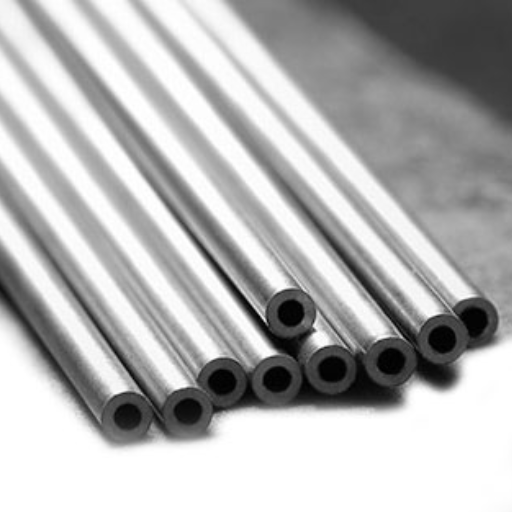
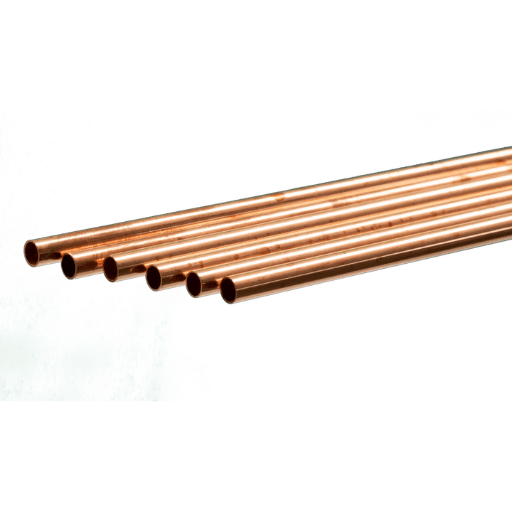
Copper tube sizes are defined by outside diameter (OD), wall thickness, and the governing standard, not by nominal size alone. In North America, ASTM B88 water tube is specified by Type (K, L, M, DWV) and nominal size, while ASTM B280 refrigeration tube is specified directly by OD. In Europe and Asia, metric copper tube sizes follow EN 1057, EN 12735, or JIS H3300.
If your RFQ says “1/2 inch copper tube” without specifying OD, wall, and standard, you’re quoting three different products. That’s why procurement engineers and HVAC contractors keep a copper tubing size chart, or copper pipe size chart, on their desk. This guide gives you the actual dimension tables, standard cross-references, and an RFQ checklist so you specify copper tube sizes correctly the first time. For the broader standards context, see our complete seamless copper tube standards guide.
Key Takeaways
- Copper tube “size” is a combination of OD, wall thickness, and standard. Nominal pipe size does not equal OD.
- ASTM B88 Type K, L, and M share the same OD but have different wall thicknesses, with Type K being the heaviest.
- ASTM B280 ACR tube is sized by actual OD and is cleaned/dehydrated for refrigeration service.
- Metric copper tube sizes (EN 1057 / JIS H3300) are not direct equivalents of inch sizes. Always check the OD before matching fittings.
- A complete RFQ includes OD, wall/ID, length, temper, standard, tolerance, quantity, and end use.
Understanding Copper Tube Size Terminology

Before you compare copper tube sizes, understand that engineers use three numbers to describe a copper tube: OD × wall thickness × length. The inside diameter (ID) is simply OD minus twice the wall. This sounds obvious, but the procurement errors we see most often start right here.
Nominal size vs. actual OD. A “1/2 inch” copper water tube under ASTM B88 has an actual OD of 0.625 inches (15.875 mm), not 0.500 inches. A “3/4 inch” tube has an OD of 0.875 inches (22.225 mm). Nominal size is a legacy plumbing designation. It tells you which fitting family to use, but it doesn’t tell you the physical OD.
Type K, L, M, and DWV. These letters describe wall thickness for a given OD under ASTM B88:
- Type K: Thickest wall, highest pressure rating, used for underground service and high-pressure systems.
- Type L: Medium wall, the default for most residential and commercial potable water systems.
- Type M: Thinner wall, lower cost, used in low-pressure heating and drainage where code allows.
- DWV: Drain, waste, and vent; the thinnest wall and lowest pressure rating.
ACR tube. Air-conditioning and refrigeration tube under ASTM B280 is sized by actual OD, not nominal size. It is also cleaned, capped, and dehydrated to prevent contamination of refrigerant circuits.
Temper affects availability. Hard-drawn copper tube comes in straight lengths, typically 3 m, 5 m, or 6 m. Annealed (soft) copper tube comes in coils, commonly 15 m, 30 m, or 50 m. If your heat exchanger layout needs long runs without joints, an annealed coil may be the better form factor even if the OD and wall are identical.
“When Marcus, a contractor in Sydney, ordered ‘1/2 inch copper tube’ for a European-packaged heat pump, he assumed the OD was 12.7 mm. The fittings on site were metric 15 mm. The difference, just 2.2 mm, meant every brazed joint had to be re-worked, adding two days to a job that should have taken an afternoon.”
ASTM B88 Copper Tube Sizes: Type K, L, M Water Tube
ASTM B88 covers seamless copper water tube in Type K, Type L, Type M, and DWV. The table below shows the most commonly specified ASTM B88 copper tube sizes and copper tube dimensions. All values are inches unless noted. Weights are approximate and vary slightly by alloy and temper.
Table 1: ASTM B88 Copper Tube Sizes, Type K, L, M Dimensions (inches)
| Nominal Size | OD (in) | OD (mm) | Type K Wall | Type L Wall | Type M Wall | Type K ID | Type L ID | Type M ID | Type K wt (lb/ft) | Type L wt (lb/ft) | Type M wt (lb/ft) |
|---|---|---|---|---|---|---|---|---|---|---|---|
| 1/4″ | 0.375 | 9.525 | 0.035 | 0.030 | N/A | 0.305 | 0.315 | N/A | 0.145 | 0.126 | N/A |
| 3/8″ | 0.500 | 12.700 | 0.049 | 0.035 | 0.025 | 0.402 | 0.430 | 0.450 | 0.269 | 0.198 | 0.145 |
| 1/2″ | 0.625 | 15.875 | 0.049 | 0.040 | 0.028 | 0.527 | 0.545 | 0.569 | 0.344 | 0.285 | 0.204 |
| 5/8″ | 0.750 | 19.050 | 0.049 | 0.042 | 0.030 | 0.652 | 0.666 | 0.690 | 0.418 | 0.362 | 0.263 |
| 3/4″ | 0.875 | 22.225 | 0.065 | 0.045 | 0.032 | 0.745 | 0.785 | 0.811 | 0.641 | 0.455 | 0.328 |
| 1″ | 1.125 | 28.575 | 0.065 | 0.050 | 0.035 | 0.995 | 1.025 | 1.055 | 0.839 | 0.655 | 0.465 |
| 1-1/4″ | 1.375 | 34.925 | 0.065 | 0.055 | 0.042 | 1.245 | 1.265 | 1.291 | 1.040 | 0.884 | 0.682 |
| 1-1/2″ | 1.625 | 41.275 | 0.072 | 0.060 | 0.049 | 1.481 | 1.505 | 1.527 | 1.360 | 1.140 | 0.940 |
| 2″ | 2.125 | 53.975 | 0.083 | 0.070 | 0.058 | 1.959 | 1.985 | 2.009 | 2.060 | 1.750 | 1.460 |
| 2-1/2″ | 2.625 | 66.675 | 0.095 | 0.080 | 0.065 | 2.435 | 2.465 | 2.495 | 2.920 | 2.480 | 2.030 |
| 3″ | 3.125 | 79.375 | 0.109 | 0.090 | 0.072 | 2.907 | 2.945 | 2.981 | 4.000 | 3.330 | 2.680 |
| 4″ | 4.125 | 104.775 | 0.134 | 0.110 | 0.095 | 3.857 | 3.905 | 3.935 | 6.510 | 5.380 | 4.660 |
| 5″ | 5.125 | 130.175 | 0.160 | 0.125 | N/A | 4.805 | 4.875 | N/A | 9.670 | 7.610 | N/A |
| 6″ | 6.125 | 155.575 | 0.192 | 0.140 | N/A | 5.741 | 5.845 | N/A | 13.870 | 10.200 | N/A |
| 8″ | 8.125 | 206.375 | 0.271 | 0.200 | N/A | 7.583 | 7.725 | N/A | 25.900 | 19.290 | N/A |
How to read the table. For a 3/4″ nominal tube, the OD is always 0.875 inches regardless of type. The wall thickness changes: Type K is 0.065″, Type L is 0.045″, and Type M is 0.032″. That difference gives Type K roughly 45% more copper mass and a higher pressure rating than Type M for the same OD.
Common applications by type. These Type K L M copper tube sizes share the same OD but differ in wall thickness. Type K is preferred for underground water service, fire protection, and high-pressure compressed air. Type L is the standard for indoor potable water distribution in most North American jurisdictions. Type M is common in residential heating loops and vacuum systems where pressure is low and cost matters. DWV is restricted to non-pressure drainage and vent lines.
“A facilities engineer in Chicago specified Type M on a chilled-water loop running at 150 psi. Within eighteen months, leaks appeared at the bends. Type L would have handled the pressure and stress concentration at the fittings. The repair cost exceeded the material savings by a factor of four.”
Pressure rating note. Pressure rating depends on wall thickness, OD, and allowable stress at temperature. As a rule of thumb, Type K handles the highest pressure, Type L is for moderate pressure, and Type M is for low-pressure applications. Always confirm the working pressure with the applicable plumbing or mechanical code for your project.
ASTM B280 ACR / Refrigeration Tube Sizes
ASTM B280 covers seamless copper tube for air conditioning and refrigeration field service. The copper tube sizes in this standard differ from ASTM B88 because ACR tube is sized by its actual OD. It is also manufactured with stricter cleanliness requirements because residual oils or moisture can damage a refrigeration system.
Table 2: ASTM B280 ACR / Refrigeration Copper Tube Sizes
| OD (in) | OD (mm) | Common Wall (in) | Common Wall (mm) | ID (in) | ID (mm) | Typical Coil Length | Common Application |
|---|---|---|---|---|---|---|---|
| 1/8″ | 3.175 | 0.030 | 0.762 | 0.060 | 1.524 | 50 ft | Capillary lines, instrumentation |
| 3/16″ | 4.763 | 0.030 | 0.762 | 0.118 | 2.997 | 50 ft | Small refrigeration circuits |
| 1/4″ | 6.350 | 0.030 | 0.762 | 0.190 | 4.826 | 50 ft | Domestic refrigerators, small AC |
| 5/16″ | 7.938 | 0.032 | 0.813 | 0.241 | 6.121 | 50 ft | Split-system linesets |
| 3/8″ | 9.525 | 0.032 | 0.813 | 0.306 | 7.772 | 50 ft | Residential AC linesets |
| 1/2″ | 12.700 | 0.032 | 0.813 | 0.436 | 11.074 | 50 ft | Commercial AC, heat pumps |
| 5/8″ | 15.875 | 0.035 | 0.889 | 0.555 | 14.097 | 50 ft | Commercial refrigeration |
| 3/4″ | 19.050 | 0.035 | 0.889 | 0.680 | 17.272 | 50 ft | Large commercial systems |
| 7/8″ | 22.225 | 0.045 | 1.143 | 0.780 | 19.812 | 50 ft | Industrial refrigeration |
| 1-1/8″ | 28.575 | 0.050 | 1.270 | 1.025 | 26.035 | 20–50 ft | Large tonnage systems |
ACR tube is usually supplied in annealed coils with sealed ends to maintain internal cleanliness. If you are buying for OEM production, specify the required cleanliness level, nitrogen charging, and packaging. Many contractors keep a small copper tubing size chart of ASTM B280 OD and wall values in their service van. Zhongzheng can supply ACR tube with degreased, dehydrated, and capped ends on request.
For very small precision sizes, see our guide to capillary copper tube for precision sizes.
Metric Copper Tube Sizes (EN 1057 / EN 12735 / JIS H3300)

Metric copper tube is specified by OD in millimeters. EN 1057 covers copper tube for water and gas, EN 12735 covers copper tube for air conditioning and refrigeration, and JIS H3300 is the Japanese standard for general copper tubing. The table below lists common metric copper tube sizes and their typical wall thicknesses.
Table 3: Metric Copper Tube Sizes (EN 1057 / JIS H3300)
| OD (mm) | OD (in) | Common Wall (mm) | Common Wall (in) | ID (mm) | ID (in) | Common Standard | Typical Application |
|---|---|---|---|---|---|---|---|
| 6 | 0.236 | 1.0 | 0.039 | 4.0 | 0.157 | EN 1057 / JIS H3300 | Instrumentation, capillary |
| 8 | 0.315 | 1.0 | 0.039 | 6.0 | 0.236 | EN 1057 / JIS H3300 | Small bore water/gas |
| 10 | 0.394 | 1.0 | 0.039 | 8.0 | 0.315 | EN 1057 / JIS H3300 | Domestic plumbing |
| 12 | 0.472 | 1.0 | 0.039 | 10.0 | 0.394 | EN 1057 / JIS H3300 | Plumbing, compressed air |
| 15 | 0.591 | 1.0 | 0.039 | 13.0 | 0.512 | EN 1057 | Potable water, heating |
| 18 | 0.709 | 1.0 | 0.039 | 16.0 | 0.630 | EN 1057 | Residential plumbing |
| 22 | 0.866 | 1.0 / 1.5 | 0.039 / 0.059 | 20.0 / 19.0 | 0.787 / 0.748 | EN 1057 | Heating, gas distribution |
| 28 | 1.102 | 1.0 / 1.5 | 0.039 / 0.059 | 26.0 / 25.0 | 1.024 / 0.984 | EN 1057 | Commercial plumbing |
| 35 | 1.378 | 1.5 | 0.059 | 32.0 | 1.260 | EN 1057 | Large plumbing, HVAC |
| 42 | 1.654 | 1.5 | 0.059 | 39.0 | 1.535 | EN 1057 | Heating mains, gas |
| 54 | 2.126 | 2.0 | 0.079 | 50.0 | 1.969 | EN 1057 | Commercial heating |
| 64 | 2.520 | 2.0 | 0.079 | 60.0 | 2.362 | EN 1057 | Industrial water/gas |
| 76.1 | 2.996 | 2.0 | 0.079 | 72.1 | 2.839 | EN 1057 | Large HVAC, process water |
| 88.9 | 3.500 | 2.0 | 0.079 | 84.9 | 3.343 | EN 1057 | Industrial process |
| 108.0 | 4.252 | 2.5 | 0.098 | 103.0 | 4.055 | EN 1057 | Large-bore process lines |
Wall thickness selections vary by pressure class and application. Always confirm against the relevant EN or JIS H3300 table.
Metric tube is widely used in Europe, Asia, Australia, and the Middle East. If your project was originally specified in metric and you’re sourcing from a North American supplier, don’t assume a 1/2″ ASTM tube will fit a 15 mm metric fitting. The OD mismatch is small but real, and it matters for brazed or compression joints.
Inch-to-Metric Conversion Quick Reference
Use this table when you need to match copper tube sizes between imperial and metric systems. The “closest metric” column shows the nearest common metric OD, not an exact match.
Table 4: Inch-to-Metric Copper Tube Size Conversion
| Imperial Nominal | Imperial OD (in) | Imperial OD (mm) | Closest Metric OD | Notes |
|---|---|---|---|---|
| 1/4″ ACR | 0.250 | 6.35 | 6 mm | Nearly interchangeable |
| 3/8″ ACR | 0.375 | 9.525 | 10 mm | Check wall thickness |
| 1/2″ ACR | 0.500 | 12.700 | 12 mm | OD close; fittings may differ |
| 1/2″ B88 | 0.625 | 15.875 | 15 mm | Common mismatch source |
| 5/8″ B88 | 0.750 | 19.050 | 18 mm / 20 mm | Verify fitting standard |
| 3/4″ B88 | 0.875 | 22.225 | 22 mm | Often interchangeable |
| 1″ B88 | 1.125 | 28.575 | 28 mm | Close OD match |
| 1-1/4″ B88 | 1.375 | 34.925 | 35 mm | Common in HVAC |
| 1-1/2″ B88 | 1.625 | 41.275 | 42 mm | Close match |
| 2″ B88 | 2.125 | 53.975 | 54 mm | Common in heating |
| 3″ B88 | 3.125 | 79.375 | 76.1 mm | Slight OD difference |
| 4″ B88 | 4.125 | 104.775 | 108 mm | Check wall and fitting |
When to specify metric vs. imperial. Specify metric when your drawings, fittings, or end market use metric standards. Specify imperial when the project is governed by U. S. or Canadian plumbing codes, or when the downstream equipment is sized in inches. Mixed-specification projects are where most dimensional errors occur, so state both OD and wall thickness explicitly in your RFQ.
Copper Tube Size Tolerances
Dimensions from the standard are nominal. When you order copper tube sizes to tight fits, production tolerances control how much the OD, wall, and length can vary. Specifying tolerances in your RFQ prevents disputes and ensures the tube fits your tooling, fittings, and inspection gauges.
Table 5: Typical Dimensional Tolerances for ASTM B88 Copper Tube
| Dimension | Typical Tolerance (ASTM B88) | Notes |
|---|---|---|
| OD ≤ 0.500″ (12.7 mm) | ±0.002″ (±0.05 mm) | Tightest OD band |
| OD 0.500″–0.875″ (12.7–22.2 mm) | ±0.003″ (±0.08 mm) | Covers 3/8″ to 3/4″ sizes |
| OD 0.875″–1.125″ (22.2–28.6 mm) | ±0.004″ (±0.10 mm) | 3/4″ to 1″ sizes |
| OD 1.125″–2.125″ (28.6–54.0 mm) | ±0.005″ (±0.13 mm) | 1″ to 2″ sizes |
| OD > 2.125″ (54.0 mm) | ±0.006″ or ±0.5% | Larger sizes |
| Wall thickness | ±10% of nominal wall | Minimum wall rules may also apply |
| Straight length | ±1/4″ for lengths ≤ 12 ft; ±1/2″ for 12–20 ft | Verify against order length |
| Coil length | ±1% or ±0.5 m typical | Agree with supplier |
| Straightness | ≤1/8″ per 3 ft (typical) | Important for automatic bending |
| Ovality | Within OD tolerance | Critical for seal integrity |
Values are typical for ASTM B88 commercial tube. Tighter tolerances are available on request but may affect price and minimum order quantity.
If you are producing heat exchangers or precision assemblies, specify the minimum wall rather than the nominal wall. ASTM B88 bases its pressure ratings on minimum wall thickness, and some mills target the low side of the tolerance band to reduce material cost. A clear tolerance callout protects your design margins.
How to Specify Copper Tube Sizes in an RFQ
A vague RFQ invites the wrong quote. Use this checklist to make sure suppliers quote the exact copper tube sizes you need:
- Outside diameter (OD): state in mm or inches, and specify the standard.
- Wall thickness or inside diameter (ID): wall is preferred because it controls pressure rating and weight.
- Length and form: straight length or coil; annealed or hard-drawn temper.
- Applicable standard: ASTM B88, ASTM B280, EN 1057, EN 12735, JIS H3300, etc.
- Alloy/temper: C12200 DHP is the default for most brazed and plumbing applications. See our C12200 DHP copper alloy properties guide for details.
- Tolerance requirements: OD, wall, length, straightness, and ovality.
- Quantity and delivery schedule: include annual volume if you need price breaks.
- End use/application: helps the supplier recommend the right cleanliness, packaging, and certification.
“An OEM heat-exchanger buyer in South Korea switched from 6 m straight lengths to 50 m continuous annealed coils. The change eliminated thirty brazed joints per unit. Scrap fell by 4%, pressure-test time dropped, and the total installed cost fell even though the per-meter tube price was slightly higher.”
Common mistakes to avoid. Don’t mix nominal size and OD in the same specification. Don’t assume “Type L” means the same thing in metric standards. Don’t forget to specify temper. Annealed tube costs more per meter but may save money in labor. And don’t request ASTM B88 tolerances for an EN 1057 tube without confirming the supplier can meet both.
When you’re ready to source, our team can review your specification against mill capability. Visit our C12200 copper tube manufacturer page for information on standards, MOQs, and documentation packages.
Typical Sizes by Application

Different applications gravitate toward specific copper tube sizes and standards. The table below is a quick reference for specifiers.
| Application | Common Sizes | Typical Standard | Notes |
|---|---|---|---|
| Potable water (residential) | 1/2″, 3/4″, 1″ Type L | ASTM B88 | Most common North American spec |
| Potable water (commercial) | 1″–3″ Type L / Type K | ASTM B88 | Type K for high pressure or buried service |
| HVAC/R linesets | 1/4″, 3/8″, 1/2″, 5/8″, 3/4″ OD | ASTM B280 | Sized by actual OD; cleaned and capped |
| Heat exchangers/condensers | 3/8″–1-1/8″ OD, often 0.035″ wall | ASTM B280 / ASTM B111 | Tight tolerance and cleanliness required |
| Medical gas | 1/2″–2″ Type L or K | ASTM B819 | Special cleanliness and certification |
| Solar thermal | 3/8″–3/4″ OD | ASTM B88 / EN 1057 | Annealed coil preferred for roof runs |
| Compressed air | 1/2″–2″ Type K / L | ASTM B88 | Type K for higher pressure |
| Industrial process water | 15 mm–108 mm OD | EN 1057 / JIS H3300 | Metric specifications common |
Frequently Asked Questions
What is the OD of a 3/4 copper tube?
A 3/4″ nominal copper water tube under ASTM B88 has an outside diameter of 0.875 inches (22.225 mm). The wall thickness depends on type: Type K is 0.065″, Type L is 0.045″, and Type M is 0.032″.
What is the wall thickness of Type L copper tube?
Type L wall thickness varies by OD. For common sizes: 1/2″ Type L = 0.040″; 3/4″ Type L = 0.045″; 1″ Type L = 0.050″; 2″ Type L = 0.070″. Type L is approximately 25–30% thinner than Type K for the same OD.
What is the difference between Type K and Type L copper tubes?
Type K and Type L copper tubes share the same outside diameter but have different wall thicknesses. Type K has the thicker wall, making it the strongest choice for high-pressure or underground service. Type L has a thinner wall and is the default for most residential and commercial potable water systems. For example, 1/2″ nominal tube has an OD of 0.625″ for both types, but Type K wall is 0.049″ while Type L wall is 0.040″.
What sizes does copper tube come in?
Available copper tube sizes depend on the standard. ASTM B88 water tube is commonly available from 1/4″ nominal up to 8″ nominal. ASTM B280 ACR tube is available from 1/8″ OD up to 1-1/8″ OD and larger. Metric copper tube sizes range from 6 mm OD up to 108 mm OD or more under EN 1057.
How do you measure copper tube diameter?
Measure the outside diameter (OD) with a caliper or micrometer. Don’t measure the inside diameter unless you’re calculating wall thickness. For wall thickness, measure the OD and ID, then use the formula: wall = (OD − ID) / 2.
What is the metric equivalent of 1/2 inch copper tube?
It depends on which “1/2 inch” you mean. ASTM B88 1/2″ nominal water tube has an OD of 15.875 mm. ASTM B280 1/2″ ACR tube has an OD of 12.700 mm. The closest common metric plumbing size is 15 mm OD (EN 1057), but the wall thicknesses differ.
Conclusion
Getting copper tube sizes right means specifying OD, wall thickness, length, temper, and standard in one clear statement. A “1/2 inch” label isn’t enough. Whether you’re buying ASTM B88 Type K/L/M water tube, ASTM B280 ACR tube, or metric EN 1057 tube, the dimension tables above give you the numbers you need to write an accurate RFQ and avoid field rework.
Key points to remember:
- Nominal size does not equal OD.
- Type K, L, and M share the same OD but differ in wall thickness and pressure rating.
- Metric and imperial tubes are not direct equivalents. Always verify OD and wall.
- Tolerances should be stated in your RFQ, especially for precision applications.
Ready to quote? Send us your OD × wall × length, temper, standard, and quantity. Our technical team reviews RFQs within 24 hours and can confirm mill capability, tolerances, and documentation for your project. Request a dimensional quotation today.