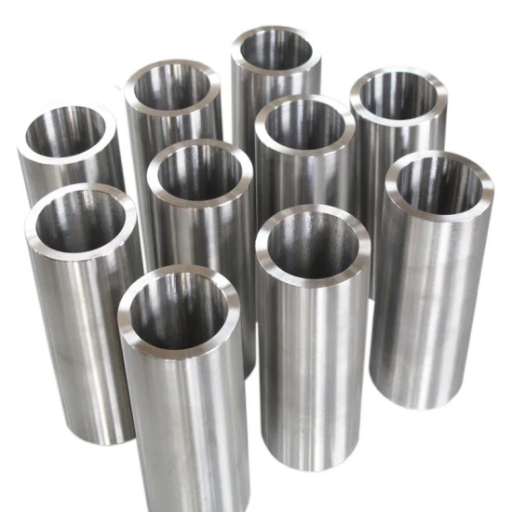
Square vs rectangular tube comes down to one variable: the direction of the load. A square section resists bending and compression about both axes almost equally, which makes it the right choice for posts and frames. A rectangular section is markedly stiffer and stronger when loaded against its long side, which makes it the right choice for beams and long spans. Neither shape is universally stronger. The correct choice follows where the load lands and how you orient the section.
A fabricator quoting a beachfront balcony this week will ask the question that decides whether the rail sags, rusts, or fits: square or rectangular tube? The honest answer, “it depends which way the load is trying to bend it,” is why so many order lines get it wrong. And with stainless steel, the shape is only half the decision. Grade and finish decide how the section survives salt air and how it looks after a decade of cleaning.
This guide gives you the full square vs rectangular tube decision framework in plain terms. We are the Wenzhou manufacturer that forms, welds, anneals, and finishes both square and rectangular stainless sections on our own lines, so this reflects how the material behaves on a production floor, not a theory textbook. By the end you can choose the shape, orient it for the load, and write a stainless order line a mill can quote without a follow-up call. Start with our complete stainless steel rectangular tube guide for the wider frame, or read on for the shape decision itself.
Key Takeaways
- Square tube (SHS) resists bending and compression about both axes with nearly equal performance, so it is the default for posts, columns, baluster verticals, and frames loaded from several directions.
- Rectangular tube (RHS) is the stronger choice only when the long side is oriented to the load. Loaded that way, an 80 x 40 mm section is roughly four times as stiff about its strong axis as about its weak axis.
- For equal steel per meter, a rectangle gains stiffness about its long axis and gives up an equal amount about its short axis compared with a square of the same wall and perimeter.
- Stainless square and rectangular tube are welded mechanical tubing under ASTM A554 (MT-304, MT-316L), not carbon-steel A500 and not pressure pipe. The current edition is ASTM A554-26.
- On a coastline, grade outranks shape. A 316L rectangular rail beats a 304 square rail of identical geometry because corrosion resistance is set by the alloy, not the profile.
What Is the Difference Between Square and Rectangular Tube?

A square tube has four equal sides (A x A), such as 40 x 40 mm, and behaves nearly the same whether you bend, compress, or twist it in any direction. A rectangular tube has two unequal pairs of sides (A x B), such as 80 x 40 mm, with a strong axis along the long dimension and a weak axis along the short one. Bent against the long side, the rectangle is far stiffer and stronger than a square of equal weight. Bent against the short side, it is the weakest member in this comparison.
SHS means square hollow section; RHS means rectangular hollow section. In North America the umbrella term is HSS, hollow structural section, and both shapes arrive under it. One caution: in Australia, some suppliers use RHS to mean “rolled hollow section” and include square profiles under it. The abbreviations vary across markets, which is why the reliable habit is to write the dimensions. “80 x 40” means the same thing in Wenzhou, Melbourne, Manchester, and Minnesota. “RHS” alone does not.
Not sure whether square or rectangular fits your application? Send us the member, the span, and the load direction and our technical team will confirm the shape, size, and wall within 24 hours.
Square vs Rectangular vs Round: The Three Hollow-Section Shapes
Three closed profiles cover nearly every stainless framing job: square (A x A), rectangular (A x B), and round (by outside diameter). Each is formed from flat-rolled strip and welded into a closed section, and for stainless in this grade range the governing standard is ASTM A554, which covers round, square, rectangular, and special shapes. It is not pressure pipe. Pressure-rated round tubing lives in the A269 and A213 world and is a separate buying decision. For the manufacturing depth behind the weld, our guide to how welded rectangular tube is manufactured is the place to go.
| Decision factor | Square tube (SHS) | Rectangular tube (RHS) | Round tube (CHS) |
|---|---|---|---|
| Geometry | A x A, equal sides | A x B, unequal sides | Outside diameter |
| Bending | Nearly equal in all directions | Strong against the long side, weak against the short | Equal in all directions |
| Column / post behavior | No weak axis to brace | Weak axis governs unbraced buckling | No weak axis, no flat face |
| Torsion | Excellent, closed section | Good, less than square at equal perimeter | Excellent, closed section |
| Joining | Clean right-angle joints, flat faces | Clean right-angle joints, flat faces | Laborious right-angle joints |
| Typical stainless use | Posts, verticals, frame legs | Top rails, long spans, low-profile members | Hand grips, curved runs, classic rail |
Square and rectangular earn their place in modern architectural work because the flat faces give clean right-angle joints, simple welding to flat members, and a crisp line. Round stays the classic grip and rolls into curves most easily. The rule of thumb: hand feel and curves go round; flat-faced modern frames go square or rectangular; single-direction spans go rectangular; posts and supports taking load from any direction go square.
Which Is Stronger: Square or Rectangular Tube?

Square tube is not stronger than rectangular tube, and rectangular tube is not stronger than square tube. Loaded against its long side, a rectangle beats a square of the same weight. Loaded against its short side, it is the weakest option in this article. Strength is a direction, not a property.
Engineers describe this with three numbers you do not need to calculate to make the right call. Section modulus (S) sets bending strength. Moment of inertia (I) sets stiffness and therefore deflection. The torsional constant (J) sets resistance to twisting. A square gives near-identical values about both axes. A rectangle hands you a large value about its strong axis and a small one about its weak axis, and that gap is exactly the advantage you gain or give up by how you orient the section.
A worked example: same steel, different direction
Compare a 50 x 50 x 3.0 mm square with a 60 x 40 x 3.0 mm rectangle. Both use a 3.0 mm wall and the same amount of steel per meter, because the perimeters are equal. The table shows section properties computed from the standard box-section formula for sharp-corner profiles. Rolled sections carry a small corner radius that nudges real values slightly higher, so the mill’s section-property sheet, or our technical team, gives the exact figure for the section you order.
| Property | 50 x 50 x 3.0 SHS | 60 x 40 x 3.0 RHS, strong axis | 60 x 40 x 3.0 RHS, weak axis |
|---|---|---|---|
| Moment of inertia (I) | ~20.8 cm^4 about both axes | ~27.4 cm^4 | ~14.3 cm^4 |
| Section modulus (S) | ~8.3 cm^3 | ~9.1 cm^3 | ~7.2 cm^3 |
Read that table the right way. Rotate the rectangle so the 60 mm side carries the load and it is roughly 30 percent stiffer than the square, with about 10 percent more bending strength. Install it the wrong way, flat against the load, and it is roughly 30 percent weaker. One section, two performances, separated by a quarter turn. The formula and section-property tables behind values like these are published openly in the RHS and SHS design-property reference at Eurocode Applied, a useful check against any supplier who quotes a tidy percentage instead of a real section property.
Where each shape actually wins
When a handrail post must resist a push from any direction, a person leaning on it, a gate swinging, a cart bumping it, the square is the safe choice. There is no weak axis to brace, so it cannot be installed wrong. Torsion follows the same logic: for a given perimeter and wall, a square encloses the most area, which raises torsional stiffness, and it resists a twist arriving clockwise or counterclockwise the same way.
When a member spans a known distance carrying a known one-directional load, the rectangle oriented deep is the efficient choice. A 60 mm or 80 mm deep rail on its edge is stiffer than a square of the same weight, so you need less material to meet a deflection limit. The honest caveat: a deep rectangle on a long unbraced span can face lateral-torsional buckling, where the compression side moves sideways and the section twists. Square sections are effectively immune. In stainless handrail and light-frame members the spans are short and the ends restrained, so this rarely governs. For genuinely load-bearing stainless structure, design to AISC Design Guide 27 or SEI/ASCE 8 and let a structural engineer run the numbers.
Here is what that orientation error looks like in the field. In early 2026 a balustrade shop in Melbourne built a 3.2 meter terrace screen from 80 x 40 x 3.0 rectangular tube, laid on the flat because the wide face sat flush against the floor track. The first load test ended the argument: the center of each long run deflected visibly under a firm push. The crew turned every section one quarter turn so the 80 mm face was vertical and repeated the test. Deflection dropped to roughly a quarter, with no change in material, wall, or cost. The shop now writes an orientation note on every drawing it sends to a mill.
When to Specify Square Tube (SHS)
Specify square tube when the member must resist loads from any direction, or when a clean, mitered, modern corner is part of the design. Because a square behaves the same about both axes, the fabricator cannot install it wrong, and there is no weak axis needing bracing in an unbraced post.
The stainless jobs that lean square are easy to recognize: handrail and balustrade posts, baluster verticals, machine guards, equipment frame legs, furniture and display stands, and solar-mount support legs. A post takes lateral load from the rail above, wind from the side, and impact from passersby, none on a predictable axis. Square answers every direction with the same stiffness. Common stainless square sizes run from 20 x 20 mm up through 40 x 40, 50 x 50, and 80 x 80 mm, with walls from roughly 1.0 to 5.0 mm. For the full A x A and A x B reference, our stainless steel rectangular tube size chart covers the shared size family and wall range.
When to Specify Rectangular Tube (RHS)
Specify rectangular tube when the load direction is known and the member spans a distance, because orienting the long side to that load buys real stiffness and strength for the same steel. Rectangular tube is the beam shape of the family: a top rail across a long run, a base rail along a floor, a stringer under balustrade panels, a horizontal frame member that must stay low-profile while still spanning.
The stainless jobs that lean rectangular include handrail top and base rails, balustrade stringers, long equipment frame members, gate frames, screening and infill frames, and wall-cladding sub-frames. The geometry gives a second benefit beyond strength. A rectangle can be far deeper than a square of the same weight, which is exactly what a low-profile member needs when headroom or sightlines matter. An 80 x 40 rail delivers far more stiffness across a span than a 40 x 40 square while keeping the same 40 mm face against the mounting. Because Zhongzheng forms square, rectangular, and round on its own Wenzhou lines, the shape and grade decisions can land on a single RFQ with one MTR and one shipment. The one rule to respect: if you specify rectangular, write the orientation into the order or drawing, because the section’s performance depends on it.
Square vs Rectangular Tube for Handrails and Balustrades

For a handrail or balustrade, the practical rule splits the assembly by job. Use rectangular tube for the long horizontal runs: the top rail, the base rail, and the stringers, oriented deep. Use square tube for the posts and vertical balusters, where loads arrive from every direction and a clean modern vertical line is wanted. Round remains the choice when the grip itself must be the classic comfortable profile or the run curves.
Two warnings keep the project honest, and both concern material rather than shape. First, the grade: on a coastline, within reach of salt spray, de-icing salts, or pool chemicals, specify 316L regardless of shape, because molybdenum in the 2 to 3 percent range is what separates a rail that tea-stains within months from one that stays clean for decades. The Nickel Institute’s marine-exposure guidance documents the same chloride logic across coastal and seawater service. Our 304 vs 316L grade comparison for rectangular tube covers that decision in full. Second, the finish interacts with the shape: flat faces show a brushed or mirror line beautifully and show every scratch too, so the rectangular tube surface finish guide matters more on shaped tube than it ever does on round.
A coastal handrail is where shape and grade collide most visibly. A public boardwalk balustrade specified in 304 square tube because the design team liked the vertical line had fine geometry and the wrong environment. Within eighteen months of salt fog, the brushed faces showed the brown streaking of tea staining along the flats and under welded brackets. The fix was not a different shape. It was MT-316L with a smoother finish that gives chlorides fewer anchor points. The square profile stayed, because the posts still needed balanced stiffness; only the grade and surface changed. On a coastline, grade outranks shape every time.
Square vs Rectangular Tube: Stainless Standards and Sourcing
In North America, architectural and light-structural stainless square and rectangular tube is welded mechanical tubing governed by ASTM A554, which covers round, square, rectangular, and special shapes in MT- grades such as MT-304 and MT-316L. It is a mechanical and ornamental tubing standard, not a pressure-pipe specification, so no pressure-rating argument hides in this decision. The current edition is ASTM A554-26, published in April 2026. Our explainer on ASTM A554 rectangular tube walks through scope, grades, and tolerances so you can read the standard against your own project.
The shape vocabulary also shifts at borders. Europe and much of Asia work to EN 10296-2, EN 10219, or the Chinese structural standard GB/T 6728, plus GB/T 12770 for welded stainless; Japan uses JIS G3446. The grades map across these systems, and the shape logic is identical because the geometry is identical. So write shape, outer dimensions, wall, grade, finish, length, and standard on every line and leave the abbreviation at home. Whether square is cheaper than rectangular has no fixed answer; price follows the per-size quote, not a rule.
The order line removes every ambiguity raised in this article. Write the shape, the size as A x A or A x B, the wall, grade, finish, length, and governing standard. An example: “Rectangular tube, 80 x 40 x 3.0 mm, ASTM A554 MT-316L, brushed finish, 6 m lengths, EN 10204 Type 3.1 documentation.” Every heat we ship is spectrographically verified before forming, and finished sections are dimensionally gauged across the flats, wall, and corner radius at final QC, so the MTR reflects what is physically in the crate. Browse the stainless steel rectangular tube range and our stainless steel square tube page, then send the line to our technical team. We confirm grade, dimensions, documentation, and lead time within 24 hours, and we tell you plainly when a different shape or thinner wall serves the job better. That straight answer is part of the service.
Frequently Asked Questions
Which is stronger, square or rectangular steel tube?
Neither wins outright. A rectangular tube with its long side against the load is stronger and stiffer than a square of the same weight. On the flat, it is the weaker member. Square is the stronger choice when the load can arrive from any direction, because it has no weak axis.
What does SHS and RHS stand for?
SHS means square hollow section and RHS means rectangular hollow section; in North America the umbrella term HSS covers both. Because some markets use RHS differently, write the outer dimensions, such as 80 x 40 mm, not the abbreviation alone.
Is square or rectangular tube better for a handrail?
Use rectangular tube, oriented deep, for the long horizontal runs. Use square tube for posts and vertical balusters. Round stays the classic grip. On a coastline, upgrade to 316L regardless of shape.
Are square and rectangular stainless tubes welded or seamless?
Architectural square and rectangular stainless tube is normally welded mechanical tubing under ASTM A554, formed from strip and welded without filler; it is not pressure pipe. Some suppliers cold-form shaped sections from seamless rounds, so confirm the manufacturing route with the mill.
What sizes do stainless square and rectangular tubes come in?
Square sections commonly run from 20 x 20 to 100 x 100 mm and rectangular from 40 x 20 to 200 x 100 mm, with walls from roughly 1.0 to 5.0 mm. Our stainless steel rectangular tube size article lists the full A x A and A x B combinations.
Is rectangular tube more expensive than square tube?
There is no fixed premium in either direction. Price tracks size, wall, grade, finish, and length, plus alloy surcharges and quantity. Square is sometimes marginally cheaper to stock because of tooling symmetry, but a per-size quote is the only reliable number.
What ASTM standard covers stainless square and rectangular tube?
ASTM A554, Standard Specification for Welded Stainless Steel Mechanical Tubing, covers round, square, rectangular, and special shapes in MT- grades. The current edition is ASTM A554-26. It is not carbon-steel A500 and not a pressure-pipe standard.
Is round stainless tube better than square?
Round is equal in every direction, is the classic comfortable grip, and rolls into curves more easily. Square and rectangular offer flat faces for clean right-angle joints and a modern architectural line. Hand feel and curves go round; flat-faced modern frames go square or rectangular.
Conclusion: Choose the Shape, Then the Grade, Then the Finish
Square vs rectangular tube selection is a three-step decision, and the shape is only the first step. Choose the shape by load direction: square when loads arrive from any direction and the member stands or frames; rectangular when the member spans a known distance with a known load, oriented deep. Then choose the grade by environment, and on a coastline or anywhere chlorides reach the surface, that means 316L before you finalize any profile. Then choose the finish by appearance, because the flat faces of shaped tube show a brushed or mirror line clearly and reward a deliberate surface.
Make those three decisions in order and the section you install will be stiff where it must be, corrosion-resistant where it lives, and presentable for the life of the structure. Our technical team confirms the shape, orientation, grade, wall, corner radius, MOQ, and lead time within 24 hours, and we would rather steer you to the correct specification than sell you a section that fights the load. Send us your application, the span, and the load direction, and get the full order line back from a mill that makes both shapes on the same floor.