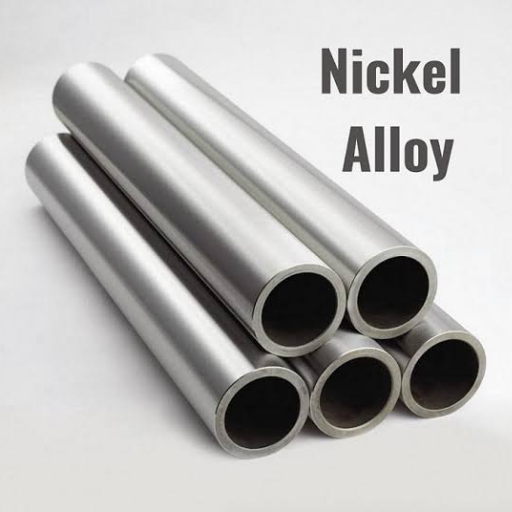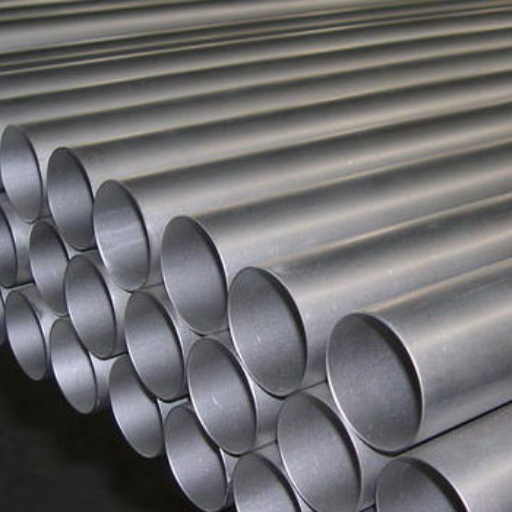
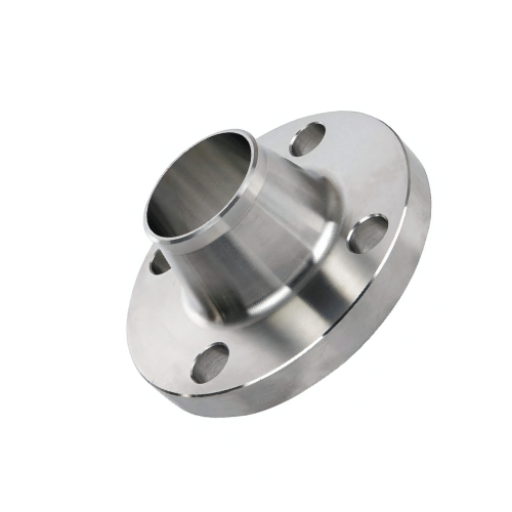
Inconel 625 flanges are nickel-alloy forgings specified to ASTM B564 and dimensioned and rated to ASME B16.5 or B16.47. They are chosen for chloride, seawater, sour-service and high-temperature piping where 316L and duplex stainless steel run out of margin.
If you have built a material take-off, you know the pattern. The pipe is written to ASTM B444 Grade 2, with a heat number and a full mill test report. The flange is written as “625, B16.5, Class 300.” That line item looks complete. It isn’t.
This guide turns it into a purchase order and a receiving check: the standards to cite, the grade decision, flange type and face, pressure-temperature ratings, forging route, sour-service limits, verification and pricing.
If your flange schedule already exists, send it to our technical team with size, class, face, grade and condition, and service temperature and medium. We will review it against the applicable standards and reply within 24 hours, including a plain answer if the item is outside our range.
Key Takeaways
- A 625 flange needs two standards on the purchase order: ASTM B564 for chemistry, heat treatment and mechanicals, and ASME B16.5/B16.47 for dimensions and rating.
- Grade 1 is not interchangeable with Grade 2. Grade 1 serves corrosion duty to about 593 °C; Grade 2, solution annealed at 1093 °C minimum, is for creep service above that. Grade 1 minimum properties also drop in sections over 100 mm.
- Not every “625 flange” is a forging. Plate-cut parts fall under ASTM B443 and bar-cut parts under B446. If the order says B564, a plate-cut flange does not match the order.
- “Class 300” is a pressure-temperature rating, not 300 psi. The allowable pressure depends on the material group and design temperature in the current B16.5 tables.
- 2026 solid 625 flanges run roughly USD 56–99/kg, about 5–10× the cost of 316L. Lead time is typically 6–14 weeks, and a quote below the raw-material floor is a grade-substitution signal.
What Is an Inconel 625 Flange?
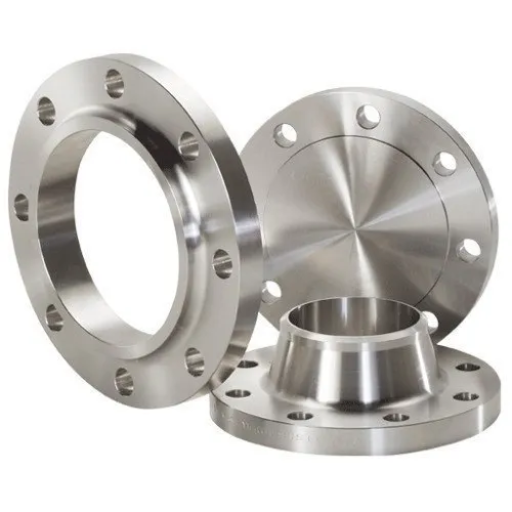
An Inconel 625 flange is a pressure-retaining pipe connection forged from nickel-chromium-molybdenum alloy UNS N06625 and specified to ASTM B564 for material and ASME B16.5 or B16.47 for dimensions and pressure rating.
Alloy 625 flanges and UNS N06625 flanges are the same product under its trade name and unified numbering designation. Suppliers also use W.Nr. 2.4856 and NiCr22Mo9Nb.
The chemistry is nickel 58% minimum, chromium 20–23%, molybdenum 8–10%, and niobium plus tantalum 3.15–4.15%. That gives a pitting resistance equivalent number (PREN) of roughly 48–51, against about 40 for super duplex 2507 and 24 for 316L, which is why 625 is specified for seawater and severe chloride service. For independent property data, see Langley Alloys; for the full material picture, see our complete Inconel 625 pipe guide.
The Standards That Actually Cover Inconel 625 Flanges
ASTM B564 is the material specification for nickel alloy forgings: chemistry, heat treatment, mechanical properties and testing. ASME B16.5 is the dimensional and rating specification: shape, facing, bolt circle, thickness and pressure-temperature tables. A purchase order citing one alone is incomplete.
Write both, with editions. The current material editions are ASTM B564-25 and ASTM B366/B366M-25, both published in November 2025. Confirm your project’s B16.5 edition before release.
The standard follows the manufacturing route, not the alloy name. A 625 flange ordered as an ASTM B564 flange is a forging.
| Product form | Material standard | Dimensional / rating standard |
|---|---|---|
| Forged flanges (WN, SO, blind, lap joint, SW, threaded, long WN, reducing) | ASTM B564 | ASME B16.5 (NPS ½–24); ASME B16.47 Series A/B (NPS 26–60); MSS SP-44 |
| Orifice flanges | ASTM B564 | ASME B16.36 |
| Line blanks and spectacle blinds | ASTM B564, or plate to B443 by agreement | ASME B16.48 |
| Wrought butt-weld fittings (elbows, tees, reducers, caps, stub ends) | ASTM B366/B366M, grade WP N06625 | ASME B16.9; MSS SP-43, SP-95, SP-97 |
| Forged socket-weld and threaded fittings | ASTM B564 | ASME B16.11 |
| Flanges machined from plate or bar | ASTM B443 (plate) / B446 (bar) | B16.5/B16.47 only where the project permits |
| Compact flanges (offshore) | Project material specification, often a B564 forging | NORSOK L-005, not ASME B16.5 |
ASTM B462 appears next to 625 in supplier literature, but the edition reviewed here does not list UNS N06625 in its scope. Ask for the edition and scope page before accepting a B462 certificate; for 625 forgings, B564 is correct.
ASTM B366/B366M covers wrought elbows, tees, reducers, caps and stub ends in grade WP N06625, with commonly cited minima of 414 MPa yield, 827 MPa tensile and 30% elongation. Classes S, W, WX and WU describe construction and NDE, not pressure class. B366 doesn’t cover cast fittings and doesn’t require a hydro test unless the order adds it. For the wider standards landscape, see our guide to nickel alloy pipe standards.
Grade 1 vs Grade 2: What to Order
Grade 1 and Grade 2 are heat-treatment conditions, not quality tiers. Choosing the wrong one produces a flange that passes every room-temperature test and still fails the design intent.
Grade 1 is annealed at 871 °C (1600 °F) minimum for corrosion service up to roughly 593 °C, and carries the higher strength. Grade 2 is solution annealed at 1093 °C (2000 °F) minimum for creep and rupture resistance above that temperature. Its room-temperature strength is deliberately lower because the higher anneal produces a coarser, more stable microstructure. An optional stabilization anneal at 982 °C may be applied.
At 600 °C in a corrosive stream, specify Grade 2. At 200 °C in seawater, Grade 1 is usually the better choice.
In Grade 1, the required minimum properties fall as the section size rises.
| Grade and condition | Min. heat treatment | Yield min. | Tensile min. | Elongation min. |
|---|---|---|---|---|
| Grade 1, section ≤100 mm (4 in.) | 871 °C annealed | 414 MPa (60 ksi) | 827 MPa (120 ksi) | 30% |
| Grade 1, section >100–254 mm (>4–10 in.) | 871 °C annealed | 345 MPa (50 ksi) | 758 MPa (110 ksi) | 25% |
| Grade 2, all sizes | 1093 °C solution annealed | 276 MPa (40 ksi) | 690 MPa (100 ksi) | 30% |
A 2-inch and a 12-inch Grade 1 flange are not the same material on paper. Grade 2 is uniform across sizes, but lower at room temperature.
Do not default to Grade 2 as a “premium” option. Below 593 °C, you give up room-temperature strength for stability you may never use. Grade 1 can be converted to Grade 2 by the additional anneal; the reverse is not practical. Order the condition you need.
Consider Daniel, a plant engineer replacing flanges on a high-temperature line. The schedule said “Inconel 625, Grade 1” because Grade 1 had been described as the stronger condition. At 650 °C, the flange sat outside Grade 1’s intended range. The correct callout was Grade 2. The room-temperature MTR looked excellent. The design basis did not.
Inconel 625 Flanges: Types, Faces, and Pressure Ratings
Type and face are joint-design decisions that never show up in a chemistry certificate.
| Type | When to specify | Practical note |
|---|---|---|
| Weld neck (WN) | High pressure, high temperature, cyclic or severe service | Butt-weld hub, bevel per ASME B16.25; best fatigue life and NDE access |
| Slip-on (SO) | Lower pressure and temperature, cost-sensitive | Fillet welds both sides; weaker fatigue performance |
| Blind (BL) | Line closures, isolation, future tie-ins | Often the largest forging in the package |
| Lap joint (LJ) | Frequent dismantling, bolt-hole alignment, large sizes | Requires a stub end; the flange can rotate |
| Socket weld (SW) | Small bore, high pressure | Typically NPS 4 and below; dimensions per B16.11 |
| Threaded (THD) | Small bore, utility service, no welding | Thread engagement and sealant are critical |
| Orifice (ORF) | Flow measurement | ASME B16.36; often supplied as a pair with jack screws |
| Long weld neck (LWN) | Subsea, insulated lines, high-moment service | Extended neck for clamps or insulation |
The 625 weld neck flange is the severe-service default: the butt weld can be radiographed and the hub transitions load smoothly. An Inconel 625 blind flange is common at isolation points. The slip-on suits modest rating, temperature and cyclic duty.
A raised face (RF) or flat face (FF) flange generally requires 125–250 µin AARH (3.2–6.3 µm Ra). An RTJ groove requires 63 µin (1.6 µm Ra) maximum. The groove is a sealing surface, not a clearance feature: one that is dimensionally correct but torn or chattered will leak regardless of ring hardness. Specifications often require the ring to be 30–40 HB softer than the groove, so it deforms and seals instead of galling. Galling is a real 625 risk on threads and sealing surfaces.
“Class 300” is a pressure-temperature rating, not a working pressure of 300 psi. ASME B16.5 assigns each material to a material group and publishes allowable pressure at each temperature. Read the group and value from the current edition for the exact alloy and form. Don’t infer a 625 rating from a generic class table, or accept a verbal “it’s good for 300.” A carbon steel Group 1.1 Class 150 flange, for comparison, falls from about 285 psi at 100 °F to 170 psi at 400 °F. Those are not 625 values.
Forged, Ring-Rolled, or Plate-Cut?
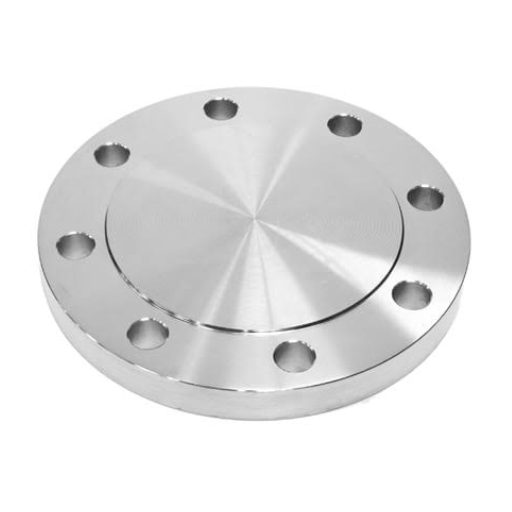
A 625 flange can be open-die forged, closed-die forged, ring rolled, or machined from plate or bar. Ring rolling develops circumferential grain flow favorable to large weld-neck and blind flanges; forged parts are generally sounder than plate-cut parts.
Picture Rania, a materials coordinator on a Gulf project. Her order called for Class 300 weld-neck flanges to ASTM B564. The delivered flanges were dimensionally perfect and the chemistry certificate matched 625. They had been machined from plate, not forged. The specification had not prohibited plate, so there were no contractual grounds to reject the lot. The project inherited a through-thickness and laminar-quality risk it never intended.
A flange machined from plate is an ASTM B443 product; one machined from bar is ASTM B446, even when the chemistry is identical. If the order says B564 and the mill supplies a plate-cut flange, the certificate and the product do not match. Plate brings laminar inclusions, uncertain through-thickness properties, and a risk that its ultrasonic quality was never intended for a pressure-containing part. Many specifications prohibit plate-cut flanges above a defined class or size, or require UT and a plate-specific approval.
Machining 625 is also harder than stainless. The alloy work-hardens rapidly, demands carbide tooling and slower speeds, and is prone to built-up edge and galling. That is why lead times and machining costs exceed stainless, not because the material is unavailable.
Corrosion, Sour Service, and Offshore Options
With a PREN of roughly 48–51, 625 handles chloride and seawater exposure that would pit 316L and stress super duplex. Rates in quiet seawater are commonly cited below about 0.025 mm/yr. Crevice conditions, deposits and galvanic couples still need design attention; a high PREN doesn’t excuse poor drainage. For where 2205 and 2507 remain the economical choice, see our duplex stainless steel fittings guide.
625 is listed for sour service under NACE MR0175 / ISO 15156-3, but the listing is conditional. Commonly cited limits include a maximum supply hardness of 35 HRC, restrictions on cold work, and application-specific temperature and chloride limits. Don’t accept “NACE approved” as a standalone phrase. Ask for the MTR hardness, condition of supply, cold-work history, and the clause relied on.
Offshore projects often use two alternatives. Compact flanges, usually to NORSOK L-005, use a metal IX seal ring and are commonly cited at 70–80% weight and space savings versus ANSI flanges. A 625 compact flange is a solid forging, but its rules come from NORSOK, not B16.5.
Weld-overlay flanges use a carbon or low-alloy body with a 625 overlay on the wetted surfaces and, critically, the RTJ groove. Typical requirements include ERNiCrMo-3 filler, a finished overlay around 3.0 mm, iron of 10% or less, ASME IX qualification, PT and PMI, and a 30–40 HB differential against the ring. Verify every value against the project specification. Solid 625 suits small and medium flanges and specifications that prohibit overlay; overlay wins on very large subsea and wellhead flanges where solid 625 would be cost- and schedule-prohibitive. See our Inconel 625 welding guide.
Where 316L, super duplex or an overlay flange meets the service envelope, specify it. A 625 flange that isn’t required is a cost, not a safeguard.
Inconel 625 Flanges: Verification, Price, and Buying Checklist
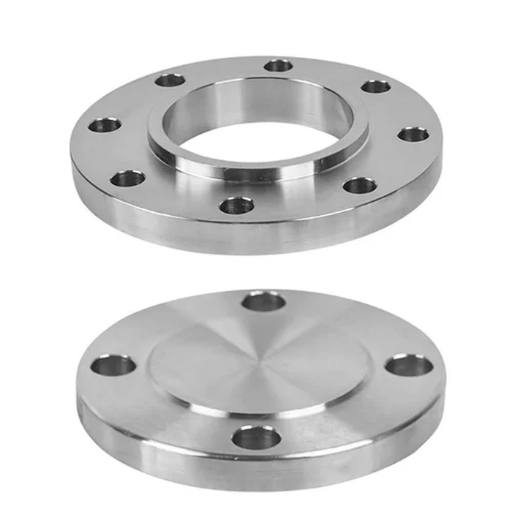
The dimensional report is not a quality report. It tells you the flange is the right shape, not that the alloy is 625, the condition is correct, or the sealing face will hold.
Mei, a QA/QC inspector, once accepted an RTJ flange that met every dimensional tolerance. The groove looked bright and clean. Under magnification it carried chatter marks that a profilometer would have caught and the eye would not. The ring never seated. The failure was not the alloy. It was the one feature the dimensional report did not describe.
Require an EN 10204 3.1 certificate as a minimum, and 3.2 where independent verification is specified. The MTR should show the heat number, chemistry against B564 limits, tensile and yield results, elongation, heat-treatment condition and temperature, hardness, any NDE, and the product form. Check that the certificate heat number matches the flange stamp, and that grade and condition match the order.
At receipt:
- PMI every heat by XRF or OES, and confirm molybdenum and niobium, not just nickel and chromium.
- Trace the heat number from the stamp to the MTR and packing list, and confirm the marking shows grade, standard, size, class, face and heat number.
- Verify grade and condition, including the heat-treatment temperature.
- Check the sealing face: RTJ profile and 63 µin finish, or RF/FF serration and 125–250 AARH.
- Review UT or PT results where specified.
Third-party inspection should be welcomed. A supplier who supports TPI, shares a sample MTR and explains the QC sequence offers better evidence than any catalogue claim.
| Item | Indicative 2026 range |
|---|---|
| Solid 625 flange, per kg | USD 56–99/kg |
| Class 150 LWN, 2 in. | 625: USD 320–410; 316L: USD 55–72 |
| Class 150 LWN, 4 in. | 625: USD 780–950; 316L: USD 115–145 |
| Class 150 LWN, 8 in. | 625: USD 1,800–2,200; 316L: USD 340–420 |
| Relative material cost | 5–10× 316L |
| Lead time | 6–14 weeks; 12–24 weeks for B366 fittings |
These are indicative bands, not quotations. Flange price per kilogram exceeds pipe price per kilogram because of forging yield loss, machining allowance, scrap, testing and lower volume. Quotes should be validity-dated, typically 7–30 days.
Treat an implausibly low quote as a question, not a bargain. Listings near 55 CNY/kg (about USD 8/kg) sit below the raw-material floor, which usually signals a mislabeled grade or a different product. For the full cost model, see our Inconel 625 price per kg analysis.
- Product form and flange type: WN, SO, blind, lap joint, SW, threaded, orifice, or long WN.
- Grade and condition: Grade 1 annealed or Grade 2 solution annealed, with the service temperature stated.
- Material standard and edition: ASTM B564-25 for forgings, B366/B366M-25 for wrought fittings.
- Dimensional standard, class and face: ASME B16.5 or B16.47, Class 150–2500, RF, FF or RTJ.
- Size and bore schedule, including the pipe schedule the weld end must match.
- Forging route: forged or ring-rolled; plate only if the specification permits it.
- NDE and documentation: EN 10204 3.1 or 3.2, UT or PT, PMI and TPI support.
- Marking and traceability: grade, standard, size, class, face, heat number, and manufacturer.
Inconel 625 Flanges: Frequently Asked Questions
What is an Inconel 625 flange?
It is a pipe connection forged from nickel-chromium-molybdenum alloy UNS N06625 to ASTM B564, dimensioned and rated to ASME B16.5 or B16.47, and used in chloride, seawater, sour and high-temperature service.
What is the difference between Grade 1 and Grade 2?
Grade 1 is annealed at 871 °C minimum for corrosion service to about 593 °C and higher room-temperature strength. Grade 2 is solution annealed at 1093 °C minimum for creep service above that temperature, with lower room-temperature strength.
What is the pressure rating of an Inconel 625 flange?
The rating comes from the ASME B16.5 pressure-temperature tables for the applicable material group, class and design temperature. “Class 300” is not 300 psi. Read the allowable pressure from the current edition.
Are Inconel 625 flanges NACE MR0175 compliant?
625 is listed for sour service under NACE MR0175 / ISO 15156-3, subject to conditions that commonly include a maximum supply hardness of 35 HRC and restrictions on cold work and service temperature. Require the hardness value on the MTR.
How much does an Inconel 625 flange cost?
In 2026, solid 625 flanges run roughly USD 56–99/kg, about 5–10× the cost of 316L. A Class 150 long weld neck 2-inch flange is typically USD 320–410, and an 8-inch is USD 1,800–2,200.
Conclusion
Inconel 625 flanges are joints, not accessories. Every leak path in a flanged connection passes through one machined face and one heat of alloy.
Specify it with two standards: ASTM B564 for the forging and ASME B16.5 or B16.47 for the shape and rating. Order the grade and condition your design temperature requires, remembering that Grade 1 properties fall in sections over 100 mm and that Grade 2 is a high-temperature trade rather than an upgrade. Confirm the forging route, sealing-face finish and MTR fields before release, then verify the delivery. A dimensional report won’t tell you whether the alloy is right.
If you are building a 625 flange and fitting package, send us the schedule: size, class, face, grade and condition, quantity, and service temperature and medium. Our technical team will review it against the current standards and respond within 24 hours with a documented quotation, or tell you directly if the item is outside our range. Start with our nickel alloy pipe guide or contact our technical team.