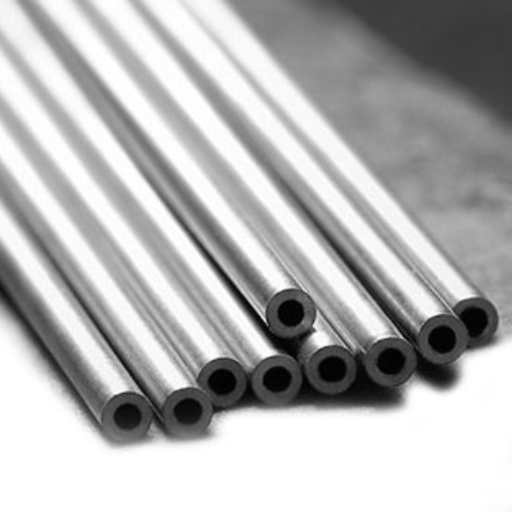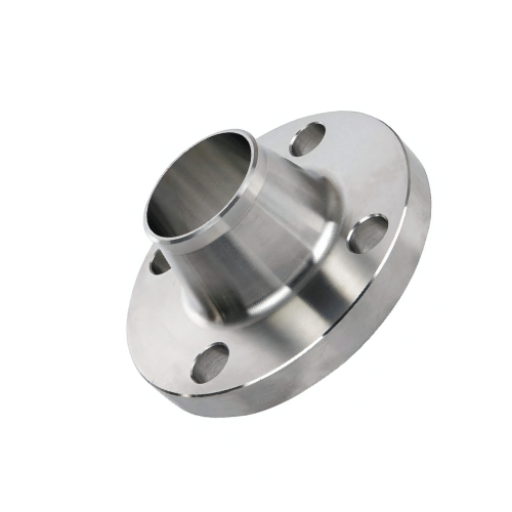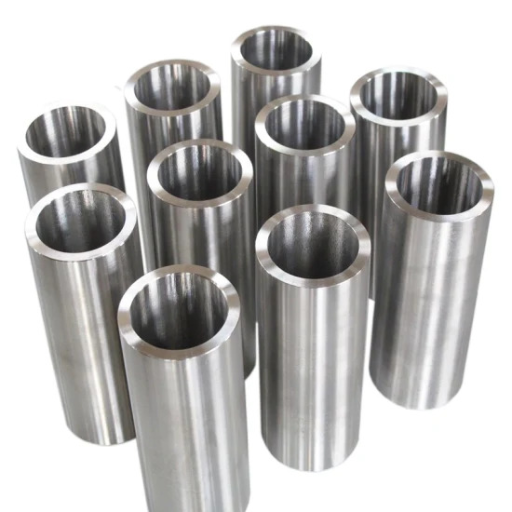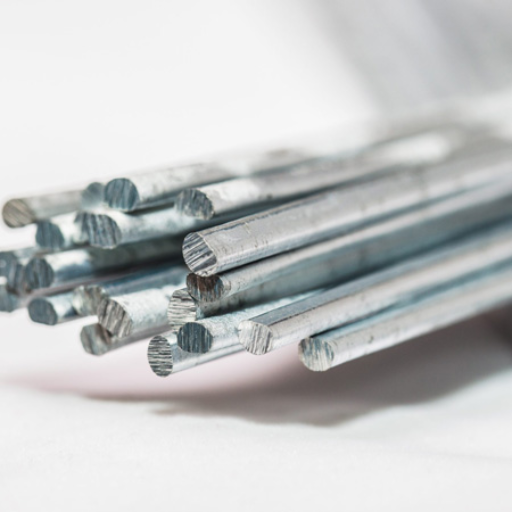
Inconel 625 (UNS N06625) is a nickel-chromium-molybdenum-niobium alloy with roughly 58–61% nickel, a PREN of 48–51 and an oxidation ceiling near 980 °C. Incoloy 825 (UNS N08825) is a nickel-iron-chromium alloy with 38–46% nickel plus copper and titanium, a PREN of about 31 and a continuous service ceiling near 540 °C. Inconel 625 costs roughly twice as much per kilogram, and in dilute-to-intermediate sulfuric acid the cheaper grade is often the better performer.
That last clause runs against what the price implies. The default assumption is that the premium grade is the safer grade. In 825’s home medium, it isn’t.
Both are solid-solution austenitic nickel alloys, neither is hardened by heat treatment, and both are specified for the same problem: a process stream that eats stainless steel. So on the Inconel 625 vs 825 question, this isn’t a quality comparison. It’s a price-tier decision inside one alloy family, set by three elements. Full specifications sit in our Inconel 625 pipe guide and the Incoloy 825 pipe guide.
Have two quotes in front of you? Send us the medium, concentration, temperature and flow velocity. Our technical team will confirm which grade is correct, or that a duplex grade does the job for less, within 24 hours.
Key Takeaways
- Chromium is nearly identical in both alloys (20–23% vs 19.5–23.5%). The price gap doesn’t buy more chromium. It buys nickel, molybdenum and niobium.
- 825 isn’t a cheaper 625. Its copper addition makes it the stronger choice in dilute-to-intermediate sulfuric and phosphoric acid, where 625’s corrosion rate climbs steeply with concentration.
- B444 and B423 are different documents and can’t be confused. But both grades share one welded-pipe specification, ASTM B705, so “B705” on a purchase order doesn’t identify the alloy.
- 825 is welded with a 625-type filler (ERNiCrMo-3) in most service, so an 825 system carries two material certificates, not one.
- Neither grade is correct above roughly 70% sulfuric acid or in wet chlorine. That is Hastelloy C-276 territory.
Inconel 625 vs Incoloy 825 at a Glance
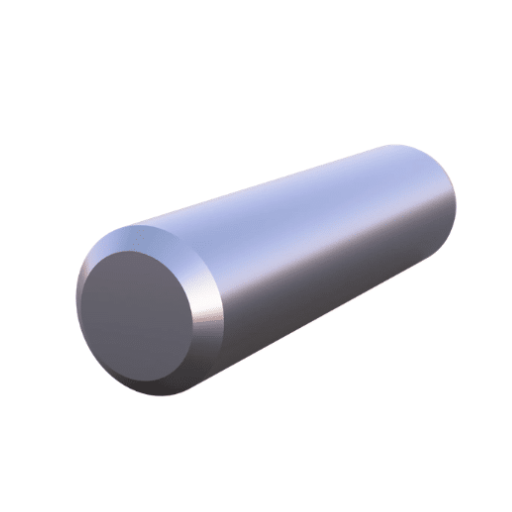
The short answer: 625 is the chloride, seawater, high-temperature and high-severity alloy; 825 is the sulfuric and phosphoric acid alloy at roughly half the price.
One naming point first. There is no such material as “Inconel 825.” Incoloy 825 carries 38–46% nickel, below the roughly 50% line separating the Incoloy family from the Inconel family, which is the same boundary that separates the Inconel and Incoloy families. If you searched for Inconel 825, you want Incoloy 825, UNS N08825, W.Nr. 2.4858. The reversed phrase Incoloy 825 vs Inconel 625 describes exactly this comparison.
| Inconel 625 (N06625) | Incoloy 825 (N08825) | |
|---|---|---|
| Base chemistry | Ni-Cr-Mo-Nb; Ni ~58–61%, Fe ≤5% | Ni-Fe-Cr-Mo-Cu + Ti; Ni 38–46%, Fe ≥22% |
| Minimum yield (0.2%) | 414 MPa (Gr 1) / 276 MPa (Gr 2) | 172 MPa (hot-finished) / 241 MPa (cold-worked) |
| Minimum tensile | 827 MPa (Gr 1) / 690 MPa (Gr 2) | 517 MPa (hot-finished) / 588 MPa (cold-worked) |
| PREN | 48–51 | ≈31 |
| Service ceiling | ~980 °C oxidation limit; Grade 2 above ~593 °C | ~540 °C continuous in air |
| Signature strength | Chlorides, seawater, severe sour, high temperature | Sulfuric acid <50%, phosphoric acid, moderate sour, FGD |
| Hard limit | Not a reducing-acid specialist; rate climbs with H₂SO₄ concentration | Not for >70% H₂SO₄; crevice-limited in stagnant seawater |
| Seamless standard | ASTM B444 | ASTM B423 |
| Welded pipe standard | ASTM B705 | ASTM B705 |
| Sour service (ISO 15156-3) | Group 4, 35 HRC; severe and HPHT | Group 4, 35 HRC; mild to moderate below ~540 °C |
| Weld filler, preferred | ERNiCrMo-3 | ERNiCrMo-3 (625-type) |
| 2026 welded pipe | 35–65 USD/kg | 22–48 USD/kg |
| 2026 seamless pipe | 50–90 USD/kg | 29–58 USD/kg |
| Raw-material floor | ≈17–19 USD/kg | ≈10–11 USD/kg |
Every mechanical figure is an ASTM minimum, not a typical. Supplier pages routinely quote 825 typical yield at 240–310 MPa against a B423 minimum of 172 MPa, then set it beside a 625 minimum. Read the column heading before comparing.
The Chemistry Behind the Price Gap
Here is the sentence worth remembering: chromium is nearly identical in both alloys. 625 runs 20.0–23.0%; 825 runs 19.5–23.5%. If you assumed the dearer alloy carries more chromium, you were wrong, and most comparison pages imply it.
| Driver | Inconel 625 | Incoloy 825 | Consequence |
|---|---|---|---|
| Nickel | ~58–61% | 38–46% | Governs chloride SCC resistance. 625 clears the practical immunity line; 825’s range straddles it. |
| Molybdenum | 8.0–10.0% | 2.5–3.5% | Drives pitting and crevice resistance, and therefore PREN. |
| Iron | ≤5.0% | ≥22% (balance) | The cost lever, and it dilutes the nickel effect. |
| Niobium + tantalum | 3.15–4.15% | none added | Solid-solution strengthening; why 625 holds strength toward 980 °C. |
| Copper | none added | 1.5–3.0% | The reason 825 wins reducing acids. |
| Titanium | ≤0.40% (residual) | 0.6–1.2% | 825’s stabilizer against sensitization after welding. |
You are paying for nickel, molybdenum, and niobium, the elements that decide chloride and high-temperature performance. Iron does the opposite job: it makes 825 affordable and it limits it.
Above roughly 45% nickel, austenitic nickel alloys are generally treated as immune to chloride stress corrosion cracking, a relationship the Nickel Institute documents across the nickel-alloy family. 625 clears that line without argument. Incoloy 825’s specification permits 38–46%, which straddles it: material at the bottom of the range is measurably less chloride-resistant than material at the top, and both are fully compliant with ASTM B423. That isn’t an accusation against any supplier. It’s why the mill test report matters more than the datasheet for this grade.
PREN, and what it does not tell you
PREN = %Cr + 3.3(%Mo) + 16(%N)
At chromium 21.5% and molybdenum 3.0%, with negligible nitrogen, Incoloy 825 lands at 21.5 + 3.3(3.0) ≈ 31.4. Inconel 625 lands at 48–51. For scale: 316L near 24, super duplex 2507 near 43, Hastelloy C-276 near 69.
PREN is a useful index and a poor screening test. A buyer who screens on PREN alone concludes that 825 is inadequate, over-buys 625, and pays twice as much for a worse result. PREN measures pitting resistance in chloride-bearing oxidizing conditions; it says nothing about reducing acids, which is exactly where 825 wins.
ASTM B444 vs B423 vs B705: Where the Standards Overlap
This is the least-discussed and most commercially consequential difference between the two grades, and it has nothing to do with metallurgy.
| Form | Inconel 625 (N06625) | Incoloy 825 (N08825) | Same document? |
|---|---|---|---|
| Seamless pipe and tube | ASTM B444 | ASTM B423 | Different |
| Welded pipe | ASTM B705 | ASTM B705 | The same specification |
| Welded tube | ASTM B704 | ASTM B704 | The same specification |
| Seamless heat-exchanger tube | ASTM B444 | ASTM B163 | Different |
ASTM B705 is titled Standard Specification for Nickel-Alloy (UNS N06625, N06219 and N08825) Welded Pipe. One document, three alloys, two of which are the subjects of this page. The full set is listed in the nickel alloy pipe standards index; the scope paragraphs are published by ASTM International.
Why this matters on a purchase order
A welded-pipe line item reading “ASTM B705, Schedule 40S, 6 inch, 240 m” has specified a standard. It hasn’t specified an alloy. B705 is satisfied by either grade, and the price difference between them is roughly a factor of two.
A maintenance engineer at a chemical plant in Rotterdam reordered spools after a turnaround using the line list inherited from the previous project. It said B705 and nothing else. Two compliant bids came back at prices nearly a factor of two apart. Nothing on the paperwork was wrong. The specification was simply silent on the only variable that mattered.
The fix is one line: write the UNS number, not just the standard. “ASTM B705, UNS N08825, Schedule 40S, 6 in, welded, ERNiCrMo-3 filler, MTR to EN 10204 3.1” can’t be substituted. “ASTM B705” can. This is a welded-pipe risk, not a universal one: B444 and B423 are separate documents, so on the seamless side the standard number already identifies the grade.
Strength and Temperature: Two Different Kinds of Ceiling
Inconel 625 is stronger in every condition: 414 MPa minimum yield against 825’s 172 MPa hot-finished or 241 MPa cold-worked. Even Grade 2, 625’s lower-strength condition, exceeds 825’s best.
825’s figure depends on which B423 condition you buy; a single “825 yield strength” number is meaningless without its condition. The same logic governs 625’s Grade 1 versus Grade 2 choice.
540 °C and 980 °C are not the same kind of number
Inconel 825’s ceiling near 540 °C is a continuous-service oxidation and creep limit in air. Above it, useful life shortens in a way no corrosion allowance recovers.
Inconel 625’s figure near 980 °C is an oxidation limit: how hot the alloy can sit in air before its protective oxide film breaks down. It isn’t a load-bearing rating, and 625’s stress-carrying capacity falls away well below it.
One is a service limit, one is a surface-stability limit. A designer who treats them as interchangeable will either over-specify 625 for a 500 °C duty or assume 825 holds 700 °C because “625 goes to 980.” At moderate pressure, the strength gap starts to cost too: 825’s allowable stress of 114 MPa hot-finished is set by its 172 MPa yield, so a line that 625 carries at a lighter wall may need one or two schedule steps in 825.
Corrosion: Where Each Grade Wins, and Where Neither Does
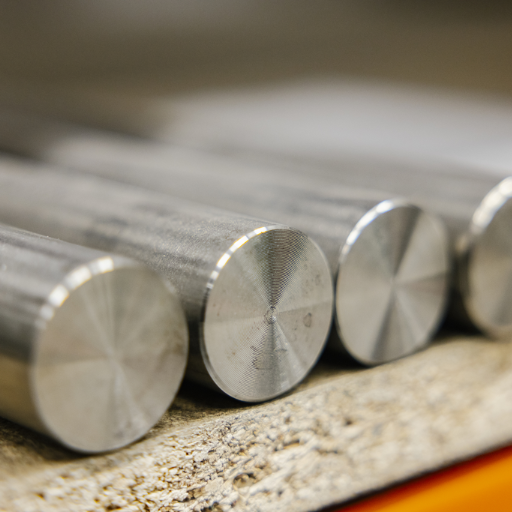
Sulfuric acid: 825’s home ground
Incoloy 825 was developed for sulfuric acid service. Its copper addition, 1.5–3.0%, is what makes it work in reducing acid environments, and 625 contains no copper at all. In dilute to intermediate concentrations, 825 performs at least as well as 625 at roughly half the price.
Inconel 625’s performance degrades as concentration rises. A published Alloy 625 datasheet gives corrosion rates of roughly 0.19 mm/yr at 15% H₂SO₄, 0.43 mm/yr at 50%, and 0.71 mm/yr at 60%. Read those as a trend line, not a design value: rate depends on temperature, aeration and velocity, and a datasheet figure without those conditions can’t set a corrosion allowance. The direction of the curve is the point.
Above roughly 70%, both grades give way. That is Hastelloy C-276 territory, and Hastelloy C-276 for concentrated acid and wet chlorine is the honest answer rather than either alloy here.
Phosphoric acid: 825’s clearest win
Wet-process phosphoric acid carries fluoride, sulfate and chloride contamination simultaneously, and it’s aggressive to most austenitic alloys. The copper-molybdenum combination in 825 handles it, which is why 825 is a standard material in phosphoric acid plants. This is 825’s strongest single application.
Chlorides and seawater: 625’s territory, and 825’s real limit
Inconel 625 is correct here: PREN 48–51, corrosion rates below 0.025 mm/yr in seawater, and practical immunity to chloride stress corrosion cracking.
Incoloy 825 performs acceptably in flowing seawater but is crevice-corrosion limited in stagnant conditions. Typical ASTM G48 Method A values put its critical pitting temperature near 25–30 °C and its critical crevice temperature near 5–15 °C. A seawater system with stagnant low points, gasketed joints or deposits isn’t an 825 system.
A marine engineer specifying a firewater main learned this the expensive way. The flowing sections performed exactly as predicted. The dead legs didn’t, and the first inspection found crevice attack at every flanged joint that had sat wet and idle.
Sour service, and where neither grade is correct
Under NACE MR0175 / ISO 15156-3, both grades sit in Group 4 and are commonly supplied at 35 HRC maximum. Qualification is table-dependent, not absolute, and the envelope differs: 825 covers mild to moderate sour duty below about 540 °C, while 625 covers severe and HPHT service. Where an 825 component contacts a 625 component, a hardness differential of about 40 HB is required, the same rule set out in our oil and gas nickel alloy guide.
There’s a cheaper error worth flagging too: where the duty is chloride-bearing but involves no acid and sits inside the duplex envelope, super duplex 2507 is correct and costs less than either alloy here. Super duplex S32750 corrosion performance covers that boundary, and it’s the family’s most common over-specification.
Welding: One Filler Metal, Two Base Metals
The preferred filler for Incoloy 825 is a 625-type consumable: ERNiCrMo-3 for GTAW and GMAW, or ENiCrMo-3 for SMAW. The same filler is the standard choice for Inconel 625.
This is deliberate. The filler is over-alloyed relative to the 825 base metal so that dilution during welding still leaves weld metal at least as corrosion-resistant as the parent. A matching ERNiFeCr-1 filler exists for 825 but isn’t preferred where pitting or stress corrosion cracking is the design case.
Parameters differ modestly. 625 runs at heat input below 1.2 kJ/mm, interpass below 100 °C, stringer bead. 825 tolerates interpass up to 150 °C, tightened to 100 °C for aggressive acid service, and needs no post-weld heat treatment because the titanium stabilizes it against sensitization.
Two procurement consequences follow. First, an 825 pipe system usually contains 625 weld metal, so the joint’s corrosion performance isn’t 825’s; where ERNiCrMo-3 is limited to about 500 °C in sulfur atmospheres, that limit applies to the joint even though the pipe is rated higher. Second, there are two material certificates, not one: the consumable’s MTR is separate and must be requested explicitly.
Cost: The Arithmetic Behind the Price Gap
Both alloys are priced off their alloy content, so the gap can be checked rather than accepted. From the composition and current raw-material pricing, the floor cost of the metal in the pipe comes to roughly 17–19 USD/kg for 625 and 10–11 USD/kg for 825. That’s the arithmetic behind “roughly double,” and it’s auditable from the chemistry table above: more nickel, three times the molybdenum, and niobium instead of iron.
| Inconel 625 | Incoloy 825 | |
|---|---|---|
| 2026 welded pipe, indicative | 35–65 USD/kg | 22–48 USD/kg |
| 2026 seamless pipe, indicative | 50–90 USD/kg | 29–58 USD/kg |
| Heavy-wall seamless | on application | 40–78 USD/kg |
| Raw-material floor | ≈17–19 USD/kg | ≈10–11 USD/kg |
| Relative to 316L | ~12–20× | ~7–12× |
Every band is indicative and undated. Nickel alloy pricing moves with the nickel price and with mill order books, so a figure in a blog post is a starting point for a conversation, not a quotation. Ask for a validity-dated quote.
On nickel exposure: 825 carries about 42% nickel, so a 1,000/tmoveinthenickelpricefeedsthroughatroughly∗∗1,000/tmoveinthenickelpricefeedsthroughatroughly∗∗0.42/kg** of 825 pipe. 625 carries around 60% nickel and has correspondingly greater exposure. Where the climb from stainless steel upward matters, when to upgrade from stainless steel to nickel alloy sets out that comparison.
The over-specification trap, in both directions
The common error is buying 625 for an acid duty 825 handles at half the price. That error is visible in the budget and invisible in the plant, because the over-specified alloy works. The rarer error runs the other way and costs far more: buying 825 for a chloride or temperature duty it can’t hold. That one is invisible in the budget and visible at the first inspection.
For either grade, ask for the mill test report with heat number, chemical analysis including nickel and molybdenum, mechanical properties with the condition stated, and the heat treatment record. EN 10204 3.1 is the normal requirement; 3.2 where a third-party witness is specified. For 825 specifically, check the carbon figure: ASTM B423 permits C ≤0.05%, and some domestic specifications tighten it considerably. Positive material identification then separates the two grades in seconds, since the molybdenum and copper signature distinguishes 625, 825 and 316L on a hand-held XRF or OES unit.
Which Should You Choose: Inconel 625 vs Incoloy 825
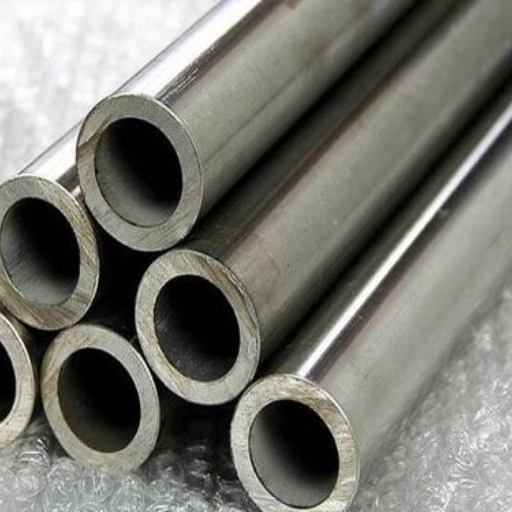
| Choose Incoloy 825 if… | Choose Inconel 625 if… | Choose neither if… |
|---|---|---|
| The medium is sulfuric acid below ~50% | Chloride concentration or temperature exceeds 825’s envelope | Sulfuric acid above ~70%, or wet chlorine: use C-276 |
| The medium is phosphoric acid, including wet-process | Sour service is severe or HPHT | Chloride-only duty inside the duplex envelope: use 2507 |
| Duty is moderate sour service below ~540 °C | Service temperature exceeds ~540 °C | The duty is mild aqueous at ambient: 316L or duplex will do |
| Seawater is flowing, with no stagnant low points | Seawater service includes stagnant or crevice-prone geometry | Strength, not corrosion, is the driver: use a precipitation-hardened alloy |
| Strength requirement is low and pressure modest | Strength requirement is high, or allowable stress drives wall thickness | Cost is binding and 825 already passes: keep 825 |
The pattern is that 825 answers a medium and 625 answers an envelope. If you can name the medium precisely, including concentration, temperature, aeration and velocity, the choice usually makes itself. If you can’t, the answer isn’t to buy the more expensive alloy. It’s to write the conditions down first.
Ready to settle the specification? Send the medium, the concentration, the operating temperature, the flow velocity and the required standard. Our technical team will confirm the grade, the form and the governing ASTM specification, and will tell you when a duplex grade does the job for less.
Frequently Asked Questions
Which is stronger, Inconel 625 or Incoloy 825?
Inconel 625, in every condition. Minimum yield is 414 MPa in Grade 1 and 276 MPa in Grade 2, against 825’s 172 MPa hot-finished and 241 MPa cold-worked. These are ASTM minimums, and 825’s figure depends on which B423 condition you purchase.
Which is more expensive, Inconel 625 or Incoloy 825?
Inconel 625, at roughly twice the price per kilogram. Indicative 2026 bands are 35–65 USD/kg welded and 50–90 USD/kg seamless for 625, against 22–48 and 29–58 for 825.
Is Inconel 625 better than Incoloy 825?
Not universally, and the framing causes real over-specification. 625 is better in chlorides, seawater, high temperature and severe sour service. 825 is better in dilute-to-intermediate sulfuric acid and in phosphoric acid, where its copper content gives equal or superior performance at roughly half the price.
Is Inconel 825 the same as Incoloy 825?
There is no Inconel 825. The alloy is Incoloy 825, UNS N08825, with 38–46% nickel, which places it below the roughly 50% nickel line separating the Incoloy family from the Inconel family.
Which is better for sulfuric acid?
Incoloy 825, in most concentrations below about 50%, and usually at lower cost. Inconel 625’s corrosion rate rises steeply with concentration, reaching roughly 0.71 mm/yr at 60% in published datasheet data. Above roughly 70%, neither grade is correct and Hastelloy C-276 is the material to specify.
Conclusion: Choose the Medium, Not the Price Tag
Inconel 625 vs Incoloy 825 comes down to five rules.
- Chromium is nearly identical, so the price gap buys nickel, molybdenum and niobium, not corrosion resistance in the abstract.
- 825 is the acid alloy. In dilute-to-intermediate sulfuric and in phosphoric acid it performs at least as well as 625 for roughly half the price.
- 625 is the chloride, temperature and severity alloy. PREN 48–51 against ≈31 is a real capability gap, and in seawater and severe sour service it’s decisive.
- B705 doesn’t identify the alloy. Write the UNS number on the purchase order, and request the filler metal certificate alongside the pipe certificate.
- Neither grade is a universal upgrade. Above roughly 70% sulfuric acid or in wet chlorine, C-276 is correct; below the duplex envelope, 2507 is cheaper and correct.
The mistake that costs most isn’t choosing the wrong alloy. It’s choosing an alloy without writing down the conditions it has to survive.
Send us your line list and the service conditions. Our technical team will confirm which grade applies, flag where a duplex grade does the job for less, and return grade, standard, form, documentation and lead time within 24 hours.