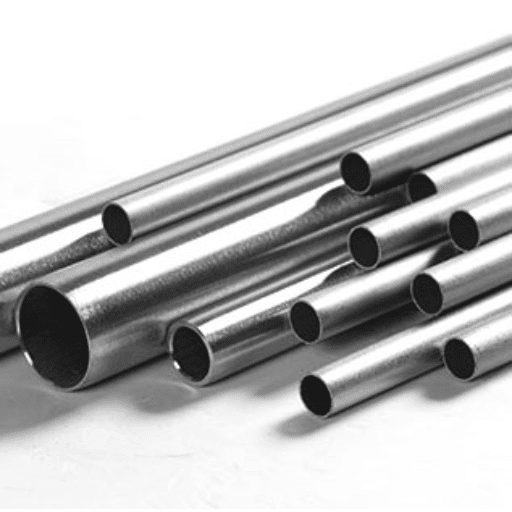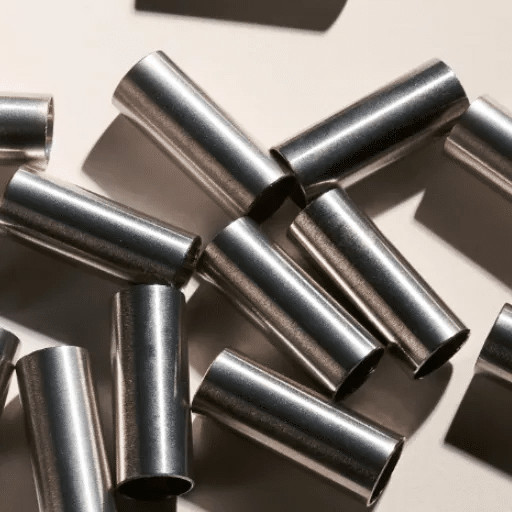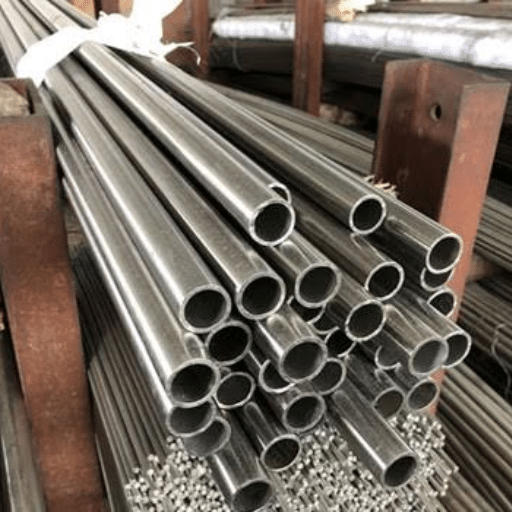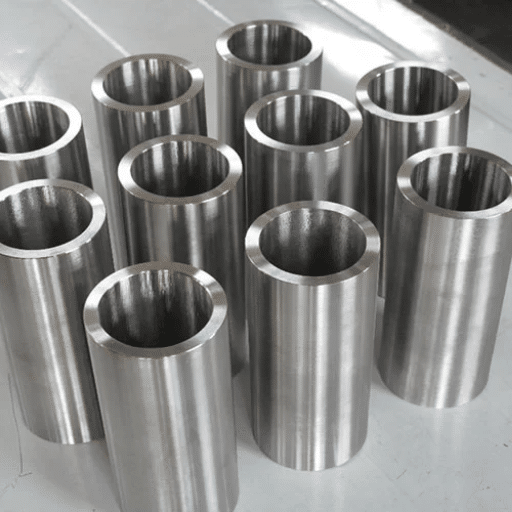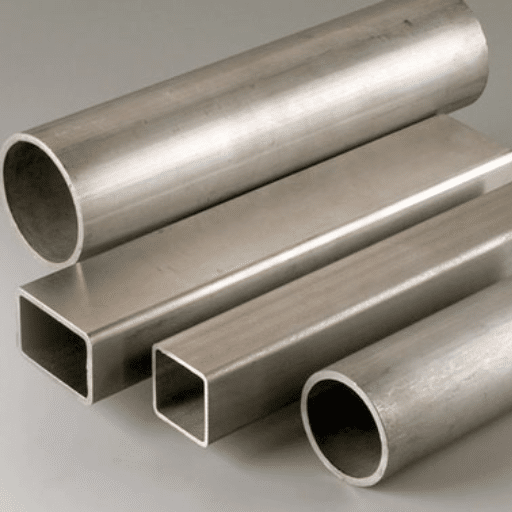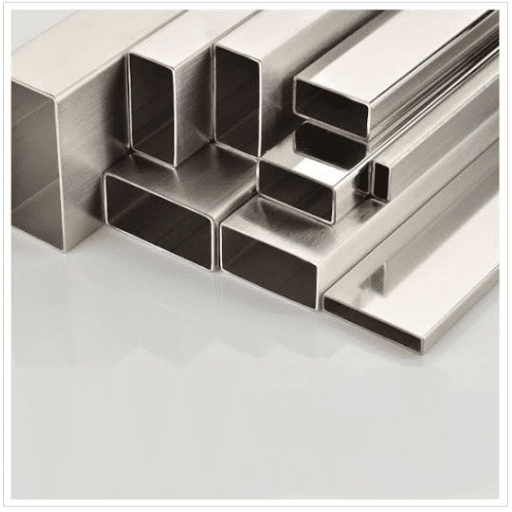
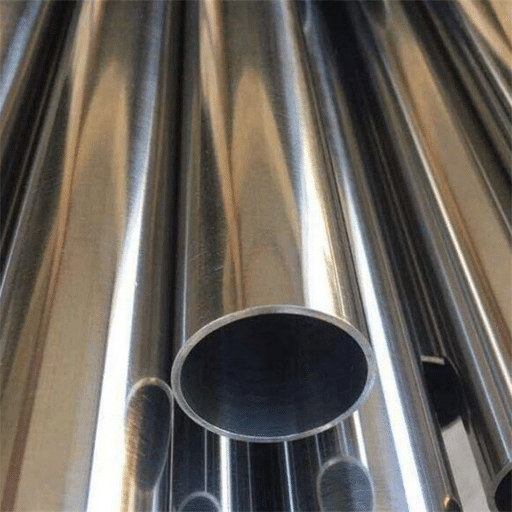
Super duplex S32750 pipe is the grade you specify when chloride concentration, H2S partial pressure, or design temperature pushes past what duplex 2205 and 316L can handle. UNS S32750, also known as Alloy 2507 or ASTM A182 Grade F53, delivers a PREN above 40 and roughly double the yield strength of 316L. That combination is why it is the default specification for offshore seawater, sour gas, and CO2 injection service. This guide covers the full procurement workflow: when to choose S32750, what to write on the spec sheet, what documentation to demand, and how to qualify a supplier so the pipe you receive matches the pipe you ordered.
Last spring, a procurement engineer at a desalination contractor in the Gulf received quotes for a brine recirculation line spec’d to super duplex S32750 pipe. Three of the four suppliers could not show a single prior heat of S32750 production. One offered duplex 2205 at a 20% discount, describing it as “basically the same material.” It is not. In brine service above 60°C, that substitution would have started pitting within five years.
You are probably reading this for one of two reasons. Either an engineer has specified super duplex S32750 pipe on your project and you need to procure it correctly, or you are evaluating whether the grade is justified before committing to a material that costs roughly three to four times 316L. Both paths converge on the same requirement: a specification that leaves nothing to interpretation, and a supplier you can verify. This guide walks through the decision, the spec, the documentation, the supplier qualification, and the cost model, in that order.
Key Takeaways
- Super duplex S32750 pipe is justified when chloride exceeds roughly 5,000 ppm, H2S partial pressure exceeds 0.05 psi, or chloride service temperature passes 121°C (250°F)
- The pipe spec must name ASTM A790 (seamless and welded) or A928 (welded with filler), a 35-55% ferrite range, and NACE MR0175 with a 32 HRC hardness cap for sour service
- A compliant S32750 MTR must show Cr 24-26%, Mo 3-5% (typically near 4%), N 0.24-0.32%, ferrite content, and solution annealing records above 1052°C
- Qualify suppliers on prior S32750 heat history, solution annealing furnace capability, and ferrite measurement equipment, not on price alone
- Zhongzheng manufactures UNS S32750 and S32760 seamless and welded pipe with full MTR, ferrite and hardness records, and third-party inspection support
When Do You Actually Need Super Duplex S32750 Pipe?

The Thresholds That Eliminate 2205
Duplex 2205 (UNS S32205) is the workhorse of the duplex family. It handles most marine and chemical service at a lower alloy cost than super duplex. S32750 exists for the conditions 2205 cannot cover. The decision comes down to a few numbers.
| Condition | 316L Holds | Duplex 2205 Holds | Super Duplex S32750 Required |
|---|---|---|---|
| Chloride concentration | up to ~1,000 ppm | up to ~5,000 ppm | above ~5,000 ppm |
| H2S partial pressure | no (SSC risk) | up to ~0.05 psi | full range, hardness ≤ 32 HRC |
| Seawater service temperature | up to ~20°C | up to ~35°C | up to ~50°C |
| Design temperature in chlorides | low | up to ~121°C (250°F) | above ~121°C (250°F) |
| Typical PREN | 24-26 | 34-36 | 40-45 |
These are engineering rules of thumb, not code tables. The exact limits depend on fluid composition, oxygen content, crevice geometry, and whether you have cathodic protection. But the pattern is consistent: as chloride rises, as H2S enters the picture, or as temperature climbs, 316L fails first, then 2205, and S32750 is the material that survives.
For a full comparison of the two duplex families, see our guide to duplex vs super duplex stainless steel.
What the Microstructure Delivers
The reason S32750 outperforms both 316L and 2205 sits in its dual-phase microstructure. About half ferrite and half austenite, with 25% chromium, 7% nickel, 4% molybdenum, and 0.27% nitrogen. The nitrogen is the critical element. It strengthens the austenite phase and sharply improves resistance to pitting and crevice corrosion.
That alloy package produces a PREN of roughly 42.5:
PREN = %Cr + 3.3(%Mo) + 16(%N) = 25 + 3.3(4.0) + 16(0.27) = 42.5
The practical meaning: S32750 resists pitting initiation in seawater at temperatures up to about 50°C (122°F). Below a PREN of 40, pitting becomes increasingly likely as chloride and temperature climb. That is why PREN is the first number engineers check when reviewing an S32750 Mill Test Report.
Confirm You Have the Right Super Duplex Grade
Before writing the spec, confirm the grade. UNS S32760 adds tungsten and copper to improve resistance in sulfuric acid and certain reducing environments. S32750 is the default for seawater and sour gas. If your process fluid contains sulfuric acid at moderate concentrations, ask your materials engineer to confirm S32750 versus S32760 before you finalize the specification.
If you already know super duplex S32750 pipe is the right call and you need a qualified manufacturer, browse our super duplex pipe range or send us your spec for technical review.
Writing the Super Duplex S32750 Pipe Specification

A vague spec produces ambiguous quotes. A precise spec produces comparable quotes and defensible receiving inspection. Here is what belongs on an S32750 pipe specification sheet.
The Six Clauses That Matter
- Standard and revision: ASTM A790 for seamless and welded pipe, or ASTM A928 if welded with filler metal is acceptable. State the revision, or “latest revision” if your project code permits. For tubing, ASTM A789 applies. For comparison, see how ASTM A312 stainless steel pipe differs as an austenitic specification.
- Grade designation: UNS S32750 (Alloy 2507 / F53). Do not accept “equivalent” without documented evidence.
- Dimensions: OD x wall thickness x length, with tolerances. State whether you follow ASME B36.19M schedules or custom dimensions. Custom dimensions require the mill to confirm feasibility before quoting. Pipe schedule selection matters because S32750’s higher allowable stress can let you drop a schedule.
- Manufacturing method: Seamless or welded. Seamless carries a premium but eliminates the weld seam. Welded pipe under A928 is common for large diameters. The choice is project-specific; see seamless vs welded stainless steel pipe for guidance.
- Heat treatment: Solution annealed at a minimum of 1925°F (1052°C) followed by rapid water quench. Put this in writing. It is the single most common source of out-of-specification super duplex.
- Supplementary requirements: Ferrite content 35-55%, NACE MR0175 compliance with a 32 HRC hardness maximum, ultrasonic testing, hydrostatic testing, and third-party inspection if your quality plan requires it.
Sour Service: Write NACE MR0175 Into the Spec
If the line carries H2S, add the NACE requirement explicitly. NACE MR0175/ISO 15156-3 limits S32750 to a maximum hardness of 32 HRC across the base metal, weld metal, and heat-affected zone. Cold working beyond specification, or improper heat treatment, can push hardness past this limit. If the MTR does not show hardness results, the material has not been verified for sour service.
Specify hardness testing at inquiry stage. Your supplier should document Rockwell C (or Vickers with HRC conversion) results for all three zones on welded pipe. This is not a “nice to have” line item. It is what protects you from sulfide stress cracking in the field.
Ferrite Content: The Requirement That Separates Real Suppliers
ASTM A790 requires 35-55% ferrite for S32750. Ferrite below 35% means reduced corrosion resistance and yield strength. Ferrite above 55% raises the risk of sigma phase precipitation during welding or elevated temperature service.
This requirement is where unqualified suppliers expose themselves. Ferrite measurement needs either a calibrated feritscope or metallographic examination. If a supplier cannot demonstrate this capability in their QC process, they have no way to confirm the phase balance of what they ship. Move on to the next candidate.
Documentation You Must Demand From the Supplier
The Complete MTR Checklist
A compliant S32750 Mill Test Report is not a one-page chemical certificate. It is a package. Verify it contains:
- Grade designation stating UNS S32750 or Alloy 2507
- Full chemical composition with Cr 24.0-26.0%, Ni 6.0-8.0%, Mo 3.0-5.0%, N 0.24-0.32%
- Mechanical properties: yield ≥ 80 ksi (550 MPa), tensile ≥ 116 ksi (800 MPa)
- Ferrite content within 35-55%, with the test method stated
- Hardness results below 32 HRC if NACE is specified
- Heat treatment records: solution annealing temperature and quench method
- Hydrostatic test pressure and duration
- Standard compliance statement with the ASTM revision
A missing ferrite reading, or a molybdenum figure below 3.5%, is grounds for rejection. The MTR must reflect what was physically measured from your material, not what was ordered from the mill. This is the standard Zhongzheng applies: every heat is spectrographically verified before production, and ferrite and hardness are measured on every batch.
Third-Party Inspection: Build It Into the Timeline
For critical projects, third-party inspection (TPI) by SGS, Bureau Veritas, TÜV, or Lloyds provides independent verification. A typical TPI scope for S32750 pipe covers witnessing chemical analysis, mechanical testing, heat treatment records, ferrite measurement, and hydrostatic testing, plus final dimensional and visual inspection.
TPI takes time. It requires production completion notices, inspector scheduling, and witness testing windows. Specify TPI at inquiry stage so the inspection plan fits your delivery schedule. Zhongzheng supports TPI at our Wenzhou facility and coordinates inspector schedules as part of the standard order process.
Need to see what a compliant package looks like? Request a sample S32750 MTR from our technical team. We will send a representative documentation package within 24 hours.
Qualifying a Super Duplex Pipe Supplier
Super duplex is a specialist grade. It demands precise nitrogen control in the melt, controlled hot and cold working, high-temperature solution annealing, and ferrite discipline. Not every stainless steel mill that sells pipe has the capability. Qualify on evidence, not on claims.
The RFQ Checklist
Send every shortlisted supplier the same questions:
- Prior S32750 heat history: How many heats of UNS S32750 have you produced in the last 24 months? Ask for reference project names and MTR samples.
- Raw material sourcing: Do you purchase S32750 billet or strip from certified mills, or attempt to produce the alloy in-house? Super duplex requires melt control that only specialized mills achieve.
- Solution annealing capability: What furnace and quench system do you use to reach a 1052°C minimum with a rapid water quench?
- Testing equipment: Do you have an optical emission spectrometer, ultrasonic flaw detection, hydraulic testing, and ferrite measurement? Ask for make and model.
- Failure history: How many S32750 heats have failed ferrite or hardness requirements, and what was your disposition?
Red Flags in Sourcing Super Duplex
- Price dramatically below the raw material index: Super duplex alloy costs several times 316L. A quote that looks like 316L pricing is probably not S32750.
- No ferrite measurement capability: Without it, phase balance is unverified.
- MTR without hardness or ferrite data: The seller has skipped the requirements that define compliant super duplex.
- “2205 is basically the same”: It is a different alloy with different limits. In brine, H2S, or high-temperature chloride service, the substitution fails.
The trust gap around Chinese manufacturers is real, and the way to close it is verification, not reassurance. A direct manufacturer who owns its production lines, names its testing equipment, and opens its facility to third-party inspection is verifiable. A trading company reselling catalogue stock cannot offer the same traceability. For a broader view of qualifying mills, see our guide to stainless steel manufacturers in China.
When a Texas-based pipe distributor audited a shortlisted supplier last year, he found furnace records showing annealing at 980°C, well below the 1052°C minimum for S32750. That supplier’s quote had been 12% below the next lowest bid. The audit caught a batch that would have shipped with degraded corrosion resistance, and the buyer reissued the award to a mill that could document the full heat treatment cycle. The 12% saving would have turned into a warranty claim and a failed brine line.
The Real Cost: S32750 Premium vs Lifecycle Failure

Why the Material Premium Is Usually Worth It
Super duplex S32750 costs roughly three to four times 316L per ton, and 30-50% more than duplex 2205. On the surface, that makes it an expensive choice. The cost model changes when you add the factors that matter in critical service.
- Higher allowable stress: S32750’s 80 ksi minimum yield lets engineers specify thinner walls for the same operating pressure. A lighter schedule reduces total tonnage and partially offsets the per-ton premium. For the calculation method, see our stainless steel pipe pressure rating guide.
- No cathodic protection in seawater: 316L systems often need impressed current or sacrificial anodes, with ongoing monitoring and replacement. S32750 eliminates that system cost.
- Service life measured in decades: In seawater service, S32750 is expected to exceed 25 years. 316L with cathodic protection typically needs replacement within a decade.
- Lower inspection cost: Fewer scheduled inspections over the design life mean lower operating expenditure.
A Lifecycle Cost Example
A North Sea operator ran the numbers for a seawater lift system at 150 meters depth. The 316L option with cathodic protection had the lower first cost. But with inspection, anode replacement, and an expected replacement at year 8, the 30-year lifecycle cost was roughly double the S32750 option. The super duplex line also carried no external protection system at all.
The pattern repeats across offshore, desalination, and sour gas projects. When the environment eliminates 316L and pushes 2205 to its limits, S32750 is usually the lowest lifecycle-cost option, not the most expensive one.
Verifying Super Duplex S32750 Pipe at Receiving
The Four-Minute Receiving Check
When the shipment arrives, a handheld XRF spectrometer and a feritscope settle most questions on the spot:
- Chemical spot check: Confirm chromium near 25%, molybdenum near 4%, and nitrogen in the 0.24-0.32% range. A molybdenum reading below 3.5% on material labeled S32750 is a rejection trigger.
- Ferrite check: Measure ferrite on the pipe body. It should sit between 35% and 55%.
- MTR cross-check: Verify the MTR grade, composition, mechanical properties, hardness, and heat treatment match what you specified.
- Marking verification: Confirm stenciling shows UNS S32750 and the ASTM standard.
We have published a complete receiving inspection protocol with a full MTR review checklist in our detailed super duplex S32750 pipe specification article. If you remember only one rule from this guide: never release S32750 into a sour or brine line based on paperwork alone. Confirm the chemistry on the pipe.
FAQ
What is the difference between S32750 and 2507?
There is no difference. 2507 is the industry name for UNS S32750. The “25” refers to roughly 25% chromium and “7” to roughly 7% nickel. UNS S32750 is the formal designation used in procurement documents and MTRs.
When should I specify super duplex S32750 instead of duplex 2205?
Choose S32750 when chloride concentration exceeds roughly 5,000 ppm, when H2S partial pressure requires NACE MR0175 compliance, when seawater service temperature approaches 50°C, or when design temperature in chlorides passes 121°C (250°F). Below those thresholds, 2205 is usually adequate at lower cost.
Does S32750 pipe require NACE MR0175 compliance?
Only if the line carries H2S. When it does, the spec should require NACE MR0175/ISO 15156-3 compliance with a maximum hardness of 32 HRC. Hardness must be documented for base metal, weld metal, and heat-affected zone.
What ASTM standard covers super duplex S32750 pipe?
ASTM A790 covers seamless and welded ferritic/austenitic stainless steel pipe, including S32750. ASTM A928 covers welded pipe fabricated with filler metal. ASTM A789 covers tubing, and ASTM A182 covers forged fittings and flanges (Grade F53).
Can S32750 pipe be welded in the field?
Yes, with strict controls: matching super duplex filler (typically 2507 class), interpass temperature below 150°C (302°F), controlled heat input, ferrite measurement in the weld and HAZ, and hardness verification. Field welding without these controls risks sigma phase precipitation and loss of corrosion resistance.
How much does super duplex S32750 pipe cost compared to 316L?
Roughly three to four times 316L per ton, and 30-50% more than duplex 2205. The premium is often offset by thinner walls, no cathodic protection requirement, and a 25+ year service life in seawater service.
Conclusion
Super duplex S32750 pipe is a specialist material for specialist conditions. The specification decision matters, but procurement discipline matters just as much: a precise spec, complete documentation, a qualified supplier, and verification at receiving. Skip any of those four steps and you pay for S32750 but receive something that cannot deliver its performance.
The good news is that the verification trail is unambiguous. PREN above 40, ferrite between 35-55%, hardness below 32 HRC for sour service, and a complete MTR package are all measurable. A supplier that documents these for every heat is a supplier you can rely on.
Zhongzheng manufactures UNS S32750 and S32760 seamless and welded pipe to ASTM A790 and A928, with ferrite and hardness measurement on every batch, full MTR documentation, and third-party inspection support at our Wenzhou facility. Send us your line list or specification. Our technical team will confirm grade suitability, dimensions, pricing, and lead time within 24 hours.