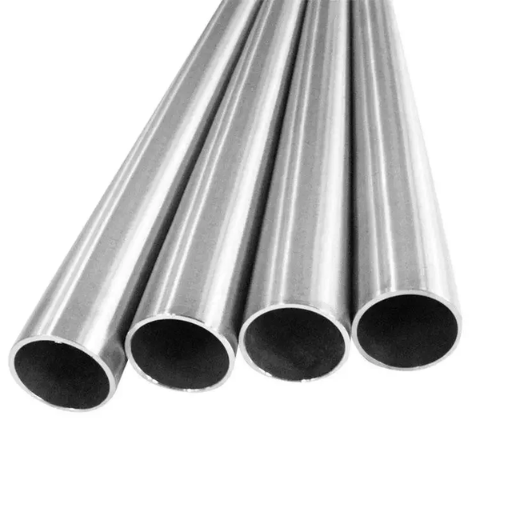
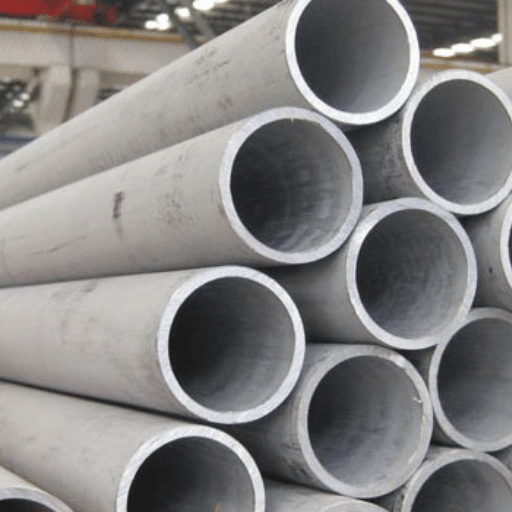
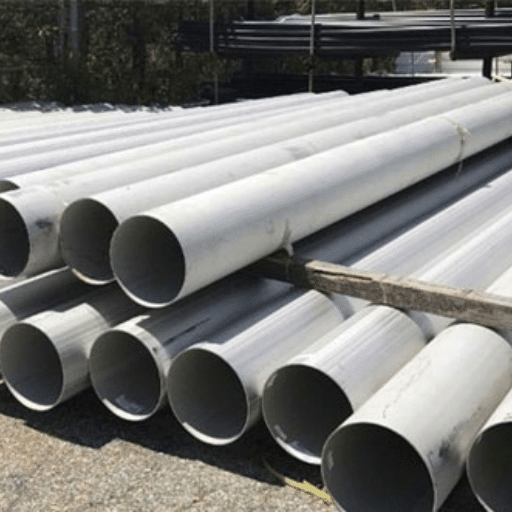
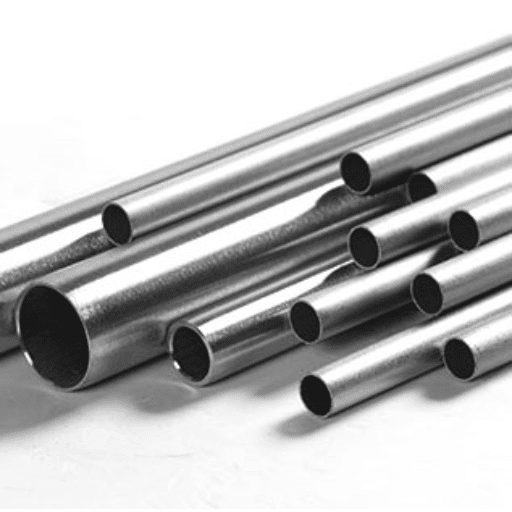
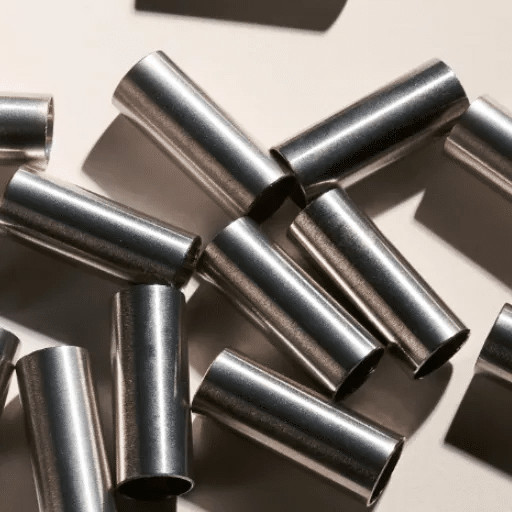
Duplex stainless steel fittings are the same duplex grades as duplex pipe, formed to fitting standards (ASTM A815) or forged to flange standards (ASTM A182): elbows, tees, reducers, caps, and flanges with roughly double the yield strength of 316L and superior chloride corrosion resistance. Selecting them correctly means choosing the right grade family, citing the right material and dimensional standards, and verifying the MTR, ferrite, PREN, heat treatment, before the parts reach your site.
The most expensive fitting mistake is not a wrong dimension. It is a wrong grade. A chemical plant upgraded its process line to 2205 pipe to handle a chlorinated stream but kept 316L flanges and fittings from the old line to save cost. Within a year, the failure was not in the pipe. It was at every 316L flange face, where the galvanic couple in the wet zone accelerated attack. The fittings were the smallest part of the order and the entire point of failure.
You already know how to specify pipe. This guide turns fittings into the same precision exercise: the grade system (F51, F60, F53, F55 and the WPS equivalents), the standards a purchase order must cite, the fitting types and size ranges, and the documentation checks that prevent grade substitution. By the end, you will be able to write a fitting line item your supplier can only meet honestly.
Key Takeaways
- Duplex fittings are governed by ASTM A815 (wrought butt-weld fittings, WPS grades) or ASTM A182 (forged flanges and socket-weld/threaded fittings, F grades); a purchase order must cite the material standard and a dimensional standard (ASME B16.9, B16.5, or B16.11).
- Specify S32205/F60, not S31803/F51, for chloride-sensitive service; F60’s guaranteed nitrogen and full molybdenum minimums preserve phase balance after forming and welding.
- Fittings, flanges, and pipe must be the same alloy family; mixing 2205 pipe with a 316L flange creates a galvanic couple that fails in the wet zone.
- A duplex fitting MTR must show ferrite content (40–60% per ASTM A815), a PREN ≥34 for 2205 (≥40 for super duplex) computed from actual chemistry, and a solution-annealing record, plus Charpy and hardness results.
- Verify on receipt with PMI and a PREN check from MTC chemistry; grade substitution concentrates in short, cheap components like fittings.
What Are Duplex Stainless Steel Fittings?

Duplex stainless steel fittings are piping components manufactured from duplex (ferritic-austenitic) stainless steel, including elbows, tees, reducers, caps, crosses, stub ends, and flanges that connect and route a duplex piping system. The term “duplex” describes the roughly 50/50 austenite/ferrite microstructure that gives these alloys their two defining advantages: corrosion resistance comparable to or better than 316L, and yield strength roughly twice as high, about 450–550 MPa versus roughly 205 MPa for 316L.
Why specify fittings in duplex at all? Because a piping system is only as corrosion-resistant as its weakest component. In high-chloride, high-pressure service, such as offshore seawater systems, chemical process lines, and desalination plants, a 316L fitting or flange is the predictable failure point. The duplex microstructure, expressed numerically as PREN (Pitting Resistance Equivalent Number), is what carries the corrosion requirement across every joint in the line. For the deeper metallurgy behind the phase balance, our complete duplex stainless steel guide walks through the microstructure, grades, and property trade-offs.
There is a second reason fittings matter more than their price suggests. Because they are short and cheap, they are the component where grade substitution and out-of-spec microstructure concentrate. The pipe is inspected, pressure-tested, and documented; the fittings are often filled from whatever the supplier stocks. Reframing the fitting from an afterthought to the highest-risk component is the first step to specifying it correctly.
Duplex Fitting Standards: ASTM A182, A815 & Dimensional Standards
The single most common buyer error in duplex fitting procurement is confusing a material standard with a dimensional standard. They do different jobs, and a purchase order must cite both.
The Material vs Dimensional Standard Distinction
A material standard (ASTM A815 or ASTM A182) defines what the metal is: chemical composition, mechanical properties, ferrite content, heat treatment, and testing. A dimensional standard (ASME B16.9, B16.5, B16.11) defines the geometry: size range, wall thickness, face dimensions, and pressure ratings. If your PO says “duplex 2205 elbow per B16.9” without a material standard, you have specified a shape but not a material. If it says “per ASTM A815” without B16.9, you have specified a material but not dimensions. A complete line item includes both.
Wrought Butt-Weld Fittings: ASTM A815
ASTM A815 / A815M covers wrought (forged-and-formed or seamless) ferritic, ferritic/austenitic, and martensitic stainless steel pipe fittings, the elbows, tees, reducers, caps, and stub ends used with duplex pipe. Grade designations use the WPS prefix, so 2205 is WPS32205, super duplex 2507 is WPS32750, and Zeron 100 is WPS32760. Dimensional coverage comes from ASME B16.9 (standard butt-weld fittings), MSS SP-43 (thin-wall, Sch 5S/10S/40S), and MSS SP-75 (large-diameter fittings).
Forged Fittings and Flanges: ASTM A182
ASTM A182 / A182M covers forged or rolled alloy and stainless steel pipe flanges, forged fittings, valves, and parts for high-temperature service. This is the standard for F-grade designations (F51, F60, F53, F55) used for flanges and for socket-weld and threaded fittings. Dimensional coverage comes from ASME B16.5 for flanges (NPS 1/2–24), ASME B16.47 for larger flanges (NPS 26–60), and ASME B16.11 for socket-weld and threaded fittings.
Cast Duplex and European Routes
Two additional routes complete the picture. ASTM A995 covers cast duplex fittings and valve bodies, using designations like 4A (2205), 5A (2507), and 6A (Zeron 100). For EU-bound projects, EN 10253-3 (fittings without specific inspection) and EN 10253-4 (fittings with specific inspection) are the European alternatives. On the pipe side, the matching standard is ASTM A790, covered in detail in our ASTM A790 duplex seamless pipe requirements guide.
Duplex Fitting Grades: F51, F60, F53, F55
The A182 F-grade system is how forged flanges and forged fittings are designated. The A815 WPS system mirrors it for wrought butt-weld fittings. Understanding the four main grades, and the two decisions between them, is the core of fitting selection.
The A182 Grade System
| Grade | UNS | Type | Cr (%) | Mo (%) | Min. PREN | Min. Yield |
|---|---|---|---|---|---|---|
| F51 | S31803 | Duplex (22% Cr) | 21.0–23.0 | 2.5–3.5 | ~30.5 | 450 MPa |
| F60 | S32205 | Duplex (tighter 22% Cr) | 22.0–23.0 | 3.0–3.5 | ~34.1 | 450–485 MPa |
| F53 | S32750 | Super duplex (25% Cr) | 24.0–26.0 | 3.0–5.0 | ≥41 | 550 MPa |
| F55 | S32760 | Super duplex (25% Cr + W/Cu) | 24.0–26.0 | 3.0–4.0 | ≥40 | 550 MPa |
The WPS equivalents for wrought butt-weld fittings follow the same UNS chemistry: WPS32205 (2205), WPS31803, WPS32750 (2507), and WPS32760 (Zeron 100), with MSS SP-43 designating them WP2205 and WP2507.
Standard Duplex: F51 vs F60 (Specify S32205)
This is the key buyer decision for standard duplex. F51/S31803 was the original 2205-type alloy with a lower nitrogen limit. F60/S32205 tightens the chemistry, a guaranteed minimum nitrogen of about 0.14% and a full 3.0% minimum molybdenum, which supports the austenite/ferrite balance after forming and welding. For chloride-sensitive service, specify S32205/F60, not S31803/F51. The dual-certification direction matters: F60 can be certified to S31803 requirements, but the reverse is not possible. A “2205” fitting that is actually S31803 carries less corrosion margin exactly where the pipe needed it. Our duplex 2205 vs 316L comparison explains the upgrade-from-austenitic decision in depth.
A real project illustrates why this distinction is not academic. A buyer ordered “duplex 2205 fittings” for a seawater-cooled heat exchanger. The MTR showed the fittings were supplied as dual-grade S31803/S32205, but at the S31803 minimums, PREN dropped from about 34 to about 30.5. On ambient seawater with crevice conditions, that is the difference between marginal and failing. The receiving inspection caught it only because PMI and a PREN check from MTC chemistry were specified. The fittings never went into the exchanger.
Super Duplex: F53 (2507) vs F55 (Zeron 100)
Both F53/S32750 and F55/S32760 carry a PREN of at least 40, so PREN does not separate them. The deciding factors are chemistry that PREN does not measure. F55 adds tungsten (0.5–1.0%) and copper (0.5–1.0%), extending its range into reducing-acid service and improving low-temperature toughness. For plain seawater immersion, F53/2507 is the standard choice. For a reducing-acid-plus-seawater combination, F55 is the specification. For a fuller treatment of the comparison, see our duplex vs super duplex grade comparison.
Lean Duplex Options
Lean duplex grades, S32304 (2304) and S32101 (2101), sit at PREN roughly 26 and cost less than full duplex. Specify them where stress-corrosion-cracking resistance matters but pitting resistance is secondary, such as structural and moderate chemical service. They are increasingly common in chemical plant and water-treatment applications where full duplex is over-specified.
Matching Fittings to Pipe: The System Requirement
Fittings, flanges, and pipe must be specified to the same alloy family. This is the single most important procurement message, and it is almost entirely absent from the fittings pages that rank for this topic. A 2205 pipe mated to a 316L flange, or to a forged fitting of a different grade, creates a galvanic couple in the wet zone. The more noble alloy drives accelerated attack on the less noble one, and the failure appears at the joint, not in the pipe.
The grade correspondence is straightforward once you know the prefixes. The wrought pipe in WPS chemistry matches the wrought fitting in WPS chemistry, and the forged flange in F chemistry must match both. If the pipe is S32205, the butt-weld fittings should be WPS32205 and the flanges F60. If the pipe is S32750, the fittings should be WPS32750 and the flanges F53. This is the system view that a manufacturer producing all three product forms can confirm, and it is the view our duplex stainless steel pipe grades and standards article takes from the pipe side.
A mixed-grade strategy is legitimate when it is deliberate. Super duplex only where the line is in continuous seawater contact, with 2205 downstream, can save an estimated 20–30% on installed cost without cutting corners. What is never legitimate is a mixed system that happens by default, filled from stock without a grade decision.
This is where sourcing from one manufacturer pays off twice. At Zhongzheng, industrial stainless steel fittings are produced alongside duplex and super duplex pipe under the same QC system, so the pipe, fittings, and flanges ship as one matched order with one MTR package. When every component is specified to the same grade family from the start, there is no flange face waiting to fail.
PREN, Ferrite Content, and Heat Treatment
Three material properties carry the duplex corrosion requirement on a fitting, and all three must appear on the MTR. None of them can be verified by looking at the part.
PREN
PREN is the Pitting Resistance Equivalent Number, calculated from the actual mill-test chemistry: PREN = %Cr + 3.3 × %Mo + 16 × %N. Note the source: it is computed from the chemistry on the MTC, not from the nominal grade. Project specifications commonly set minimums of about 34 for 2205 (some specs use 32) and at least 40 for super duplex. A fitting supplied at the low end of an S31803 chemistry range can miss a 34 minimum by several points, which is exactly the dual-grade trap described above. Our duplex corrosion resistance and PREN article covers the corrosion mechanisms behind these thresholds.
Ferrite Content
ASTM A815 requires duplex fittings to have a ferrite content of roughly 40–60% by volume, measured per ASTM E562 (point count) or a calibrated magnetic method. Some purchaser specifications impose tighter ranges, for example 35–55%, so confirm the range your project requires. The consequences of being outside the band are specific: too little ferrite (below about 40%) reduces strength and stress-corrosion-cracking resistance; too much ferrite (above about 60%) reduces toughness and localized corrosion resistance. Ferrite content is a verification line on the MTC, not an optional extra.
Solution Annealing
Solution annealing is mandatory for duplex fittings after forming: typically 1020–1100°C followed by rapid water quench. Slow cooling is the most common cause of out-of-spec ferrite ratios and precipitates brittle intermetallic phases, sigma and chi, that degrade toughness and localized corrosion resistance. Critically, a fitting that was not properly solution-annealed cannot be fixed in the field. This is a mill-control issue and a buyer-verification issue. For the welding-side counterpart, heat input control and ferrite balance in duplex welds, our duplex stainless steel welding guide is the reference.
Fitting Types, Dimensions, and End Connections

Duplex fittings span the same product forms as any stainless fitting, each with its own dimensional standard and size range.
Butt-weld fittings (ASTM A815, ASME B16.9): elbows (45°, 90°, 180°, long and short radius), equal and reducing tees, concentric and eccentric reducers, caps, crosses, and lap-joint stub ends (Types A and B). Size range from NPS 1/8″ to 48″ (300 NB and above), schedules 5S to 80S, with ends bevelled per ASME B16.25 for field welding. Thin-wall variants follow MSS SP-43.
Socket-weld and threaded fittings (ASTM A182, ASME B16.11): 45° and 90° elbows, equal and reducing tees, couplings, unions, plugs, caps, and bushings. Typically DN 15–100 (1/2″–4″), in pressure classes 2000, 3000, 6000, and 9000. These are the small-bore fittings used on instrument lines and secondary connections.
Flanges (ASTM A182, ASME B16.5/B16.47): weld neck, slip-on, blind, socket weld, threaded, and lap joint, in classes 150–2500. For high-pressure offshore and subsea service, the weld-neck ring-type-joint (RTJ) flange is the preferred specification, because it provides a metal-to-metal seal for the bolted joint.
For a full view of the sizes, schedules, and end preparations available in the duplex and super duplex range, see our industrial stainless steel fittings product page.
When to Choose Duplex vs Super Duplex Fittings
The selection rule can be stated as a short decision table tied to service environment.
| Service environment | Recommended grade |
|---|---|
| Moderate chloride, general chemical processing, topside duty | Duplex 2205 (S32205 / F60 / WPS32205) |
| Brackish water, water treatment, pulp and paper | Duplex 2205 |
| Full seawater immersion, subsea, splash zone | Super duplex 2507 (S32750 / F53 / WPS32750) |
| Reducing-acid plus seawater combination | Super duplex F55 (S32760 / Zeron 100) |
| Sour gas, NACE Zone 2 | Duplex 2205 |
| Sour gas, NACE Zone 1 / high chloride plus H2S | Super duplex |
The cost trade-off is real and often misstated. Super duplex 2507 costs roughly 30–80% more than 2205 at the material level. But its roughly 20–30% higher yield strength permits thinner walls at the same design pressure, narrowing the total installed-cost gap to about 20–30%. And as noted in the system section, a deliberate mixed-grade design (super duplex where the line is in continuous seawater contact, 2205 downstream) captures most of the benefit without the full-material premium. Our super duplex S32750 pipe specifications article covers the offshore and sour-service context in more depth.
Verifying Duplex Fittings: Documentation & Testing

The verification section is where manufacturer-side quality becomes checkable. Fittings are easy to substitute and hard to inspect visually, which is why the documentation package carries the integrity of the order.
What the MTR/MTC Must Show
A duplex fitting mill test certificate per EN 10204 Type 3.1 (mill QA) or Type 3.2 (third-party witnessed, required for offshore and naval work) must include:
- Chemical composition, from which the PREN value is computed against the project minimum
- Mechanical properties, including yield and tensile strength
- Ferrite content, measured per ASTM E562 or a calibrated magnetic method, within the required range
- Solution-annealing record, documenting the heat treatment and quench
- Charpy impact results at the specified low temperature (commonly −40°C or −46°C)
- Hardness results, with the applicable maximum (for example, about 32 HRC for 2507; NACE MR0175/ISO 15156 imposes a maximum near 22 HRC for sour-service materials; confirm against the current edition)
Supplementary Verification for Critical Service
For critical or offshore service, add independent checks. PMI (Positive Material Identification) on receipt confirms the grade and protects against substitution. ASTM A923 intermetallic-phase testing catches the sigma and chi phases that slow cooling after forming can leave behind. ASTM G48 Method A (ferric chloride pitting test) verifies localized corrosion resistance, often on weld coupons for super duplex in seawater service.
An offshore project that required ASTM A923 testing on its fittings caught a heat that had been slow-cooled after forming. The intermetallic content would have failed G48 corrosion testing in service, but dimensional inspection had passed it. The lot was rejected before a single fitting was installed, because the verification step was in the specification.
At Zhongzheng, this is not a paper exercise. Every heat of raw material is spectrographically verified before production, and finished fittings pass the dimensional, surface, and, where applicable, hydrostatic checks that the documentation records, so the MTR reflects the physical material, not just the order. If your project requires third-party inspection or supplementary ferrite and PREN verification, our QC team has supported those requirements across international EPC projects. Send us your grade, fitting type, OD/wall, and application and we will confirm availability with full documentation within 24 hours.
Frequently Asked Questions
What is ASTM A815?
ASTM A815 is the standard specification for wrought ferritic, ferritic/austenitic (duplex), and martensitic stainless steel pipe fittings, the elbows, tees, reducers, caps, and stub ends used with duplex pipe. It defines chemistry, mechanical properties, ferrite content, heat treatment, and testing for WPS-designated grades such as WPS32205 and WPS32750.
What is the difference between ASTM A182 and ASTM A815?
ASTM A182 covers forged or rolled pipe flanges, forged fittings, and valves, using F-grade designations (F51, F60, F53, F55). ASTM A815 covers wrought butt-weld pipe fittings, using WPS-grade designations. In practice: flanges and socket-weld/threaded fittings are specified to A182; butt-weld fittings to A815. Both must be paired with a dimensional standard (B16.5, B16.11, or B16.9).
Are duplex fittings stronger than 316L?
Yes, significantly. Duplex grades have minimum yield strengths of roughly 450–550 MPa depending on grade, versus roughly 205 MPa for 316L, about twice the yield strength at comparable or better chloride corrosion resistance, which permits thinner walls at the same design pressure.
What ferrite content is required in duplex fittings?
ASTM A815 requires roughly 40–60% ferrite by volume, measured per ASTM E562 or a calibrated magnetic method. Some purchaser specifications impose tighter ranges, such as 35–55%. Confirm the range your project requires, and confirm the MTC states the measured value.
Do duplex fittings need heat treatment?
Yes. Duplex fittings must be solution-annealed after forming, typically 1020–1100°C followed by rapid water quench. Slow cooling can precipitate brittle intermetallic phases (sigma and chi) and upset the ferrite/austenite balance, degrading toughness and corrosion resistance.
How do I specify duplex fittings for offshore seawater service?
Specify super duplex 2507 (S32750/F53/WPS32750) for components in continuous seawater contact, cite the material standard (ASTM A815 for butt-weld, A182 for flanges) plus the dimensional standard (ASME B16.9/B16.5), require a PREN of at least 40 computed from MTC chemistry, and demand Type 3.2 certification, ferrite content, and ASTM A923/G48 testing in the documentation package.
Conclusion
Duplex stainless steel fittings are not the afterthought of a duplex system; they are the failure point. The pipe gets specified precisely; the fittings and flanges get filled from stock. This guide gives you the four moves that close that gap: specify the right grade family (F60 over F51; F53 or F55 for super duplex), cite both the material and dimensional standards on every PO, keep fittings, flanges, and pipe in the same alloy family, and verify the MTR, ferrite, PREN, heat treatment, Charpy, and hardness, before the parts reach your site.
The cheaper fitting is the expensive one. Price per kilogram is the wrong metric; verified PREN and ferrite are the right ones. When the grade, the standards, and the documentation are all specified, a supplier can only meet the requirement honestly, and you can receive the material with confidence.
If you are building a duplex line now, send your grade, fitting type, OD/wall, and application to our technical team. Because Zhongzheng manufactures the pipe, the fittings, and the flanges under one QC system, we can confirm the complete matched order, with full documentation, within 24 hours. Request a duplex fitting quotation →