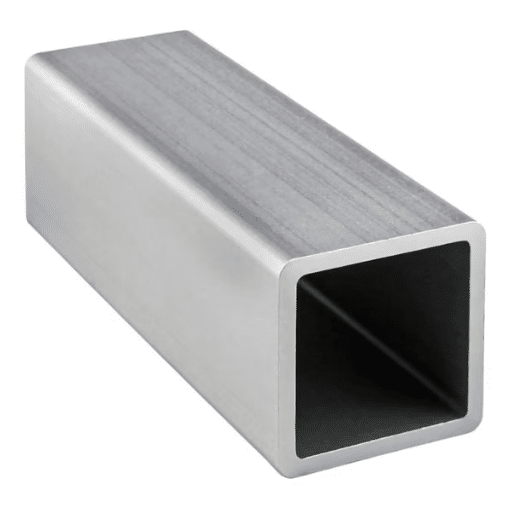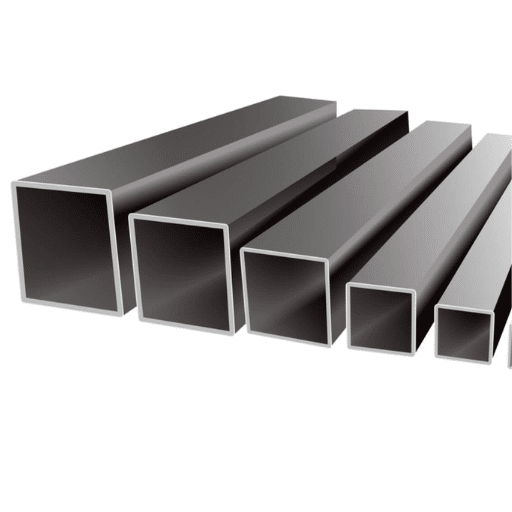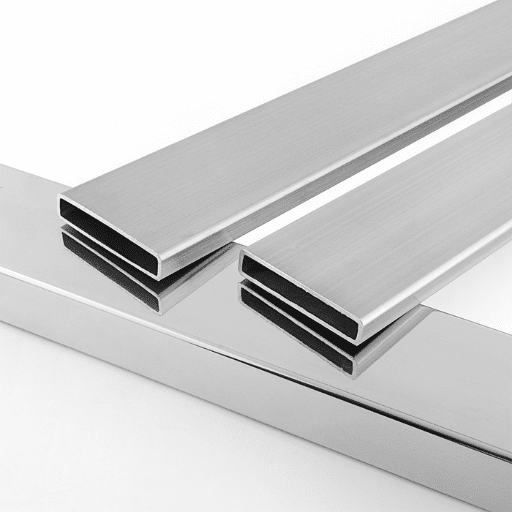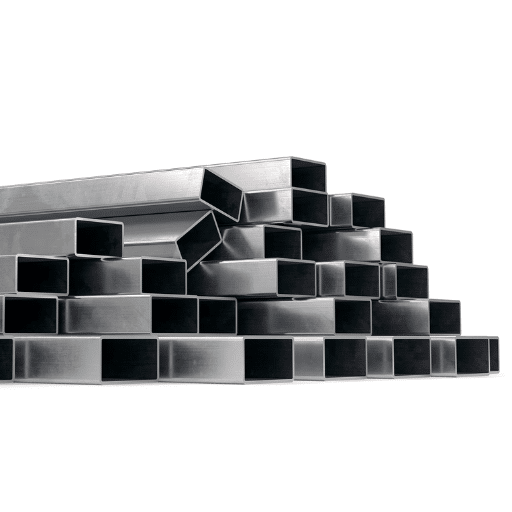
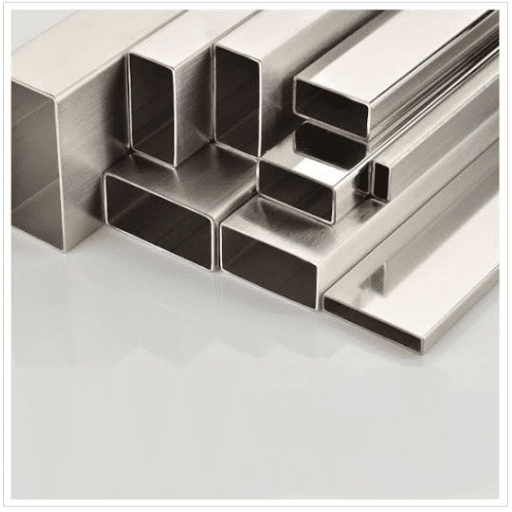
A stainless steel rectangular hollow section (RHS) is a welded, non-circular hollow profile with a rectangular cross-section, supplied to a depth × width × wall thickness designation. In Europe, it is specified as a two-part requirement: EN 10219-2 fixes the dimensions, tolerances and sectional properties, while EN 10088-2 or EN 10088-4 supplies the stainless grade. If your quotation cites EN 10296-2 for a rectangular section, that standard does not cover your product; it applies to circular tubes only.
That single point trips up more orders than any grade question. Last autumn a UK fabricator specified a 100 × 50 × 3 RHS in 1.4404 for a coastal balustrade and quoted an EN number on the enquiry. The material arrived, the certificate matched the mill test report, and the receiving inspection still raised a non-conformance because the standard named on the paperwork covered round tube and said nothing about a rectangular profile. Nothing was defective. The specification was simply wrong at the source.
You probably already know what RHS means and roughly which sizes you want. What you need is the piece most supplier pages skip: which European standard actually governs a stainless RHS, how the designation and the EN grade numbers work, and how to write an order line that produces the certificate your project requires. We form, weld and finish stainless rectangular sections on our own lines in Wenzhou and sell into ASTM, EN and GB markets, so this is written from the mill side of the transaction. For the full product picture, start with our complete stainless steel rectangular tube guide.
Key Takeaways
- RHS is a European vocabulary. RHS (rectangular), SHS (square) and CHS (circular) are all subsets of HSS, the North American umbrella term. “Box section” is the same product in fabricator language.
- A stainless RHS needs two European standards, not one. EN 10219-2 gives the geometry and tolerances; EN 10088-2/-4 gives the stainless grade. EN 10219’s own material grades (S235JRH–S355J2H) are carbon structural steels, not stainless.
- EN 10296-2 is a circular-tube standard for welded stainless mechanical and general-engineering tube. It does not cover rectangular sections, and citing it on a rectangular order is the most common standards mistake in the trade.
- The designation is depth × width × wall thickness (a 200 × 100 × 8 RHS is 200 mm deep, 100 mm wide, 8 mm wall), and the grade is stated separately, never as part of the size.
- Match a certificate on chemistry, not on the label. 1.4401 (316) and 1.4404 (316L) are often written interchangeably but are not the same grade.
Want the European route confirmed against your section before you order? Send us the designation and the standard your project specifies, and our technical team will confirm grade, availability and documentation. Talk to our technical team.
What Is a Stainless Steel Rectangular Hollow Section (RHS)?

A stainless steel RHS is a hollow structural profile formed from stainless strip, welded closed along a longitudinal seam, and sized to a rectangular outside dimension. It’s one product carrying four common names, and the name you use usually reveals your market. A UK or Irish engineer says RHS or box section. A US engineer says HSS. A stockist in either market may simply list it as rectangular tube.
The definition matters because the vocabulary is part of the search. Buyers type “stainless steel box section” and expect to land on the same product as the one they order as “100 × 50 RHS.” They do, but only if they know the terms are interchangeable.
RHS, SHS, CHS and HSS: The Vocabulary Map
| Term | Stands for | What it describes | Where it is used |
|---|---|---|---|
| RHS | Rectangular Hollow Section | Hollow section with a rectangular (non-square) profile | UK, Ireland, Australia, NZ, Europe |
| SHS | Square Hollow Section | Hollow section with a square profile | As above |
| CHS | Circular Hollow Section | Round hollow section (pipe) | As above |
| HSS | Hollow Structural Section | Umbrella term covering round, square and rectangular | North America |
| Box section | (colloquial) | Either a square or rectangular hollow section | UK fabricators and merchants |
| Rectangular tube | (commercial) | The same product, descriptive register | Stockists in all markets |
Read the HSS row carefully. RHS, SHS and CHS are all types of HSS. HSS is the parent term, not a synonym for RHS. In this article we use “HSS” only when contrasting European and North American practice. (HSS is also used as an abbreviation for high-speed steel, which has nothing to do with hollow sections; context settles it.)
Is RHS Square or Rectangular? (and Why the Trade Is Loose About It)
Technically, RHS is rectangular and SHS is square; they are distinct terms. In loose trade usage, “RHS” is frequently applied to square tube as well. That usage is technically incorrect, and saying so isn’t pedantry.
A drawing that reads “50 × 50 RHS” invites confusion about whether the section is square or rectangular, when the correct callout is “50 × 50 SHS.” Specify the shape term that matches the profile, and the drawing survives the journey to a fabricator who didn’t write it. For how the two shapes behave under load and in fabrication, see our square vs rectangular tube comparison.
Box Section, Rectangular Tube and RHS: Are They the Same Product?
Yes. Box section and rectangular tube are the same product as RHS, described in different registers. Box section is fabricator shorthand and skews toward UK search behaviour. Rectangular tube is the commercial and stockist term. RHS is the engineering term you should put on a drawing and a purchase order.
There is one caveat worth stating. “Box section” can describe a square profile as easily as a rectangular one, so it is useful as a search term but weak as a specification. When the section reaches a drawing, use RHS or SHS.
Which Standard Covers a Stainless Steel Rectangular Hollow Section in Europe?
There is no single European standard that covers a stainless steel rectangular hollow section end to end. The requirement splits into two parts: one standard for the geometry, and one for the material grade. Understanding that split is the difference between a clean order and a certificate query at goods-in.
| Requirement | European standard | What it supplies |
|---|---|---|
| Geometry, tolerances, mass, sectional properties | EN 10219-2 (cold formed welded structural hollow sections) | Outside dimensions, wall, straightness, twist and squareness tolerances; mass per metre; area, I, W and i values. Covers circular, square, rectangular and elliptical sections |
| Material grade | EN 10088-2 / EN 10088-4 (stainless steels) | The stainless grades themselves: 1.4301, 1.4307, 1.4404, 1.4401, 1.4571, 1.4462, with composition, mechanical properties and corrosion-resistance class |
| Hot-finished counterpart | EN 10210-1 / -2 | Hot-finished structural hollow sections, where a hot-finished route is required |
| Circular stainless mechanical tube | EN 10296-2 | Circular cross-section only. The standard most often mis-cited on rectangular orders |
| Welded stainless tube, pressure purposes | EN 10217-7 | Circular, pressure applications |
| Cold-sized square/rectangular precision tube | EN 10305-5 | Precision square and rectangular tube with tight tolerances and specified surface roughness; a different, precision-oriented product |
| North American welded stainless mechanical tube | ASTM A554 / A554M | Round, square, rectangular and special-shape welded stainless mechanical tubing |
EN 10219-2: Dimensions, Tolerances and Sectional Properties
EN 10219-2 is the geometric heart of a European RHS specification. It defines the permitted outside dimensions and wall thicknesses, the tolerance limits that apply to them, and the sectional properties a designer needs. It covers cold formed welded structural hollow sections in circular, square, rectangular and elliptical form, with rectangular sizes running out to 500 mm × 300 mm and walls to 40 mm in the current edition. Because it is a dimensional and tolerance standard, it doesn’t care whether the steel is carbon or stainless; it describes the shape. Confirm the current scope and part structure through the CEN standards catalogue, and take the section properties into Eurocode 3 when you size a member.
EN 10088-2 and EN 10088-4: Where the Stainless Grades Actually Come From
The stainless grades live in the EN 10088 family. EN 10088-2 gives technical delivery conditions for stainless sheet, plate and strip, and EN 10088-4 covers stainless steels for construction. Between them they define the grades a European RHS buyer recognizes as numbers rather than letters: 1.4301, 1.4307, 1.4401, 1.4404, 1.4571 and the duplex grade 1.4462.
This is the detail that separates a mill-authored page from a supplier’s standards list. EN 10219-1, the technical delivery conditions for the hollow section itself, lists material grades S235JRH through S355J2H. Those are non-alloy and fine-grain structural steels, not stainless. So the European stainless RHS specification is written as EN 10219-2 for geometry plus EN 10088-2/-4 for the grade, and a phrase such as “EN 10219 grade” is a category error: it names a carbon structural steel grade on a stainless product.
EN 10210: The Hot-Finished Counterpart
EN 10210-1 and EN 10210-2 are the hot-finished equivalents of the EN 10219 pair. Hot-finished sections carry different tolerances and heavier walls than cold-formed ones and are chosen when the hot-finished route is specified. The material-grade caveat is the same: EN 10210’s own grades are carbon structural steels, so a stainless hot-finished section still draws its grade from EN 10088.
The Most Common Standards Mistake: EN 10296-2 Is a Circular-Tube Standard
EN 10296-2 specifies welded tubes of circular cross-section in stainless steel for mechanical and general engineering purposes: technical delivery conditions, composition, mechanical properties, dimensions and tolerances. Its scope is round tube. It doesn’t extend to square or rectangular sections.
Despite that, EN 10296-2 is widely quoted on stainless rectangular and box-section orders, and it appears in supplier standards lists as though it covered the product. When it does, the certificate cannot speak to the section being bought. The practical fix is simple: for a stainless RHS, write EN 10219-2 plus EN 10088-2/-4, and reserve EN 10296-2 for products that really are circular. Our welded rectangular tube standards guide explains how the section is formed and welded beneath those tolerances, and the ASTM A554 explainer covers the North American route if your project runs on that system instead.
Reading an RHS Designation: Depth × Width × Wall Thickness

A European RHS designation states three numbers in a fixed order, and reading them correctly prevents most size confusion.
200 × 100 × 8: What Each Number Means
In a 200 × 100 × 8 RHS, the 200 is the depth (the larger outside dimension), the 100 is the width (the smaller outside dimension), and the 8 is the wall thickness, all in millimetres. Depth is conventionally stated first and is normally the larger figure. The designation describes geometry only.
Metric RHS vs Imperial HSS: Two Ways to Describe One Section
North America describes the same section as a nominal imperial HSS size with a fractional or gauge wall, for example a “5 × 3 × 1/4” HSS. The order of the leading dimensions is the same (depth first), but the units and the way the wall is expressed differ. The trap is conversion.
A nominal imperial name doesn’t correspond to a clean metric size, so a “4 × 2 × 1/4” HSS is not a 100 × 50 × 6 RHS. Convert on actual millimetres, never on the nominal inch names, or the section that arrives won’t fit a bracket cut to the metric figure.
Preferred RHS Size Families (and Where the Full Chart Lives)
European stainless RHS clusters into preferred families, commonly 40 × 20, 50 × 25, 60 × 30, 80 × 40, 100 × 50, 120 × 60, 150 × 75, 200 × 100, 250 × 150 and 300 × 200, with walls typically running 2–12 mm in the stainless stockists’ range. Sections outside these families are made to order. We do not reproduce the full chart here; the complete stainless steel rectangular tube size and wall-thickness chart holds the data, and the weight chart covers mass and section properties.
Stainless Grades in RHS Form: EN, AISI and UNS Designations
European buyers, drawings and certificates use EN 10088 material numbers, not AISI names. An Asian mill’s mill test report may state the AISI or UNS grade while your drawing specifies the EN number. The mapping below is the translation you need to read the certificate against the design.
| EN number | EN short name | AISI / common | UNS | Notes for RHS |
|---|---|---|---|---|
| 1.4301 | X5CrNi18-10 | 304 | S30400 | General architectural and indoor-exterior work |
| 1.4307 | X2CrNi18-9 | 304L | S30403 | Low-carbon; welded sections without post-weld anneal |
| 1.4306 | X2CrNi19-11 | 304L (higher Ni) | S30403 | Variant; verify before quoting |
| 1.4401 | X5CrNiMo17-12-2 | 316 | S31600 | Molybdenum-bearing; moderate chloride exposure |
| 1.4404 | X2CrNiMo17-12-2 | 316L | S31603 | The common European coastal and marine specification |
| 1.4571 | X6CrNiMoTi17-12-2 | 316Ti | S31635 | Stabilised; elevated-temperature service |
| 1.4462 | X2CrNiMoN22-5-3 | Duplex 2205 | S32205 | High-strength, chloride-exposed structural RHS |
1.4301, 1.4307 and the 304 Family
1.4301 is the standard 304 grade and covers the majority of architectural and interior RHS work. 1.4307 is the low-carbon 304L equivalent, chosen where a welded section will not receive a post-weld anneal and carbon sensitisation at the weld is a concern. The third column shows both mapping to the 304 family, but they are distinct in composition and must be specified by the number you actually require.
1.4401, 1.4404 and 1.4571: The Molybdenum Grades
1.4404 is 316L and 1.4401 is 316, and they aren’t the same grade, even though they are written interchangeably on a great many commercial documents. The molybdenum content makes both more resistant to chlorides than the 304 family, which is why 1.4404 is the default for coastal and marine rectangular sections. 1.4571 (316Ti) adds titanium stabilisation for elevated-temperature service. When your drawing says 1.4404, a certificate reading 1.4401 is a substitution, not a synonym.
1.4462: Duplex RHS Where Strength and Chloride Resistance Both Matter
1.4462 is duplex 2205, a two-phase stainless steel with roughly double the yield strength of 304 or 316 and high resistance to chloride stress-corrosion cracking. It is chosen for structural RHS in aggressive environments where a heavier 316L section would otherwise be needed. Grade selection is a decision in its own right, so we keep it out of this page: see our 304 vs 316L rectangular tube comparison for the common choice, and our duplex stainless steel guide for 2205.
Matching the EN Number to the Grade on the Certificate
The practical instruction for anyone receiving an Asian mill certificate against a European drawing is this: match on chemical composition, not on the label. A certificate may name the AISI grade while your drawing names the EN number, or the reverse. Check the composition against the EN 10088 requirement for the number you specified, and treat the trade name as a convenience rather than proof. The full document set that travels with a lot is described on the pillar guide.
Tolerances and the One Real Difference Between the EN and ASTM Systems
Tolerances are where European and North American practice diverge most visibly, and the divergence is philosophical as much as numerical.
The EN 10219-2 Tolerance Framework
EN 10219-2 publishes limits for outside dimension, wall thickness, straightness, twist, squareness and concavity or convexity, together with a minimum mass tolerance. Outside-dimension tolerances are expressed as a percentage with minimum and maximum floors, mass allowance sits in the region of ±6%, and straightness, twist and squareness each carry their own limits. Confirm every figure against the current edition of the standard before writing one into a contract, and never present an EN tolerance as though it were an ASTM A554 value.
Minimum Corner Radius in Europe, Maximum Corner Radius in North America
The single insight worth carrying between the two systems concerns the corner. Europe specifies a minimum outside corner radius for cold-formed sections, largely to avoid forming and welding problems at a corner that’s too tight. North America, under ASTM A554, specifies a maximum corner radius by wall thickness, with the emphasis on preserving a usable flat width. In one sentence: Europe caps how tight the corner may be; North America caps how round it may be.
That line explains most cross-system fitment confusion, and the detail lives on our canonical rectangular tube corner radius page, which covers the radius tables, measurement and fitment.
How to Specify and Certify a Stainless Steel RHS Order

The loop most pages fail to close is the order line itself. A complete European RHS specification names six things, and omitting any of them invites a substitution or a certificate query.
The RHS Order Line: Designation × Grade × Standard × Finish × Length × Certification
- Designation, depth × width × wall, e.g. 100 × 50 × 3 RHS
- Grade, the EN material number, e.g. 1.4404
- Standard, the geometry standard, e.g. EN 10219-2
- Finish, e.g. 2B, brushed or polished; see our surface finish guide
- Length, cut-to-length or random length, with the cut tolerance
- Certification, the inspection certificate your project requires
Worked, that reads: RHS 100 × 50 × 3, EN 10219-2, 1.4404, brushed finish, 6 m random length, with inspection certificate. The size is not the grade: a callout that stops at “100 × 50 × 3 stainless” specifies no grade at all, and a quotation can legitimately return any stainless grade against it.
Documentation: EN 10204 Certificates and the Mill Test Report
EN 10204 defines the inspection-document types European buyers recognize. Type 3.1 is an inspection certificate issued by the manufacturer’s independent inspection representative, stating the results of specific inspections on the delivered material, and it is the document most European specifications ask for. Confirm the exact certificate type your project requires and the type your supplier issues per order before you commit; the certificate type is a specification item, not an afterthought. The complete documentation package, including the mill test report, composition, mechanical properties and dimensional inspection record, is described on our rectangular tube guide.
On CE marking and the Construction Products Regulation, be aware that stainless structural hollow sections sit in a genuinely awkward corner of the harmonised-standard landscape, and coverage is not the same as for carbon structural steels. Do not assume a blanket CE position. Confirm the project’s marking and Declaration of Performance requirements against the specification, and ask your supplier to supply the mill documentation package the project calls for.
Stockist or Mill? Choosing the Supply Route
A UK stockist gives you fast delivery on popular sizes in 304 and 316, cut to size, with no minimum. A mill gives you control over grade, standard, section and certification, plus made-to-order sizes beyond the preferred families. The right route depends on whether your constraint is lead time or specification. Where the specification is the constraint, the certificate and the standard matter more than the shelf.
Frequently Asked Questions
What does RHS mean in steel?
RHS stands for rectangular hollow section: a hollow structural profile with a rectangular cross-section. In Europe the term appears alongside SHS (square hollow section) and CHS (circular hollow section). In North America all three are covered by the umbrella term HSS, hollow structural section.
Is RHS square or rectangular?
RHS is rectangular and SHS is square; they are officially distinct. In loose trade usage “RHS” is sometimes applied to square tube, but that is technically incorrect. Put SHS on a drawing for a square profile and RHS for a rectangular one.
What is the difference between RHS and box section?
They are the same product. Box section is fabricator shorthand used mainly in the UK, while RHS is the engineering term. Because “box section” can also mean a square profile, use RHS or SHS when the section reaches a drawing.
What is the difference between SHS, RHS and CHS?
The letters describe the profile shape: SHS is square, RHS is rectangular, and CHS is circular. All three are hollow sections, and in North American terminology all three are subsets of HSS.
What is the standard for stainless steel rectangular hollow section?
In Europe it is a two-part specification: EN 10219-2 for dimensions, tolerances and sectional properties, plus EN 10088-2 or EN 10088-4 for the stainless grade. In North America the welded stainless mechanical tubing standard is ASTM A554.
Is EN 10296-2 for rectangular or circular tube?
Circular. EN 10296-2 covers welded tubes of circular cross-section in stainless steel for mechanical and general-engineering purposes, and does not cover square or rectangular sections. Correct its use on a rectangular order by specifying EN 10219-2 with an EN 10088 grade.
What is the difference between EN 10219 and EN 10210?
EN 10219 covers cold formed welded structural hollow sections and EN 10210 covers the hot finished equivalent. They differ in forming route, tolerances and typical wall range. Neither supplies stainless grades; those come from EN 10088.
What grades are stainless hollow sections supplied in?
Commonly 1.4301 and 1.4307 (the 304 family), 1.4401 and 1.4404 (the 316 family), 1.4571 (316Ti) and the duplex grade 1.4462. The grade number, not the trade name, is what belongs on a European drawing.
Can a stainless steel RHS be used structurally?
Yes, where the design allows for it and the section is specified and certified accordingly. Stainless RHS is widely used in balustrades and handrails, canopies and equipment frames; for heavy structural work, duplex grades offer higher strength. Confirm structural, marking and documentation requirements against the project specification.
Conclusion: Say RHS, Name the Standard, Get the Section You Designed
The confusion around stainless steel rectangular hollow sections is not about the metal. It’s about language and paperwork. RHS, SHS, box section and rectangular tube are one product with four names, and in Europe the standards question has two answers that get collapsed into one wrong number.
Carry four things away. RHS is the engineering term for a rectangular hollow section, and SHS is its square sibling, both under the North American umbrella HSS. A stainless RHS is specified with EN 10219-2 for geometry plus EN 10088-2/-4 for the grade, and EN 10296-2 belongs to circular tube only. The designation is depth × width × wall, with the grade stated separately. And a certificate should be matched on chemistry, not on the trade name, because 1.4401 and 1.4404 are different grades written interchangeably every day.
If you would rather not inspect the specification yourself, send it to us instead. Share your section designation, the standard your project specifies and the certification you need, and our technical team will confirm the grade, the section and the documentation and respond within 24 hours. To see the range we produce, visit our stainless steel rectangular tube product page. For everything else in this family of products, the rectangular tube guide is the place to start.