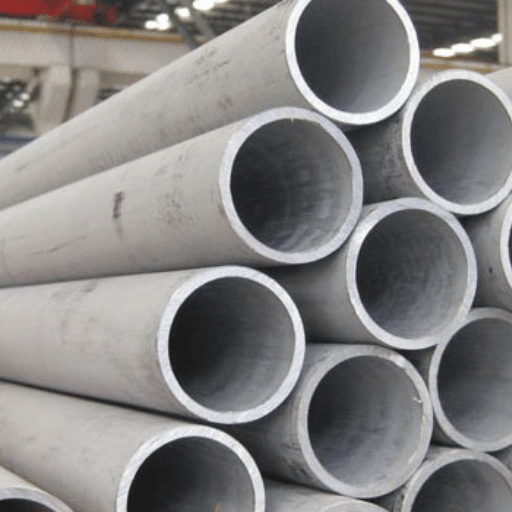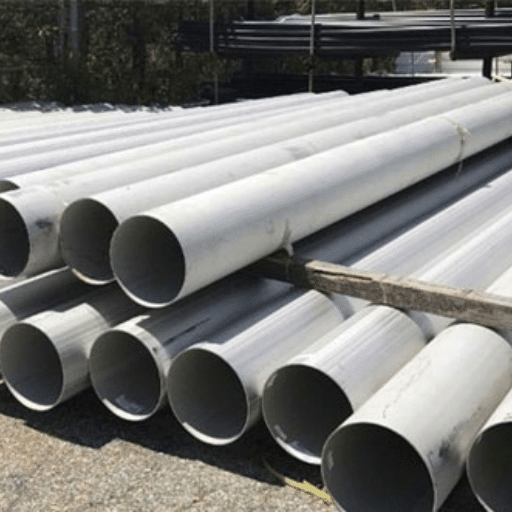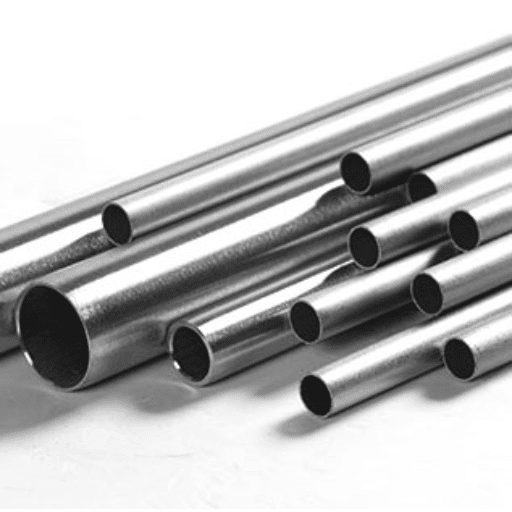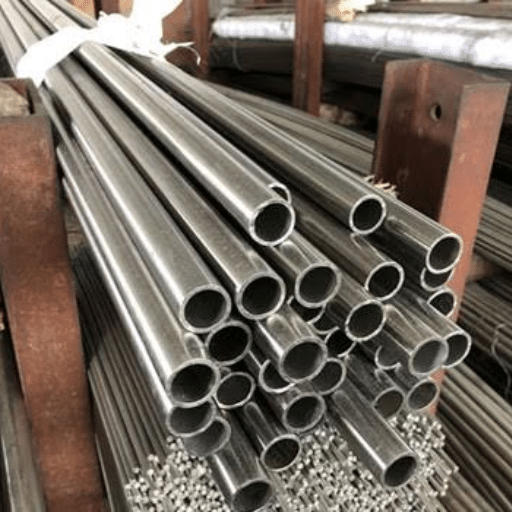
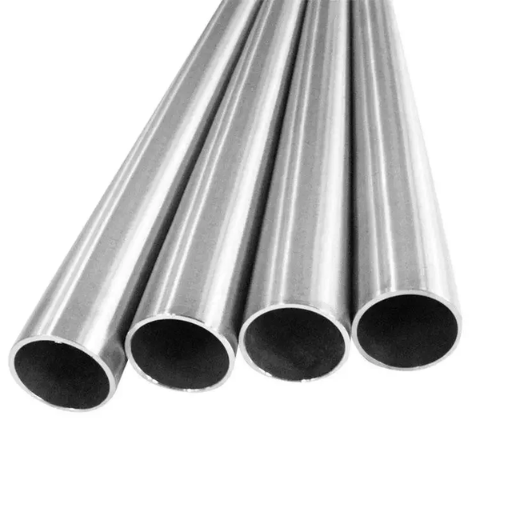
The best nickel alloy pipe for oil and gas depends on the well, not on the material family. In sour service, Incoloy 825 (UNS N08825) is the economical workhorse for production tubing and flowlines; Inconel 625 (UNS N06625) takes over where H₂S partial pressure or strength demand rises; and Hastelloy C-276 (UNS N10276) is reserved for the most aggressive acid media. All three are approved under NACE MR0175 / ISO 15156 only under specific conditions and below a specific hardness.
That sentence is where most supplier pages stop. The decision a project engineer actually faces is narrower and harder: which grade is qualified for this well under the applicable ISO 15156-3 Annex A table, and whether the flowline has to be solid alloy at all.
Two conditions end the duplex conversation and put a nickel alloy on the line list. The first is an H₂S partial pressure beyond what super duplex 2507 qualifies for. The second is a temperature above duplex’s sigma-phase ceiling. Once either applies, the question is no longer “nickel alloy or duplex.” It is which nickel alloy, in which condition, to which standard, with which documentation package.
You already know a nickel alloy is required. This article answers the three questions that follow: the sour-service grade-selection matrix keyed to H₂S, chloride and temperature; the NACE exclusion rules few pages publish; and the construction economics that decide what the line costs.
Key Takeaways
- Grade follows the envelope, not the family. Incoloy 825 is the cost-rational first choice for sour gas; Inconel 625 is for higher H₂S partial pressure and strength; Hastelloy C-276 is for severe acids. Each is approved in a specific condition under ISO 15156-3 Annex A.
- Not every nickel alloy is approved for sour service. Inconel 600 (N06600) is not listed for sour service, and Monel 400 (N04400) has only limited approval and is generally not recommended for sour gas. In the annealed condition, 825 and 625 both carry a 35 HRC limit.
- Upstream and downstream use different standards. NACE MR0175 / ISO 15156 governs production; refining uses NACE MR0103 / ISO 17945. Applying MR0175 to a refinery is a real specification error.
- A flowline does not have to be solid alloy. CRA-clad pipe costs 30–50% less than solid CRA and CRA-lined pipe 50–70% less, for long flowlines where the liner’s integrity under depressurisation is managed.
- Super duplex 2507 is roughly 1.5–3× cheaper than Inconel 625 and is the correct specification wherever its envelope holds. Nickel alloy is the step beyond, not the default.
For the full material-family picture, grades and standards, see our complete nickel alloy pipe guide. For the cheaper tier, our duplex stainless steel for oil and gas guide covers when 2205 and 2507 are the smarter specification.
Which Nickel Alloy Should You Use in Sour Service?
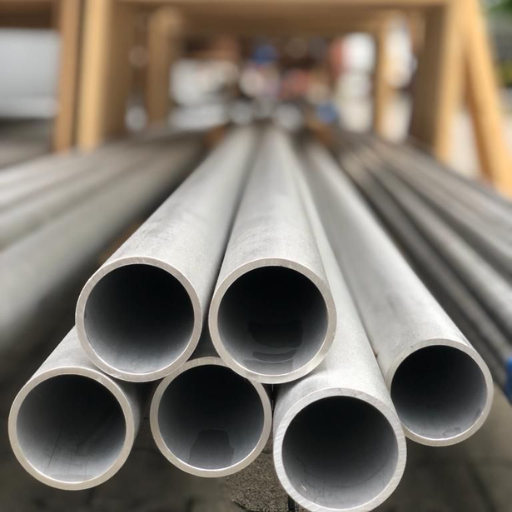
Nickel alloys are specified for oil & gas where duplex stainless steel’s envelope is exceeded: high H₂S partial pressure, high chloride, high temperature, or a combination. Inconel 625 (N06625) handles the highest H₂S partial pressures; Incoloy 825 (N08825) is the economical workhorse for sour gas production tubing and flowlines; Hastelloy C-276 (N10276) is reserved for the most aggressive acids. All three must meet the hardness limits in ISO 15156-3 Annex A.
The matrix below keys each grade to the standard, the PREN, the sour-service status and the system it belongs in. Every “qualified” status is conditional: the applicable Annex A table governs, and the limit moves with the delivered condition.
| Grade (UNS) | ASTM pipe/tube standard | PREN | ISO 15156-3 status | Condition & hardness limit | Where it belongs in oil & gas |
|---|---|---|---|---|---|
| Inconel 625 (N06625) | B444 (seamless) / B705 (welded pipe) | 48–51 | Qualified, Annex A | Annealed: 35 HRC / 287 HBW; aged condition reported at ≤ 40 HRC | Highest-H₂S sour flowlines, subsea umbilicals, downhole screens, valve trim, subsea jumpers |
| Incoloy 825 (N08825) | B423 (seamless) / B705 (welded) | ~34 | Qualified, Annex A | Annealed: 35 HRC / 200 HBW | Sour gas production tubing, casing, flowlines (H₂S + CO₂ + chlorides); the cost-rational first choice |
| Hastelloy C-276 (N10276) | B622 (seamless) / B619 (welded pipe) | ≥ 69 | Qualified, Annex A | Solution annealed 1120 °C min + quench; ≤ 35 HRC; no cold work > 15% | Severe acid service, wet chlorine, HF-adjacent, FGD; sour service at the aggressive end |
| Monel 400 (N04400) | B165 (seamless) / B725 (welded) | n/a (Ni-Cu) | Limited, generally not recommended for sour gas | Verify per Annex A | HF alkylation unit piping, seawater and firewater, not a sour-gas grade |
| Inconel 600 (N06600) | B167 (seamless) / B517 (welded) | ~29 | Not listed / not approved for sour service | n/a | High-temperature oxidation service, excluded from the sour-service shortlist |
| Inconel 718 (N07718) | B983 (precipitation-hardened forms) | ~34 | Qualified (age-hardened, hardness-dependent) | Age-hardened, verify Annex A carefully | High-strength downhole tools and completions hardware, not general flowline pipe |
Read the last two columns together, and the discipline of the whole exercise appears. A grade isn’t “sour-service approved” as a name. It’s approved in a condition, below a hardness, inside an environmental envelope. Change the condition and the approval can change with it.
The grade articles carry the specification details: Inconel 625 pipe to ASTM B444, Hastelloy C-276 pipe specifications, and Monel 400 pipe and its service limits.
Working on a line list right now? Send our technical team the fluid chemistry and the governing standard. If the grade and the condition do not match, we will tell you before you order. Send us your line list
Are All Nickel Alloys Approved for Sour Service? The Exclusion Rules
No. NACE MR0175 / ISO 15156 qualifies alloys individually, and approval is conditional on hardness, heat treatment and the environmental envelope. Two familiar grades fail the shortlist, and this is the step most supplier pages skip.
Inconel 600, not listed for sour service
Inconel 600 (N06600) is a strong, oxidation-resistant nickel-chromium alloy with decades of service in high-temperature furnace and heat-treating duty. It isn’t, however, an alloy approved for sour service. A specification that reads “nickel alloy, sour service” and lists Inconel 600 alongside 625 will draw a rejection from a competent materials engineer.
A materials engineer at an EPC contractor caught exactly that in 2025. The draft line list for a sour gas gathering system named “Inconel 600” for a small-bore drain line, carried over from an earlier high-temperature project on the same site. She removed it from the sour-service scope before the purchase order went out. The substitution cost nothing; discovering it on the receiving dock would have cost a shutdown of the fabrication schedule.
Monel 400, limited approval, not a sour-gas grade
Monel 400 (N04400) is a nickel-copper alloy with excellent resistance to hydrofluoric acid and to seawater, and it remains the standard choice for HF alkylation unit piping. That is a non-sour application, and the distinction matters. For sour gas, Monel 400 has only limited approval and is generally not recommended. Its strength as an HF and seawater material does not translate into a sour-service recommendation.
The conditional nature of approval
Three conditions decide whether a qualified grade actually qualifies for your line:
- Delivered condition. In the annealed condition, both Incoloy 825 and Inconel 625 carry a 35 HRC limit. Inconel 625 in an aged condition is reported at a higher limit approaching 40 HRC, which is why the figure appears inconsistently across sources. State the condition, and read the Annex A table for that condition.
- Cold work. Cold work beyond roughly 15% reduction may be rejected for sour service even where the measured hardness passes. Hardness is a proxy for the risk you are controlling, not the only control.
- Contact differential. Where an 825 component seats against a 625 component, a 40 HB hardness differential is required to protect the harder part. Small geometry changes the specification.
The rule to carry into procurement is simple: cite the UNS grade, the delivered condition, the applicable ISO 15156-3 Annex A table, and the hardness requirement on the purchase order. “Nickel alloy, sour service” is not a specification.
For how the standards layer together across alloys, see the nickel alloy pipe standards index.
What Counts as Sour Service? H₂S, pH, Chloride and Temperature
A system is sour under NACE MR0175 / ISO 15156 when the H₂S partial pressure reaches 0.05 psia (0.34 kPa) in gas systems, or when the H₂S concentration reaches 15 ppm in some liquid and multiphase cases. Severity is then set by the combination of H₂S partial pressure, in-situ pH, chloride concentration and temperature, not by H₂S alone.
That combination is the part buyers underweight. A trace of H₂S in a benign, near-neutral, cool liquid is a different risk from the same H₂S concentration in a hot, acidic, chloride-loaded brine. Two amplifiers do most of the work:
- Low in-situ pH. Below roughly pH 4, H₂S becomes markedly more aggressive toward steels and alloys through sulfide stress cracking.
- High temperature. Above roughly 80 °C, the cracking risk rises, and the mechanism can shift.
Chlorides compound the risk through chloride stress corrosion cracking, and free elemental sulfur, where present, compounds it further. This is why the material selection sheet is built from four inputs, not one figure.
The downstream consequence is that the field-verifiable control is hardness. Hardness can be measured on the delivered product; the environmental envelope often cannot be checked at the mill. That is why the Mill Test Report with recorded hardness values, not a general certificate of compliance, is the document that decides acceptance at receiving.
Upstream or Downstream? NACE MR0175 vs NACE MR0103
The two standards are not interchangeable, and using the wrong one is a common, expensive error.
| Environment | Governing standard | Scope |
|---|---|---|
| Upstream production, wells, flowlines, gathering, processing | NACE MR0175 / ISO 15156 | Sour service in oil and gas production. ISO 15156-3 covers CRAs; the Annex A tables carry the per-grade limits. |
| Downstream refining, process units, exchangers, scrubbers | NACE MR0103 / ISO 17945 | Sour service in petroleum refining. |
A refinery process line specified to MR0175 is specified to the wrong document, and a supplier who issues a “MR0175-compliant” certificate for a refinery exchanger has answered a question the project did not ask. Downstream, the alloys are also different in emphasis: C-276, Alloy 20 and 825 dominate refinery process service, where the driver is often acid attack and chloride rather than H₂S partial pressure.
Mapping Nickel Alloy to Oil & Gas Systems
Where each nickel alloy actually goes, by value chain. This is deliberately tighter than a full value-chain map, because the material selection is what a project needs from this page.
| Segment | System | Typical nickel alloy | Driver |
|---|---|---|---|
| Upstream | Downhole production tubing & casing | Incoloy 825, Inconel 625 | H₂S / CO₂ / chloride + strength; API 5CRA / ISO 13680 |
| Wellhead & Christmas trees | Inconel 625 (solid), C-276 trim | API 6A pressure-containing, chloride + sour | |
| Subsea trees, jumpers, spools | Inconel 625 (solid) | API 17D, HPHT sour | |
| Flowlines & risers | 625 solid / alloy-clad / alloy-lined | DNV-OS-F101, ISO 13623, see construction section | |
| Umbilical & control-line tubing | Inconel 625, super duplex | Small-diameter seamless, high-chloride | |
| Seawater injection & firewater | Super duplex 2507 first; Monel 400 legacy | Chloride + crevice, duplex usually wins on cost | |
| Midstream | Line pipe & pipelines | 825, 625 (rare) | Wet sour gas / corrosive crude |
| Manifolds, storage, separators | 825, 625 | Sour produced fluids | |
| Downstream | Refinery process piping | C-276, Alloy 20, 825 | NACE MR0103 / ISO 17945, not MR0175 |
| Shell-and-tube heat exchangers | C-276, 625 tube | Chloride + acid service | |
| FGD scrubbers & flue-gas | C-276, C-22 | Wet/dry cycling, chlorides, acid condensate | |
| HF alkylation unit | Monel 400 | Hydrofluoric acid, a non-sour nickel-alloy application |
Two rows carry the article’s structural correction. The downstream rows are governed by MR0103, not MR0175. The HF alkylation row is the one place Monel 400 belongs and sour service is not the driver.
Solid, Clad or Lined? Choosing the Flowline Construction
A flowline doesn’t have to be solid nickel alloy. This is the second decision, and it often moves the line cost more than the grade choice does.
| Construction | CRA wall (approx.) | Cost vs solid CRA | Preferred application | Key limitation |
|---|---|---|---|---|
| Solid CRA (seamless) | Full wall (4–25 mm+) | Baseline (highest) | Wellhead, Christmas trees, subsea jumpers, HP downhole tubing | Highest material cost |
| CRA-clad pipe | 2–4 mm inner, metallurgical bond | 30–50% lower | Risers, spools, short flowlines | Limited bend radius; end-weld complexity |
| CRA-lined pipe | 2–4 mm inner, mechanical bond | 50–70% lower | Long-distance subsea flowlines | Liner collapse risk on depressurisation / reversed pressure |
The bond type decides where each construction belongs. A metallurgical clad resists the bending and thermal cycling a riser sees, so risers favour clad. A mechanical liner is cheaper and works well on long, straight flowlines, provided the design manages the one condition that can defeat it: depressurisation.
When line pressure is released quickly, or reversed, a mechanically bonded liner can collapse inward. That behaviour is a qualification question, and DNV-RP-A203 is the framework that governs it. A lined flowline is a sound, cost-efficient choice when the liner-integrity case is qualified for the operating profile, and a liability when it’s not.
Why this belongs in a material-selection article: it is the difference between a buyer specifying a USD 2 million solid-alloy line and a USD 600k lined line, and almost no supplier content explains it. Most competitor pages default to “seamless nickel alloy pipe” and stop.
When Duplex Is the Smarter Specification
An honest nickel alloy page has to say this plainly: super duplex 2507 is roughly 1.5–3× cheaper than Inconel 625 and is the correct specification wherever its envelope is not exceeded. Its temperature ceiling sits near 250–300 °C before sigma-phase embrittlement becomes the limit, and its chloride and sour-service envelope covers a large share of real wells.
Nickel alloy is justified when one of these is true:
- the H₂S partial pressure exceeds what duplex qualifies for under ISO 15156,
- the temperature exceeds duplex’s sigma-phase ceiling,
- the medium is a severe acid that duplex cannot handle (the C-276 case),
- strength and wall-thickness reduction at the top of the design envelope make the premium pay,
- or the consequence of failure, shutdown, lost production, emergency freight, outweighs the material delta.
For most buyers reading this page, the first honest step is to confirm that super duplex genuinely cannot do the job. Our duplex stainless steel for oil and gas guide and our super duplex S32750 corrosion performance article cover that envelope in detail. If duplex holds, it is the better commercial answer, and we will say so.
Specifying and Verifying Nickel Alloy Pipe for an Oil & Gas Project
The RFQ checklist
A purchase order for sour-service nickel alloy should carry all of the following:
- UNS grade, N06625, N08825, N10276 (not the trade name alone)
- Product form and standard, seamless (B444 / B423 / B622) or welded (B705 / B619), with the edition year
- Dimensions, OD × Wall Thickness × Length, to ASME B36.19M (S-series), not ASME B36.10M
- Delivered condition, annealed, solution annealed, or aged, stated explicitly
- NACE clause, the applicable ISO 15156-3 Annex A table and the hardness requirement
- Tests, hardness on the MTR, PMI, and ultrasonic testing at the lower frequencies coarse-grain austenitic material demands (1.0–1.5 MHz, with reference blocks of the same grade)
Documentation
The documents that decide acceptance are the Mill Test Report with hardness values recorded, the heat-treatment certificate, the NACE certificate, and the material certification to EN 10204 3.1 (3.2 on request). A shipment accepted on a one-page certificate with no hardness data cannot be proven NACE-compliant, and in a documented case of exactly that, an 825 line was replaced rather than argued over. The piece of paper is the compliance.
Verification
Positive material identification (XRF or OES) confirms the grade at receiving. Ultrasonic inspection at the correct frequency and with same-grade reference blocks confirms internal soundness. Third-party inspection (TPI) provides the independent signature most international projects require. Together these form the workflow that separates a mill that understands sour service from one that ships pipe.
Frequently Asked Questions
What nickel alloy is used in oil and gas?
Incoloy 825 is the workhorse for sour gas production tubing and flowlines; Inconel 625 for higher-H₂S and higher-strength duty; Hastelloy C-276 for severe acid service; and Monel 400 for hydrofluoric acid and seawater. Each is approved under ISO 15156-3 only in a specific condition.
What is the best nickel alloy for sour service?
There is no single best grade; the envelope decides. Incoloy 825 (N08825) is the cost-rational first choice, Inconel 625 (N06625) takes over as H₂S partial pressure or strength demand rises, and Hastelloy C-276 (N10276) covers the severe-acid end.
Is Inconel 625 good for sour service?
Yes, in the correct condition. Inconel 625 is qualified under ISO 15156-3 Annex A, with a 35 HRC / 287 HBW limit reported for the annealed condition and a higher limit reported for the aged condition. Cold work beyond roughly 15% may be rejected regardless of hardness.
Is Incoloy 825 good for sour service?
Yes. Incoloy 825 is qualified under Annex A with a reported 35 HRC / 200 HBW limit in the annealed condition, and is the standard economical choice for sour gas production tubing and flowlines where H₂S, CO₂ and chlorides combine.
Is Monel 400 suitable for sour service?
No, not generally. Monel 400 has only limited approval and is generally not recommended for sour gas. Its strength is hydrofluoric acid and seawater service, which are separate, non-sour applications.
Is Inconel 600 approved for sour service?
No. Inconel 600 (N06600) is not listed for sour service. Specifying a nickel alloy by trade name rather than by UNS grade and the applicable Annex A table is the most common sour-service specification error.
What is the difference between NACE MR0175 and MR0103?
MR0175 / ISO 15156 governs upstream oil and gas production; MR0103 / ISO 17945 governs downstream refining. Applying MR0175 to a refinery line specifies the wrong standard.
What is the difference between solid CRA, clad and lined pipe?
Solid CRA is full-wall alloy throughout. Clad pipe has a thin alloy layer metallurgically bonded to a carbon-steel wall, 30–50% cheaper. Lined pipe has a mechanically bonded liner, 50–70% cheaper, with liner integrity under depressurization as the qualification question.
Conclusion and Next Step
Selecting nickel alloy pipe for oil and gas is an envelope decision, not a family decision. Establish whether the service is sour, map H₂S partial pressure, pH, chloride, and temperature, screen out the grades that are not approved, then shortlist 825, 625 or C-276 against the applicable ISO 15156-3 Annex A table. Choose the construction, solid, clad, or lined, before you choose the grade price. And confirm whether super duplex 2507 already does the job, because it usually costs a fraction of what 625 does.
This page is written so you can tell which of those decisions your project actually faces. If you are also weighing the stainless tier below duplex, our when to upgrade from stainless steel to nickel alloy article covers the general ladder.
The next step is a line list. Send us your fluid chemistry, H₂S partial pressure, CO₂, chloride concentration, operating temperature and pressure, and the governing standard. If the grade and the sour-service condition do not match, our technical team will say so before you order and return the corrected grade, condition, and documentation package within 24 hours. Send us your line list