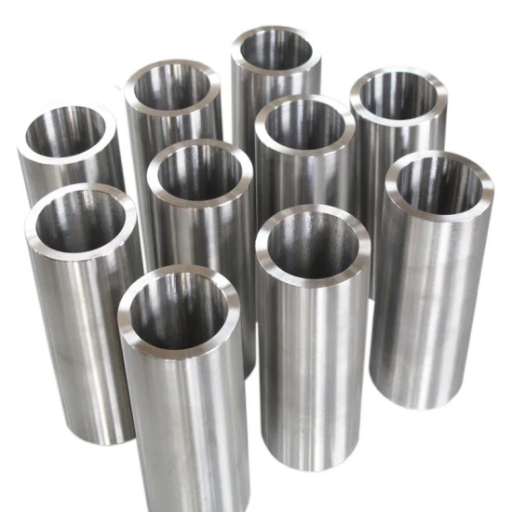
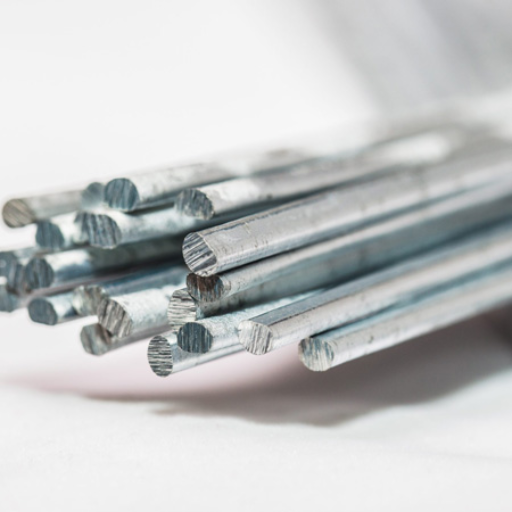
The Gulf of Mexico subsea pipeline accident occurred when the pipeline system failed at a depth of 2400 meters, which caused investigators to find the single fault that caused the break because of a welded pipe section. The operator’s procurement team learned its most expensive lesson after it spent $47 million on remediation costs and three months of lost production because they discovered that some “seamless” pipes did not match its expectations, while they needed to learn about manufacturing procedures that produced ASTM A312 specifications instead of completing a purchase order.
The essential component of process piping systems, which support vital operations in oil and gas, chemical processing, and power generation industries, consists of stainless steel seamless pipe. The seamless pipe design achieves consistent mechanical strength through its entire pipe structure because it does not have heat-affected zones which create weakness points that endanger pressure safety. Engineers who need to design safe systems for high-pressure pipelines that operate at high temperatures must use seamless pipe for their projects.
The guide establishes the entire technical system that organizations need to use for selecting, purchasing, and testing stainless steel seamless pipe according to ASTM A312 requirements. The process of hot piercing manufacturing starts with solid billets which get transformed into hollow pipe while the pressure rating system determines which schedule should be used. The process will explain hot piercing manufacturing which produces hollow pipes from solid billets and pressure rating systems, which determine schedule selection and grade differences between 304 and 316L and steps for quality verification, which help identify premium manufacturers as well as commodity suppliers.
What is Stainless Steel Seamless Pipe?
Definition and Key Characteristics
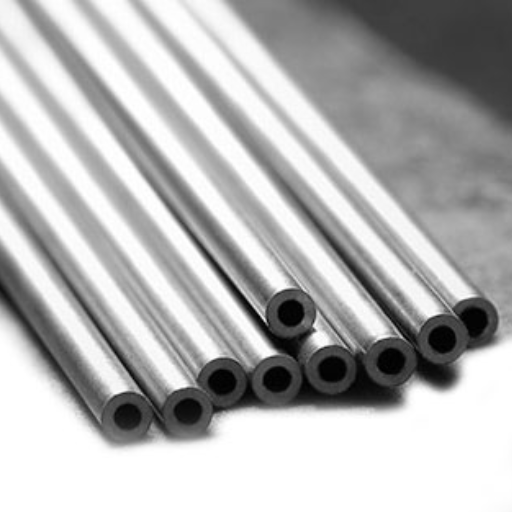
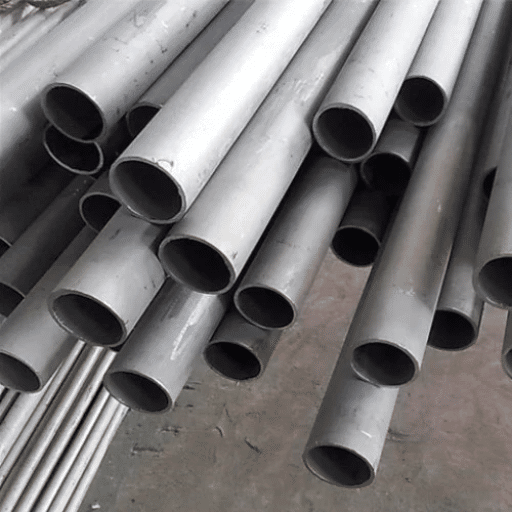
Stainless steel seamless pipe is manufactured from solid round steel billets through a hot forming process that creates a hollow tube without any longitudinal weld seam. This manufacturing method produces a homogeneous microstructure with consistent mechanical and corrosion-resistant properties throughout the entire pipe circumference.
The absence of a weld seam provides three critical advantages for demanding applications:
- Uniform Pressure Capability: Seamless pipe withstands internal pressure equally in all directions, with no stress concentration points that initiate failure
- Superior Corrosion Resistance: Without weld seams or heat-affected zones, corrosion initiates uniformly rather than at localized weak points
- Extended Fatigue Life: Cyclic loading—common in pulsating pressure systems—distributes evenly across the pipe wall rather than concentrating at discontinuities
ASTM A312 functions as the main standard which controls the production of seamless stainless steel pipes through its specifications that address seamless and welded and extensively cold-worked austenitic stainless steel pipes designed for both high-temperature environments and common corrosive applications. The specification defines chemical composition, mechanical properties, manufacturing tolerances, and testing requirements for grades including TP304, TP304L, TP316, TP316L, TP321, and TP347.
When to Specify Seamless Pipe
Seamless pipe is the specification of choice when operating conditions exceed the safe limits of welded alternatives. The practical threshold is 0.8 MPa (116 psi) working pressure—below this, quality welded pipe may suffice; above it, seamless construction becomes increasingly necessary.
Applications requiring seamless pipe include:
- High-pressure hydraulic systems and chemical injection lines
- Boiler and superheater tubes in power generation
- Oil and gas production tubing and flowlines
- Nuclear power plant primary piping
- Cryogenic systems where uniform low-temperature toughness is essential
- Pharmaceutical sterile processes where contamination cannot be tolerated
For a complete comparison of seamless versus welded construction—including cost implications, manufacturing differences, and selection criteria—see our detailed seamless vs welded pipe comparison.
ASTM A312 Standard Specifications
Scope and Coverage
ASTM A312/A312M is the American Society for Testing and Materials specification for seamless welded and heavily cold-worked austenitic stainless steel pipes. The standard provides engineers with procurement document specifications for high-temperature and general corrosive service pipes through its dimensional, mechanical, and chemical requirements.
The specification covers nominal pipe sizes from NPS 1/8″ through NPS 48″ and thicknesses from Schedule 5S through Schedule XXS. The standard provides two versions, which are inch-pound (ASTM A312) and metric (ASTM A312M) that share the same technical specifications but use different measurement systems.
Chemical Composition Requirements
ASTM A312 defines maximum and minimum chemical composition limits for each grade. The critical distinction between standard and “L” grades is carbon content:
| Element | TP304 | TP304L | TP316 | TP316L |
|---|---|---|---|---|
| Carbon, max | 0.08% | 0.035% | 0.08% | 0.035% |
| Manganese, max | 2.00% | 2.00% | 2.00% | 2.00% |
| Phosphorus, max | 0.045% | 0.045% | 0.045% | 0.045% |
| Sulfur, max | 0.030% | 0.030% | 0.030% | 0.030% |
| Silicon, max | 1.00% | 1.00% | 1.00% | 1.00% |
| Chromium | 18.0–20.0% | 18.0–20.0% | 16.0–18.0% | 16.0–18.0% |
| Nickel | 8.0–11.0% | 8.0–13.0% | 10.0–14.0% | 10.0–15.0% |
| Molybdenum | — | — | 2.00–3.00% | 2.00–3.00% |
The reduced carbon content in 304L and 316L minimizes sensitization during welding—critical for maintaining corrosion resistance in welded assemblies. However, for seamless pipe applications where welding is minimal, standard 304 and 316 grades provide slightly higher strength.
Mechanical Properties
ASTM A312 specifies minimum mechanical properties for seamless pipe in the solution-annealed condition:
| Grade | Tensile Strength, min | Yield Strength, min | Elongation, min |
|---|---|---|---|
| TP304 | 75 ksi (515 MPa) | 30 ksi (205 MPa) | 35% |
| TP304L | 70 ksi (485 MPa) | 25 ksi (170 MPa) | 35% |
| TP316 | 75 ksi (515 MPa) | 30 ksi (205 MPa) | 35% |
| TP316L | 70 ksi (485 MPa) | 25 ksi (170 MPa) | 35% |
These minimums ensure that pipe purchased to ASTM A312 will perform predictably under mechanical stress. Actual values typically exceed these minimums, with tensile strengths commonly reaching 80–85 ksi for 304 and 316 grades.
ASTM A312M (Metric) vs ASTM A312 (Inch)
The “M” designation indicates metric dimensions and units. The ASTM A312M standard establishes pipe dimensions as millimeter measurements while providing mechanical properties in megapascals (MPa) format. The technical requirements are identical—only the measurement system differs.
Engineers need to identify which dimensional system to use for international projects because they must choose between “ASTM A312 seamless pipe, metric dimensions” and “ASTM A312M seamless pipe.” The use of different measurement systems within one piping network results in fittings that do not match properly.
Seamless Pipe Manufacturing Process

The transformation from solid steel billet to finished seamless pipe involves precise thermal and mechanical operations. Understanding this process explains why seamless pipe commands a price premium—and why that premium is justified for critical applications.
Raw Material Preparation
The production process for seamless pipes starts with the use of solid round steel billets which typically have a diameter range of 80 to 280 millimeters and a length range of 1.2 to 3.5 meters. At Zhongzheng, every billet undergoes spectrographic analysis before entering production. The imported optical emission spectrometers that we use for testing purposes establish the chemical makeup of materials according to their specific grade requirements. The billet gets rejected for processing when its carbon content, chromium percentage, and nickel content fail to meet the established specifications.
The preparation process for billet surfaces includes two methods, which involve shot blasting and pickling to achieve the removal of mill scale and surface imperfections. The finished pipe wall achieves defect-free quality because clean surfaces prevent rolling defects in the final product.
Hot Piercing Process (Mannesmann Process)
The piercing mill operation is the defining step in seamless pipe manufacturing. Billets are heated to 1,150–1,250°C in rotary hearth or walking beam furnaces until the steel reaches plastic deformation temperature.
The heated billet is fed into a two-roll cross-roll piercing mill—the Mannesmann process that has defined seamless pipe production for over a century. Two cone-shaped rolls rotate in opposite directions, gripping the billet and rotating it helically against a stationary piercing point (mandrel). The piercing point extrudes through the billet center, creating a hollow shell called a capillary tube.
Key piercing parameters include:
- Roll angle (typically 8–12°) controlling wall thickness
- Mandrel diameter determining inner diameter
- Feed angle controlling elongation ratio
The resulting hollow shell has uniform wall thickness but requires further elongation to achieve final dimensions.
Rolling and Elongation
After piercing, the hollow shell passes through rolling mills that elongate the pipe while reducing wall thickness:
Plug Mill (MPM): Multi-stand plug mills with floating mandrel bars process medium-diameter pipes (140–406 mm). The mandrel maintains internal diameter while external rolls reduce wall thickness.
Mandrel Mill: For smaller diameters (25–150 mm), mandrel mills use curved rollers arranged at 90° angles to achieve continuous wall thickness reduction.
Stretch Reducing Mill (SRM): A 24-stand mill achieves final outer diameter through controlled diameter reduction without internal mandrel support.
At each rolling stage, dimensional measurements verify outer diameter, wall thickness, and ovality against ASTM A312 tolerances.
Cold Drawing (for Precision Dimensions)
Some applications require tighter dimensional tolerances or smoother surface finishes than hot rolling alone can achieve. Cold drawing pulls the pipe through a die and over a mandrel at room temperature, providing:
- Improved dimensional tolerance: OD tolerances within ±0.5% versus ±1.0% for hot-finished
- Smoother surface finish: Ra values of 1.6–3.2 μm versus 6.3–12.5 μm for hot-finished
- Enhanced mechanical properties: Cold working increases tensile strength and yield strength
Cold drawing is specified for instrument tubing, heat exchanger tubes, and applications requiring precise hydraulic or pneumatic sealing.
Heat Treatment
Solution annealing restores the austenitic microstructure and corrosion resistance that may have degraded during hot working. ASTM A312 requires solution annealing at minimum 1,900°F (1,040°C) followed by rapid quenching.
The heat treatment process:
- Heating to solution temperature in controlled-atmosphere furnace
- Holding time calculated by wall thickness (typically 1 hour per inch)
- Rapid water quenching to prevent carbide precipitation
- Verification that annealing has restored proper grain structure
Proper solution annealing is critical for corrosion resistance. Improperly annealed pipe may exhibit intergranular corrosion sensitivity in subsequent service.
Finishing Operations
After heat treatment, pipe undergoes surface finishing and final inspection:
Pickling: Immersion in nitric/hydrofluoric acid solution removes oxide scale from heat treatment, restoring the passive chromium oxide layer.
Passivation: Optional additional treatment enhances corrosion resistance, particularly for 316L grades intended for aggressive environments.
Straightening: Multi-roll straighteners achieve straightness requirements of ≤1 mm/m for standard pipe, ≤0.5 mm/m for precision applications.
End Preparation: Pipe ends are cut square, deburred, and beveled if specified for welding.
Quality Control at Each Stage
Zhongzheng’s seamless pipe production incorporates quality verification at critical points:
- Raw material: Spectrographic verification of every heat
- After piercing: Dimensional check of hollow shell
- After rolling: Wall thickness measurement and ultrasonic scanning
- After heat treatment: Hardness testing and microstructural verification
- Final inspection: 100% ultrasonic flaw detection, hydrostatic testing, dimensional inspection
This multi-stage verification ensures that defects are detected before value is added to non-conforming material.
Dimensions and Schedules

Nominal Pipe Size (NPS) System
The NPS system designates pipe sizes from NPS 1/8″ through NPS 48″. The “nominal” designation is historical—actual dimensions differ from the nominal size:
- NPS 1/8″: Actual OD = 0.405″
- NPS 1/2″: Actual OD = 0.840″
- NPS 2″: Actual OD = 2.375″
- NPS 6″: Actual OD = 6.625″
- NPS 12″: Actual OD = 12.750″
The outer diameter is fixed for each NPS; wall thickness varies by schedule.
Pipe Schedule Classifications
Schedule numbers indicate wall thickness relative to pipe diameter. Common stainless steel schedules include:
| Schedule | Wall Thickness Characteristic | Typical Applications |
|---|---|---|
| 5S | Extra light wall | Low-pressure, sanitary |
| 10S | Light wall | Low-pressure process |
| 40S | Standard wall | General process piping |
| 80S | Extra strong | High-pressure, corrosive |
| 160 | Double extra strong | Very high pressure |
| XXS | Triple extra strong | Extreme pressure |
Note: “S” suffix indicates stainless steel dimensions per ASME B36.19M, which differ from carbon steel schedules in B36.10M.
Dimensional Tolerances
ASTM A312 specifies dimensional tolerances that manufacturers must meet:
- Outer diameter: ±1.0% for NPS 8″ and smaller; ±0.5% for larger sizes
- Wall thickness: ±12.5% (minimum wall thickness at any point)
- Length: +6mm/-0mm for specified lengths
- Ovality: Within OD tolerance for thin-wall pipe; special limits for thick-wall
These tolerances are designed into pressure rating calculations. Engineers specify “minimum wall” or “nominal wall” depending on whether the 12.5% tolerance must be accounted for in stress calculations.
Weight Calculations
Theoretical weight per foot can be calculated using:
Weight (lb/ft) = 10.69 × (OD – Wall Thickness) × Wall Thickness
For metric calculations:
Weight (kg/m) = 0.02466 × (OD – Wall Thickness) × Wall Thickness
Where OD and wall thickness are in consistent units (inches for lb/ft, mm for kg/m).
Pressure Ratings and Design
Pressure-Temperature Ratings
The maximum allowable working pressure (MAWP) for seamless pipe depends on diameter, wall thickness, material grade, and operating temperature. Pressure ratings are calculated per ASME B31.3 Process Piping using the formula:
P = 2 × S × E × t / (D – 2 × Y × t)
Where:
- P = Maximum allowable working pressure (psi)
- S = Allowable stress at temperature (psi)
- E = Quality factor (1.0 for seamless pipe)
- t = Wall thickness (inches)
- D = Outside diameter (inches)
- Y = Temperature coefficient (0.4 for austenitic stainless steel below 900°F)
Schedule 40 Pressure Ratings by Size
The following table shows MAWP for Schedule 40 seamless pipe at various temperatures, accounting for 12.5% mill tolerance:
| Size | OD (in) | Wall (in) | 100°F | 400°F | 800°F |
|---|---|---|---|---|---|
| 1/2″ | 0.840 | 0.095 | 4,200 psi | 3,000 psi | 880 psi |
| 3/4″ | 1.050 | 0.099 | 3,400 psi | 2,450 psi | 720 psi |
| 1″ | 1.315 | 0.116 | 3,200 psi | 2,300 psi | 670 psi |
| 1-1/2″ | 1.900 | 0.127 | 2,400 psi | 1,720 psi | 500 psi |
| 2″ | 2.375 | 0.135 | 2,000 psi | 1,430 psi | 420 psi |
| 3″ | 3.500 | 0.189 | 1,900 psi | 1,360 psi | 400 psi |
| 4″ | 4.500 | 0.207 | 1,600 psi | 1,150 psi | 340 psi |
| 6″ | 6.625 | 0.245 | 1,300 psi | 930 psi | 275 psi |
Based on TP316L allowable stress: 16.7 ksi at 100°F, 12.1 ksi at 400°F, 3.5 ksi at 800°F per ASME B31.3 Table A-1
Key observation: Pressure rating decreases significantly with increasing pipe size and with increasing temperature. A 1″ Sch 40 pipe rated for 3,200 psi at ambient temperature is limited to 670 psi at 800°F.
Allowable Stress by Temperature
ASME B31.3 Table A-1 provides allowable stress values for ASTM A312 grades at temperatures from cryogenic to 1,500°F:
| Temperature | TP304/304L | TP316/316L |
|---|---|---|
| 100°F | 20.0 ksi | 20.0 ksi |
| 200°F | 18.6 ksi | 18.6 ksi |
| 400°F | 16.5 ksi | 16.5 ksi |
| 600°F | 15.4 ksi | 15.4 ksi |
| 800°F | 14.0 ksi | 14.0 ksi |
| 1,000°F | 9.3 ksi | 11.0 ksi |
| 1,200°F | 3.2 ksi | 5.0 ksi |
Note: Values shown for seamless pipe. Welded pipe requires quality factor E = 0.85, reducing allowable stress by 15%.
High-Pressure Applications
When Schedule 40 ratings are insufficient, engineers specify thicker schedules:
- Schedule 80: Approximately 1.5× Schedule 40 wall thickness
- Schedule 160: Double extra strong wall for very high pressure
- XXS (Double Extra Strong): Thickest standard schedule available
For unique pressure requirements, manufacturers can produce custom wall thicknesses beyond standard schedules. At Zhongzheng, our seamless pipe mills accommodate non-standard OD/wall combinations for specialized high-pressure applications.
Planning a high-pressure system? Request pressure calculations for your specific operating conditions, and our engineers will confirm the required schedule and grade.
Grades and Applications

304/304L Seamless Pipe
304 stainless steel is the most widely specified grade for general corrosion-resistant applications. With 18% chromium and 8% nickel, it provides excellent oxidation resistance and good mechanical properties at moderate cost.
Typical applications:
- Food and beverage process piping
- Pharmaceutical water systems
- Chemical processing (non-chloride environments)
- Heat exchanger tubing
- Architectural and structural applications
When to specify 304L over 304: For welded assemblies where post-weld heat treatment isn’t practical, 304L’s reduced carbon content prevents sensitization and maintains corrosion resistance in the heat-affected zone. For purely seamless applications, standard 304 provides slightly higher strength.
316/316L Seamless Pipe
316 stainless steel adds 2–3% molybdenum to the 304 base composition, dramatically improving resistance to pitting and crevice corrosion in chloride-containing environments. This makes 316L the default choice for marine, coastal, and chemical processing applications.
PREN (Pitting Resistance Equivalent Number) comparison:
- 304: PREN ≈ 18–20
- 316: PREN ≈ 23–27
Higher PREN indicates better resistance to chloride-induced pitting. For seawater applications with chloride levels of 19,000–20,000 ppm, 316L is the minimum specification; 304 would experience rapid pitting attack.
Typical applications:
- Marine and offshore seawater systems
- Chemical processing with chlorides
- Pulp and paper digesters
- Pharmaceutical sterile processes
- Coastal and de-icing salt exposure
321/347 Seamless Pipe
321 (titanium-stabilized) and 347 (niobium-stabilized) grades resist sensitization at high temperatures, making them suitable for service above 800°F where standard 304/316 would become susceptible to intergranular corrosion.
Typical applications:
- High-temperature heat exchangers
- Furnace and boiler components
- Exhaust systems
- Process piping above 400°C
Duplex Seamless Pipe (ASTM A790)
Duplex stainless steels combine austenitic and ferritic microstructures, delivering approximately twice the yield strength of austenitic grades with superior resistance to chloride stress corrosion cracking.
UNS S32205 (Duplex 2205) properties:
- Yield strength: 65 ksi minimum (vs. 30 ksi for 316L)
- PREN: 35–37 (vs. 23–27 for 316L)
- Superior chloride stress corrosion cracking resistance
ASTM A790 covers duplex seamless pipe for general corrosion-resistant service. For detailed duplex specifications and offshore applications, see our duplex stainless steel pipe guide.
Super Duplex (UNS S32750)
Super duplex grades (S32750, S32760) push corrosion resistance even higher, with PREN > 40 for extreme environments including sour service (H2S) and high-chloride offshore applications.
Typical applications:
- Offshore subsea production systems
- Sour gas processing (NACE MR0175 compliant)
- Seawater injection systems
- Chemical process piping in aggressive media
Quality Control and Testing
In-Process Quality Control
Quality verification at Zhongzheng extends throughout the manufacturing process:
Raw Material Verification: Every incoming billet heat is sampled and analyzed on imported optical emission spectrometers. Chemical composition—including carbon, chromium, nickel, molybdenum, and trace elements—is verified against the ordered grade specification before the billet enters production.
Dimensional Monitoring: Wall thickness, outer diameter, and ovality are measured at multiple stages:
- After piercing: Hollow shell dimensions
- After rolling: Intermediate pipe dimensions
- After heat treatment: Final dimensional verification
Temperature Control: Furnace temperatures are continuously monitored and recorded to ensure solution annealing achieves proper microstructural recovery.
Non-Destructive Testing (NDT)
ASTM A312 requires either hydrostatic testing or non-destructive electric testing. Zhongzheng applies both methods for comprehensive verification:
Ultrasonic Flaw Detection: 100% volumetric inspection using automated ultrasonic testing (UT) detects internal and external defects including:
- Laps and seams from rolling
- Inclusions and voids
- Wall thickness variations beyond tolerance
Eddy Current Testing: For smaller diameter tubing, eddy current inspection detects surface and near-surface defects through electromagnetic induction.
Hydrostatic Testing: Each pipe is pressurized with water to a test pressure of 1.5× the specified working pressure (or 1.0× for specific customer requirements). The test verifies structural integrity and identifies leaks or weaknesses.
Destructive Testing
Mechanical property verification includes:
Tensile Testing: Samples from each heat are tested to verify:
- Tensile strength meets minimum requirements
- Yield strength exceeds specification
- Elongation indicates adequate ductility
Hardness Testing: Rockwell or Brinell hardness verifies proper heat treatment and material condition.
Intergranular Corrosion Testing: When specified (particularly for non-stabilized grades), ASTM A262 practice tests verify resistance to sensitization.
Documentation
Every seamless pipe shipment includes comprehensive documentation:
Mill Test Report (MTR) Contents:
- Heat number and traceability information
- Chemical composition analysis (all elements)
- Mechanical test results (tensile, hardness)
- Heat treatment records (temperature, time, method)
- Hydrostatic test pressure and results
- Dimensional inspection results
- Standard compliance statement (ASTM A312)
EN 10204 Certification:
- Type 3.1: Manufacturer’s inspection certificate with test results from inspected product
- Type 3.2: Inspection certificate with independent verification by purchaser’s inspector or third party
Procurement and Sourcing

Specifying Seamless Pipe Requirements
A complete seamless pipe specification includes:
- Standard: ASTM A312 (or ASTM A312M for metric)
- Grade: TP304, TP304L, TP316, TP316L, etc.
- Manufacturing method: Seamless (SMLS)
- Dimensions: NPS and Schedule (or OD × Wall Thickness)
- Heat treatment: Solution annealed (required)
- Surface finish: Pickled, passivated, bright annealed, or electropolished
- Testing requirements: Hydrostatic test pressure, NDT method
- Documentation: MTR requirements, EN 10204 certification type
- Marking: Heat number, grade, specification, size
- Third-party inspection: If required (SGS, TÜV, BV, etc.)
Zhongzheng Seamless Pipe Capabilities
Size Range:
- Seamless pipe: NPS 1/8″ through NPS 24″ (6–610 mm OD)
- Schedules: 5S, 10S, 40S, 80S, 160, XXS
- Custom wall thicknesses available
Grade Availability:
- Standard austenitic: 304, 304L, 316, 316L, 321, 347
- High-temperature: 310S, 317L
- Duplex: UNS S31803, S32205 (ASTM A790)
- Super duplex: UNS S32750, S32760 (ASTM A790)
Surface Finishes:
- Pickled and passivated (standard)
- Bright annealed (clean, oxide-free)
- Electropolished (Ra ≤ 0.4 μm for pharmaceutical)
Testing and Documentation:
- 100% ultrasonic flaw detection
- Hydrostatic testing to specified pressure
- Full MTR documentation
- EN 10204 3.1/3.2 certification
- Third-party inspection support
Lead Times and MOQ
Standard Seamless Pipe:
- Common sizes (Sch 40, 304/316L): 4–6 weeks
- Less common sizes: 6–8 weeks
Custom Dimensions:
- Non-standard OD/wall combinations: 6–8 weeks
- Specialized surface finishes: Add 1–2 weeks
Specialty Grades:
- Duplex 2205: 6–8 weeks
- Super duplex: 8–12 weeks
Minimum Order Quantities:
- Standard austenitic grades: 1,000 kg or negotiated
- Duplex/super duplex: 2,000–5,000 kg depending on size
Expedited Production:
For critical project schedules, Zhongzheng offers priority production scheduling with confirmed delivery dates. Contact our technical team to discuss your timeline requirements.
FAQs
What is the difference between seamless and welded stainless steel pipe?
Seamless pipe is manufactured from solid billets through hot piercing and rolling, with no longitudinal weld seam. Welded pipe is formed from flat strip with a longitudinal weld seam. Seamless pipe provides uniform pressure capability, superior corrosion resistance, and 20% higher pressure ratings than equivalent welded pipe. For a detailed comparison, see our seamless vs welded pipe guide.
What does “Schedule 40” mean for stainless steel pipe?
Schedule 40 is a wall thickness designation. Schedule 40 establishes standard pressure capabilities through its specific wall thickness requirements which apply to each nominal pipe size (NPS). The dimensions of stainless steel Schedule 40 differ from those of carbon steel Schedule 40 but ASME B36.19M serves as the official standard for stainless steel pipe dimensions.
How is seamless stainless steel pipe made?
The manufacturing process involves: (1) heating solid steel billets to 1,150–1,250°C, (2) piercing the billet with a mandrel to create a hollow shell, (3) rolling to elongate and reduce wall thickness, (4) solution annealing at 1,900°F+, (5) pickling/passivation, and (6) final inspection and testing.
What is the maximum pressure for 316L seamless pipe?
The system has received training until the month of October in the year 2023. The maximum operational pressure for 316L seamless pipe depends on its respective pipe size and pipe schedule. The 1″ Schedule 40 316L seamless pipe can handle approximately 3,200 psi at 100°F which decreases to 2,300 psi at 400°F and 670 psi at 800°F. The pressure capacity of larger pipes decreases because they have greater diameter sizes. The ASME B31.3 formula should be applied for achieving exact calculation results.
Is seamless pipe suitable for applications with elevated temperatures?
Seamless pipe is the preferred choice for operating at high-temperature conditions. The 304/316 grades maintain their strength until they reach 800°F whereas stabilized grades (321, 347) protect against sensitization which occurs at temperatures above 800°F. The specific temperature ratings can be found in ASME B31.3 allowable stress tables.
What is ASTM A312 TP316L?
The standard ASTM A312 specifies the requirements for austenitic stainless steel pipe which can be produced through seamless and welded methods and through heavy cold work. The designation TP316L identifies Type 316 Low-carbon grade which contains 16 to 18 percent chromium and 10 to 14 percent nickel and 2 to 3 percent molybdenum with a carbon content that does not exceed 0.035 percent for enhanced weldability and corrosion resistance.
How do I verify seamless pipe quality from Chinese manufacturers?
The manufacturer must provide material test reports (MTRs) which include spectrographic chemical analysis results. The manufacturer needs to demonstrate that they conduct ultrasonic testing which covers all parts of the seamless pipe and hydrostatic testing. For critical applications, specify third-party inspection (SGS, TÜV, Bureau Veritas) during manufacturing.
What is the difference between 304 and 316 seamless pipe?
The seamless pipe made from 304 steel and 316 steel shows different properties. The 316 alloy contains 2-3% molybdenum which enables it to resist chloride pitting and crevice corrosion better than other alloys. The 316 standard applies to marine and coastal environments as well as chemical processing facilities. The 304 material provides protection against general corrosion except in environments with chloride presence. The price of 316 materials exceeds that of 304 materials by 20 to 30 percent.
What is the difference between hot rolled and cold drawn seamless pipe?
Hot rolled pipe is formed at high temperature (1,150–1,250°C) and has standard dimensional tolerances (±1.0% OD). The cold drawn pipe process uses room temperature die pulling to create pipes with better strength and tighter tolerances and smoother surfaces. Cold drawing is specified for precision applications.
How do I calculate the weight of stainless steel seamless pipe?
The formula Weight (lb/ft) = 10.69 × (OD – Wall) × Wall requires OD and wall thickness to be measured in inches. The metric formula Weight (kg/m) = 0.02466 × (OD – Wall) × Wall requires dimensions to be measured in millimeters. The weight of 2 Sch 40 pipe which has 2.375 OD and 0.154 wall thickness amounts to 3.65 lb per foot.
Conclusion
Stainless steel seamless pipe remains the specification of choice for critical process piping where failure is not an option. The ASTM A312 standard provides the framework for chemical composition, mechanical properties, and quality verification that engineers depend on for safe system design.
The seamless manufacturing process produces a pipe with uniform properties that welded alternatives cannot match because it proceeds from billet heating through piercing and rolling to solution annealing. The seamless premium serves as a dependable investment for high-pressure service, corrosive environments, and safety-critical applications.
Key specification decisions include:
- Grade selection: 304L for general service, 316L for chloride environments, duplex for superior strength and SCC resistance
- Schedule selection: Match wall thickness to operating pressure using ASME B31.3 calculations
- Quality verification: Specify MTR documentation, hydrostatic testing, and NDT requirements
- Manufacturer qualification: Verify testing capabilities, third-party inspection access, and documentation quality
At Zhongzheng, seamless pipe production combines Wenzhou’s manufacturing expertise with international standard compliance. Every pipe is spectrographically verified, ultrasonically tested, and hydraulically proven before shipment—ensuring that your specification is met before delivery, not discovered after installation.
Ready to specify seamless pipe for your project? Submit your line list with operating conditions, and our engineers will confirm the right grade, schedule, and delivery timeline within 24 hours.