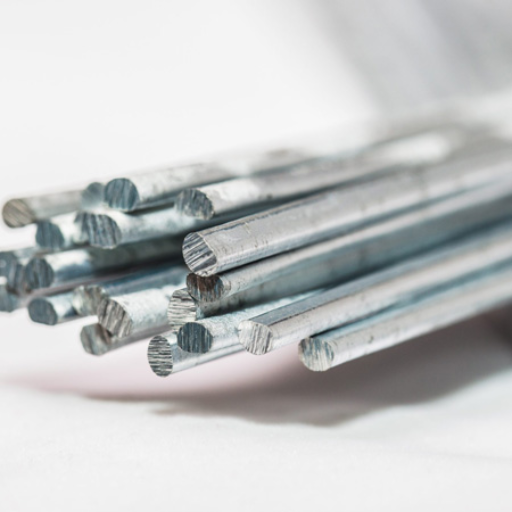
The best stainless steel rectangular tube for your project is almost always a welded 304 or 316L section manufactured to ASTM A554, sized and finished to match the environment it will serve. This guide is the complete manufacturer-authored reference for specifying rectangular tube: what it is, which grade to choose, the standards that govern it, the sizes and geometry that determine whether it fits, and how to source it from a qualified China manufacturer with documentation you can trust.
Stainless steel rectangular tube is the workhorse of architectural and structural framing. Handrails, balustrades, equipment frames, solar mounting structures, machine guards, and furniture all lean on it. But the specification decisions that seem small, the grade, the corner radius, the finish, decide whether that section lasts five years or fifty. Get them wrong and you are not buying a cheaper tube. You are buying an early replacement.
Marco, a fabrication shop owner in Barcelona, learned this the hard way in 2023. He quoted a beachfront balcony handrail using 304 rectangular tube because it was the cheapest stock his supplier listed. Eighteen months later his client sent photos of rust-colored pitting along the railing, less than 100 meters from salt spray. The fix, re-fabricating in 316L, cost more than the original contract. This guide exists to keep that from happening to you.
We are Zhejiang Zhongzheng Stainless Steel, a manufacturer in Wenzhou, China, not a distributor. We make welded rectangular tube on our own lines and test every heat spectrographically before it forms. What follows is how we help engineers and procurement teams specify rectangular tube with confidence, from the first RFQ to the container on the water.
Key Takeaways
- Rectangular tube is a welded hollow structural section, available in grades 304, 304L, 316, and 316L, plus duplex 2205 for high-chloride or high-strength service.
- ASTM A554 governs welded stainless steel rectangular tube in North America; EN 10296-2 and GB/T 12770 are the EU and China equivalents. Your MTR should cite the exact standard and edition.
- Choose grade by environment, not by price: 316L (PREN 24-25) beats 304 (PREN 18-20) in coastal, marine, food, and pool service.
- Size determines fitment: common stock runs from 20×10 mm to 200×100 mm, with wall thickness 0.5-6.0 mm and lengths to 12 m on request.
- The corner radius is the most commonly overlooked dimension. ASTM A554 caps the external corner radius at 3x wall thickness; confirm it before you order handrail fittings.
What Is Stainless Steel Rectangular Tube?

A stainless steel rectangular tube is a hollow structural section (HSS) formed from flat stainless steel strip into a rectangular profile and joined by electric resistance welding (ERW) or TIG welding. It is supplied in corrosion-resistant grades such as 304, 304L, 316, and 316L under ASTM A554. In the UK and EU you will hear the same product called a stainless steel box section or a rectangular hollow section (RHS). All three terms describe the same thing: a closed, four-sided, welded hollow profile.
What distinguishes it from a solid bar is what the hollow center buys you. For the same weight of material, a rectangular tube delivers far more bending strength, because the material sits away from the neutral axis. That efficiency is why structural frames use tube instead of bar: lighter, cheaper, and just as stiff for the loads most frames carry.
Rectangular tube is almost always manufactured by welding. Seamless rectangular sections exist, but they are rare and expensive, and for structural framing they add nothing you need. For pressure service, where a seamless construction is a code requirement, our seamless stainless steel tube range is the right starting point. If you are working through the difference between welded and seamless for a specific application, our welded rectangular tube manufacturing guide walks through the ERW and TIG processes in detail, including the weld tests that prove integrity.
Rectangular vs Square vs Round: Which Shape to Specify
The shape choice comes down to how the load arrives. Rectangular tube is at its best when the bending load is directional: handrails, equipment frames, and structural supports where the load is largely vertical. With the long side oriented vertically, the section resists that bending with a much higher section modulus than a square tube of the same weight.
Square tube gives equal strength in both axes, which simplifies connections and bracing when loads are unpredictable. Round tube offers the best strength-to-weight ratio for pressure and is the natural choice where a welded joint must seal, but it gives you no flat surfaces for mounting. For a deeper comparison of when to choose each, see our square vs rectangular tube selection guide.
Grades for Rectangular Tube: 304, 304L, 316L & Duplex 2205
Grade selection is the single decision that most determines how long your rectangular tube lasts. The good news is that for most projects the choice is between two grades: 304 and 316L. The table below is the short version, and the sections that follow give you the reasoning.
Grade 304 / 304L (ASTM A554 MT-304 / MT-304L)
304 is the default grade for rectangular tube, and for good reason. It offers strong corrosion resistance indoors and in dry, sheltered environments, good weldability, and the best price-per-meter of the austenitic grades. It is designated MT-304 (or MT-304L for the low-carbon version) under ASTM A554. The low-carbon 304L variant avoids chromium carbide precipitation at the weld, so it is the safer choice whenever the tube will be welded on site.
The limitation is chlorides. In coastal air, road salt, pool chemicals, or any persistent chloride exposure, 304 will eventually pit. The pitting resistance equivalent number (PREN) for 304 is roughly 18-20, which tells you it has a real ceiling in marine service.
Grade 316L (ASTM A554 MT-316L)
316L adds 2-3% molybdenum, and that addition is transformative. It pushes the PREN to roughly 24-25 and makes the grade the standard for coastal, marine, food, beverage, and pharmaceutical environments. When a client is building within sight of the ocean, we typically steer the specification to 316L without being asked. It costs more per meter, but it costs far less than re-fabricating a failed railing. For the data on chloride corrosion and grade selection, the Nickel Institute publishes the authoritative guidance.
Grade 201 (Budget Alternative)
201 is a lower-nickel austenitic that sells for less than 304. It is acceptable for purely interior, dry applications where corrosion is not a real risk and appearance is the main concern. It is not a substitute for 304 in damp, humid, or chloride-bearing environments, and it is never a substitute for 316L near the coast. If your project can tolerate the risk, 201 is a legitimate cost saver. If you are not sure, do not take the risk on a visible installation.
Duplex 2205 (When You Need More)
For high-splash marine zones, pool decks, or structural framing that needs roughly double the yield strength of 316L, duplex 2205 (UNS S32205) is the step up. Its PREN of 34-35 handles chlorides that would pit 316L over time. Rectangular tube in duplex is a niche product, and few suppliers offer it, which is exactly why we cover it in our duplex 2205 rectangular tube guide. For the broader duplex grade family, see the duplex stainless steel grades guide.
Grade Selection Decision Matrix
Use the environment, not the marketing, to choose your grade:
| Environment | Recommended Grade | Why |
|---|---|---|
| Interior, dry (furniture, display fixtures) | 201 or 304 | No corrosion driver; appearance only |
| Humid interiors, covered walkways | 304 | Mild exposure, low chloride |
| Urban exterior, rain and mild pollution | 304 / 304L | General atmospheric corrosion resistance |
| Coastal air within a few km of the sea | 316L | Chloride-laden air pits 304 within months |
| Direct marine splash, boat rails, marina structures | 316L minimum; duplex 2205 for high-splash | Continuous chloride exposure |
| Food, beverage, pharmaceutical frames | 316L | Hygienic service, clean-in-place chemicals |
| Pool enclosures and decks | 316L | Chlorine and pool chemicals are aggressive |
| High-strength structural framing in coastal zones | Duplex 2205 | ~2x yield strength of 316L, high PREN |
Not sure between 304 and 316L for your project? Send us the environment and location, and our technical team will confirm the right grade within 24 hours. The full technical comparison lives in our 304 vs 316L rectangular tube guide.
Governing Standards: ASTM A554, EN 10296-2 & GB/T 12770

If your project is documented to a standard, that standard should appear on the Mill Test Report (MTR) that ships with your tube. Three standards govern stainless steel rectangular tube, depending on where the project is built.
ASTM A554: The North American Standard
ASTM A554/A554M, Standard Specification for Welded Stainless Steel Mechanical Tubing, is the governing standard for rectangular tube in the US and Canada. It covers square, rectangular, round, and special shapes up to 16 in. (406.4 mm) outside dimension, with wall thicknesses of 0.020 in. (0.51 mm) and over.
Under ASTM A554, grades carry an MT prefix, meaning “mechanical tubing”: MT-304, MT-304L, MT-316, MT-316L, and MT-201. Mechanical tubing is distinguished from pressure-rated pipe; the standard emphasizes dimensional tolerance, surface, and weld integrity rather than pressure containment. It also separates mechanical tubing (guaranteed mechanical properties, required flattening tests) from ornamental tubing (cosmetic-focused, wider tolerances). If your tube carries a load, specify mechanical grade and say so on the RFQ.
Compliance is not a label. It is a set of tests, including the flattening test and reverse flattening test, which compress a section until the walls meet and confirm the weld shows no cracks. For the full breakdown of A554 grades, classifications, and testing, see our ASTM A554 rectangular tube compliance guide.
EN 10296-2 and GB/T 12770: EU and China Equivalents
For European projects, EN 10296-2 is the standard for welded circular and shaped stainless steel tubes for mechanical and general engineering purposes, which is where rectangular and square hollow sections fall. For projects documented under Chinese national standards, GB/T 12770 governs welded stainless steel tube for structural and mechanical use. A qualified China manufacturer should be able to produce and document to all three. If you are buying for an EU or UK project, the terminology changes too, so our stainless steel rectangular hollow section (RHS) guide covers the EU naming and documentation conventions.
What Compliance Means in Practice
Real compliance shows up in the paperwork. Demand an MTR that cites the standard and edition, lists chemical composition, mechanical properties, and test results. For European projects, the certificate format is often EN 10204 2.2 or 3.1, where 3.1 means a certificate issued by the manufacturer with verified test results. For critical projects, arrange third-party inspection with SGS, TUV, or Bureau Veritas at the mill; a manufacturer that routinely hosts inspectors will not flinch at the request.
Stainless Steel Rectangular Tube Sizes, Dimensions & Wall Thickness
Size is where most buyers actually make their decision, and it is the query we see most in practice. The table below is a curated list of common stock sizes, not an exhaustive one. The full catalog lives in our rectangular tube size chart.
Common Stock Sizes (Metric)
| Size (mm) | Wall (mm) | Weight (kg/m) |
|---|---|---|
| 40 x 20 | 1.60 | 1.38 |
| 40 x 20 | 2.60 | 2.10 |
| 50 x 30 | 1.60 | 1.88 |
| 50 x 30 | 2.90 | 3.32 |
| 60 x 40 | 2.60 | 3.73 |
| 60 x 40 | 4.00 | 5.67 |
| 80 x 40 | 2.60 | 4.55 |
| 80 x 40 | 5.00 | 8.47 |
| 150 x 100 | 8.00 | 27.70 |
| 160 x 80 | 4.00 | 14.30 |
| 180 x 100 | 5.60 | 23.00 |
Common Stock Sizes (Imperial, Type 304/L & 316/L)
| Outside Dimension (in) | Wall (in) | Weight (lbs/ft) |
|---|---|---|
| 2 x 1 | .120 | 2.25 |
| 3 x 2 | .120 | 3.88 |
| 4 x 2 | .180 | 6.90 |
| 4 x 3 | .250 | 10.89 |
| 6 x 4 | .250 | 16.35 |
| 8 x 4 | .375 | 28.69 |
Wall Thickness Ranges
Standard production runs 0.5 mm to 6.0 mm wall thickness, with heavier walls to 10 mm available on inquiry. In imperial gauges, that is roughly .049 in. to .375 in. Wall thickness is the second most common cause of failed fitments, after corner radius, so confirm it against your fittings before you commit a container.
Lengths
The standard length is 6 m, with custom lengths up to 12 m on request. For sea freight, many buyers use container-optimized 5.8 m lengths to get a clean count per 20-foot or 40-foot container. If you are importing, ask for the length that maximizes your container utilization; it lowers your landed cost per meter.
Custom Dimensions
A solar mounting manufacturer in Germany, for example, needed a 120 x 60 mm section with a 3.0 mm wall, a combination that appeared in no distributor’s catalog. Rather than redesign their frame, they went to a manufacturer that would roll the custom size. That is the argument for working directly with a mill: if you can draw it, we can usually quote it. Custom aspect ratios to 5:1 are feasible, with a minimum order quantity around 500 kg for custom sizes and tooling lead time folded into the schedule. Need a size you do not see here? Tell us the A x B x wall combination and our technical team will confirm feasibility, tooling, and lead time within 24 hours.
Tolerances, Corner Radius & Geometry
The corner radius is the dimension that causes the most fitment failures, and almost no supplier explains it. Here is the rule. Under ASTM A554, the maximum external corner radius is 3x the wall thickness. Typical internal corner radius runs 1-2x the wall thickness. When your handrail fittings and gussets are machined to a specific radius, a mismatch means gaps, grinding, and an ugly visible weld repair. Our rectangular tube corner radius guide goes deeper into how to specify it, including the geometry diagrams.
OD, Wall, Straightness & Twist Tolerances
Outside dimension tolerances follow ASTM A554 Table 1, which varies with size. Wall thickness is typically held to +/-10%, with +/-5% available on request for precision work. Straightness is normally specified at 1 mm per meter maximum. Twist, the rotation along the length that makes a long section look corkscrewed, is capped around 2 mm/m for structural grades. Twist is a particular problem for visible installations, because a slight rotation shows up immediately in a balustrade run.
Flatness of Sides
Side flatness deviation is normally held to 0.5% of the side width maximum. It matters more than most buyers realize: a bowed side means a handrail that refuses to sit flush against a wall or a frame that racks when you bolt it together.
Surface Finishes: Mill, Brushed, Mirror & Electropolished
Finish controls how the tube looks and, in some industries, how it performs. Here is the finish menu with the surface roughness (Ra) values that define each level:
| Finish | Ra Value | Typical Use |
|---|---|---|
| Mill finish | Ra 1.0-2.5 um | Structural framing, hidden or painted surfaces |
| 180 grit brushed | Ra 0.4-0.8 um | General architectural, handrails |
| 320 grit brushed | Ra 0.2-0.4 um | Fine architectural, balustrades, visible frames |
| Mirror #8 | Ra <0.1-0.2 um | Decorative, feature architectural elements |
| Electropolished | Ra <=0.4 um | Food, pharma, hygienic process frames |
Match the finish to the application, not the mood board. A coastal handrail should be 316L with a 320 grit or mirror finish, because the smoother surface gives chlorides fewer anchor points. A food or pharmaceutical frame should be 316L electropolished, because the electrochemical process removes embedded iron and leaves a surface that resists bacterial adhesion and cleans down properly. The mechanics and grade-by-finish logic are covered in our stainless steel rectangular tube finishes guide, and SSINA’s surface finish designations are the standard reference for specifying them.
One warning on grain direction. A brushed finish has a directional grain, and it will not match across a mitered joint if the sections are cut and rotated. If you are ordering pre-finished tube for a visible installation, specify the grain direction and keep all cuts in the same orientation, or plan to blend the joints with a flap disc.
Applications by Industry

Rectangular tube earns its keep across more industries than any other tube shape, because it is cheap, weldable, and stiff in the direction you actually load it.
Architectural & Construction
Handrails, balustrades, facade supports, and furniture all run on rectangular tube. The workhorse sizes are 50 x 30, 40 x 20, and 80 x 40 mm. For fabrication guidance specific to handrails and balustrades, including fittings, base plates, and joint details, see our rectangular tube for handrails and balustrades guide.
Food, Beverage & Pharmaceutical
Equipment frames, clean-room supports, and process skids use 316L rectangular tube, frequently electropolished, because the surface has to stand up to clean-in-place chemicals and inspection. The frame is not just structure; it is a hygienic surface.
Marine & Coastal
Boat rails, marina structures, and pool enclosures demand 316L as a minimum, with duplex 2205 for high-splash zones where the chloride load is relentless. If your project is within a few kilometers of the sea, start the grade conversation at 316L.
Industrial & Solar
Machine guards, conveyor frames, and solar mounting structures are a growing application, because rectangular tube gives a lightweight, corrosion-resistant frame with flat surfaces that bolt together easily. For solar specifically, the section is often used bare or with a light brushed finish; 304 is usually sufficient, since the frame is typically not near salt water.
How to Source Rectangular Tube from a China Manufacturer
Sourcing stainless steel rectangular tube from China is a defensible strategy when you understand what separates a manufacturer from a trader. A trader resells whatever a mill gives them and cannot answer a technical question with production knowledge. A manufacturer owns the line, the test equipment, and the paperwork. Here is the checklist we recommend every buyer run before placing an order.
The RFQ Checklist
- Grade and standard: State the grade (304, 304L, 316L, 2205) and the governing standard (ASTM A554, EN 10296-2, GB/T 12770). Ambiguity here is how you end up with 201 when you paid for 304.
- Dimensions as A x B x wall x length: Give the outside dimensions, wall thickness, and length, not just “50 x 30”.
- Quantity and container plan: Ask for the length that maximizes container utilization.
- Mechanical vs ornamental: Say explicitly whether the section carries a load and requires mechanical-grade certification.
- Tolerance requirements: Call out any wall tolerance tighter than +/-10%, and the corner radius if your fittings depend on it.
- Finish: Specify the finish and Ra target, and the grain direction if visible.
Documentation You Should Demand
A complete package includes the MTR (citing the standard and edition), an EN 10204 3.1 certificate for European projects, and a dimensional inspection report. For critical work, request third-party inspection with SGS, TUV, or Bureau Veritas, and ask to witness tests. At Zhongzheng, every coil is spectrographically verified before forming, every production run is dimensionally gauged in-line, and flattening and reverse flattening tests are performed per ASTM A554. The MTR reflects what we measured, not what we ordered. If a supplier hesitates on documentation, that is the answer.
Why Wenzhou
Wenzhou is China’s stainless steel manufacturing center, and Zhongzheng is based in the Lantian Industrial Zone, Longwan District. That location matters to your supply chain: raw material suppliers, component manufacturers, and export logistics are all within a short distance, which is why Wenzhou mills can hold pricing and lead times that factories elsewhere struggle to match. We ship FCL and LCL from the Port of Wenzhou and Ningbo-Zhoushan, with export-standard packaging: plastic sleeving, VCI wrap for corrosion protection, and wooden crates for mirror-finish sections. Our technical team answers RFQs and specification questions within 24 hours, because your schedule is the constraint, not our availability.
Frequently Asked Questions
What is the difference between welded and seamless rectangular tube?
Welded tube is formed from strip and joined by ERW or TIG welding, which makes it efficient and cost-effective. Seamless tube is pierced from a solid billet and has no longitudinal weld seam, but it is expensive and rarely necessary for rectangular structural sections. For structural and architectural framing, welded rectangular tube is the industry standard.
Can welded rectangular tube be used structurally?
Yes. ASTM A554 mechanical tubing is manufactured with guaranteed mechanical properties and tested (including flattening and reverse flattening tests) specifically so it can carry calculated structural loads. Specify mechanical grade, not ornamental, when the tube is load-bearing.
Which grade should I use near the coast?
316L. Its molybdenum content pushes the PREN to 24-25 versus 18-20 for 304, which is the difference between decades of service and visible pitting within months in chloride-laden air. For direct marine splash, consider duplex 2205.
What corner radius should I specify?
The maximum external corner radius under ASTM A554 is 3x the wall thickness, and the typical internal radius is 1-2x the wall thickness. If your fittings are machined to a specific radius, confirm the actual produced radius with the mill before ordering.
Can a rectangular tube be electropolished?
Yes. Electropolishing is an electrochemical process that removes a thin surface layer and embedded iron, producing an Ra <=0.4 um surface. It is standard for food, beverage, and pharmaceutical frames where surface cleanliness and bacterial resistance matter.
How do I verify ASTM A554 compliance or read an MTR?
Check that the MTR cites the standard and edition, lists the chemical composition with spectrographic results, mechanical properties, and the required test results (flattening, reverse flattening). For extra assurance, arrange third-party inspection with SGS, TUV, or Bureau Veritas at the mill before shipment.
Conclusion
Specifying stainless steel rectangular tube well is a five-step chain. Match the grade to the environment, starting at 304 and moving to 316L (or duplex 2205) near chlorides. Confirm the size and wall thickness against your fittings. Verify the corner radius, because it is the dimension that breaks fitments. Choose the finish for the application, not just the look. And source from a manufacturer whose documentation proves what is physically in the tube.
That last step is the one most buyers skip, and it is the one that protects your project. At Zhongzheng, we manufacture welded rectangular tube in our Wenzhou plant, verify every heat spectrographically, gauge dimensions in-line, and document it all in an MTR you can hand to your QC team. We produce standard austenitic grades and duplex 2205 on the same floor, and our technical engineers, not salespeople, will confirm the right grade, finish, and lead time for your application.
Send us your A x B x wall dimensions and your application, and we will confirm grade, finish, lead time, and price within 24 hours. Browse our stainless steel rectangular tube product range, or speak with our technical team to start your RFQ.